Loading…
Loading video…
130,604 views
Did you know that every FDA drug approval relies on null and alternative hypotheses to determine if a treatment actually works? These fundamental statistical concepts help researchers distinguish between real effects and random chance. For instance, when testing whether a new SAT prep course improves scores, statisticians use what is null and alternative hypotheses principles to compare student performance against expected outcomes. These contrasting statements form the backbone of scientific research, from medical trials to agricultural studies across American universities and research institutions. Watch the full video on JoVE Coach to master this concept with expert-led visuals and step-by-explanations.
Null and alternative hypotheses represent two competing claims about population parameters that researchers test using statistical methods. The null hypothesis (H₀) typically represents the status quo, equality, or "no effect" scenario, while the alternative hypothesis (H₁) represents the research claim or "there is an effect" scenario. These concepts are essential for students preparing for AP Statistics, college statistics courses, and standardized tests like the MCAT.
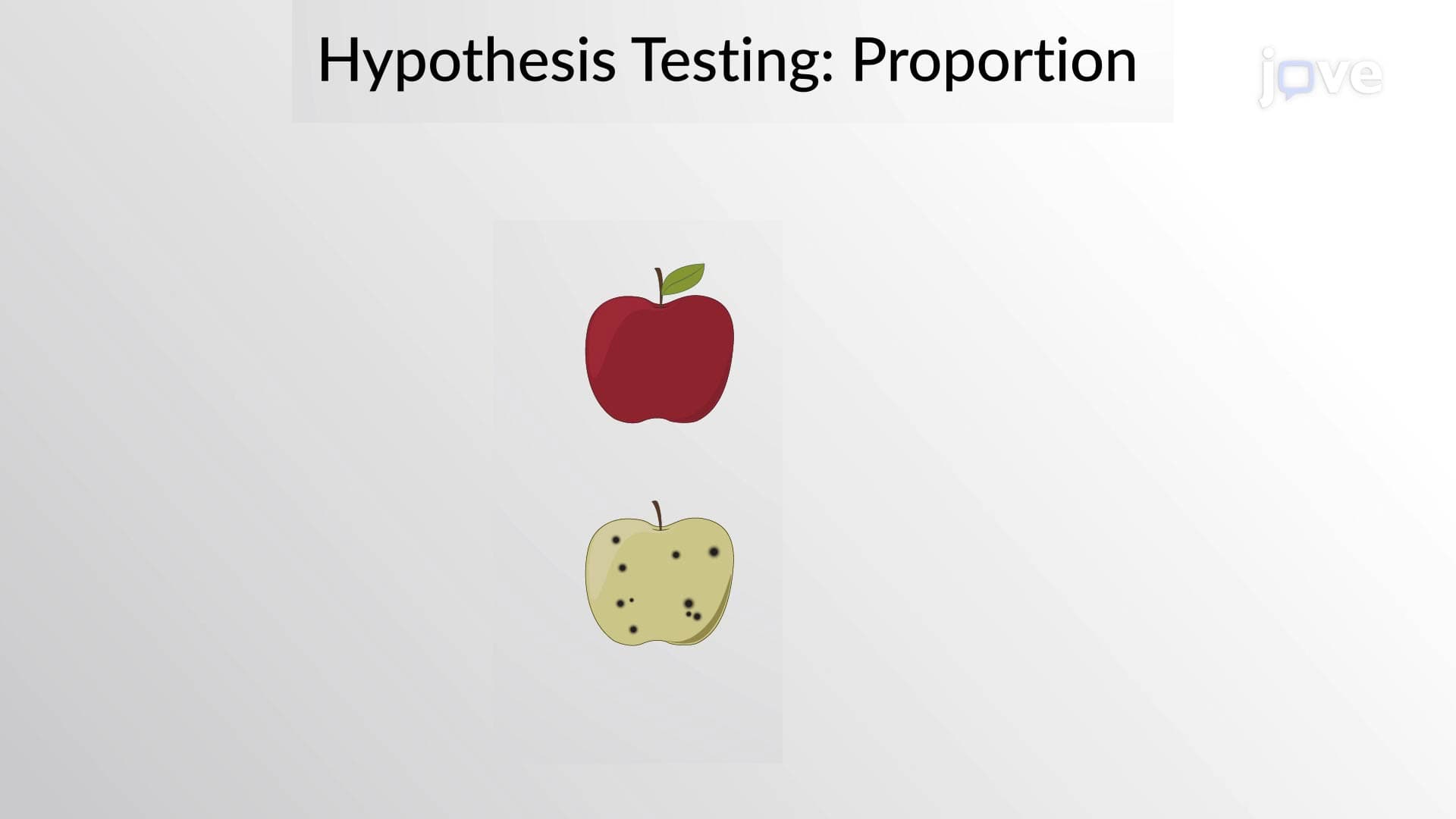
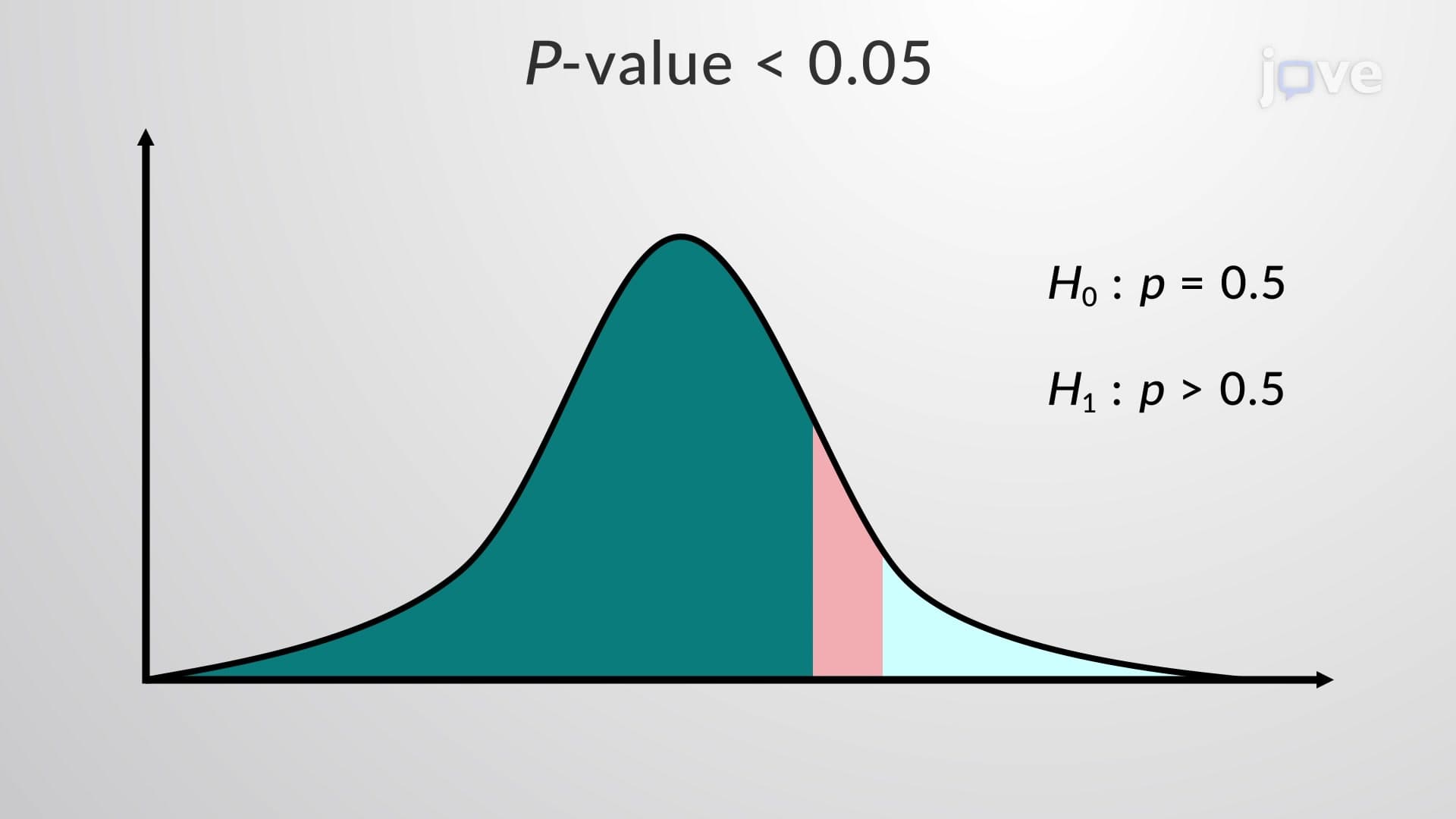
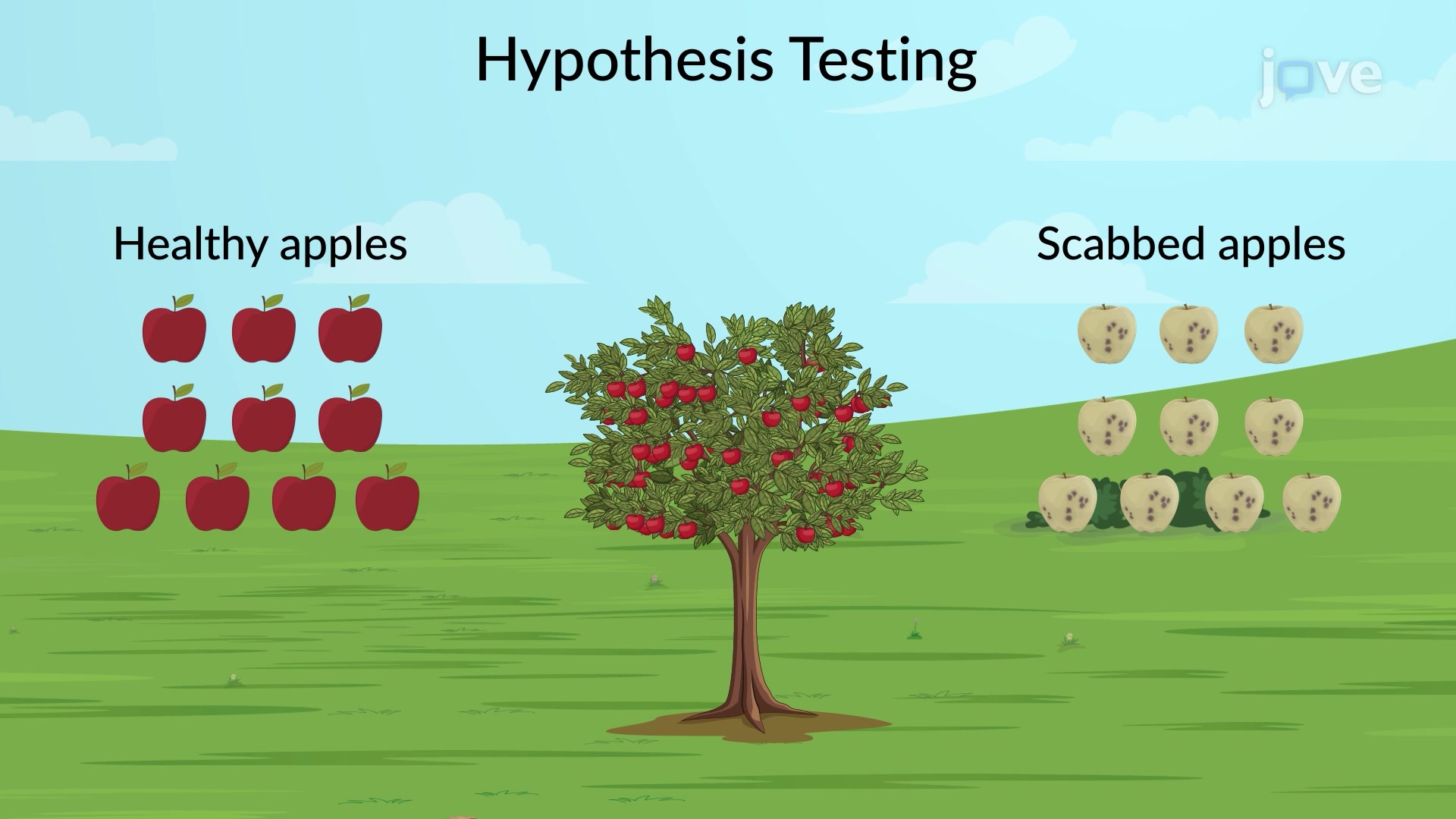
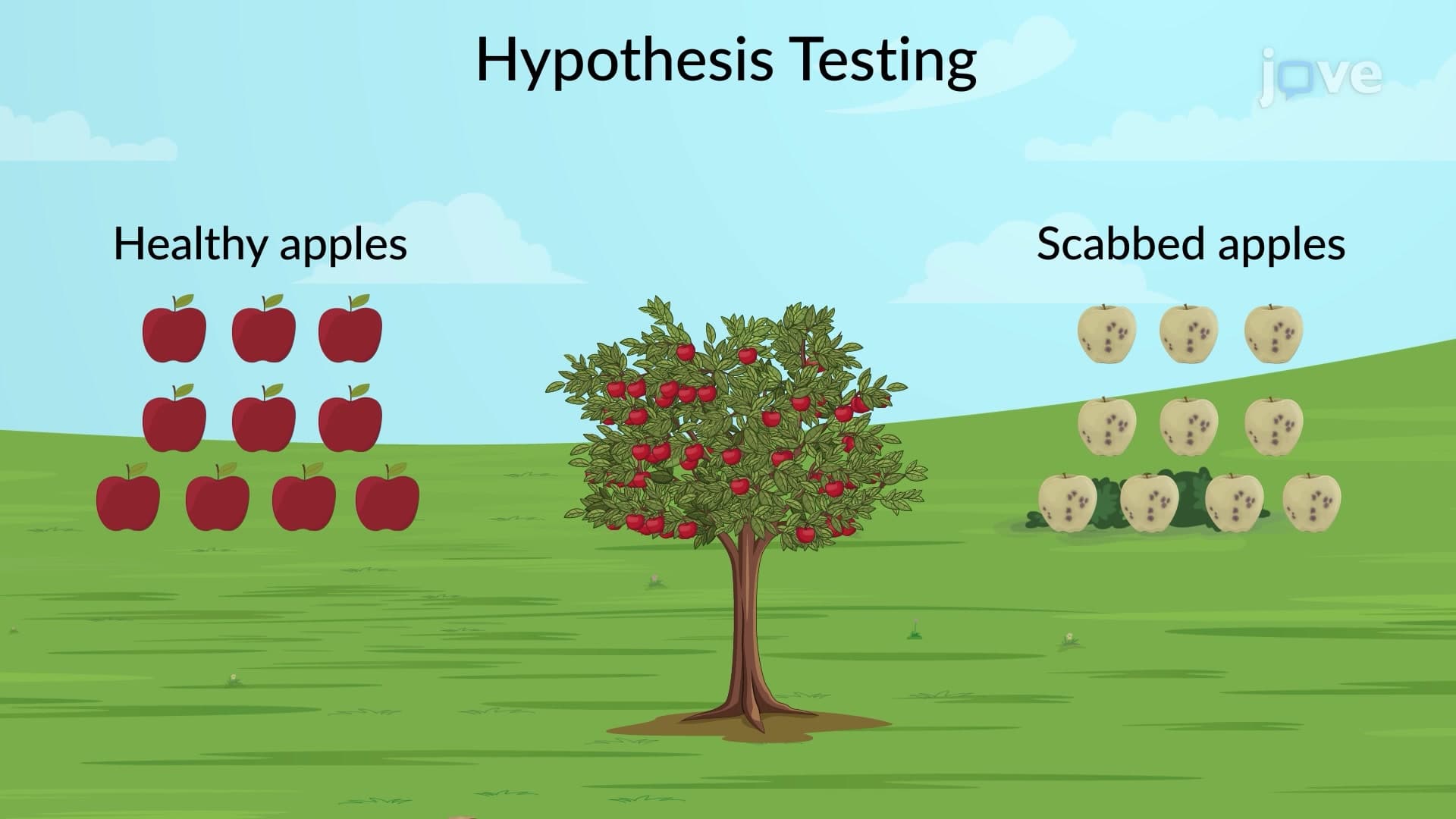
The null hypothesis serves as the default assumption that researchers attempt to challenge. In the apple cultivation example, H₀ states that the proportion of healthy apples equals the proportion of scabbed apples (p = 0.5). This represents no bias toward either outcome. American agricultural researchers frequently use this approach when testing new farming techniques. For instance, the USDA might test whether a new pesticide affects crop yield by setting H₀: "the new pesticide produces the same yield as traditional methods."
The alternative hypothesis represents what researchers believe or want to prove. Critically, H₁ should never specify an exact numerical value because obtaining precisely that value could occur by random chance alone. Instead, proper alternative hypotheses indicate direction (greater than, less than) or simply "not equal to." In pharmaceutical research, companies testing new medications follow FDA guidelines that require alternative hypotheses like "the drug reduces symptoms more than placebo" rather than "the drug reduces symptoms by exactly 15%."
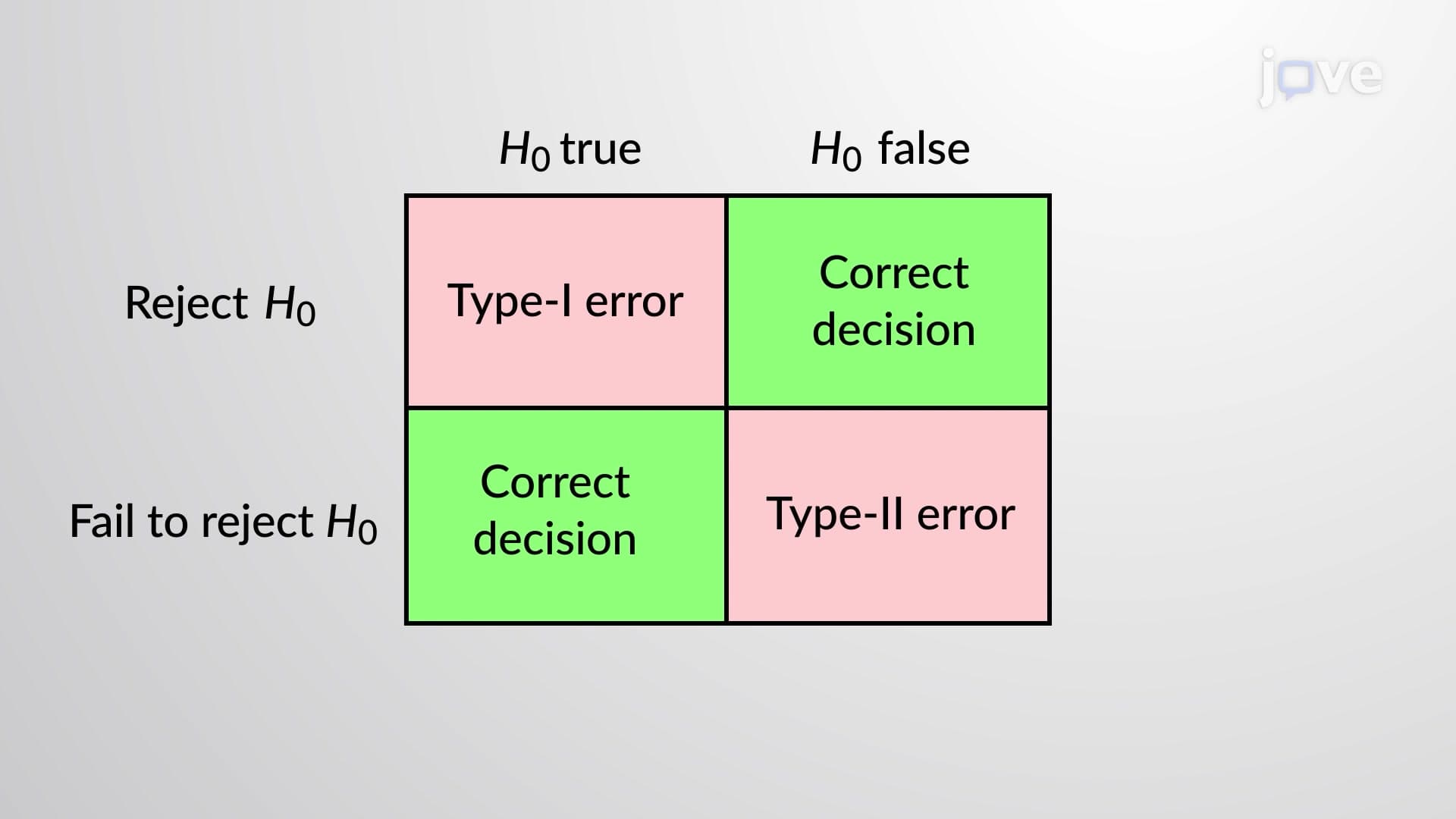
These concepts appear frequently in AP Statistics free-response questions and college statistics exams. Students encounter hypothesis testing in quality control scenarios at American manufacturing companies, clinical trials at institutions like the Mayo Clinic, and market research conducted by firms like Gallup. Understanding proper hypothesis formulation helps students succeed on standardized tests and prepares them for careers in data science, healthcare, and research. The distinction between null and alternative hypotheses also underlies more advanced statistical concepts students will encounter in upper-level courses, including Type I and Type II errors, power analysis, and confidence intervals.
Frequently Asked Questions
Null and alternative hypotheses are two competing statements about a population that researchers test using data. The null hypothesis (H₀) represents "no change" or "no difference," while the alternative hypothesis (H₁) represents the research claim or "there is a difference." Think of them as opposing arguments in a courtroom where evidence determines which one to support.
AP Statistics frequently tests hypothesis formulation in free-response questions worth 12-15% of your total score. You'll identify appropriate null and alternative hypotheses for given scenarios, explain why certain formulations are incorrect, and connect hypotheses to statistical conclusions. Practice with College Board released exams helps master this skill.
Students often write alternative hypotheses with exact values like H₁: p = 0.3, which is incorrect because you could get that exact proportion by chance alone. Instead, use inequalities like H₁: p ≠ 0.5, H₁: p > 0.5, or H₁: p < 0.5 depending on your research question.
Medical researchers use these hypotheses to test drug effectiveness, compare treatment methods, and evaluate diagnostic tools. For example, when testing a new cancer treatment, H₀ might state "the new treatment has the same survival rate as standard treatment," while H₁ states "the new treatment improves survival rates."
No advanced calculus is required for basic hypothesis testing concepts. Students with Algebra 2 and basic probability knowledge can master null and alternative hypotheses. The focus is on logical thinking and understanding research design rather than complex mathematical computations.
Next, explore p-values, significance levels, Type I and Type II errors, and test statistics. These concepts build directly on hypothesis formulation and appear together on standardized tests like the MCAT and in college statistics courses.
Use this memory device: H₀ (null) represents "nothing new" or "no change" - like innocent until proven guilty. H₁ (alternative) represents "something different" - the claim you're trying to prove with evidence. Practice writing both hypotheses for various scenarios until this becomes automatic.
Exact values can occur by random chance alone, making them impossible to prove definitively with sample data. Statistical tests work by showing evidence against the null hypothesis, not by confirming precise numerical predictions. This principle underlies all valid statistical inference.
Related Micro-courses



Related Subjects
 Physics 33 micro-courses›
 Math Fundamentals 11 micro-courses›