Loading…
Loading video…

130,604 views

Did you know that 83% of female guppies chose orange males over blue ones in a controlled aquarium study? Testing a claim about population proportion helps researchers determine whether this observed preference truly reflects the population's behavior or just random chance. In US pharmaceutical trials, scientists use identical statistical methods to validate drug effectiveness claims, comparing observed patient outcomes against expected baseline rates. Watch the full video on JoVE Coach to master this concept with expert-led visuals and step-by-step explanations.
Testing a claim about population proportion is a fundamental statistical procedure that allows researchers to validate or refute assertions about what percentage of a population possesses a specific characteristic. This method forms the backbone of evidence-based decision-making across multiple disciplines, from medical research validating treatment effectiveness to quality control in manufacturing processes.
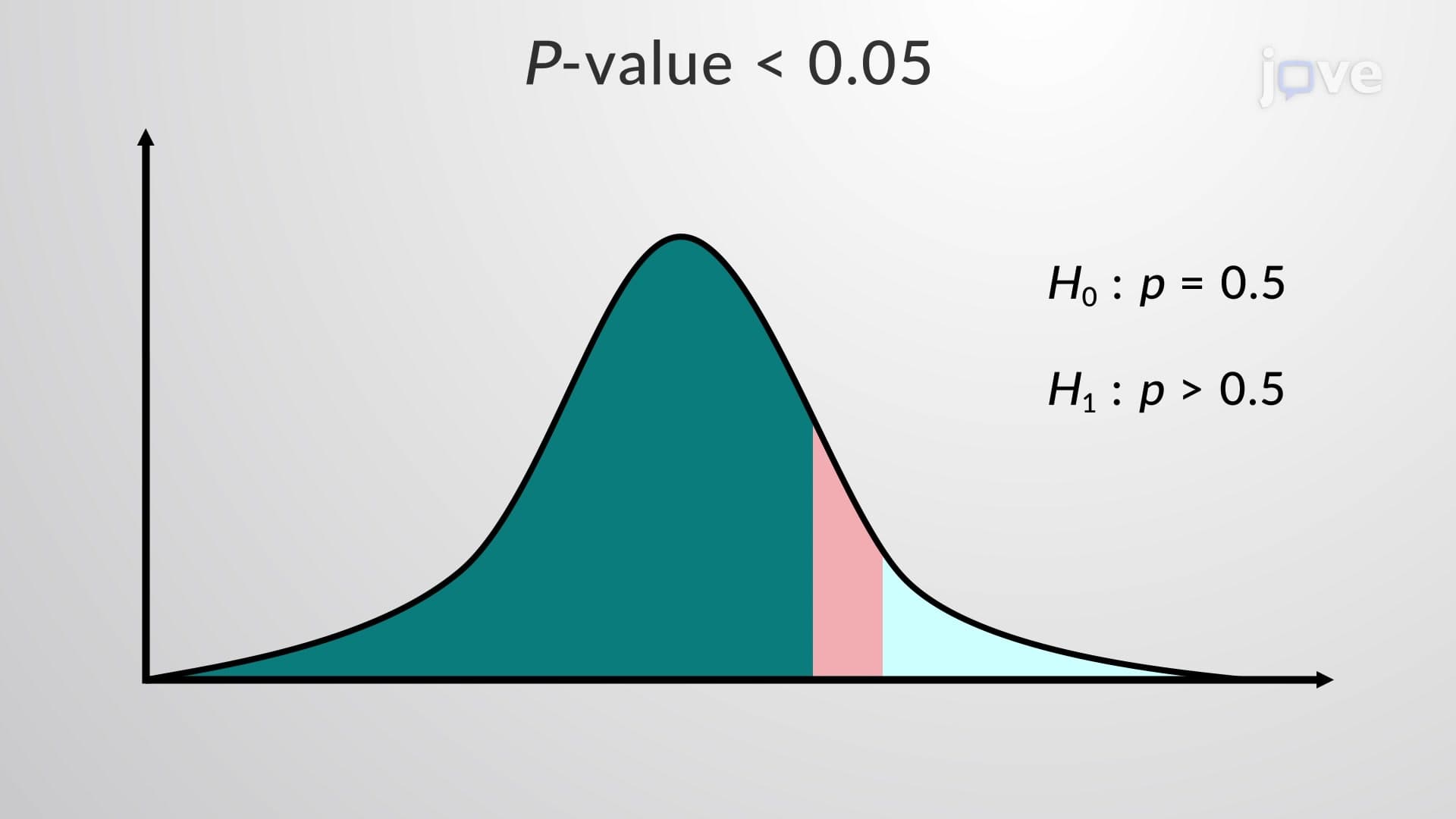
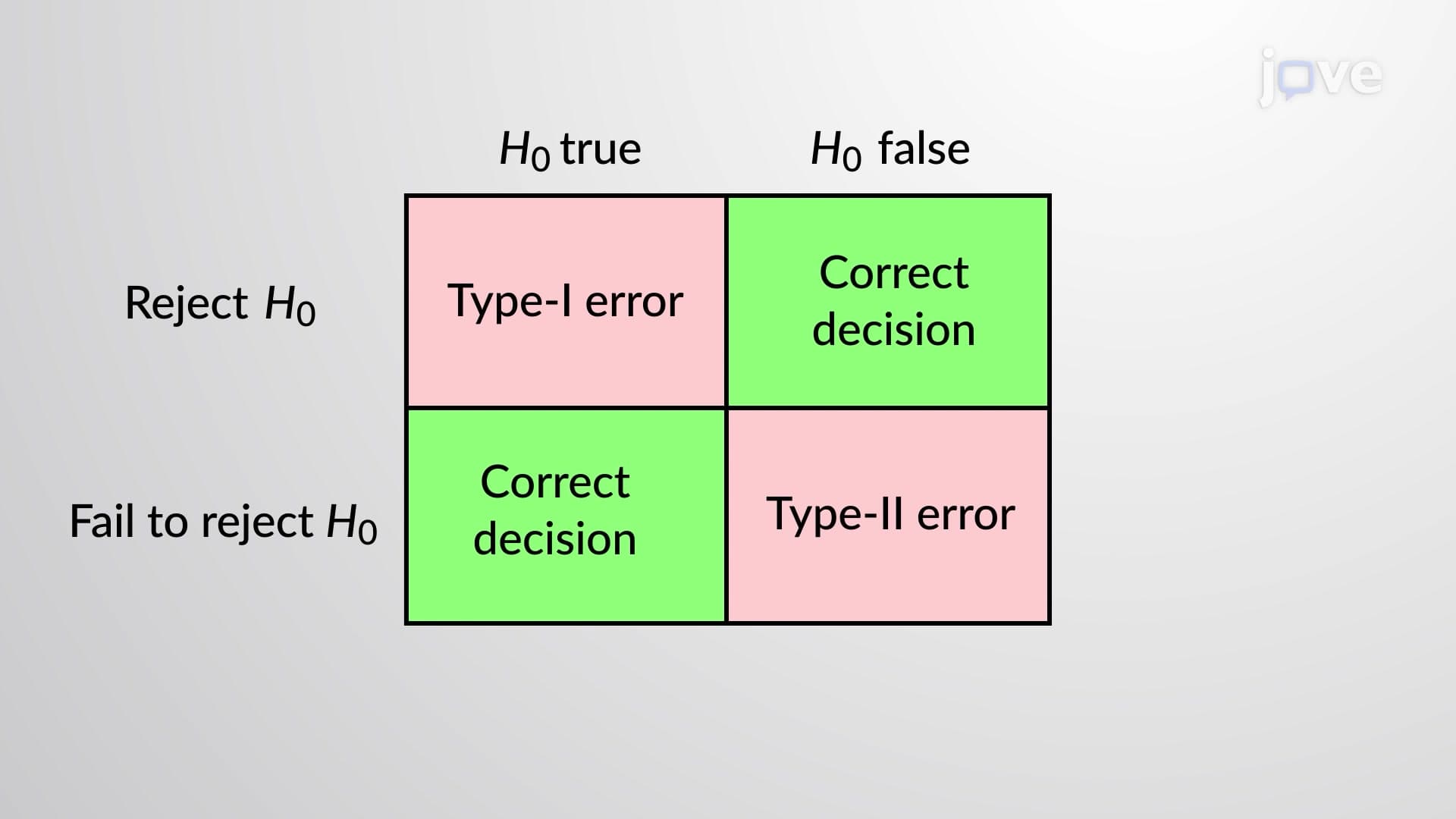
The process begins with establishing two competing hypotheses. The null hypothesis (H₀) typically represents the status quo or a claim of no effect, while the alternative hypothesis (H₁ or Hₐ) represents the researcher's theory or the claim being tested. In the guppy example, the null hypothesis stated that females show no preference (50% choose orange, 50% choose blue), while the alternative claimed that more than 50% prefer orange males.
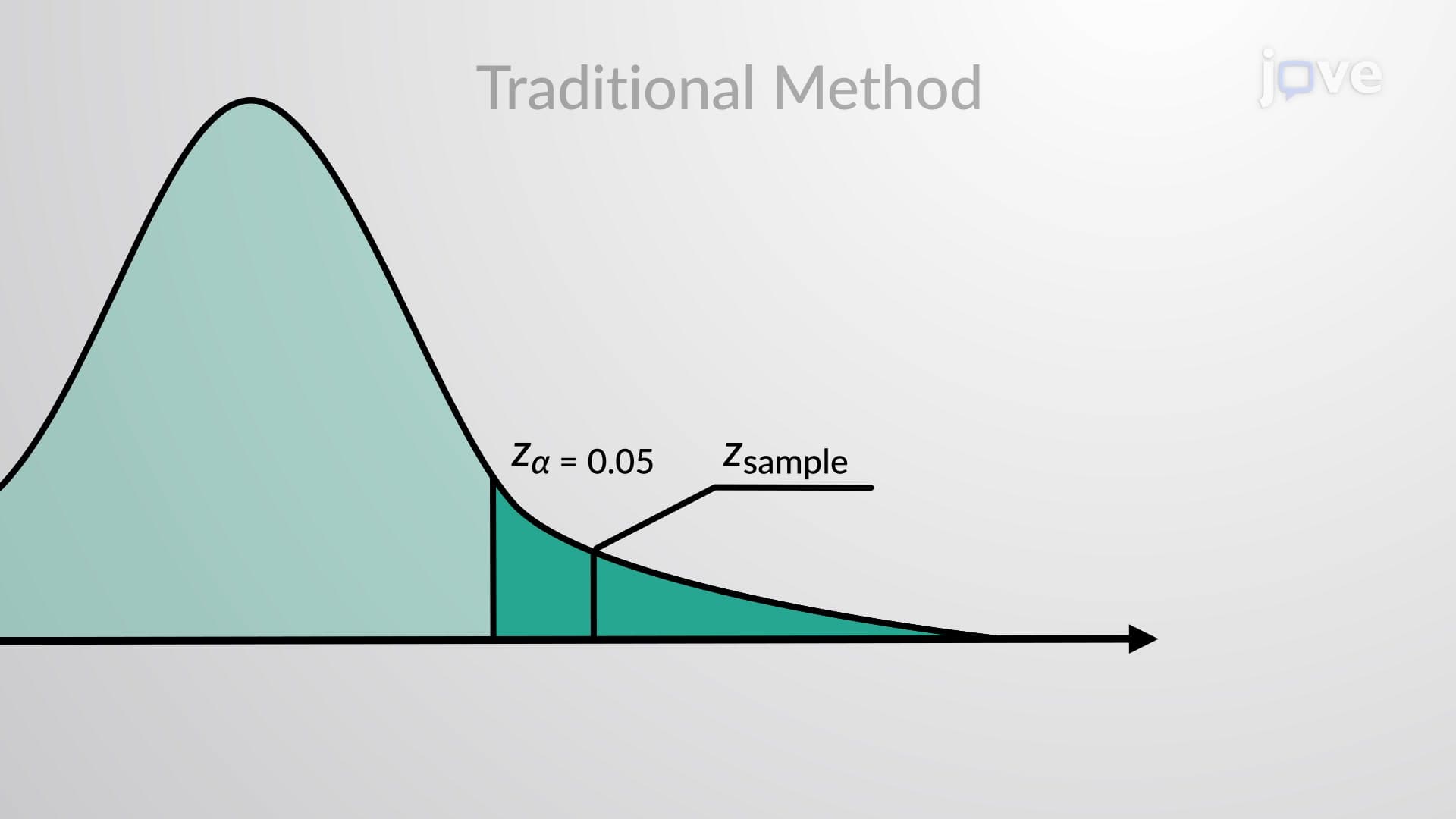
The mathematical foundation involves converting sample proportions into standardized test statistics, typically using the z-statistic formula. When the sample proportion significantly differs from the hypothesized population proportion, the calculated z-value will fall outside the acceptance region, leading to rejection of the null hypothesis.
For proportion testing, the test statistic follows the formula: z = (p̂ - p₀) / √(p₀(1-p₀)/n), where p̂ represents the sample proportion, p₀ is the hypothesized proportion, and n is the sample size. In the guppy study, with 10 out of 12 females choosing orange males, p̂ = 0.83, creating a z-statistic that fell within the critical region at α = 0.05.
This statistical technique appears frequently on AP Statistics exams, college statistics courses, and standardized tests like the MCAT. US pharmaceutical companies use proportion testing to demonstrate drug efficacy—for instance, testing whether a new vaccine prevents infection in more than 90% of recipients, compared to existing treatments.
In quality control scenarios, manufacturers might test claims about defect rates. If a company claims their product has a defect rate below 2%, statisticians can collect samples and use proportion testing to verify this assertion. The FDA regularly employs these methods when evaluating safety claims for medical devices and medications.
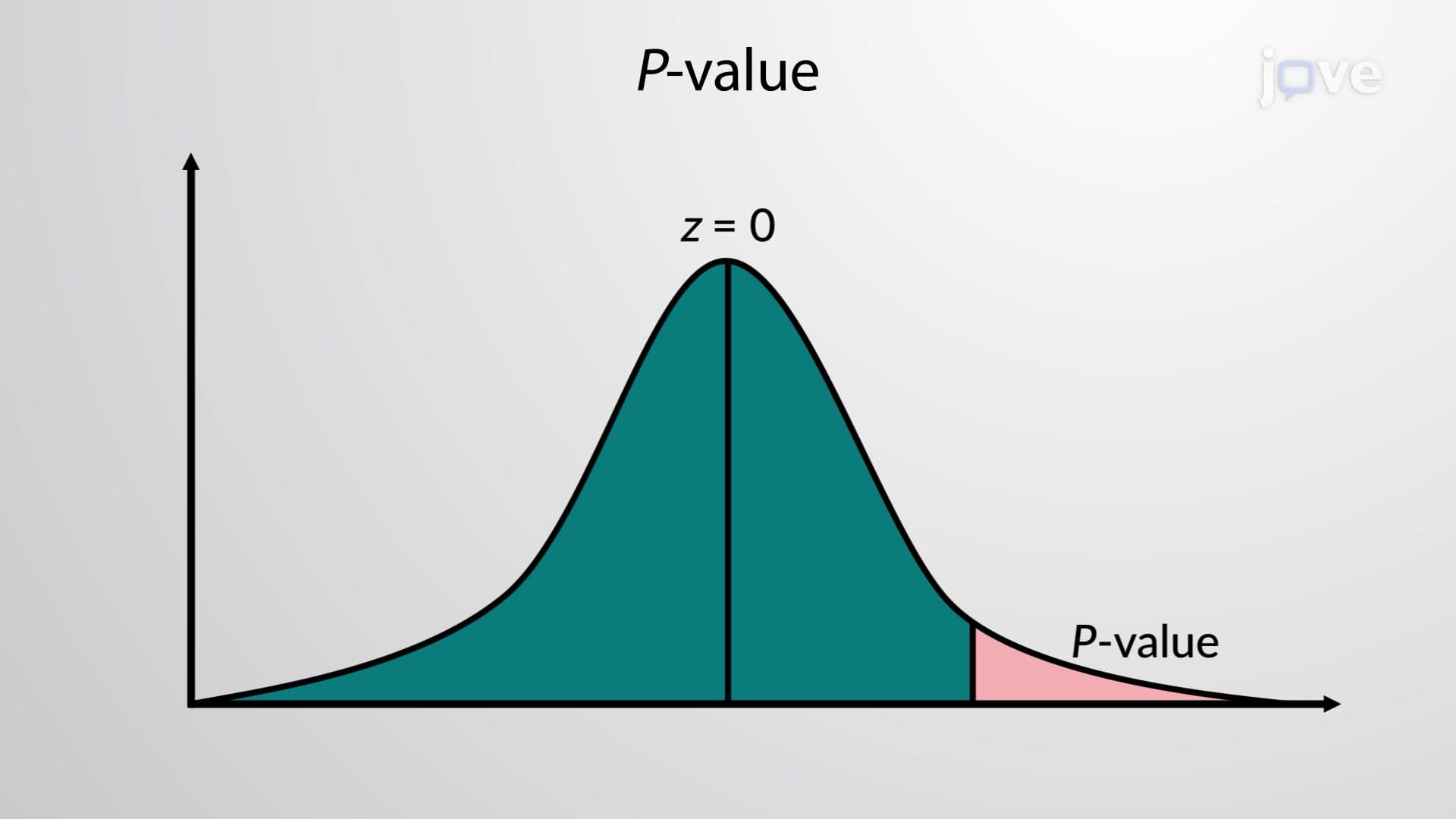
The p-value represents the probability of observing the sample result (or something more extreme) if the null hypothesis were true. A p-value of 0.011, as found in the guppy experiment, indicates strong evidence against the null hypothesis, suggesting the observed preference didn't occur by random chance. This statistical significance provides confidence that the aquarium guppies genuinely exhibit the same mating preferences as their wild counterparts.
Frequently Asked Questions
Testing a claim about population proportion is a statistical method used to determine whether a specific percentage claim about a population is supported by sample evidence. You use it when you want to validate assertions like "70% of Americans support this policy" or "less than 5% of patients experience side effects." It's essential for research validation, quality control, and evidence-based decision-making across science, business, and healthcare fields.
AP Statistics frequently includes proportion testing in both multiple-choice and free-response sections, often requiring students to set up hypotheses, calculate test statistics, and interpret p-values. College statistics courses emphasize real-world applications, asking students to analyze scenarios like clinical trial results or market research data. The MCAT includes proportion concepts in its statistics and research methods sections, particularly for interpreting medical study results.
One-tailed tests examine whether a proportion is significantly greater than or less than a specific value, while two-tailed tests check if it's simply different from that value. Use one-tailed when you have a directional hypothesis (like "more than 60% prefer brand A"), and two-tailed for non-directional claims (like "the proportion differs from 50%"). The choice affects your critical values and p-value interpretation.
US pharmaceutical companies rely heavily on proportion testing during clinical trials to demonstrate drug effectiveness and safety. They test claims like "the vaccine is 95% effective" by comparing vaccination success rates against control groups. The FDA requires these statistical validations before approving new medications, ensuring that observed benefits aren't due to random chance but represent genuine therapeutic effects.
Generally, you need at least 30 observations, with both np₀ and n(1-p₀) being at least 5 for the normal approximation to be valid. Larger samples provide more reliable results and greater statistical power to detect true effects. For high-stakes decisions like medical trials, researchers often use hundreds or thousands of participants to ensure robust conclusions.
No, proportion testing requires only basic algebra and an understanding of percentages. The most complex calculation involves the z-statistic formula, which uses square roots and fractions. Focus on understanding the logical flow: sample data → test statistic → p-value → conclusion. Most statistical software handles the calculations, so conceptual understanding matters more than computational ability.
Practice identifying appropriate hypotheses from word problems, memorize the test statistic formula, and understand p-value interpretation. Create a step-by-step checklist: verify conditions, state hypotheses, calculate test statistic, find p-value, and write conclusions in context. Work through multiple practice problems covering different scenarios like quality control, medical studies, and opinion polls to build confidence and pattern recognition.
After mastering basic proportion testing, explore confidence intervals for proportions, two-sample proportion tests comparing different groups, and chi-square tests for categorical data analysis. These concepts build naturally from single-proportion testing and appear frequently in advanced statistics courses, research methodology classes, and graduate-level quantitative analysis programs.
Related Micro-courses



Related Subjects
 Physics 33 micro-courses›
 Math Fundamentals 11 micro-courses›