Loading…
Loading video…

130,604 views

Why do scientists never say they "accept" a hypothesis, even when their data supports it? The distinction between hypothesis accept or fail to reject fundamentally shapes how researchers interpret experimental results and avoid scientific overreach. Consider a CDC study where a new treatment shows no effect on patient recovery rates—this doesn't prove the treatment is useless, but rather that insufficient evidence exists to support its effectiveness. This critical concept in Hypothesis Accept Or Fail To Reject Explained prevents researchers from making premature conclusions that could halt promising research directions. Watch the full video on JoVE Coach to master this concept with expert-led visuals and step-by-step explanations.
The hypothesis accept or fail to reject framework represents one of the most crucial yet misunderstood concepts in scientific methodology. This distinction goes far beyond mere semantics—it fundamentally shapes how researchers interpret data and make decisions about continuing or abandoning research directions.
When experimental results show no significant effect, the temptation exists to conclude that the tested intervention simply doesn't work. However, scientific rigor demands a more nuanced approach. Failing to reject the null hypothesis acknowledges that while current evidence doesn't support the alternative hypothesis, multiple factors could explain this outcome. Perhaps the sample size was too small, the experimental conditions weren't optimal, or the effect exists but is smaller than the study could detect.
Consider the FDA's drug approval process: when a pharmaceutical company's clinical trial fails to show significant improvement over a placebo, the FDA doesn't conclude the drug is definitively ineffective. Instead, they recognize insufficient evidence for approval, often allowing companies to conduct larger studies or modify their approach. This distinction has led to breakthrough medications that initially showed modest or inconclusive results.
This concept appears frequently in AP Statistics, college research methods courses, and standardized tests like the MCAT. Students often encounter questions asking them to interpret experimental results where no significant difference was found between treatment and control groups. Understanding that "no evidence of effect" differs from "evidence of no effect" becomes crucial for success in advanced coursework and research careers.
The hypothesis accept or fail to reject principle has prevented countless premature research abandonments. When Alexander Fleming first observed penicillin's antibacterial properties, initial results were inconsistent and modest. Had researchers "accepted" early null hypotheses about its ineffectiveness, modern antibiotic medicine might never have developed. Similarly, early climate change research showed variable results that could have been dismissed if scientists had accepted null hypotheses rather than recognizing the need for more comprehensive, long-term studies.
This framework also applies to everyday medical practice. When a patient doesn't respond to a first-line treatment, physicians don't conclude the condition is untreatable. Instead, they recognize that insufficient evidence exists for that particular approach's effectiveness in that specific case, leading them to explore alternative treatments, dosages, or diagnostic possibilities.
Frequently Asked Questions
Failing to reject a hypothesis means insufficient evidence exists to support an alternative claim, while accepting would incorrectly imply definitive proof of no effect. This distinction keeps research opportunities open and prevents premature conclusions. Scientists maintain that absence of evidence isn't evidence of absence, allowing for future investigations with improved methods or larger sample sizes.
AP Statistics frequently tests this concept through interpretation questions where students must explain experimental results showing no significant difference. You'll need to distinguish between "insufficient evidence to support the alternative hypothesis" and "proof that no effect exists." Practice identifying scenarios where Type II errors (false negatives) might occur due to small sample sizes or experimental limitations.
Absolutely—the MCAT's Psychological, Social, and Biological Foundations section regularly includes research interpretation questions. You'll encounter passages describing studies with non-significant results and must choose answers that properly reflect scientific uncertainty rather than definitive conclusions. This concept also appears in data-based questions across multiple MCAT sections.
When clinical trials show no significant improvement, researchers don't conclude treatments are useless—they recognize insufficient evidence for effectiveness. The CDC uses this approach when evaluating public health interventions, often conducting larger studies or modifying protocols rather than abandoning promising approaches. This prevents valuable treatments from being discarded prematurely.
Not at all—this concept builds on basic logic and critical thinking skills you already possess. Think of it like a courtroom: "not guilty" doesn't mean innocent, just that insufficient evidence exists for conviction. The same applies to scientific hypotheses: no evidence of effect doesn't prove no effect exists.
Create a simple mantra: "Absence of evidence is not evidence of absence." Practice with real research examples, focusing on why scientists remain cautious about negative results. When reviewing practice problems, always ask whether the study had enough power to detect meaningful effects.
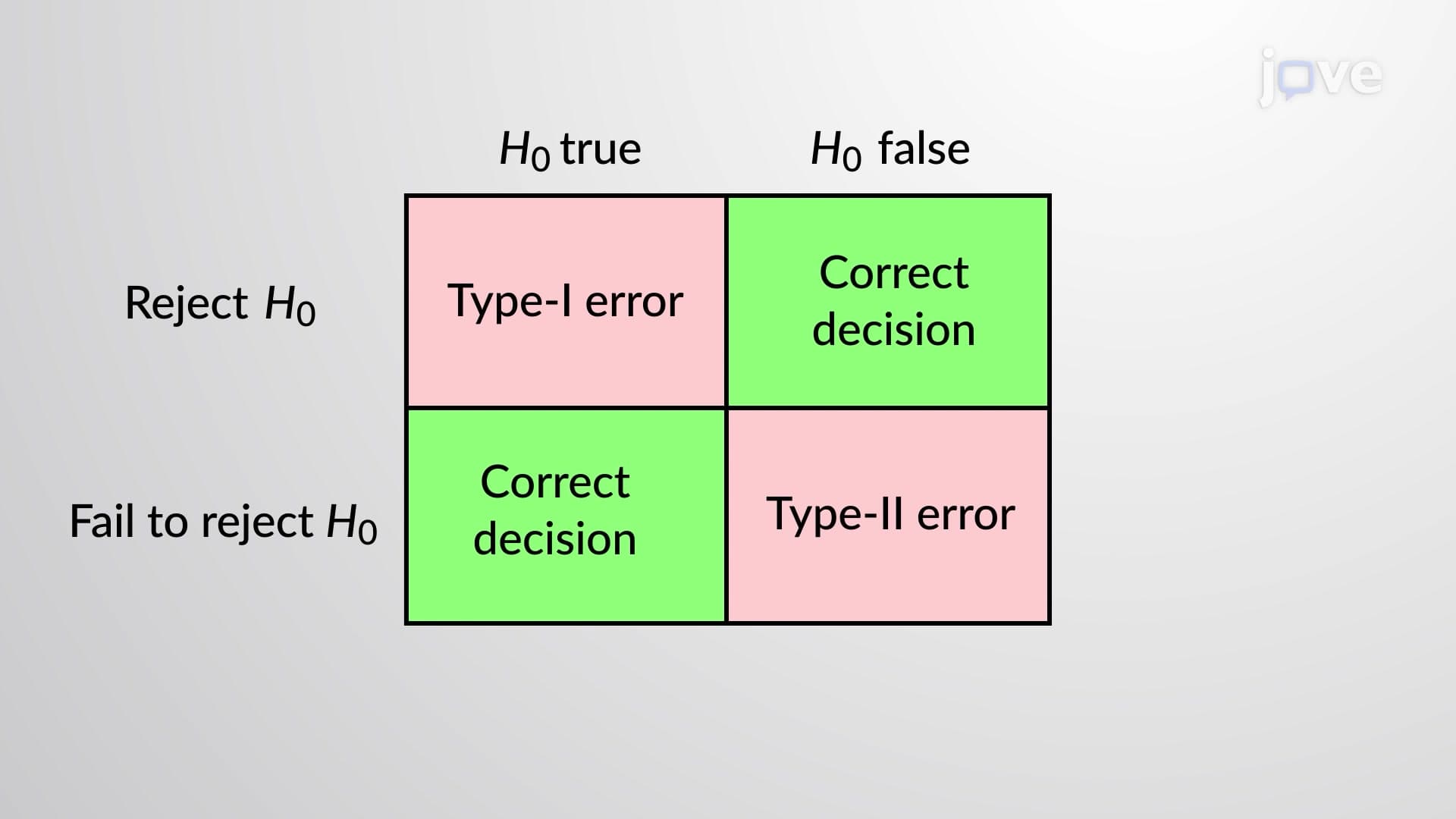
This concept directly links to Type I and Type II errors, statistical power, and confidence intervals in advanced courses. Understanding it now builds foundation knowledge for research methods, biostatistics, and evidence-based practice in fields like medicine, psychology, and public health.
Research scientists, medical professionals, data analysts, and policy makers all rely on proper hypothesis interpretation. Pharmaceutical researchers, epidemiologists, clinical psychologists, and environmental scientists regularly apply these principles when designing studies and interpreting results that influence public health and safety decisions.
Related Micro-courses


Related Subjects
 Physics 33 micro-courses›
 Math Fundamentals 11 micro-courses›