Loading subject page…

- Statistics
- Measures of Relative Standing
- Percentile
Micro-course: Measures of Relative Standing
77,400 views
Learn key concepts and earn your certificate.







Percentile

00:00
01:18
Video Summary: What Is Percentile
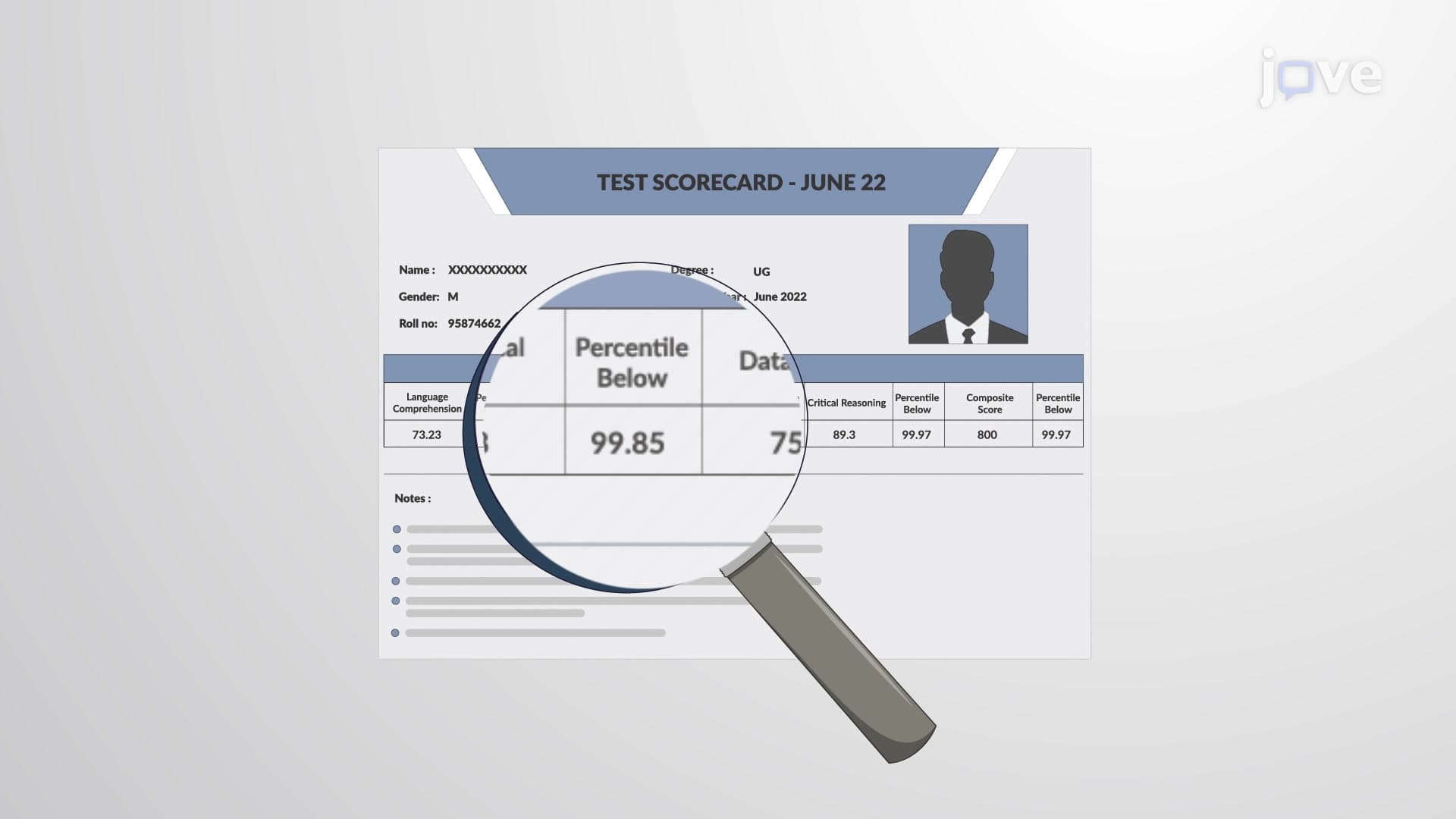
Did you know that when a student scores in the 90th percentile on the SAT, they didn't necessarily get 90% of questions correct? A percentile is a statistical measure that divides data into 100 equal parts, showing what percentage of values fall below a specific point. For example, if you score 1400 on the SAT and rank in the 95th percentile, it means 95% of test-takers scored lower than you. Understanding what is percentile helps students interpret standardized test scores, college admissions data, and academic rankings. Watch the full video on JoVE Coach to master this concept with expert-led visuals and step-by-step explanations.
- Understand what is percentile and how it divides data into 100 equal parts for statistical analysis
- Identify the relationship between percentiles and data distribution in ascending order
- Analyze how percentiles differ from raw scores and percentage scores in academic contexts
- Compare individual performance against larger populations using percentile rankings
- Evaluate percentile calculations using the standard formula and real dataset examples
- Apply percentile concepts to interpret SAT, ACT, and AP exam score reports accurately
- Recognize common misconceptions about percentiles versus percentage scores
- Explore practical applications of percentiles in college admissions and standardized testing
Understanding What is Percentile: Core Definition
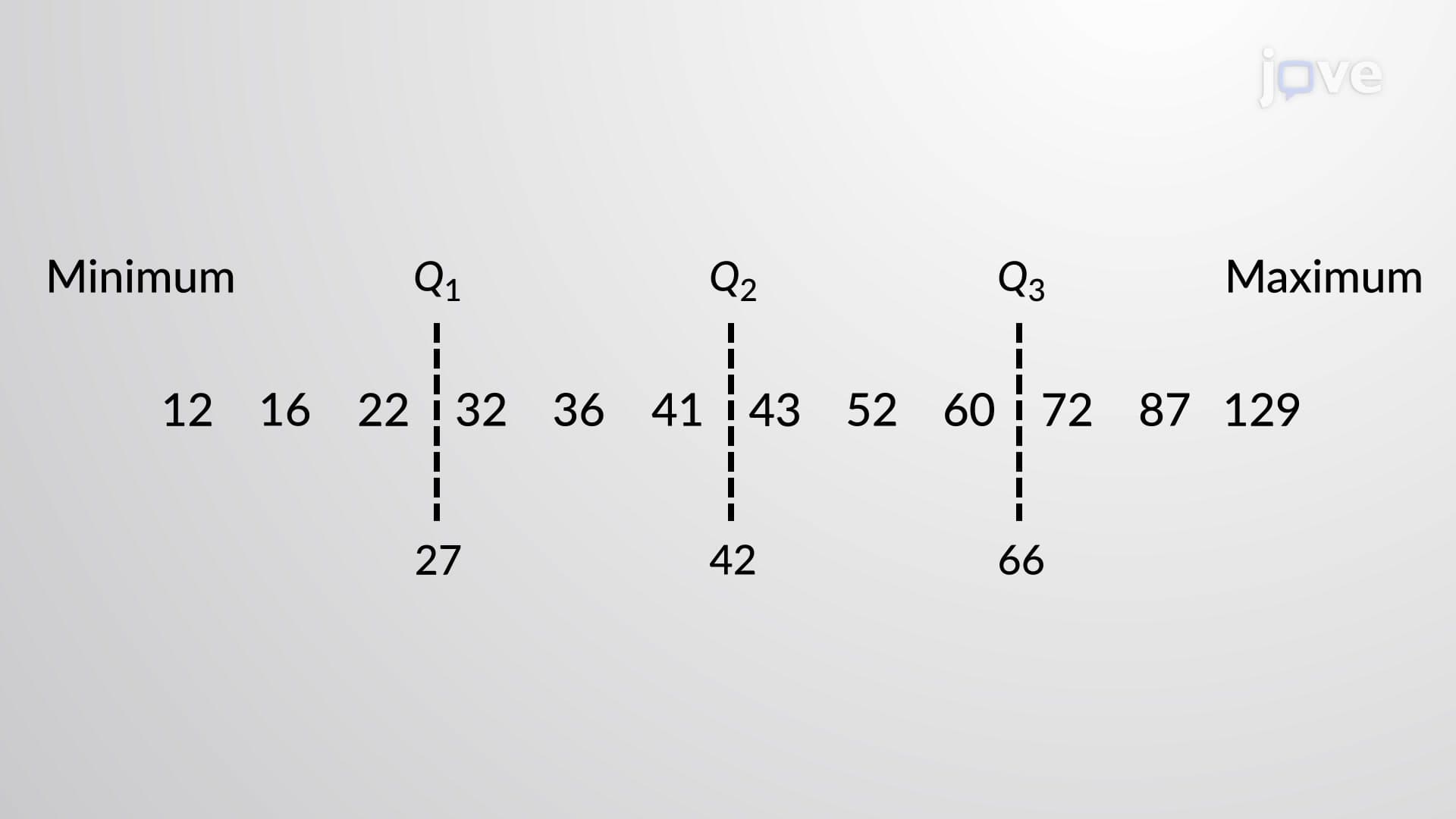
A percentile represents a value below which a certain percentage of data points fall when arranged in ascending order. This statistical concept transforms raw data into meaningful comparisons by dividing any dataset into 100 equal segments. Unlike percentage scores that measure correctness, percentiles measure relative position within a group.
The 50th percentile, also called the median, splits data exactly in half. If 1,000 students take the SAT, the student at the 50th percentile scored higher than 500 students and lower than 500 students. This positional interpretation makes percentiles invaluable for standardized testing, where absolute scores matter less than relative performance.
Percentile Calculation and Formula Application
The percentile formula provides a systematic approach: Percentile = (Number of values below target value / Total number of values) × 100. Consider a chemistry class where 25 students take a midterm exam. If Sarah scores 85 and 18 students scored below her, her percentile rank equals (18/25) × 100 = 72nd percentile.
This calculation process appears frequently on AP Statistics exams and college-level statistics courses. Students must arrange data in ascending order first, then apply the formula systematically. Many graphing calculators and statistical software packages automate these calculations, but understanding the underlying process remains crucial for exam success.
Real-World Applications in US Education
American standardized tests extensively use percentile reporting. The SAT provides both raw scores (400-1600) and percentile ranks, helping colleges evaluate applicants fairly across different test dates. A 1300 SAT score might represent the 87th percentile, meaning the student outperformed 87% of test-takers nationally.
Medical school admission tests like the MCAT report percentile ranks alongside scaled scores. A 515 MCAT score in the 92nd percentile carries more meaning than the raw number alone. Similarly, nursing school entrance exams (HESI A2, TEAS) use percentile rankings to compare candidates across different testing periods and locations.
Common Misconceptions and Exam Strategies
Students frequently confuse percentiles with percentage scores. A 75th percentile score doesn't mean answering 75% of questions correctly-it means outperforming 75% of test-takers. This distinction proves critical for AP Statistics free-response questions and college statistics midterms.
When preparing for standardized tests, focus on percentile targets rather than raw score goals. Research shows that understanding your percentile objectives helps create more effective study strategies and realistic expectations for college admissions processes.
Frequently Asked Questions
A percentile shows what percentage of people scored below you in a group. If you're in the 80th percentile on the SAT, you scored higher than 80% of all test-takers. It's a way to compare your performance to everyone else who took the same test.
Percentile definition in testing contexts means your rank compared to other test-takers, not your raw score percentage. A 90th percentile SAT score means you outperformed 90% of students, regardless of how many questions you answered correctly. This ranking system helps colleges compare students fairly.
AP Statistics frequently tests percentile calculations and interpretations in both multiple-choice and free-response sections. Students must calculate percentiles using formulas, interpret percentile graphs, and explain what percentile rankings mean. These concepts appear in approximately 10-15% of AP Statistics exam questions.
Yes, MCAT reports include both scaled scores (472-528) and percentile ranks updated annually. Medical schools consider both metrics, but percentiles help compare applicants across different test years. A 515 MCAT score might represent different percentiles depending on the testing year's difficulty and candidate pool.
Healthcare professionals use percentiles for growth charts, blood pressure readings, and diagnostic test results. For example, pediatricians plot children's height and weight on percentile charts to assess normal development patterns. A child in the 25th percentile for height is taller than 25% of same-aged peers.
Not at all! Percentiles build on basic fraction and percentage concepts you already know. Start with familiar examples like test scores or sports rankings. Once you understand that percentiles show relative position rather than absolute performance, the concept becomes much clearer and more intuitive.
Practice with real datasets from your textbook and create your own examples using class test scores. Focus on the calculation formula and practice interpreting percentile graphs. Make flashcards distinguishing percentiles from percentages, and work through SAT or AP practice problems regularly.
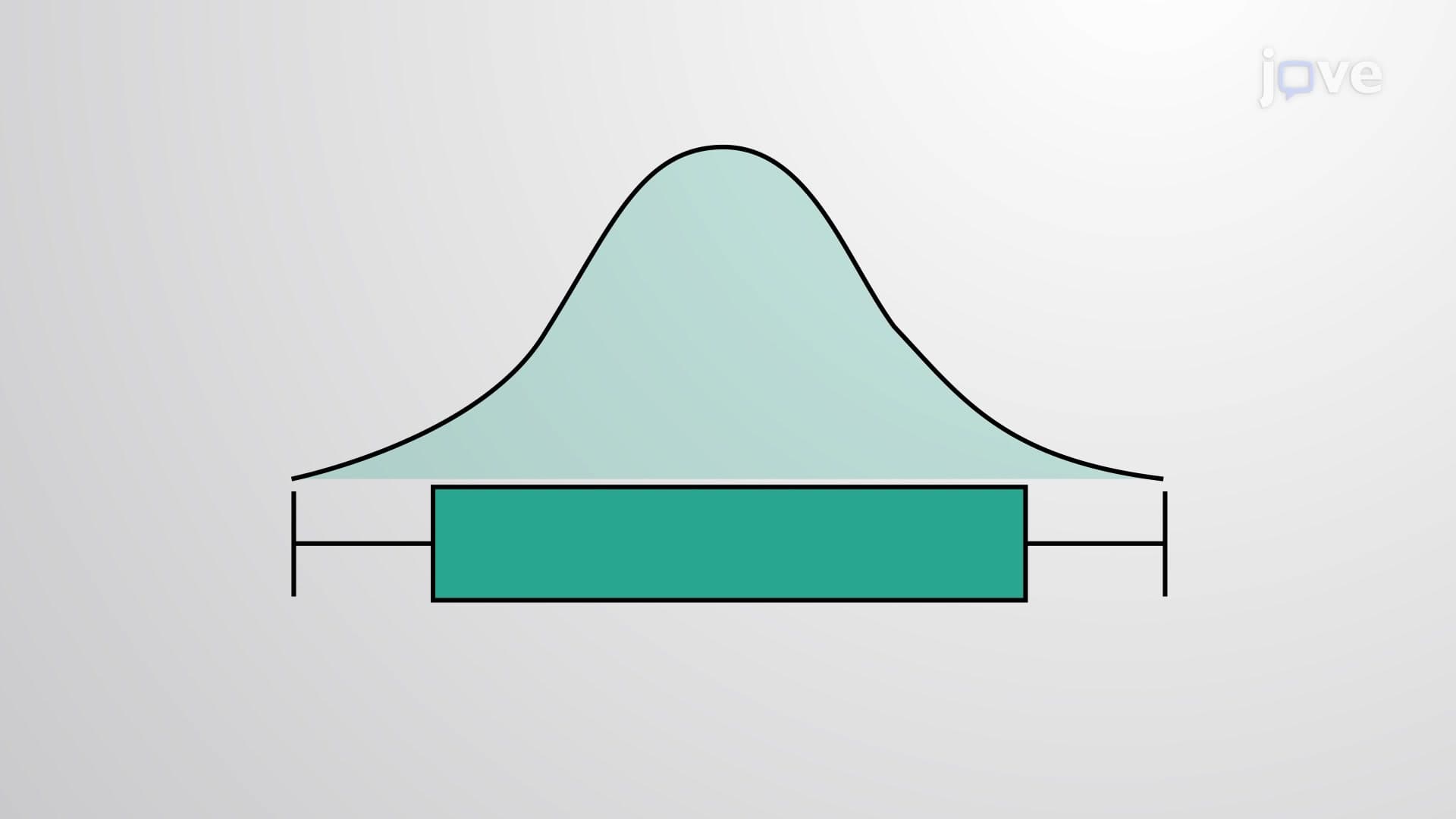
After percentiles, explore quartiles, deciles, and box plots for deeper data analysis skills. Study normal distribution curves, z-scores, and standard deviation to understand how percentiles relate to bell-shaped data patterns. These concepts frequently appear together on standardized tests and college statistics courses.
Related Micro-courses