Loading video…


 12 Concepts
 6K views

Video Summary: What Is Supply
Ever wonder why iPhone prices surge when new models launch, yet Android phones flood the market at every price point? Supply represents the fundamental economic force driving these patterns, it's the quantity of goods producers willingly offer at specific prices. Take Tesla's strategic production decisions: when electric vehicle demand spiked in 2021, Tesla ramped up manufacturing at its Fremont, California facility, demonstrating how companies adjust supply based on market conditions and profitability. Watch the full video on JoVE Coach to master this concept with expert-led visuals and step-by-step explanations.
What is supply forms the backbone of market economics, representing producers' behavior in response to market signals. Unlike simple inventory or stock, supply captures the dynamic relationship between price and quantity that businesses are prepared to offer. This concept appears frequently in AP Economics exams and college microeconomics courses, where students must distinguish between changes in quantity supplied (movement along the curve) and changes in supply (curve shifts).
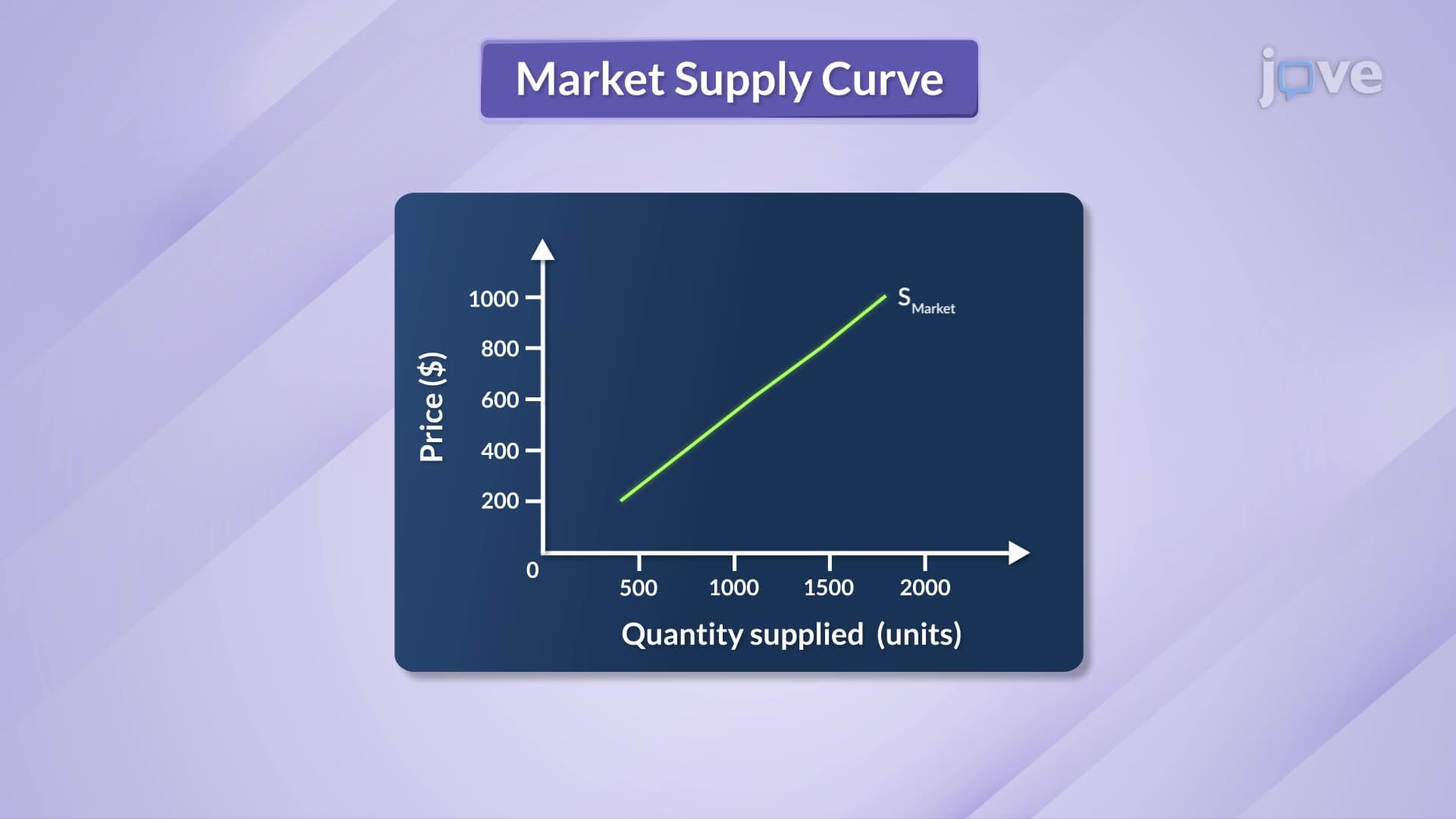
The law of supply establishes a positive relationship between price and quantity supplied. When smartphone manufacturers like Apple see higher market prices, they increase production to maximize profits. This principle explains why luxury car manufacturers like Cadillac and Lincoln maintain limited production runs, higher prices justify expanded supply. For SAT Subject Test preparation, remember that this relationship assumes other factors remain constant (ceteris paribus).
Technological advancement serves as a crucial supply shifter in modern markets. Amazon's implementation of robotic fulfillment centers exemplifies how technology increases supply capacity while reducing costs. Similarly, advancements in hydraulic fracturing (fracking) revolutionized US oil supply, making previously uneconomical reserves profitable. College economics students often encounter these examples in midterm examinations when analyzing supply curve shifts.
The number of producers significantly impacts total market supply. The craft brewery explosion in states like Colorado and California demonstrates how new market entrants increase overall supply. Conversely, industry consolidation, such as airline mergers, typically reduces supply flexibility. Understanding these dynamics proves essential for AP Microeconomics students tackling free-response questions about market competition and supply analysis.
Modern supply depends heavily on complex input relationships. The 2021 semiconductor shortage highlighted how input price fluctuations affect supply across industries, from automotive manufacturers like Ford and GM to electronics companies. Production costs, including labor wages, raw material prices, and regulatory compliance expenses, directly influence supply decisions. These real-world disruptions frequently appear in college economics case studies and standardized test scenarios.
Related Micro-courses