Loading video…


 14 Concepts
 53.7K views

Video Summary: Weak Base Strong Acid Titration Theory and Calculations
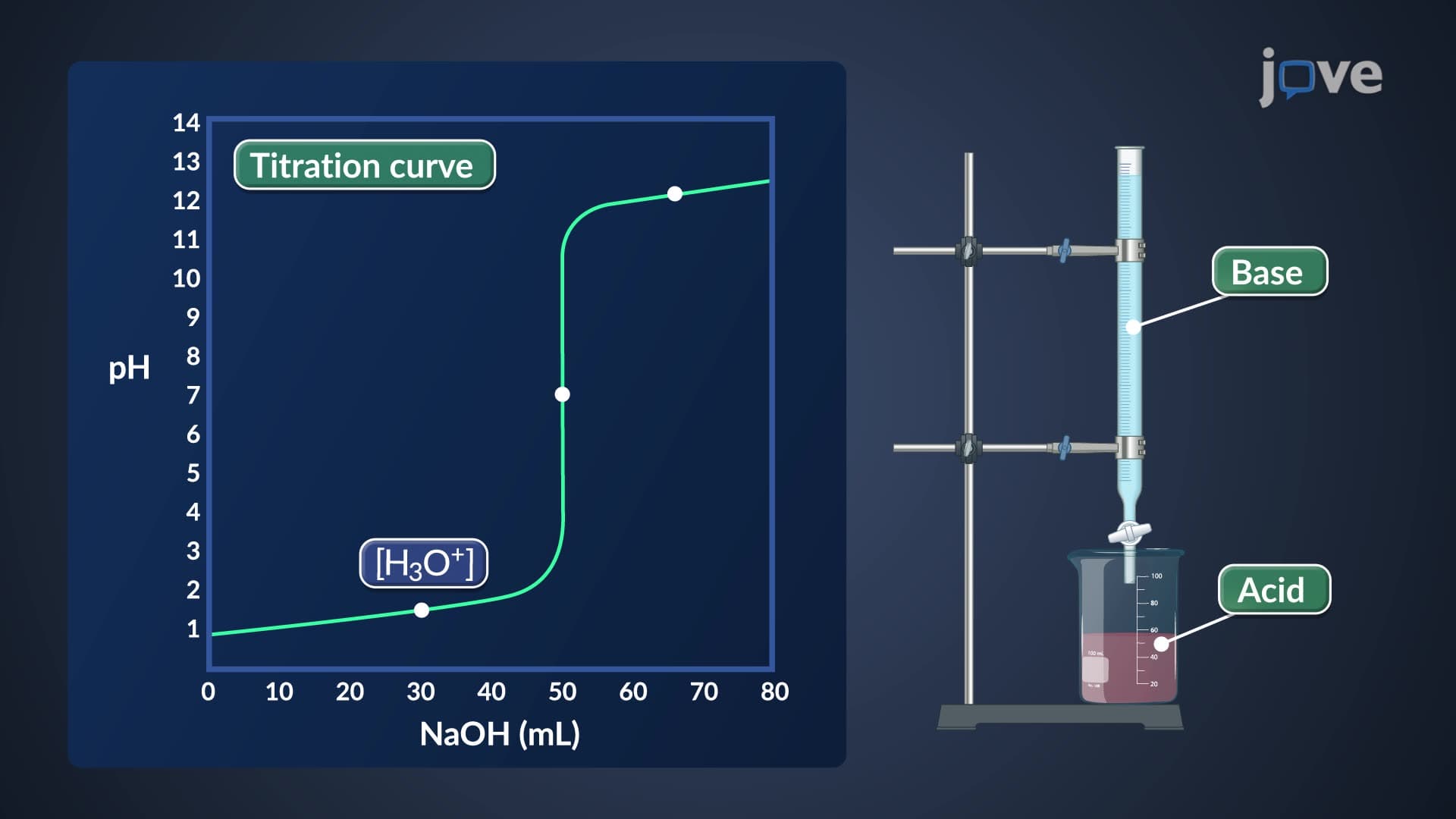
Ever wondered why household ammonia cleaners neutralize acidic stains so effectively? Weak base strong acid titration reveals the fascinating pH changes when bases like ammonia react with strong acids like hydrochloric acid. In pharmaceutical manufacturing across the United States, companies use ammonia-HCl titrations to determine precise concentrations of active ingredients in medications. This weak base strong acid titration process creates a characteristic curve showing dramatic pH shifts at the equivalence point. Watch the full video on JoVE Coach to master this concept with expert-led visuals and step-by-step explanations.
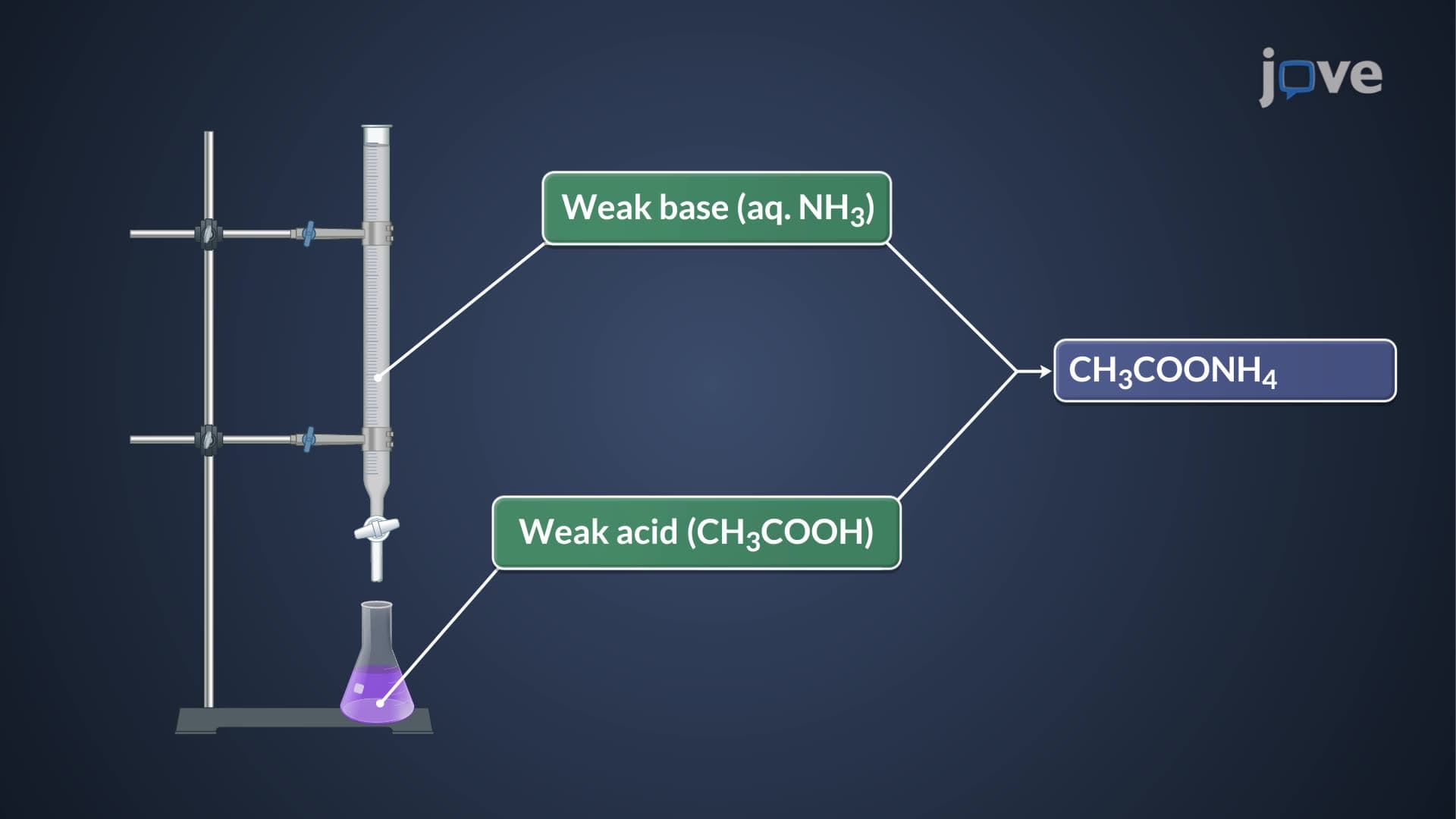
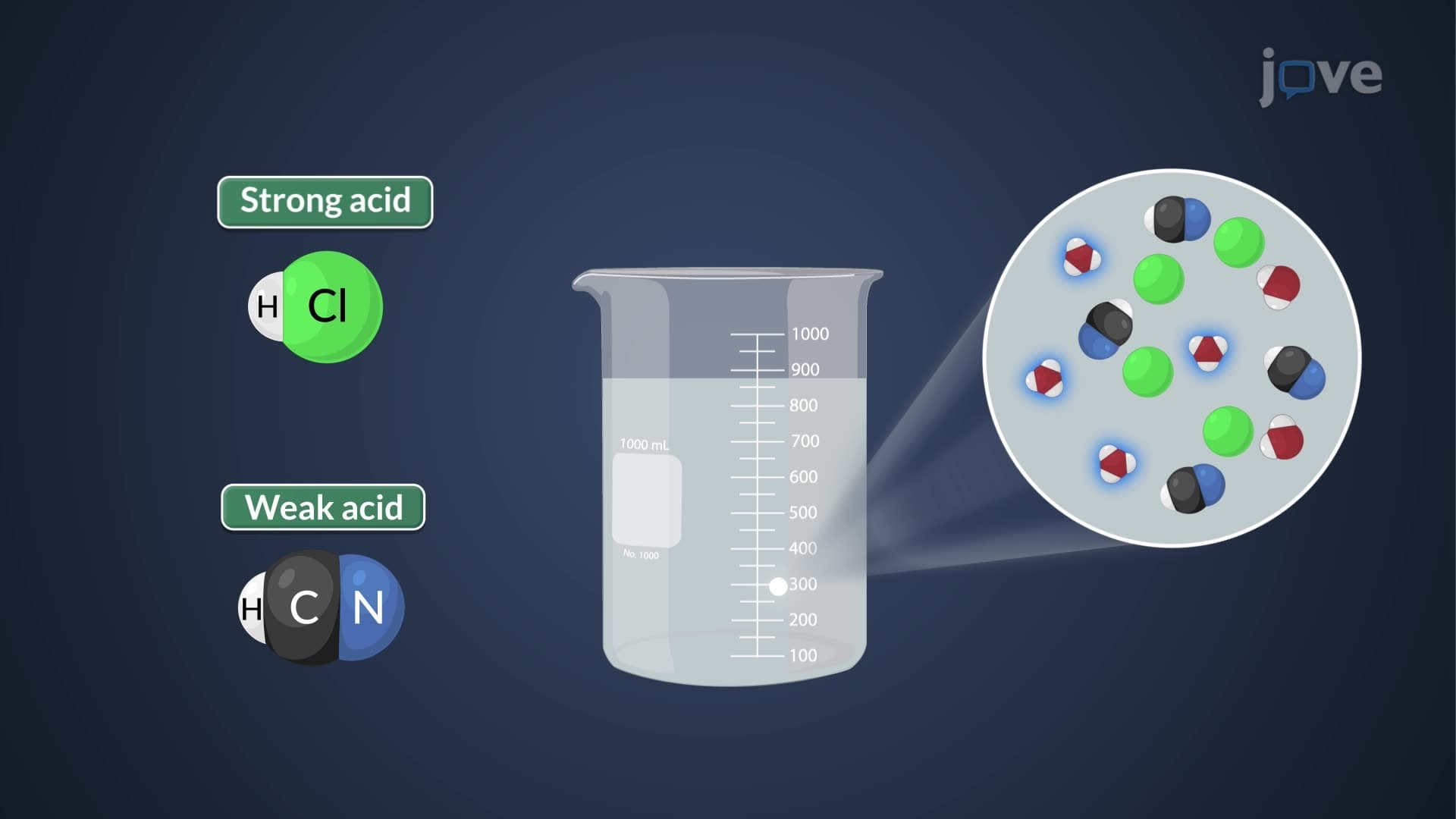
Weak base strong acid titration represents one of the four primary types of acid-base titrations studied in advanced chemistry courses. Unlike strong acid-strong base reactions, this process involves a weak base (incomplete ionization) reacting with a strong acid (complete ionization), creating a unique pH curve with distinct characteristics. The most commonly studied example involves ammonia (NH₃) titrated with hydrochloric acid (HCl), a reaction frequently encountered in AP Chemistry and college-level analytical chemistry courses.
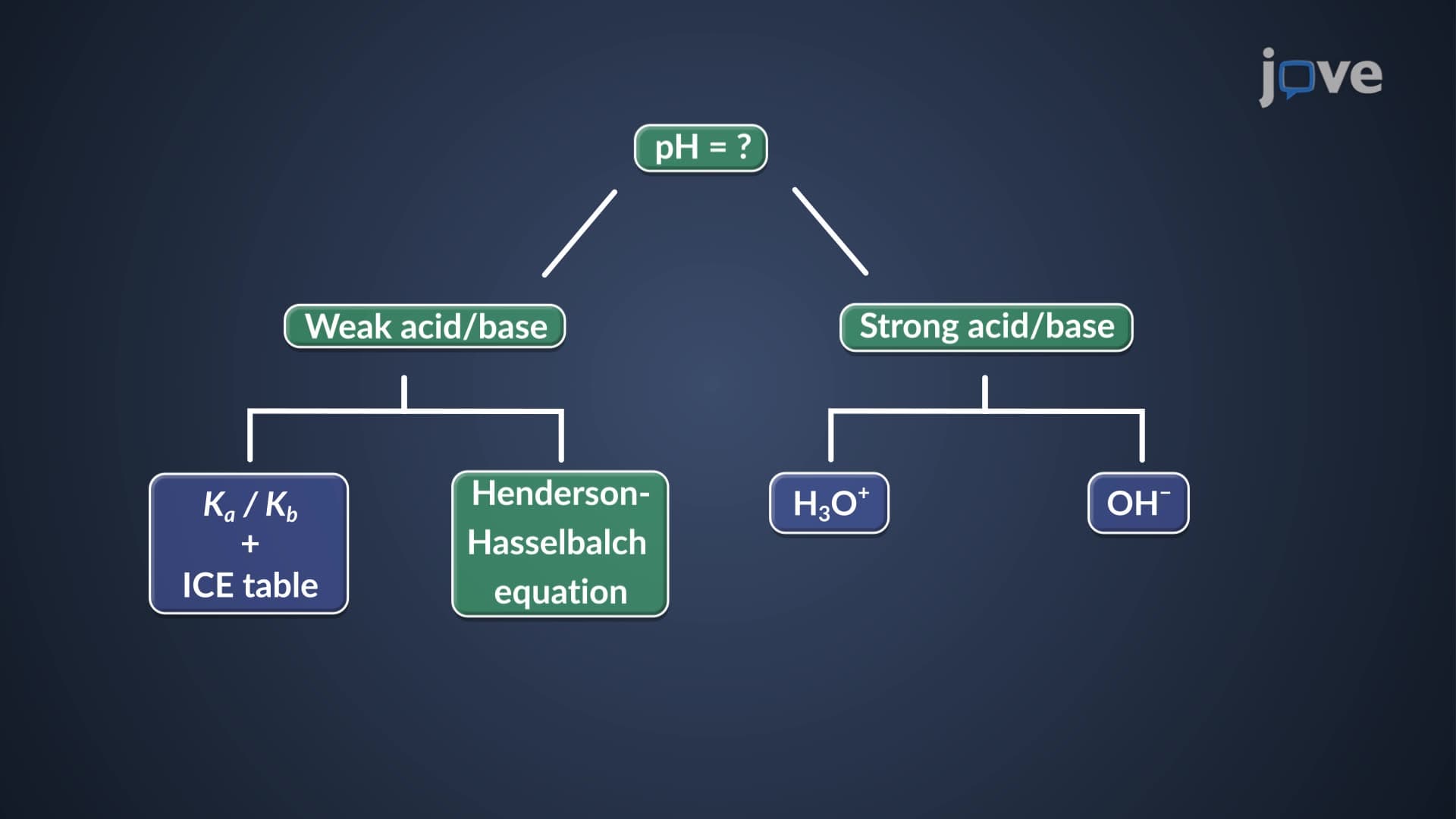
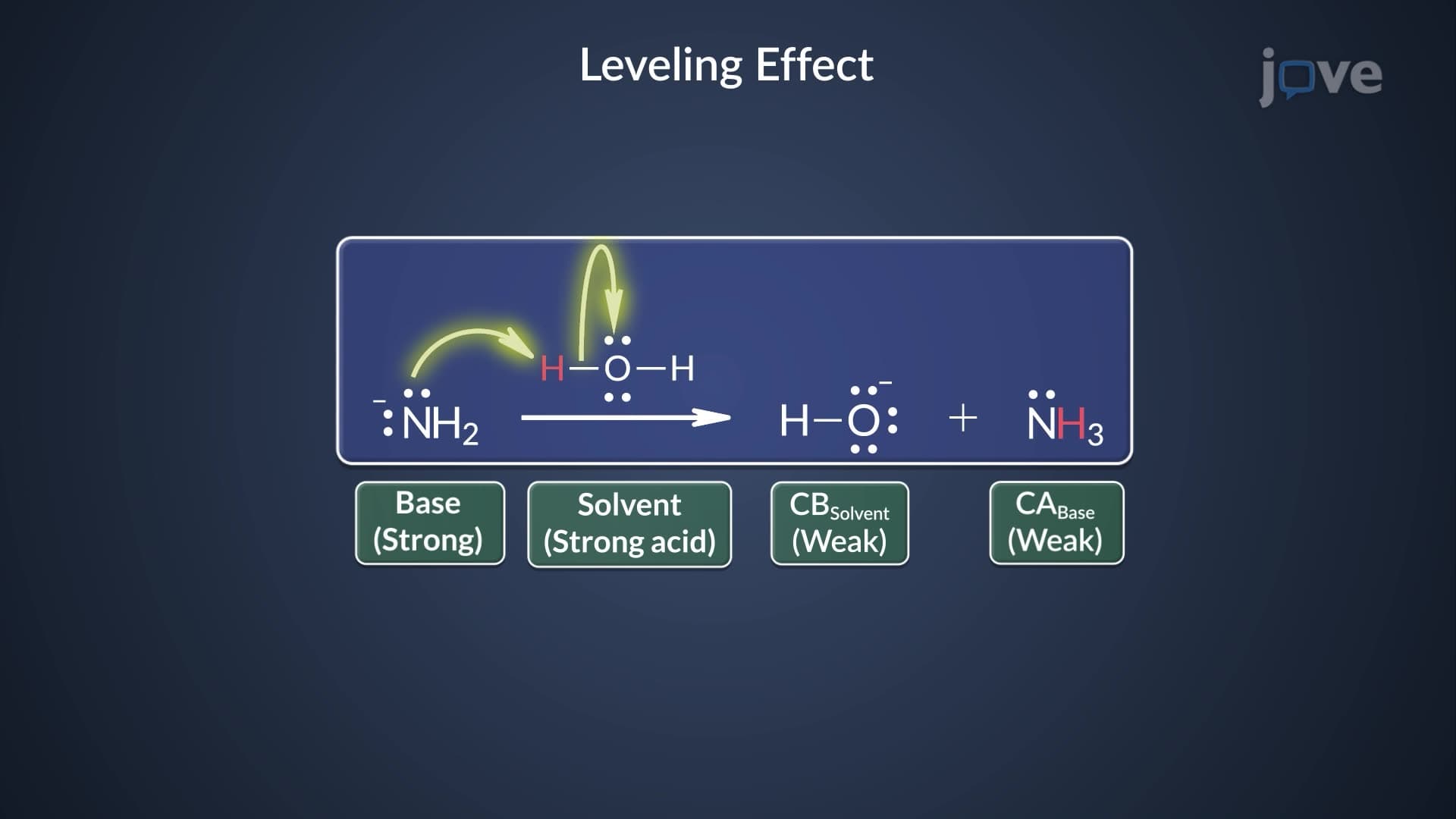
The titration begins with a basic solution, typically around pH 11 for 0.1 M ammonia. This high pH results from ammonia's partial ionization: NH₃ + H₂O ⇌ NH₄⁺ + OH⁻. Students calculate this initial pH using ICE tables and the base dissociation constant (Kb = 1.8 × 10⁻⁵ for ammonia). As strong acid is added, the pH decreases gradually, forming a buffer system containing both the weak base (NH₃) and its conjugate acid (NH₄⁺).
The buffer region represents the most mathematically intensive portion for students preparing for standardized exams. When equal concentrations of ammonia and ammonium ions exist, the Henderson-Hasselbalch equation simplifies to pH = pKa, where pKa = 14 - pKb = 9.25 for ammonia. This relationship frequently appears on MCAT chemistry sections and college organic chemistry exams, requiring students to interconvert between Ka and Kb values.
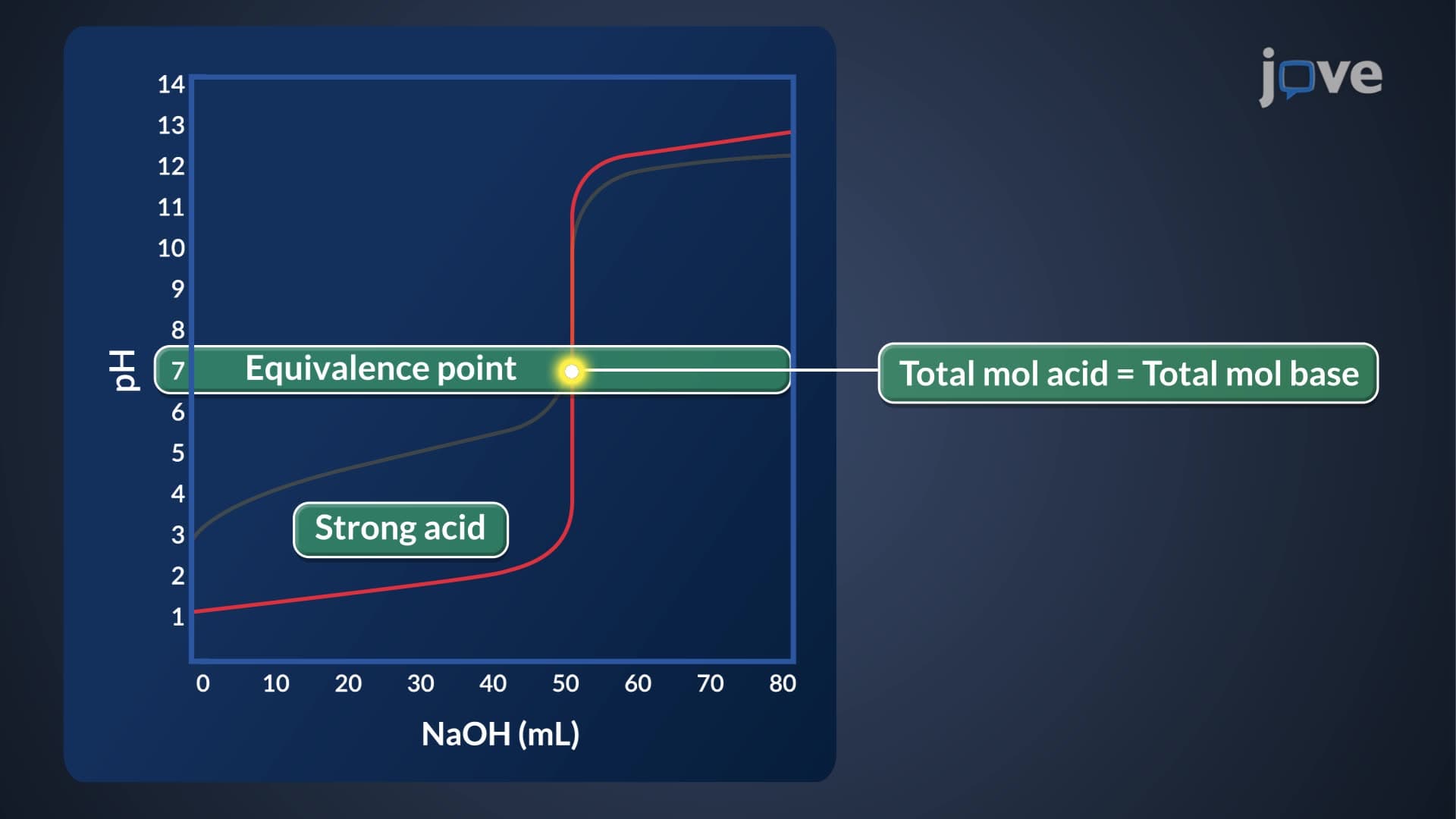
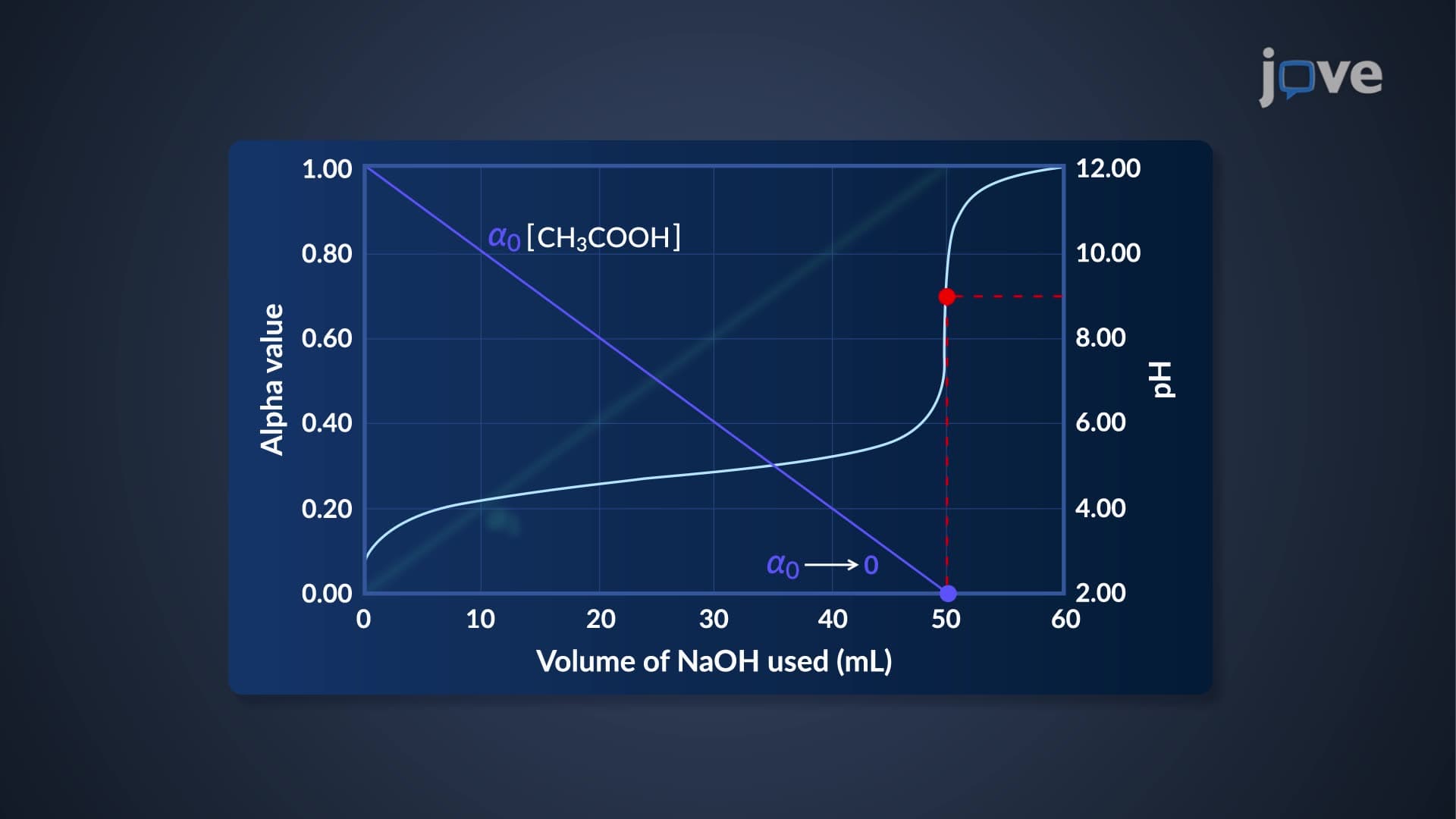
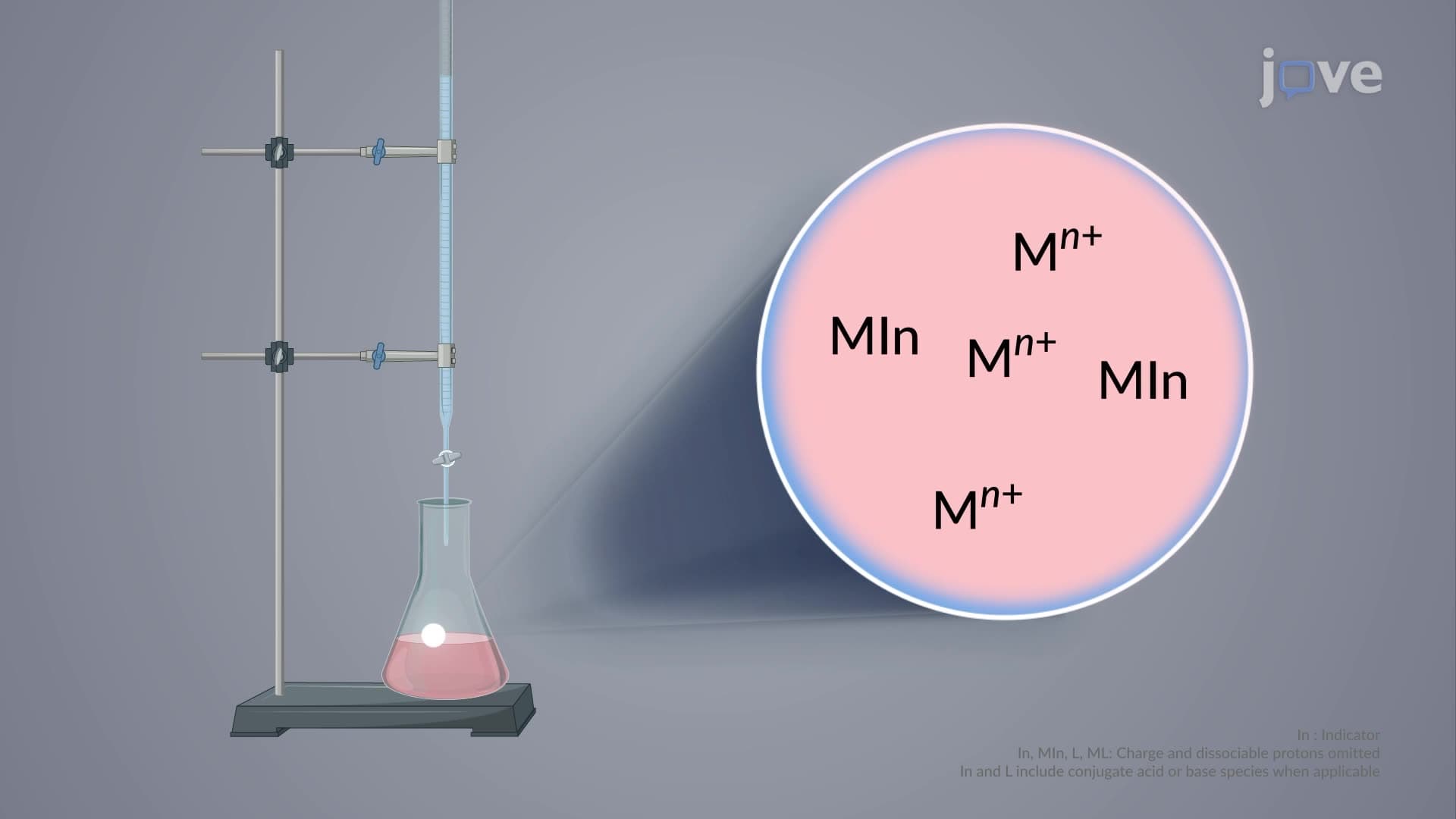
The equivalence point occurs when all weak base molecules have been neutralized, creating a solution containing only the conjugate acid salt. Unlike strong acid-strong base titrations (pH = 7), weak base-strong acid equivalence points are acidic (typically pH 4-6) due to salt hydrolysis. The ammonium ion (NH₄⁺) acts as a weak acid, releasing protons and lowering solution pH. This acidic equivalence point necessitates acidic-range indicators like methyl red (transition range: pH 4.2-6.3), making indicator selection crucial for accurate endpoint detection in laboratory settings and pharmaceutical quality control applications.
Related Micro-courses