Loading video…


 9 Concepts
 1.5M views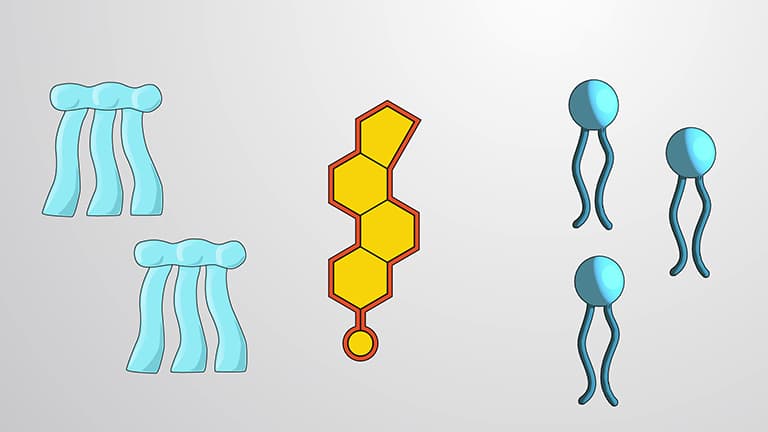

Video Summary: What are Lipids Structure Types and Biological Functions
Why does oil separate from water in salad dressing, yet butter melts smoothly into hot pancakes? The answer lies in understanding lipids structure classification functions - the diverse family of biological molecules that includes everything from the fats in your breakfast to the cholesterol measured in routine blood tests at American hospitals. These hydrophobic molecules serve crucial roles in cell membranes, energy storage, and hormone production throughout the human body. Watch the full video on JoVE Coach to master this concept with expert-led visuals and step-by-step explanations.
Lipids represent one of the four major macromolecule groups essential to life, distinguished by their predominantly hydrophobic character due to extensive hydrocarbon regions. Unlike proteins or carbohydrates, lipids share this water-avoiding property rather than a common structural framework, making their classification unique among biological molecules.
Triglycerides (Fats) constitute the most abundant lipids in the American diet and human energy storage. Each triglyceride molecule consists of glycerol (a three-carbon alcohol) bonded to three fatty acid chains. The saturation level - determined by carbon-carbon double bonds - directly impacts physical properties. Saturated fats like those in butter remain solid at room temperature, while unsaturated fats in olive oil stay liquid. This principle explains FDA nutrition labeling requirements on packaged foods throughout the United States.
Phospholipids modify the basic triglyceride structure by replacing one fatty acid with a phosphate group, creating amphiphilic molecules with hydrophilic "heads" and hydrophobic "tails." This dual nature enables spontaneous bilayer formation in aqueous environments, establishing the fundamental structure of all cellular membranes. American medical students studying for the MCAT frequently encounter questions about phospholipid orientation in cell membranes.
Steroids feature a distinctive four-ring carbon skeleton, exemplified by cholesterol - a molecule measured in routine lipid panels at American hospitals. Despite lacking glycerol or obvious fatty acid chains, steroids qualify as lipids due to their hydrophobic nature and biological roles in hormone production and membrane fluidity regulation.
These structural differences translate into specialized functions. Triglycerides provide concentrated energy storage (9 calories per gram versus 4 for carbohydrates), phospholipids create selective barriers enabling cellular compartmentalization, and steroids serve as signaling molecules and membrane components. Understanding these structure-function relationships proves essential for success in AP Biology exams, where students must explain how molecular structure determines biological function.
The clinical relevance extends to American healthcare, where lipid profiles assess cardiovascular risk through cholesterol and triglyceride measurements, directly connecting biochemical structure to medical practice.
Related Micro-courses