Loading video…


 10 Concepts
 457.4K views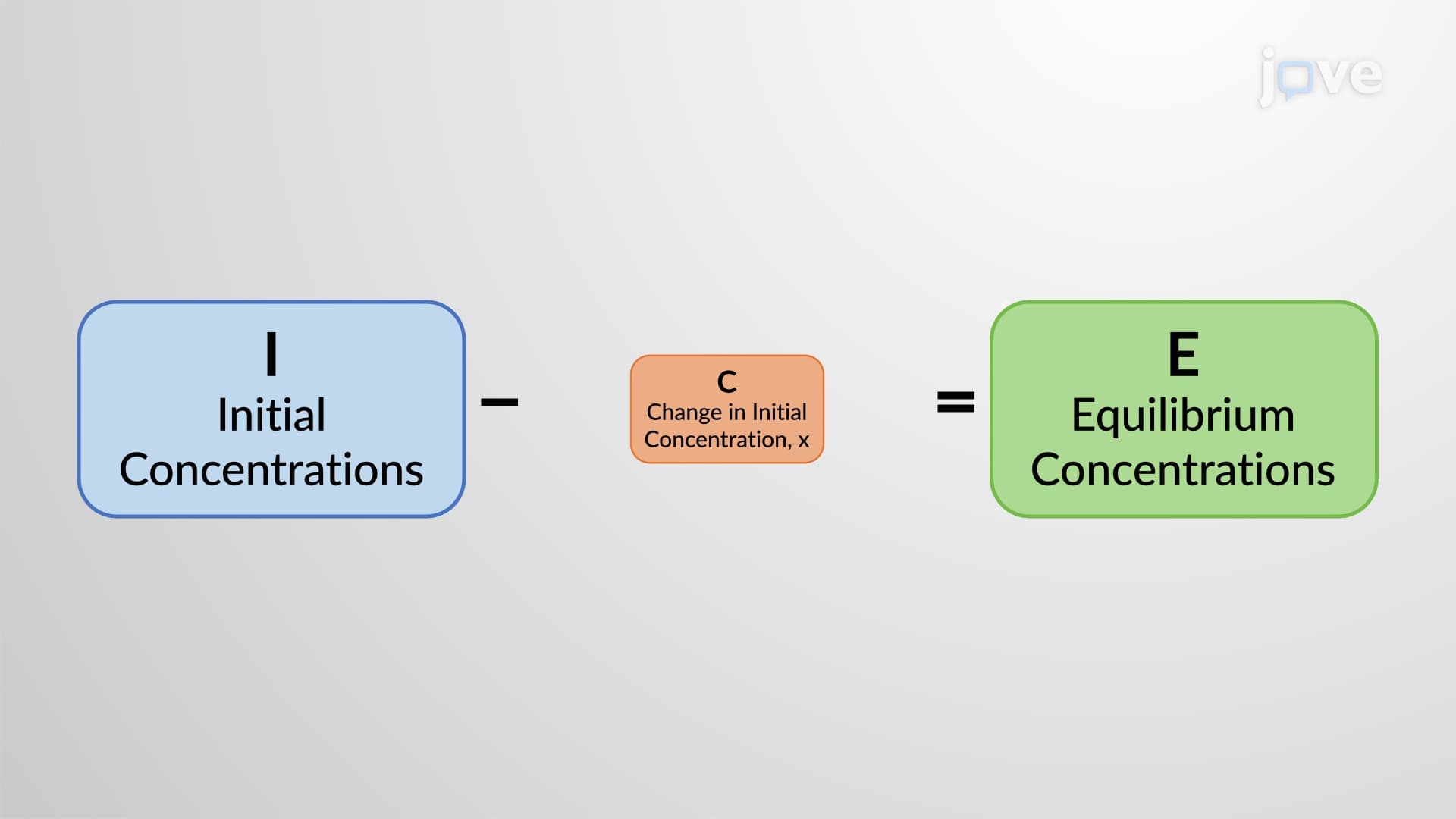

Video Summary: What Is the Small X Assumption
Ever wondered how chemists avoid complex quadratic equations when calculating equilibrium concentrations? The small x assumption is a powerful mathematical shortcut that simplifies equilibrium problems when reaction conditions are just right. For example, when pharmaceutical companies at Pfizer calculate drug stability in solution, they often use this approximation to streamline their quality control processes. This concept, known as What is The Small X Assumption, transforms intimidating equilibrium calculations into manageable arithmetic. Watch the full video on JoVE Coach to master this concept with expert-led visuals and step-by-step explanations.
The small x assumption represents one of chemistry's most practical mathematical shortcuts, allowing students and professionals to bypass complex quadratic equations in equilibrium calculations. This approximation method applies specifically when two critical conditions align: the equilibrium constant (K) is relatively small, and initial reactant concentrations are sufficiently large. Under these circumstances, the extent of reaction remains minimal, meaning the change in concentration (represented as "x") becomes negligible compared to starting values.
The assumption's validity hinges on rigorous mathematical criteria. When K values fall below 10^-3 and initial concentrations exceed 0.1 M, the reaction typically converts less than 5% of reactants to products. This 5% threshold serves as the universal validation standard-if the calculated x value represents less than 5% of any initial concentration, the approximation holds true. Students preparing for AP Chemistry or college-level physical chemistry courses encounter this concept frequently, as it appears in approximately 30% of equilibrium problems on standardized exams.
American pharmaceutical companies routinely employ this assumption when analyzing drug degradation kinetics. At Johnson & Johnson's research facilities, chemists use small x approximations to predict medication shelf life without solving complex equations. Similarly, environmental engineers at the EPA apply this method when modeling pollutant equilibrium in water treatment systems. The assumption proves particularly valuable in industrial quality control, where rapid calculations enable real-time process adjustments.
For MCAT preparation and college chemistry midterms, mastering this concept provides significant time advantages. Students can complete equilibrium problems 50% faster when correctly applying the small x assumption. The key strategy involves immediate recognition of favorable conditions: scan for small K values (typically scientific notation with negative exponents) and relatively large initial concentrations. Practice problems should emphasize the validation step-always verify that x remains under 5% of initial values. This verification step frequently appears as a separate question component on AP Chemistry exams, making it essential for comprehensive understanding.
Related Micro-courses