Loading video…


 10 Concepts
 457.4K views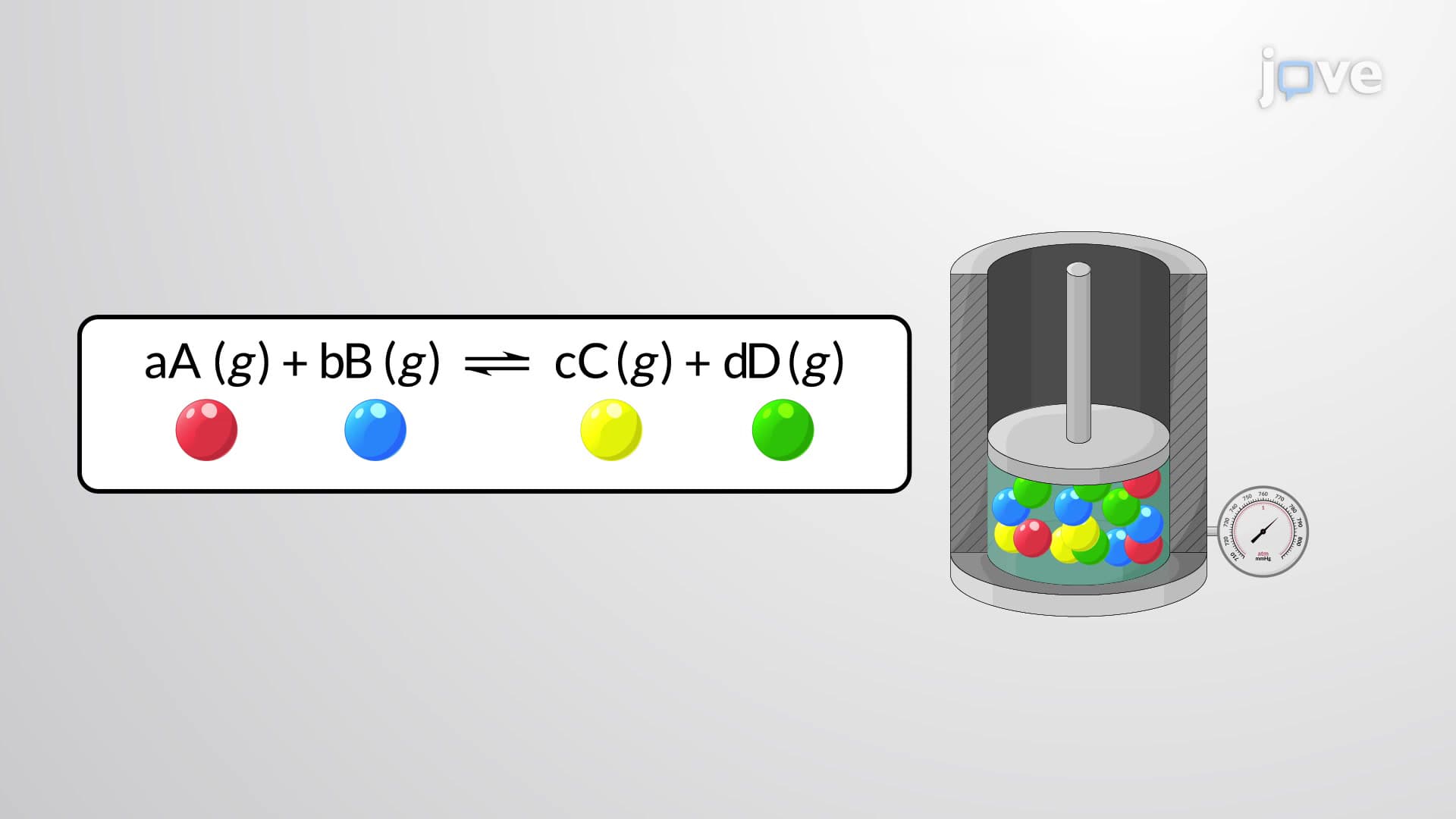

Video Summary: Le Chateliers Principle Changing Explained
Ever wonder why airbags inflate instantly during car crashes? Le Chatelier's principle changing governs how chemical equilibria respond when conditions shift-just like the rapid gas expansion that saves lives in automotive safety systems across American highways. Le Chatelier's Principle Changing Explained reveals how pressure and volume changes drive equilibrium shifts in predictable directions. Watch the full video on JoVE Coach to master this concept with expert-led visuals and step-by-step explanations.
Le Chatelier's Principle Changing Explained centers on how equilibrium systems respond to pressure and volume stress. When external forces disturb a chemical equilibrium, the system automatically shifts to minimize that disturbance-a fundamental concept tested extensively on AP Chemistry exams and college general chemistry courses.
The principle operates through the inverse relationship between gas volume and pressure. As volume decreases, pressure increases proportionally, creating stress that the equilibrium must relieve. The system responds by shifting toward the side with fewer gas molecules, effectively reducing pressure and restoring balance.
The ideal gas law (PV = nRT) reveals that pressure directly correlates with the number of gas moles present. This relationship becomes crucial for predicting equilibrium shifts. Consider the industrial production of ammonia via the Haber process: N₂ + 3H₂ ⇌ 2NH₃. Four moles of reactant gases produce only two moles of ammonia product.
When manufacturers increase pressure in Haber process reactors, equilibrium shifts right toward ammonia formation-the side with fewer gas molecules. This pressure manipulation maximizes ammonia yield, demonstrating how Le Chatelier's principle guides real industrial applications across American chemical plants.
Volume manipulations create predictable equilibrium responses. In laboratory settings, using a gas-tight syringe to compress an equilibrium mixture increases pressure, shifting the reaction toward fewer gas particles. Conversely, expanding the volume decreases pressure, favoring the side with more gas molecules.
This concept appears frequently on MCAT practice tests, where students must predict how syringe compressions affect gas-phase equilibria. Understanding these volume-pressure relationships proves essential for success in medical school prerequisite courses.
Not all systems respond equally to pressure changes. When reactants and products contain equal gas moles-like the reaction I₂ + Cl₂ ⇌ 2ICl-pressure variations produce no net equilibrium shift. Additionally, adding inert gases at constant volume doesn't affect equilibrium position since partial pressures of reacting species remain unchanged.
These exceptions frequently challenge students on college chemistry midterms, emphasizing the importance of counting gas molecules on each side before applying Le Chatelier's principle.
Related Micro-courses