Loading video…


 6 Concepts
 1.3K views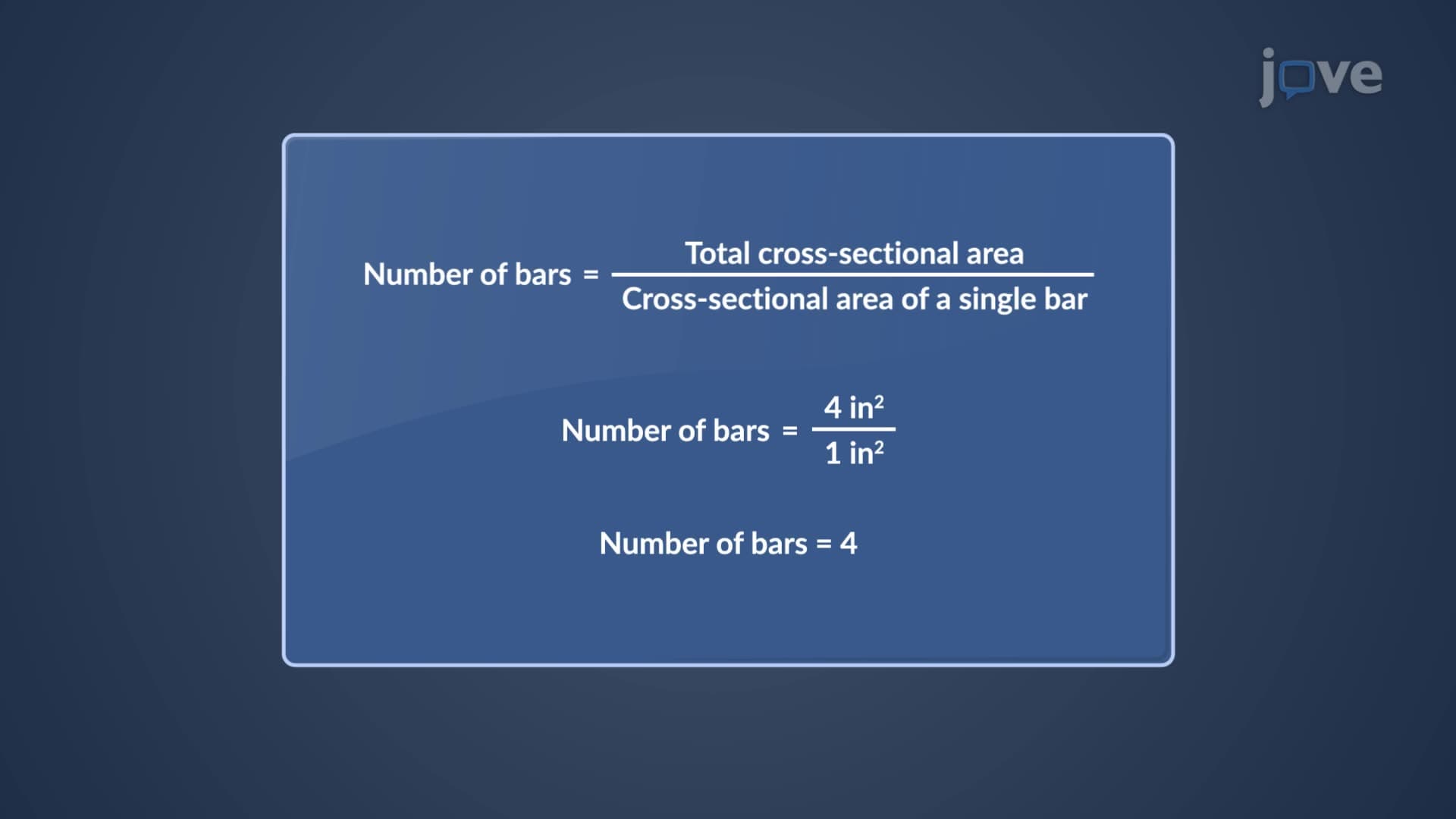

Video Summary: What Is Design Example Distributing Reinforcements
Did you know that a slight miscalculation in reinforcement distribution could compromise an entire bridge structure? Design example distributing reinforcements involves the critical engineering process of selecting and arranging steel bars within concrete structures to meet specific strength requirements. Consider the Brooklyn Bridge's concrete anchorages, where engineers must precisely calculate how many steel bars of available sizes will provide the required 4 square inches of reinforcement area. What is Design Example Distributing Reinforcements becomes essential when standard bar sizes don't perfectly match design needs, requiring engineers to round up and adjust quantities for safety. Watch the full video on JoVE Coach to master this concept with expert-led visuals and step-by-step explanations.
Design example distributing reinforcements represents a fundamental challenge in structural engineering where theoretical design requirements must be translated into practical construction solutions using available materials. This process requires engineers to bridge the gap between calculated reinforcement needs and the discrete sizes of steel bars available in the market. The concept becomes particularly crucial in major infrastructure projects like the rehabilitation of the Interstate 35W bridge in Minneapolis, where precise reinforcement distribution directly impacts public safety.
The core mathematical principle involves calculating the cross-sectional area of available reinforcement bars and determining how many bars are needed to meet or exceed design requirements. Using the standard area formula A = π × (d/2)², engineers must work with the constraint that bar quantities must be whole numbers. For instance, when design calculations call for 4 square inches of reinforcement area, and available bars provide 2.25 square inches each, the resulting 1.777 bars must be rounded to 2 bars, providing 4.5 square inches total. This 12.5% excess reinforcement represents a safety margin that engineers must account for in their designs.
American construction practices, governed by ACI (American Concrete Institute) standards, require engineers to frequently navigate these distribution challenges. Consider the construction of a typical parking garage in Chicago, where engineers might choose between #14 bars (1.693-inch diameter, 2.25 sq in area) or #11 bars (1.128-inch diameter, 1.00 sq in area). The choice affects not only material costs but also construction logistics, as smaller bars are easier to handle but require more pieces, potentially increasing labor costs. This decision-making process directly connects to concepts tested in the Fundamentals of Engineering (FE) exam and various state Professional Engineering licensing exams.
The distributing reinforcements process requires engineering judgment beyond mere mathematical calculation. Engineers must consider factors such as bar spacing requirements, concrete cover specifications, and constructability constraints. The American Association of State Highway and Transportation Officials (AASHTO) guidelines emphasize that reinforcement distribution affects not just strength but also crack control and serviceability. Students preparing for the AP Physics C: Mechanics exam or college-level statics courses will recognize how these principles connect to broader concepts of force distribution and structural equilibrium.
Related Micro-courses