Loading video…


 8 Concepts
 7.6K views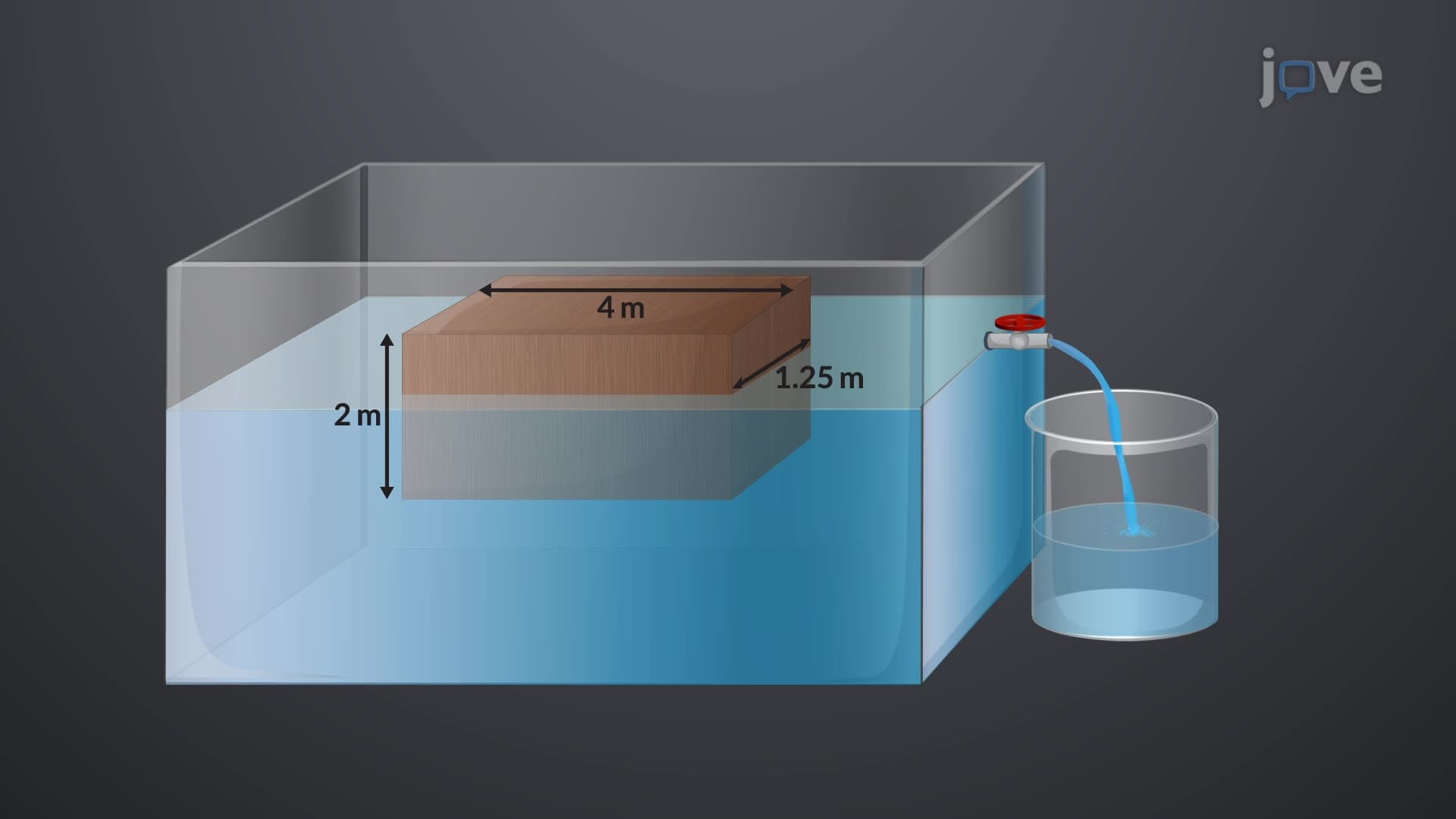

Video Summary: Design Example Application of Archimedes Principle Explained
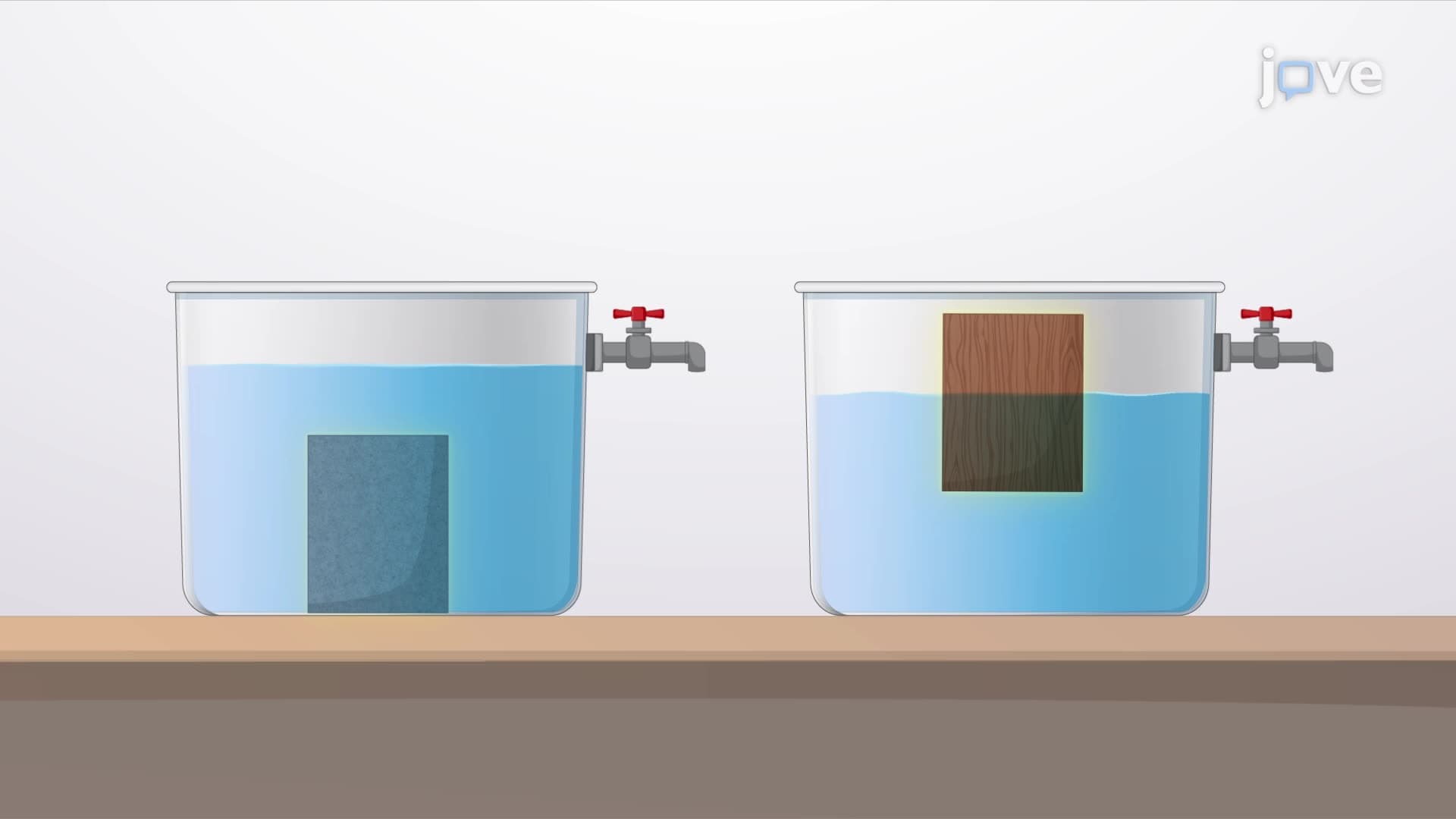
Why do massive aircraft carriers float while a small coin sinks? The answer lies in understanding bernoulli's equation for flow along a streamline and buoyancy principles that govern fluid mechanics. This Design Example Application of Archimedes Principle Explained demonstrates how engineers at Newport News Shipbuilding calculate displacement and stability for US Navy vessels. By analyzing a floating wooden block's submerged volume and center of buoyancy, students master the fundamental relationship between displaced fluid weight and floating object equilibrium. Watch the full video on JoVE Coach to master this concept with expert-led visuals and step-by-step explanations.
The Design Example Application of Archimedes Principle Explained builds upon fundamental fluid statics to solve real engineering problems. Archimedes' principle states that the buoyant force equals the weight of displaced fluid, forming the basis for all flotation calculations. This principle directly connects to bernoulli's equation for flow along a streamline when analyzing fluid motion around submerged objects.
When engineers design floating structures like oil rigs in the Gulf of Mexico, they must precisely calculate displacement volumes. The specific gravity ratio (0.64 for wood in our example) determines what fraction of the object submerges. For any floating object, the equilibrium condition requires:
Weight of object = Weight of displaced fluid
This relationship allows engineers to predict draft depths, stability characteristics, and load-carrying capacity. The bernoulli's equation for flow along a streamline concept becomes crucial when these floating objects encounter moving water or wind-induced currents.
The center of buoyancy represents the centroid of displaced fluid volume, located at the geometric center of the submerged portion. For our rectangular wooden block, this point sits at half the submerged depth. Understanding this location proves essential for stability analysis in naval architecture.
US Coast Guard regulations require detailed buoyancy calculations for all commercial vessels. Engineers use these principles to ensure ships remain stable during loading operations at ports like Long Beach, California, or Houston, Texas. The bernoulli's equation for flow along a streamline study guide often includes these stability problems because moving fluids create additional forces affecting floating objects.
This design example appears frequently in AP Physics C mechanics problems and college-level fluid mechanics courses. Students encounter similar problems on the MCAT, particularly in passages about biological systems like fish swim bladders or blood flow dynamics.
The bernoulli's equation for flow along a streamline explained becomes particularly relevant when analyzing how floating objects behave in flowing water. Engineers designing bridge piers in rivers like the Mississippi must consider both static buoyancy and dynamic fluid forces. Understanding these interconnected principles prepares students for advanced coursework in aerospace engineering, where aircraft design involves both buoyancy principles (for lighter-than-air vehicles) and Bernoulli effects for wing lift generation.
Related Micro-courses