Loading video…


 8 Concepts
 7.6K views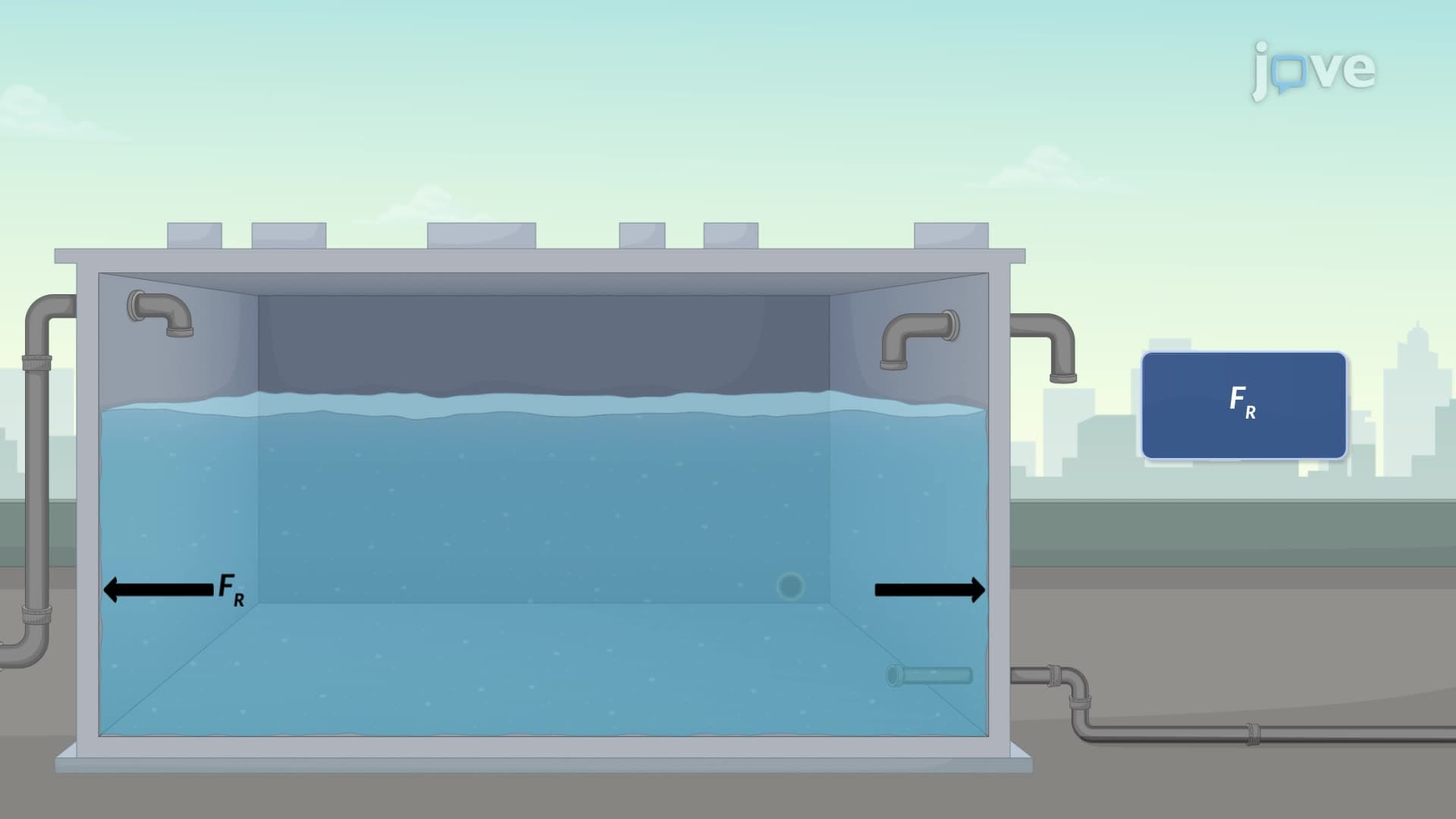

Video Summary: Hydrostatic Pressure Force on a Plane Surface Explained
Ever wonder why submarine hulls need to be incredibly thick, or why dam walls are wider at the bottom? The hydrostatic pressure force on a plane surface creates enormous loads that engineers must carefully calculate. For instance, the Hoover Dam experiences millions of pounds of force from Lake Mead's water pressing against its concrete face. This fundamental fluid mechanics principle determines how pressure varies with depth and affects submerged surfaces at different orientations. Watch the full video on JoVE Coach to master this concept with expert-led visuals and step-by-step explanations.
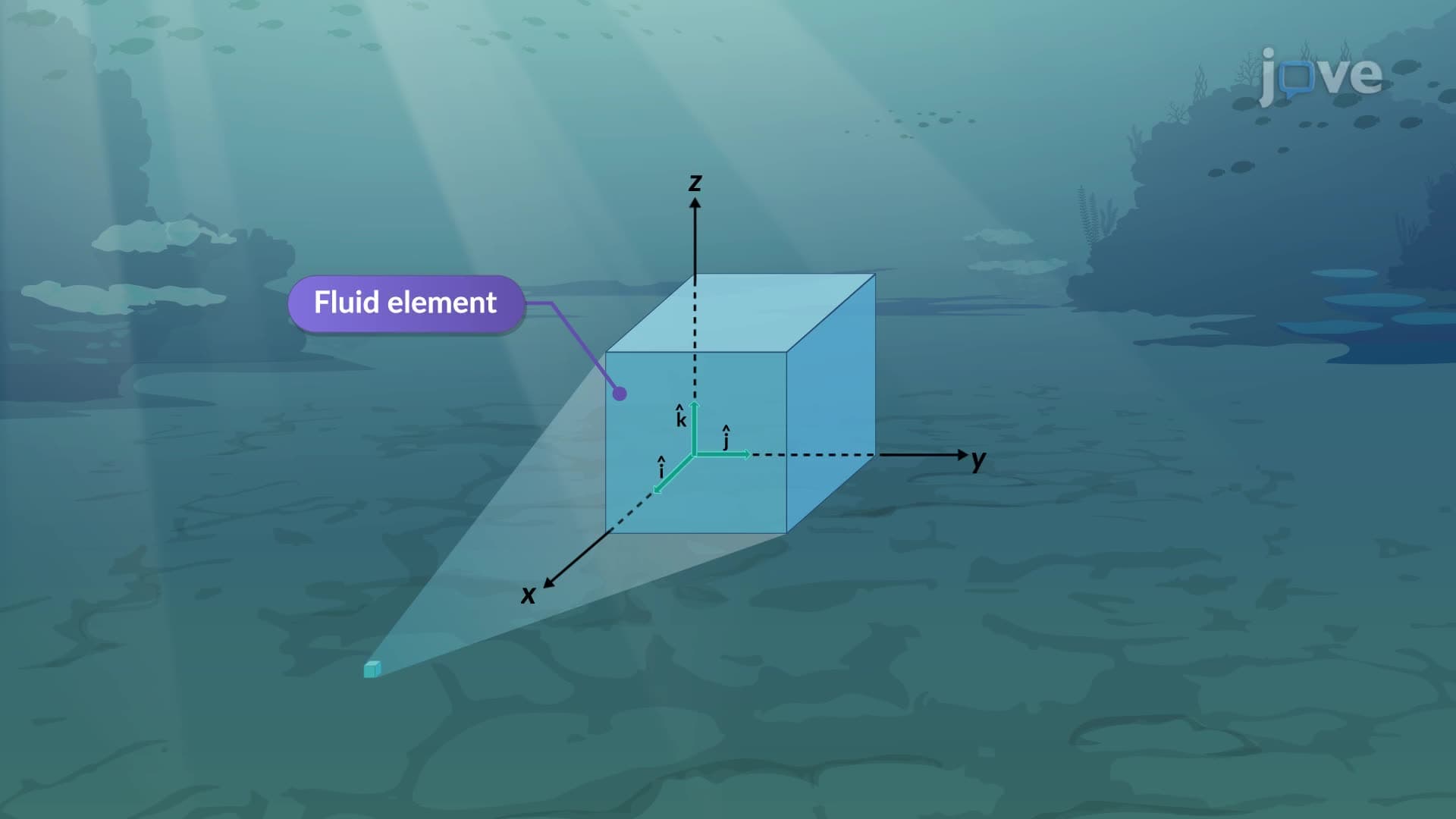
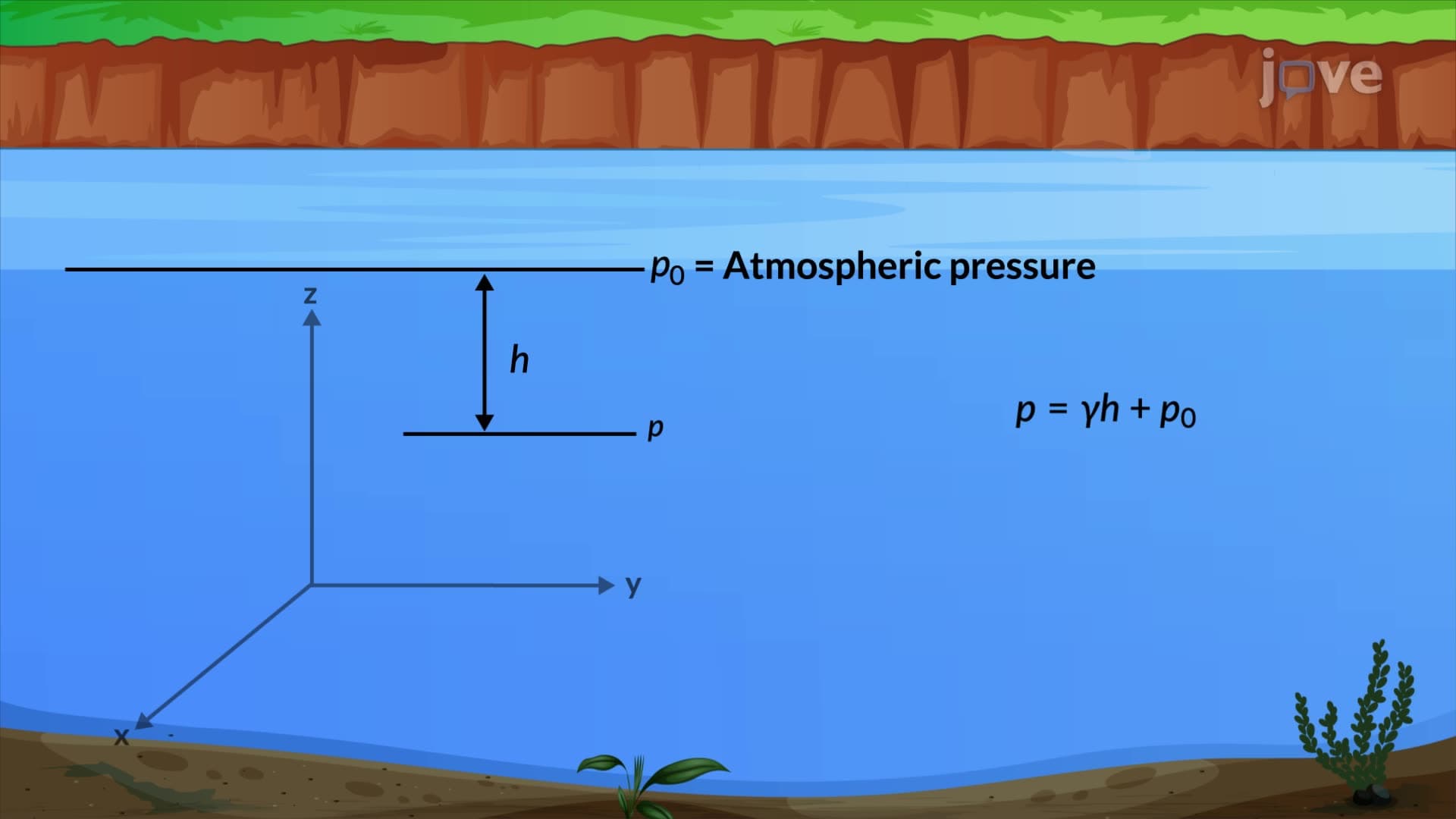
When any surface is submerged in a fluid, the surrounding liquid exerts pressure forces that increase linearly with depth. This fundamental principle governs everything from swimming pool design to spacecraft fuel tanks. The hydrostatic pressure force on a plane surface represents the total effect of these distributed pressure loads, which engineers must calculate precisely for safe structural design.
For horizontal surfaces like tank bottoms or submarine deck plates, pressure remains constant across the entire surface since depth stays uniform. The resultant force equals the pressure at that depth multiplied by the surface area, acting directly through the surface's geometric center (centroid). This straightforward calculation makes horizontal surfaces the simplest case in hydrostatic analysis.
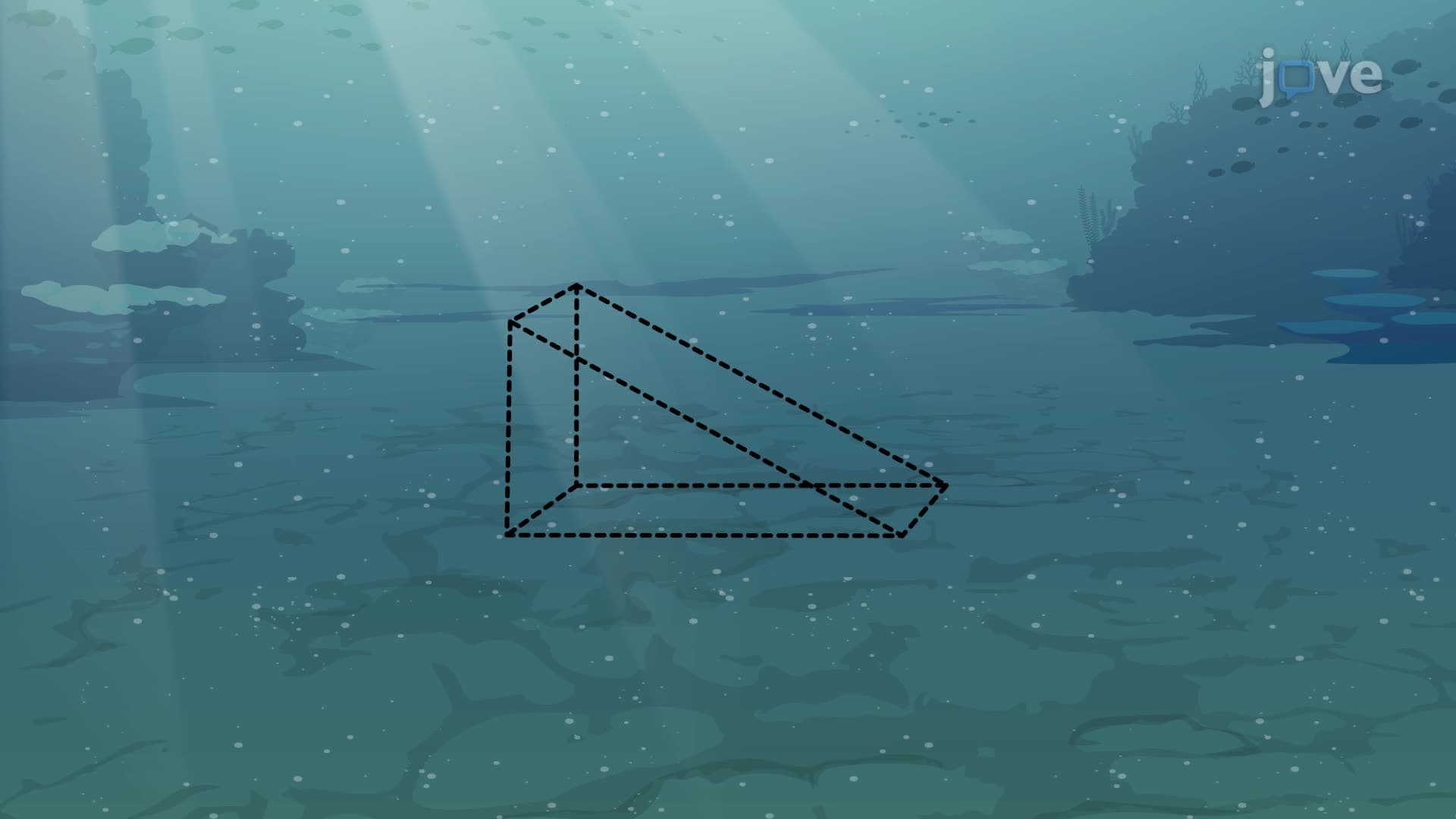
Vertical surfaces like dam faces experience linearly increasing pressure from top to bottom, creating a triangular pressure distribution. The resultant force equals the fluid's specific weight times the surface area times the depth to the area's centroid. However, the force doesn't act through the centroid-it acts through the "center of pressure," located below the centroid toward the deeper region.
For inclined surfaces, engineers must integrate pressure forces across varying depths. Each small surface element experiences pressure proportional to its individual depth, requiring calculus-based solutions. This complexity appears in applications like angled spillway gates or tilted submarine viewing ports.
These principles directly impact major US infrastructure projects. The Glen Canyon Dam's concrete arch withstands over 5 million tons of hydrostatic force from Lake Powell. Naval architects use these calculations when designing aircraft carrier hulls that must withstand extreme ocean pressures during high-speed maneuvers.
Students encounter these concepts in AP Physics C, college-level fluid mechanics courses, and engineering programs. The MCAT includes hydrostatic pressure questions in its physics sections, while engineering licensure exams test practical applications. Understanding pressure distribution helps explain why dam walls have curved profiles and why submarine pressure hulls use spherical shapes for maximum strength efficiency.
Related Micro-courses