Loading video…


 8 Concepts
 7.6K views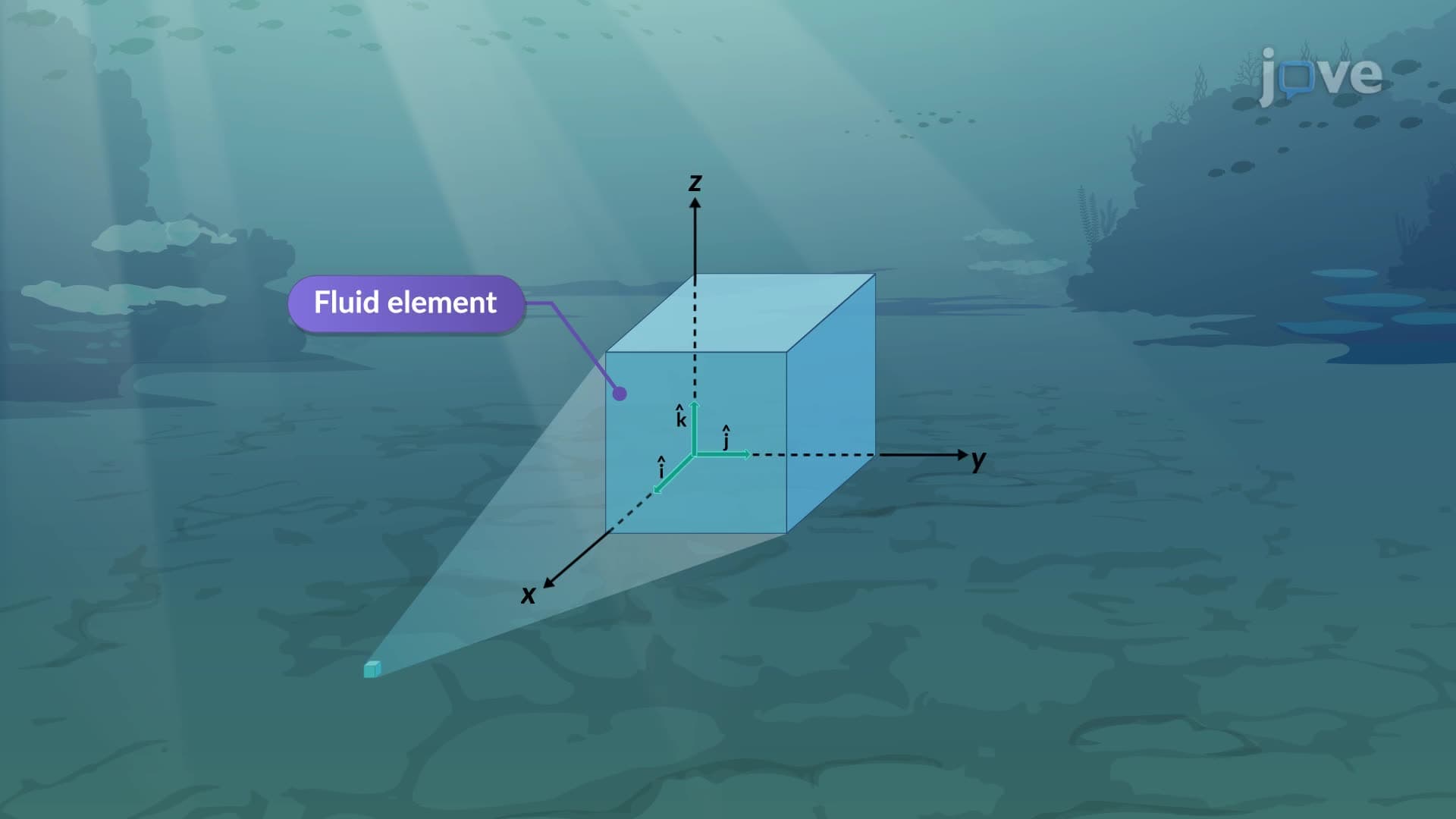

Video Summary: Basic Equation for Pressure Field Tutorial
Ever wonder how engineers calculate water pressure at the bottom of the Hoover Dam or atmospheric pressure changes during a hurricane? The basic equation for pressure field reveals how forces acting on fluid elements create predictable pressure variations throughout any fluid system. This fundamental concept appears in everything from hydraulic systems in construction equipment to blood pressure measurements in medical diagnostics across US hospitals. Watch the full video on JoVE Coach to master this concept with expert-led visuals and step-by-step explanations.
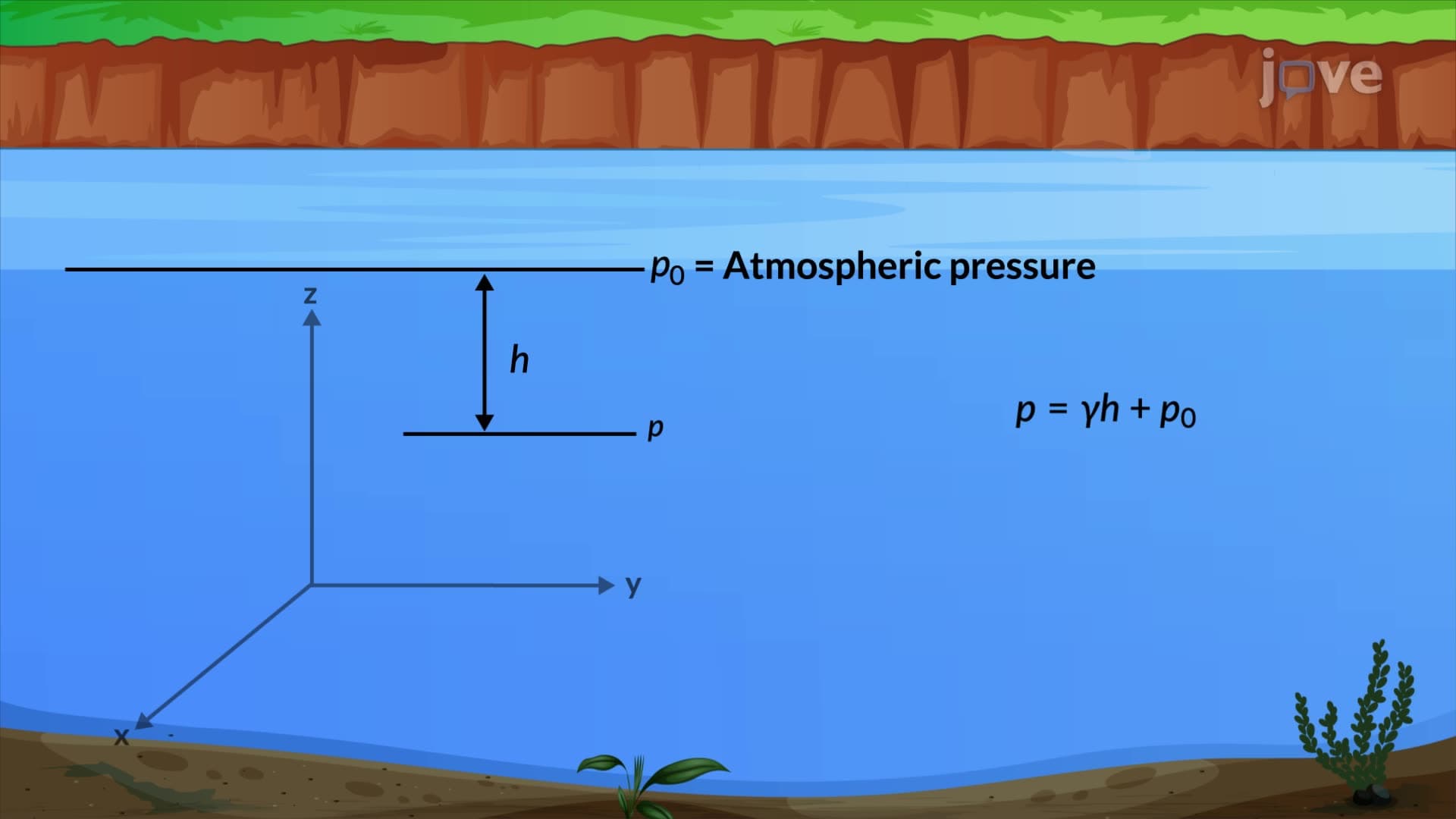
The basic equation for pressure field forms the cornerstone of fluid mechanics, describing how pressure varies throughout any fluid system. This fundamental relationship emerges from applying Newton's laws to infinitesimally small fluid elements, revealing the intricate balance between forces that govern fluid behavior in everything from water distribution systems to atmospheric phenomena.
When analyzing fluid behavior, engineers consider a representative rectangular element within the fluid mass. Two distinct force categories act upon this element: surface forces generated by pressure differences across element faces, and body forces primarily consisting of gravitational weight. The pressure at the element's center, denoted as p, serves as a reference point for calculating average pressures on each face using mathematical derivatives.
This force analysis proves crucial for AP Physics students and college engineering majors studying fluid mechanics. The concept frequently appears on standardized tests like the MCAT, where understanding pressure relationships in biological systems becomes essential for medical school preparation.
The resultant surface force calculation involves summing pressure contributions from all six faces of the rectangular element. In the y-direction, this calculation considers pressure variations that create net forces, with similar analyses applied to x and z directions. These individual components combine vectorially to represent total surface force per unit volume.
Real-world applications include designing water towers in cities like Chicago, where engineers must calculate pressure distributions to ensure adequate water pressure at different building heights. The equation also governs hydraulic brake systems in vehicles manufactured by companies like Ford and General Motors, where precise pressure control ensures safety.
The final step involves applying Newton's second law to the fluid element, incorporating both surface forces per unit volume and gravitational weight effects. This combination yields the complete pressure field equation, enabling prediction of pressure variations throughout three-dimensional fluid systems. The specific weight term accounts for fluid density and gravitational acceleration, making the equation applicable across different fluid types and gravitational environments.
Related Micro-courses