Loading video…


 8 Concepts
 2.7K views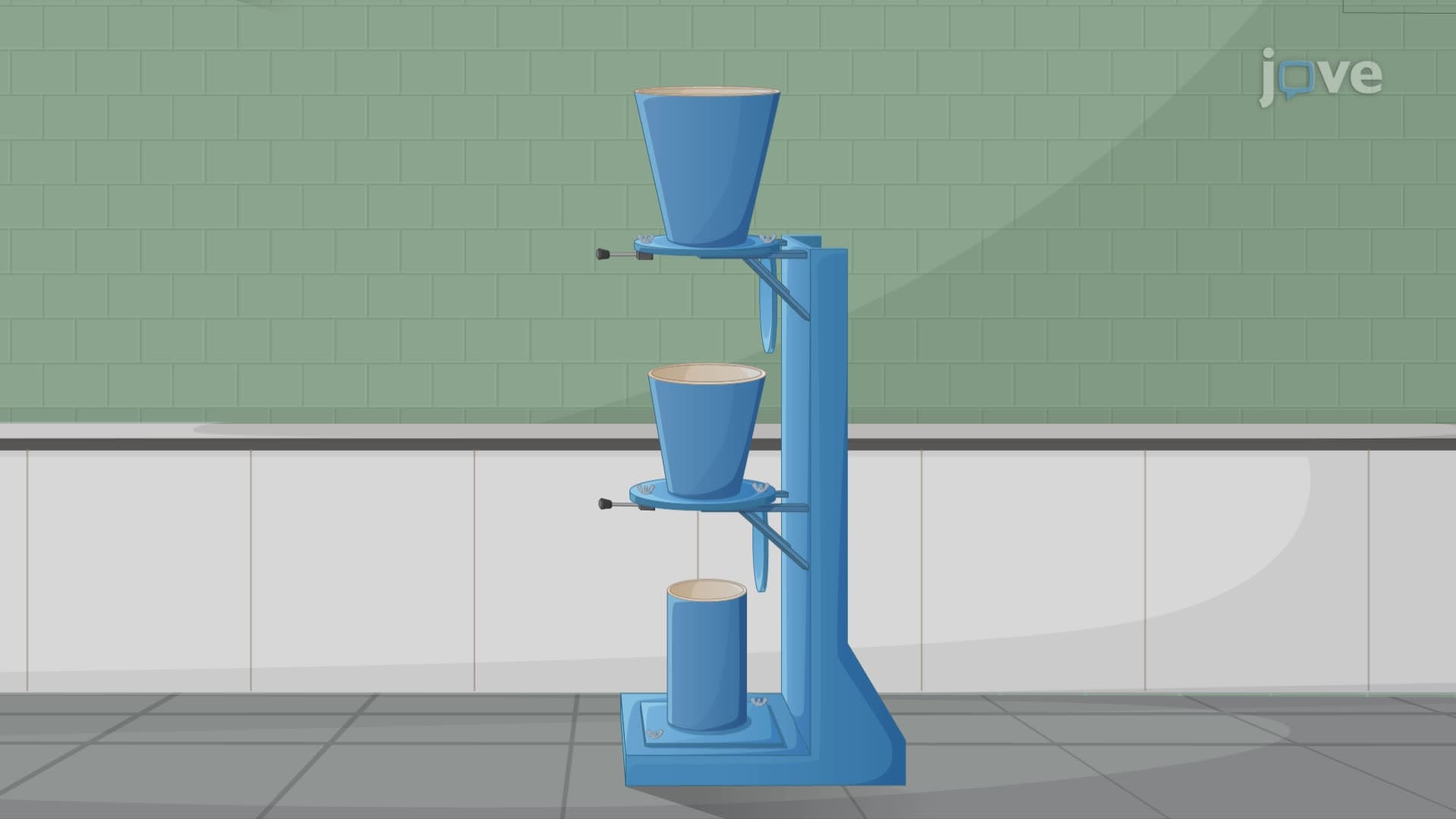

Video Summary: What Is Compacting Factor Test
Did you know that a poorly mixed concrete batch can fail catastrophically, like the $15 billion in annual US infrastructure damage from premature concrete deterioration? The compacting factor test measures concrete workability by comparing how well concrete naturally flows versus how it performs under full compaction. This standardized procedure helps construction teams from California's earthquake-resistant buildings to Florida's hurricane-proof structures ensure their concrete mix designs meet project specifications. Watch the full video on JoVE Coach to master this concept with expert-led visuals and step-by-step explanations.
The compacting factor test represents a standardized approach to measuring concrete workability that directly correlates with real-world construction conditions. Unlike simple slump tests that only measure consistency, this method evaluates how effectively concrete can be placed and consolidated under its own weight-a critical factor in determining construction success.
The test apparatus consists of two truncated cone-shaped hoppers mounted above a standardized cylinder, all featuring polished interior surfaces to minimize friction effects. This design simulates the natural flow conditions concrete experiences during placement in construction projects, from high-rise building pours to highway construction. The sequential dropping process-first from the upper hopper to the lower hopper, then into the measurement cylinder-creates controlled compaction similar to gravity-fed concrete placement systems used across US construction sites.
The compacting factor calculation involves determining two distinct density measurements. First, the partially compacted density represents concrete that has only undergone the natural settling from the two-stage drop. Second, the fully compacted density is achieved through systematic tamping in four layers, representing optimal compaction achievable through mechanical means. The ratio of these densities yields the compacting factor, typically ranging from 0.7 to 0.95 for workable concrete mixes.
Construction engineers across American infrastructure projects use compacting factor results to optimize mix designs for specific applications. For instance, concrete destined for narrow wall forms in seismic zones requires higher workability (compacting factors above 0.85) than mass concrete for dam construction. The test proves particularly valuable for evaluating concrete containing recycled aggregates, increasingly common in sustainable construction practices mandated by LEED certification requirements.
This assessment method appears frequently in civil engineering curricula and professional certification exams, including the PE exam and various state licensing requirements. Students preparing for AP Environmental Science or college-level materials science courses encounter compacting factor principles when studying sustainable construction materials and infrastructure resilience.
Related Micro-courses