Loading video…


 7 Concepts
 3.2K views

Video Summary: What Is Aliasing
Ever wonder why digital music sometimes sounds distorted or why medical imaging can produce false patterns? Downsampling without proper precautions creates aliasing-a phenomenon where signal frequencies become indistinguishable from each other. This occurs when sampling rates fall below the critical Nyquist frequency, causing spectral overlap that permanently distorts the original signal. Consider how MRI scanners at Johns Hopkins Hospital must carefully control sampling to avoid diagnostic errors. Watch the full video on JoVE Coach to master this concept with expert-led visuals and step-by-step explanations.
Aliasing represents one of the most critical concepts in digital signal processing, occurring when continuous signals are converted to digital form through sampling. This phenomenon fundamentally changes how we perceive and reconstruct original signals, making it essential for students pursuing engineering, computer science, or medical technology careers.
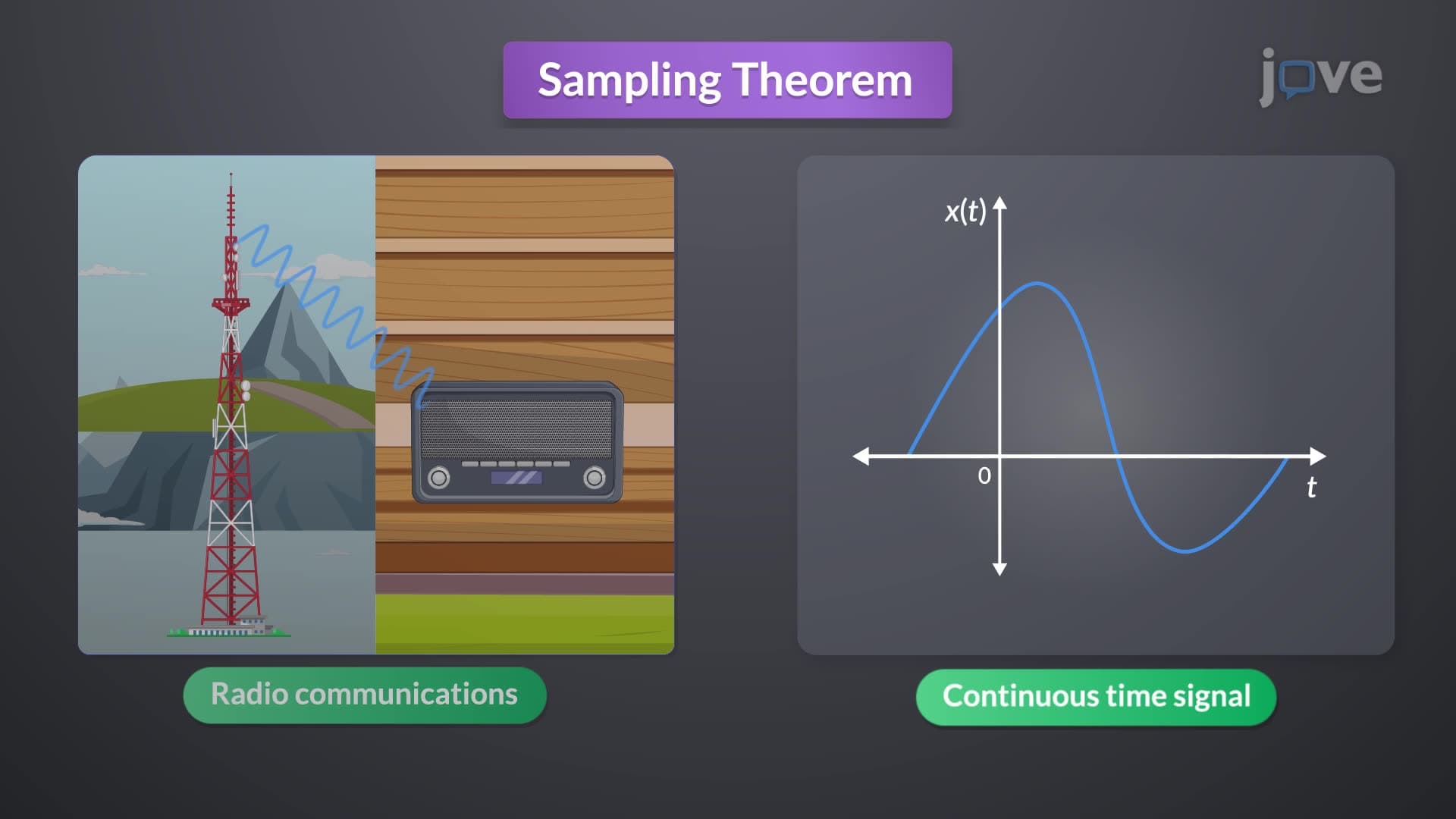
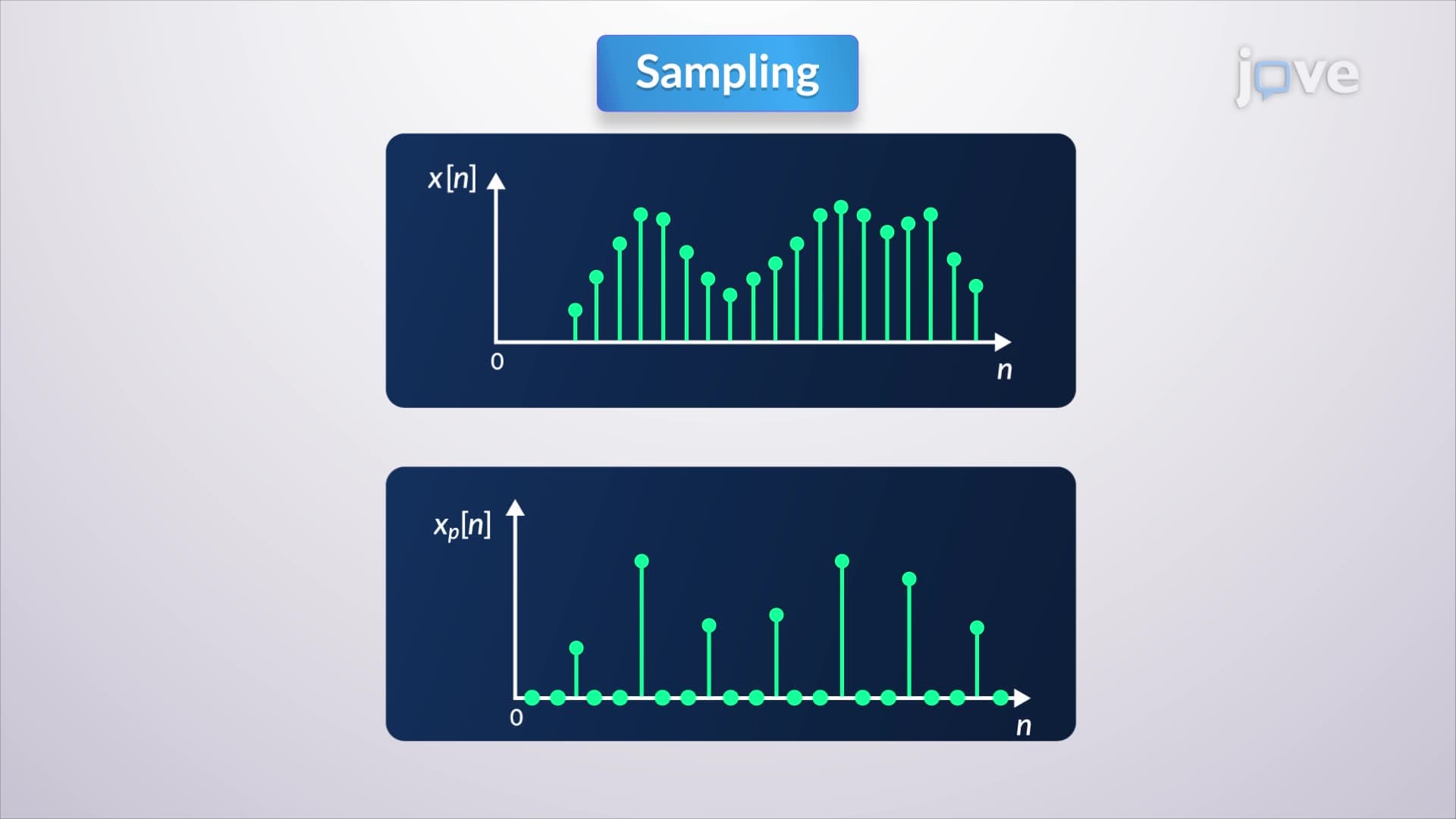
When we perform downsampling, we're essentially taking snapshots of a continuous signal at regular intervals. The downsampling definition involves reducing the sampling rate of a signal, which can lead to aliasing if not handled properly. The Nyquist-Shannon sampling theorem establishes that the sampling frequency must be at least twice the highest frequency component in the original signal to avoid aliasing.
Consider a sinusoidal signal with frequency f. When sampled at rate fs, the theorem requires fs > 2f for perfect reconstruction. If this condition isn't met, frequencies above fs/2 (the Nyquist frequency) will fold back into lower frequency ranges, creating false frequency components that weren't in the original signal.
Understanding downsampling becomes crucial in numerous professional contexts. At Massachusetts General Hospital, radiologists must understand aliasing to interpret MRI and CT scans correctly-improper sampling can create artifacts that mimic pathological conditions. Similarly, audio engineers at recording studios like Abbey Road Studios' US locations must prevent aliasing when digitizing analog recordings to maintain sound quality.
The downsampling concept extends beyond theoretical mathematics into practical engineering challenges. When Apple engineers develop new iPhone cameras, they must balance image quality with processing speed, carefully managing sampling rates to prevent aliasing in digital image sensors.
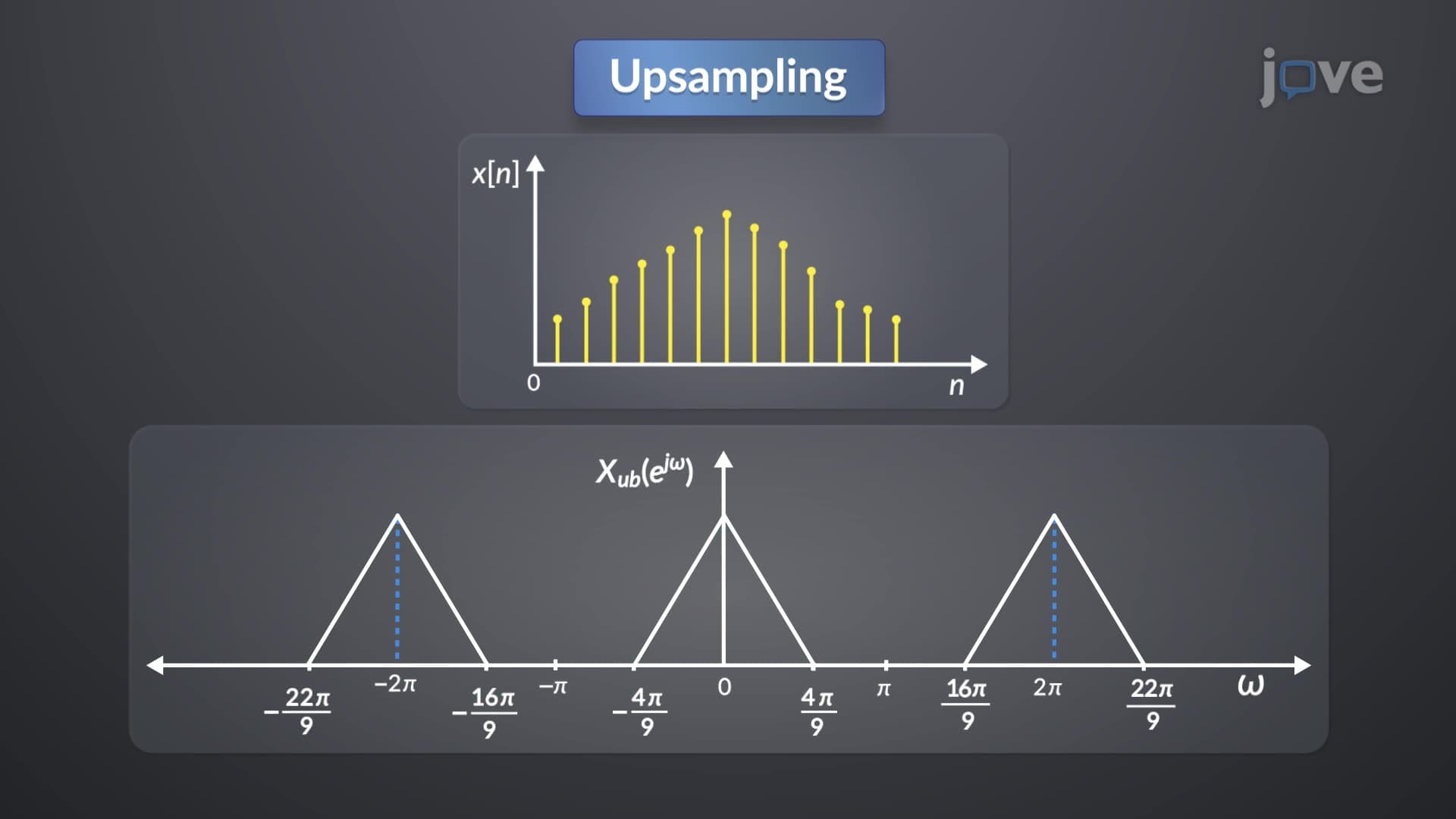
The downsampling overview reveals complex frequency domain behavior. When fundamental frequency remains below half the sampling frequency, increasing it produces proportionally higher output frequencies. However, when fundamental frequency exceeds this threshold but stays below the sampling frequency, a counterintuitive effect occurs-higher input frequencies produce lower output frequencies due to spectral folding.
This principle appears frequently on AP Physics exams and college-level Signals and Systems courses at institutions like MIT and Stanford. Students preparing for the MCAT's physics section should understand how aliasing affects medical imaging techniques, while engineering students encounter these concepts in digital signal processing coursework.
Related Micro-courses