Loading video…


 7 Concepts
 3.2K views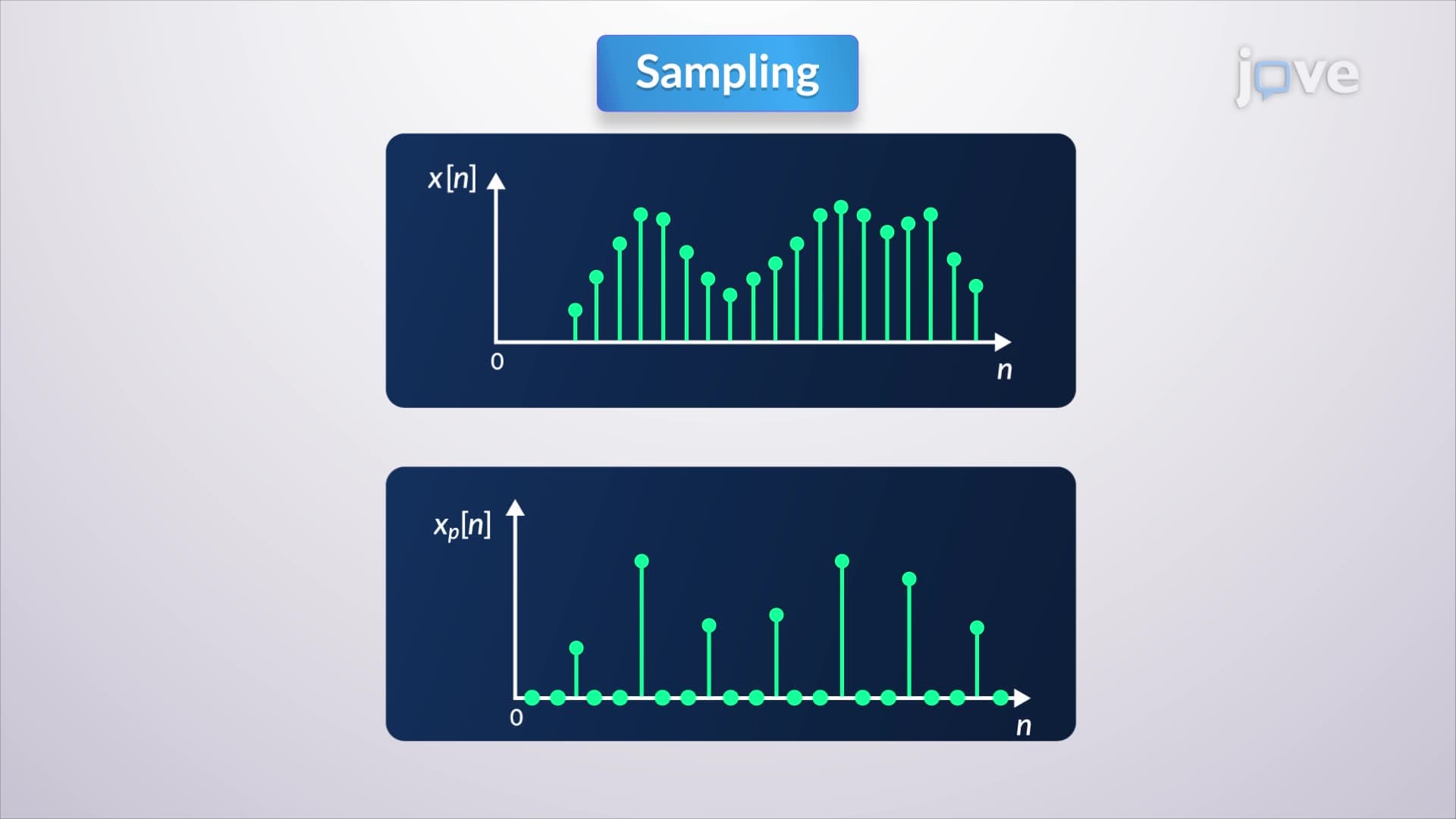

Video Summary: What Is Downsampling
Ever wonder how your smartphone compresses hours of 4K video without losing essential quality? Downsampling is the digital signal processing technique that makes this possible by systematically reducing data points while preserving critical information. In telecommunications across the US, from Verizon's network optimization to Netflix's streaming algorithms, downsampling enables efficient data transmission by taking every N-th sample from an original sequence. This process, also called decimation, maintains the integrity of band-limited signals while dramatically reducing file sizes and processing requirements. Watch the full video on JoVE Coach to master this concept with expert-led visuals and step-by-step explanations.
Downsampling represents a cornerstone technique in digital signal processing where we systematically reduce the number of samples in a digital sequence by keeping only every N-th sample. Unlike simple data deletion, downsampling follows mathematical principles that preserve essential signal characteristics while achieving significant data reduction. This process, technically known as decimation, creates a new sequence where samples occur at integer multiples of the decimation factor N.
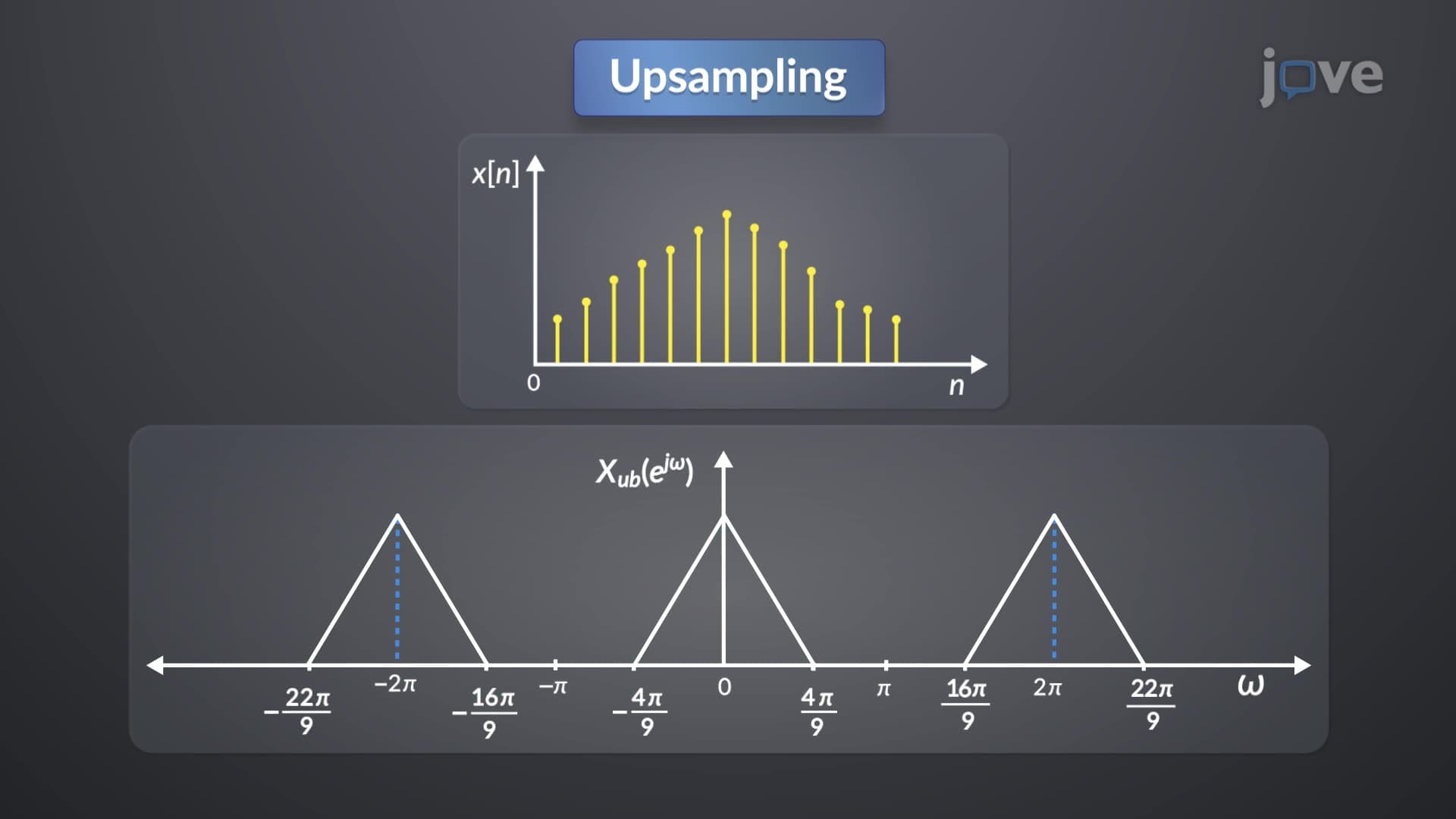
The mathematical beauty of downsampling lies in its frequency domain behavior. When we decimate a sequence, the Fourier transform of the resulting signal becomes a scaled and shifted combination of the original spectrum. This transformation follows the principle that F(decimated) = (1/N) × Σ F(original shifted), where the summation accounts for spectral replicas introduced by the sampling rate reduction.
Major US technology companies leverage downsampling extensively. Apple's iPhone camera system uses downsampling algorithms to convert high-resolution sensor data into manageable file sizes without perceptible quality loss. Similarly, Spotify and other streaming services employ downsampling to deliver music at various bit rates, accommodating different bandwidth constraints across American cellular networks.
In medical applications, downsampling enables efficient storage and transmission of diagnostic images. US hospitals using GE Healthcare or Siemens equipment routinely downsample MRI and CT scan data for telemedicine consultations, ensuring specialists can review cases remotely without compromising diagnostic accuracy.
The critical challenge in downsampling involves preventing aliasing-the unwanted distortion that occurs when high-frequency components fold back into lower frequency ranges. Successful downsampling requires the original signal to be band-limited, meaning its frequency content doesn't exceed the Nyquist frequency of the new, reduced sampling rate.
US telecommunications standards, including those implemented by AT&T and T-Mobile, incorporate anti-aliasing filters before downsampling operations. These filters ensure that only frequencies below the new Nyquist limit remain in the signal, preventing the spectral overlap that causes aliasing artifacts.
Downsampling concepts frequently appear in AP Physics C exams, particularly in questions involving wave analysis and signal processing. College engineering programs, including those at MIT, Stanford, and Georgia Tech, emphasize downsampling in courses covering digital communications and multimedia systems. Students preparing for the Fundamentals of Engineering (FE) exam encounter downsampling problems in the electrical and computer engineering sections, where understanding sampling rate conversion proves essential for professional practice.
Related Micro-courses