Loading video…


 8 Concepts
 4.6K views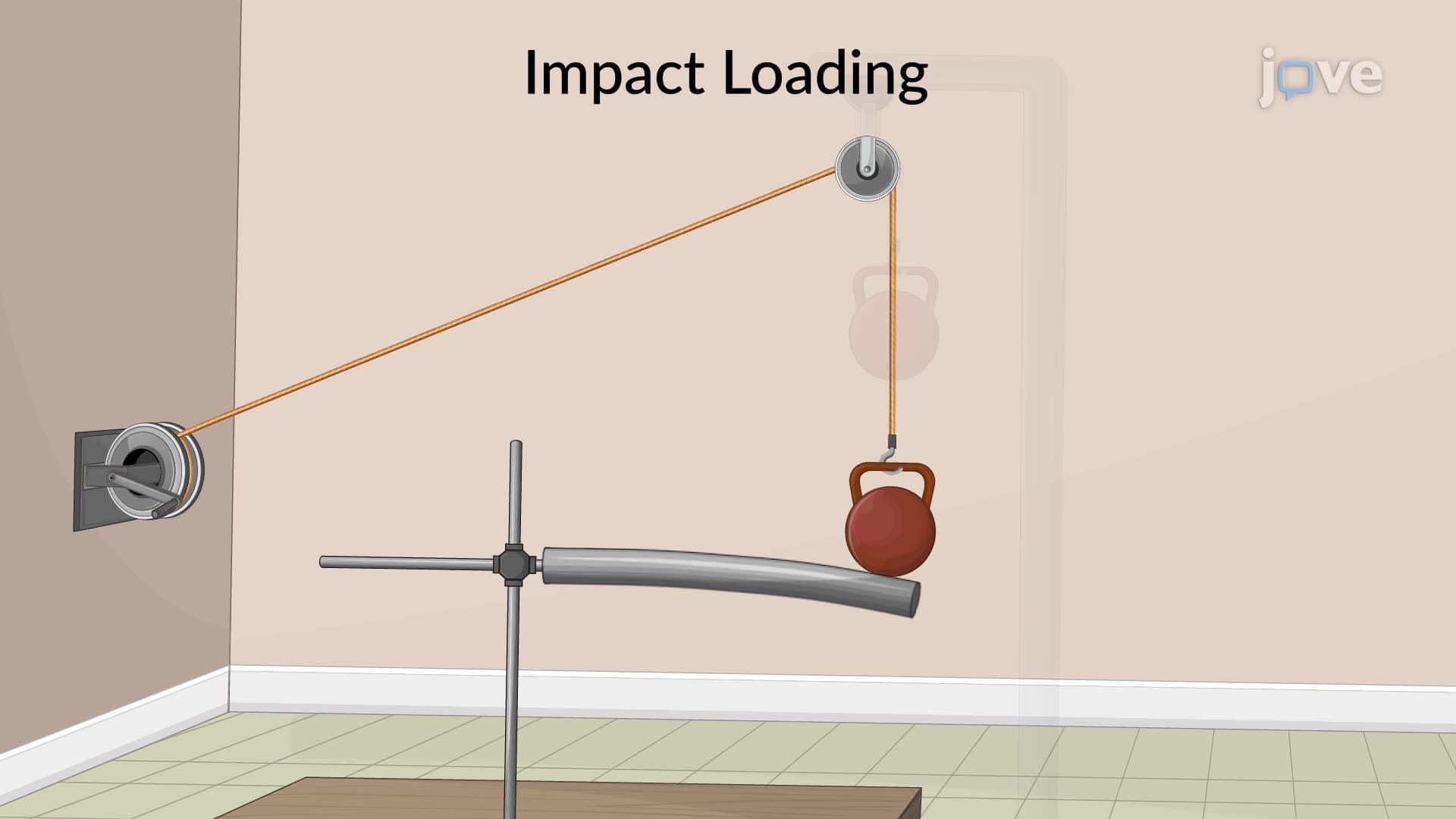

Video Summary: Impact Loading on a Cantilever Beam Explained
Ever wonder why diving boards flex so dramatically when a diver jumps? Impact loading on a cantilever beam explains this fascinating physics phenomenon where dropped objects transfer massive energy through structural elements. When engineers design bridges like San Francisco's Bay Bridge cantilever sections, they must calculate how falling debris or sudden loads create stress concentrations at fixed supports. The maximum stress depends on the object's potential energy, beam geometry, and material properties, with strain energy reaching its peak at the fixed end where bending moments are greatest. Watch the full video on JoVE Coach to master this concept with expert-led visuals and step-by-step explanations.
Impact loading on a cantilever beam represents a critical engineering concept where dynamic forces create significantly higher stresses than equivalent static loads. Unlike static loading, impact scenarios involve energy transfer from moving objects, making this analysis essential for structures like highway overpasses, building balconies, and industrial equipment supports throughout the United States.
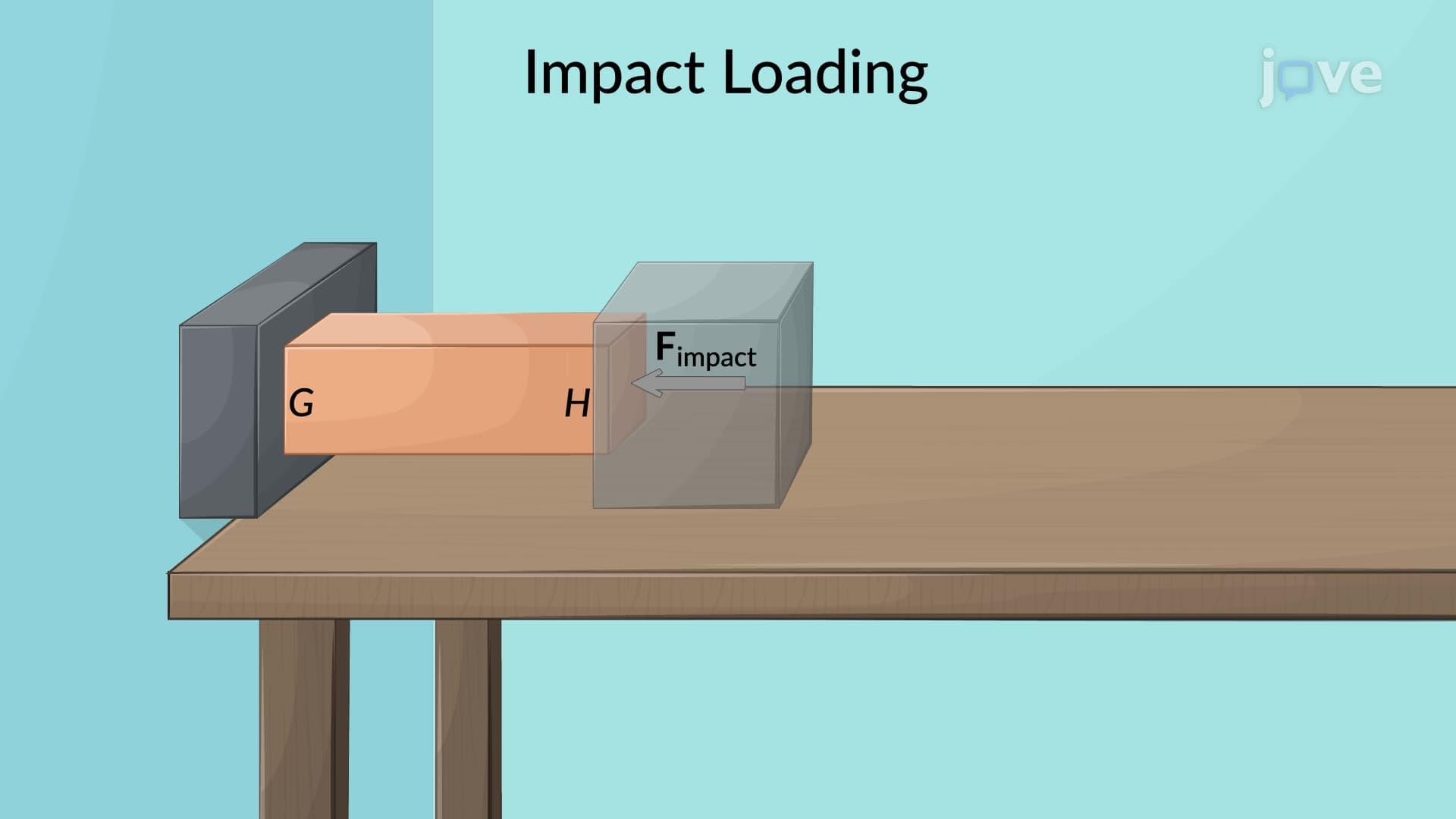
When an object falls onto a cantilever's free end, the collision transforms gravitational potential energy (mgh) into kinetic energy, which then converts to strain energy within the beam material. This energy transformation creates internal stresses that can exceed static load stresses by factors of two or more, explaining why dynamic loading considerations appear frequently in AP Physics C exams and college-level mechanics of materials courses.
The strain energy concentration occurs primarily near the fixed support, where bending moments reach maximum values. For a cantilever with length L, the bending moment at distance x from the free end equals -Wx, where W represents the impacting object's weight. This linear distribution means engineers must reinforce the fixed end most heavily.
The mathematical relationship integrates strain energy over the beam's entire length, but the fixed end experiences the highest stress concentrations. This principle applies directly to real structures like the cantilever sections of the Queensboro Bridge in New York, where engineers calculated impact loads from potential vehicle collisions or falling construction materials.
Maximum stress in impact loading scenarios depends on three primary factors: the maximum load (related to impact energy), the beam's moment of inertia, and material properties. For circular cross-sections, the moment of inertia equals πd⁴/64, where d represents diameter. This relationship demonstrates why larger diameter beams handle impact loads more effectively.
The stress equation σ(max) = M(max) × c / I shows that stress inversely relates to moment of inertia, explaining why engineers prefer larger cross-sections for impact-prone applications. Students encounter these calculations frequently in college engineering courses and professional licensing exams like the Fundamentals of Engineering (FE) exam administered across all US states.
Modern engineering applications require impact loading analysis for structures ranging from California earthquake-resistant building cantilevers to Texas oil rig support beams. The Federal Highway Administration mandates impact load considerations for bridge design, while building codes throughout the US specify minimum impact resistance for cantilever balconies and overhangs.
Understanding these principles helps students excel in advanced placement physics courses and prepares them for engineering programs at institutions like MIT, Stanford, and state universities nationwide. The mathematical foundations support both theoretical understanding and practical problem-solving skills essential for STEM career success.
Related Micro-courses