Loading video…


 8 Concepts
 4.6K views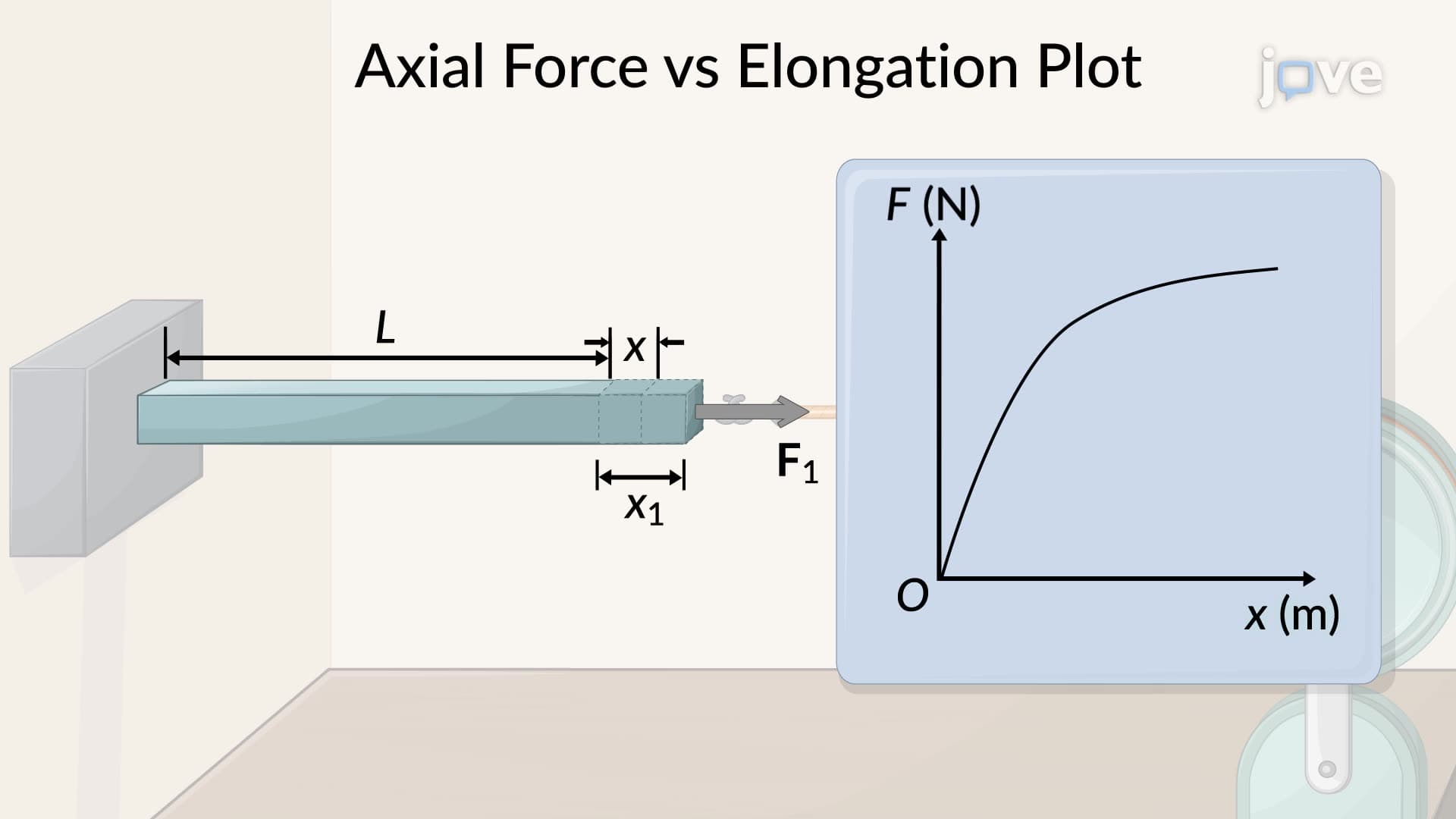

Video Summary: What Is Strain Energy
Ever wonder why a rubber band snaps back to its original shape after stretching? Strain energy is the secret behind this elastic behavior, it's the energy stored within materials when they deform under applied forces. Picture the suspension springs in a Ford F-150 truck compressing as it hits a bump, storing energy that then pushes the truck back up. Understanding what is strain energy reveals how engineers design everything from skyscrapers to spacecraft components. Watch the full video on JoVE Coach to master this concept with expert-led visuals and step-by-step explanations.
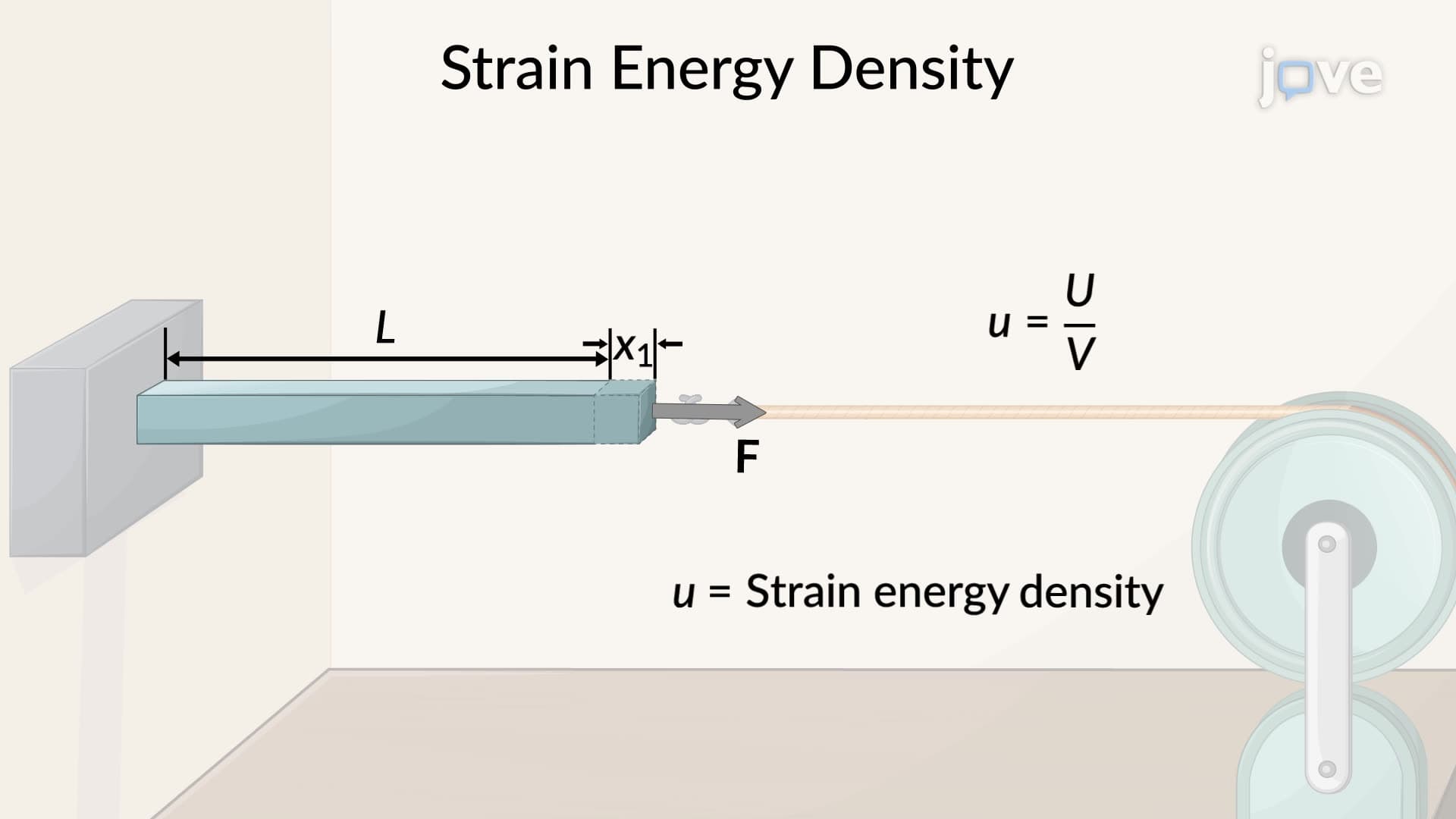
Strain energy represents the internal energy stored within a material when it undergoes deformation due to applied external forces. This fundamental concept in mechanics of materials explains why a compressed spring bounces back or why a stretched guitar string vibrates when plucked. When you apply force to deform any elastic material, whether it's the steel cables in the Golden Gate Bridge or the rubber in a basketball, that material stores energy internally, ready to release it when the external force is removed.
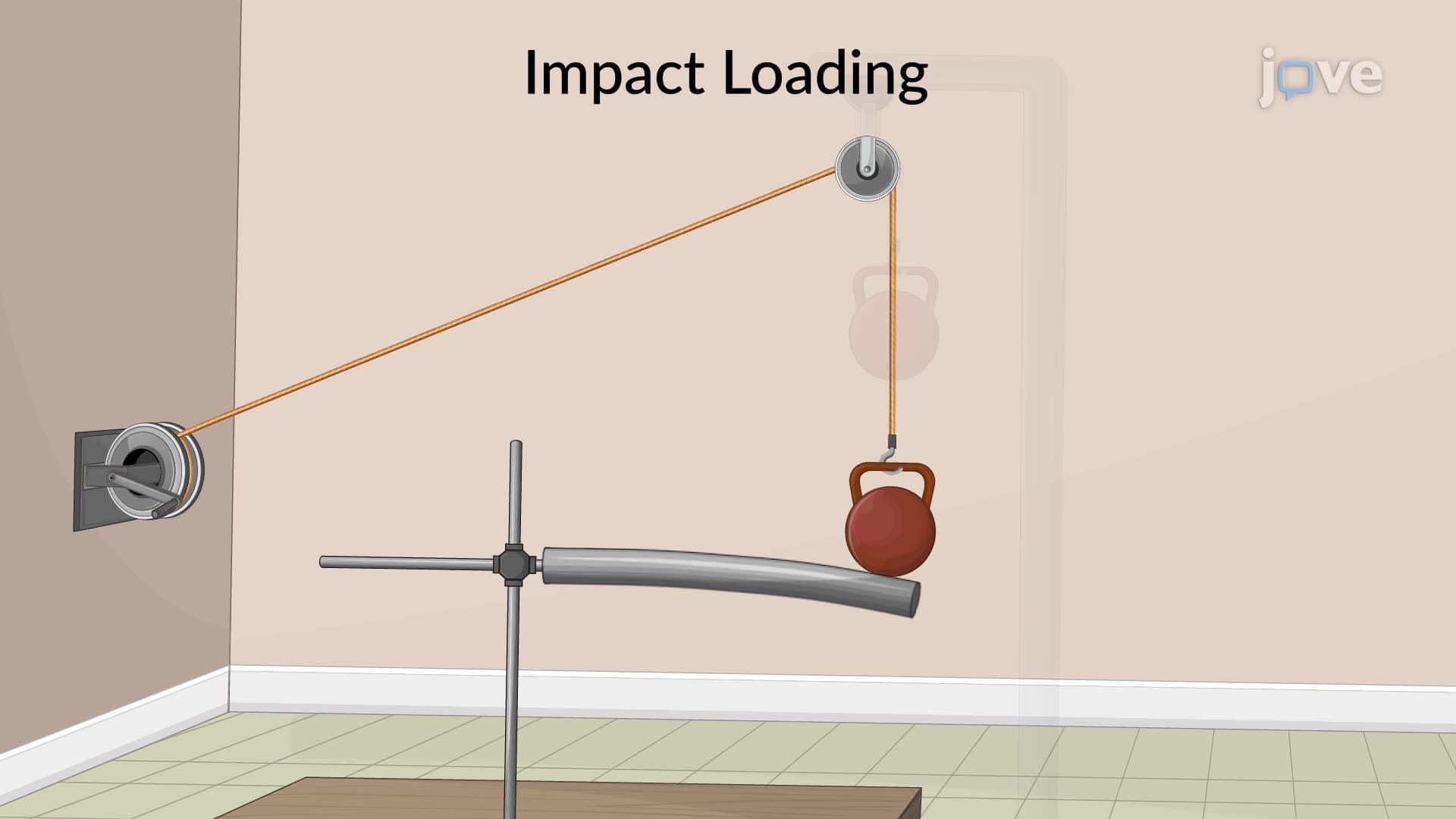
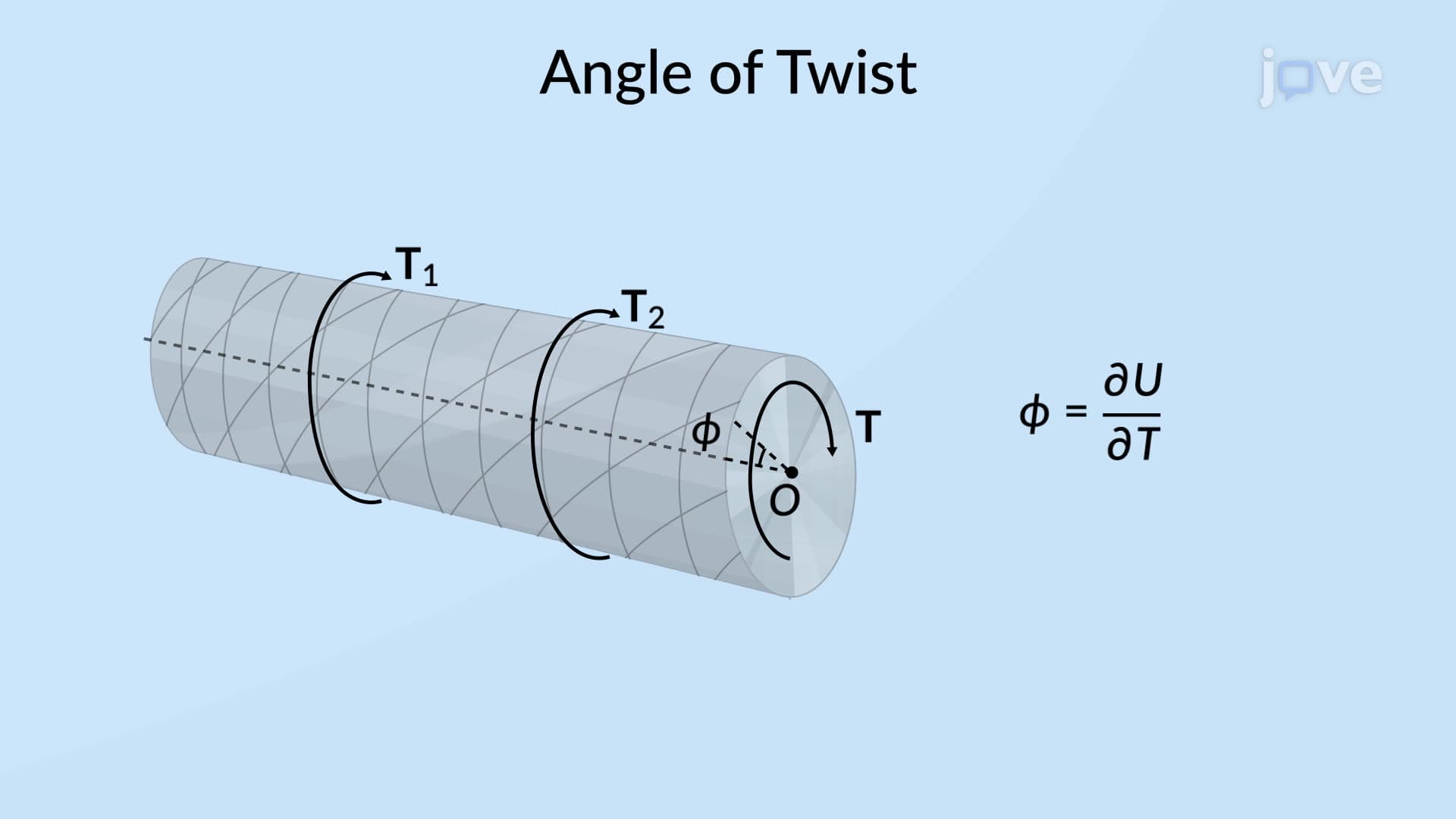
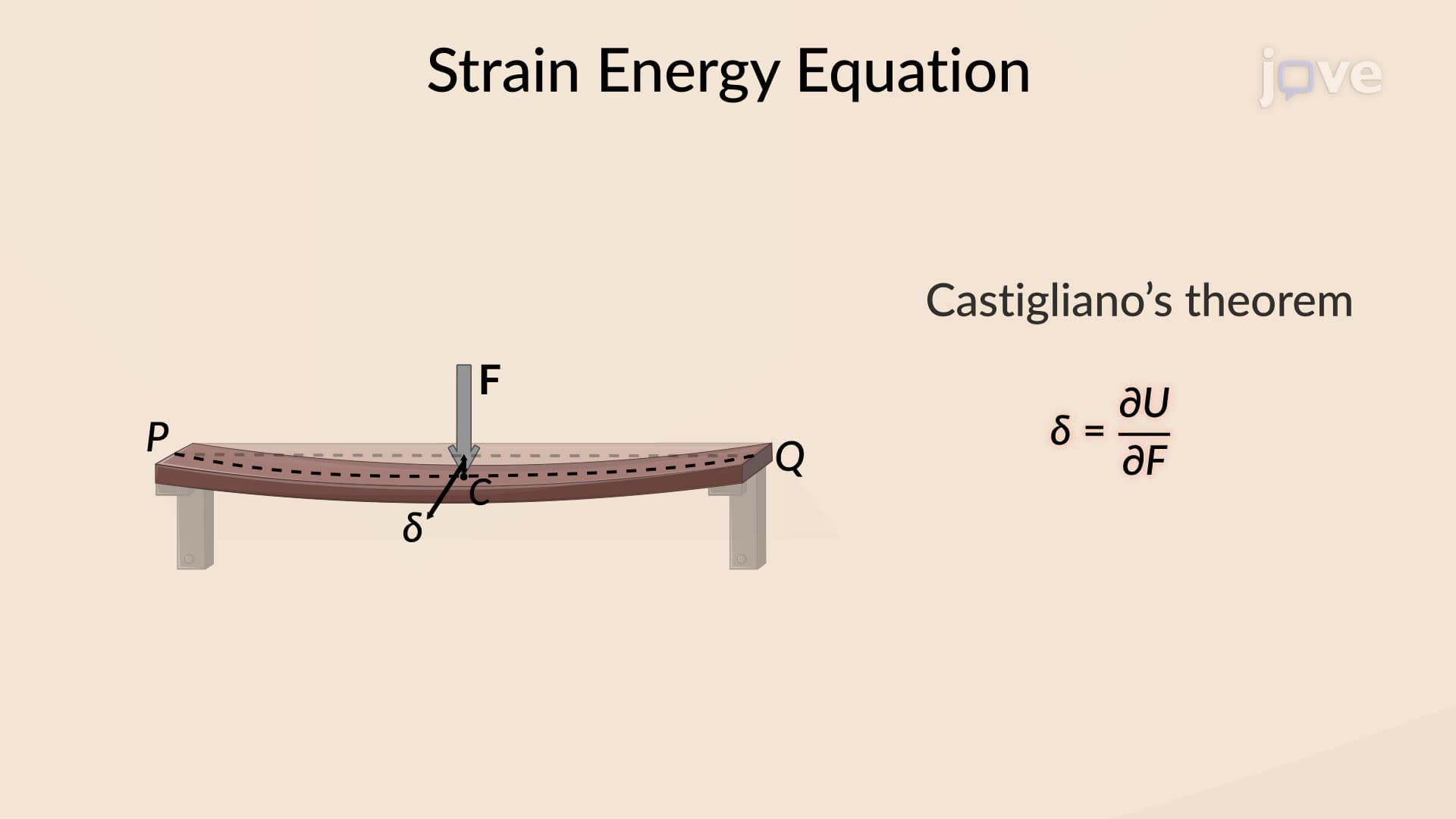
The mathematical foundation of strain energy lies in the work-energy theorem. As an external force gradually deforms a material, it performs work equal to the force multiplied by the displacement. This work doesn't disappear; instead, it transforms into strain energy stored within the material's molecular structure. For a rod under axial loading, the total strain energy equals the area under the load-deformation curve, calculated through integration of force with respect to displacement.
Within a material's elastic limit, the relationship between applied force and resulting deformation follows Hooke's Law, creating a linear load-deformation relationship. This linearity has profound implications for strain energy calculations. Since force increases proportionally with deformation, the strain energy becomes proportional to the square of the deformation, a relationship that appears frequently on AP Physics exams and college engineering assessments.
Consider a typical structural steel beam used in American construction. When loaded within its elastic range, the beam stores strain energy that's completely recoverable. Remove the load, and the beam returns to its original shape, releasing all stored energy. This principle guides structural engineers at firms like Skidmore, Owings & Merrill when designing earthquake-resistant buildings in California, where controlled energy storage and release can mean the difference between structural survival and catastrophic failure.
Strain energy concepts directly influence countless engineering applications across American industry. Automotive suspension systems in vehicles manufactured by General Motors or Ford rely on controlled strain energy storage in springs and shock absorbers to provide smooth rides. Aerospace engineers at Boeing calculate strain energy distributions in aircraft wings to ensure they can withstand turbulence loads while maintaining structural integrity.
The concept also appears prominently in standardized testing environments. MCAT physics sections frequently include strain energy problems, particularly in the context of biological materials like bone and cartilage. College-level statics and dynamics courses build upon strain energy foundations to introduce more advanced topics like energy methods for structural analysis, making this concept crucial for students pursuing engineering degrees at institutions like MIT, Stanford, or the University of California system.
Related Micro-courses