Loading video…


 14 Concepts
 24.5K views

Video Summary: Cable Subjected to a Distributed Load Explained
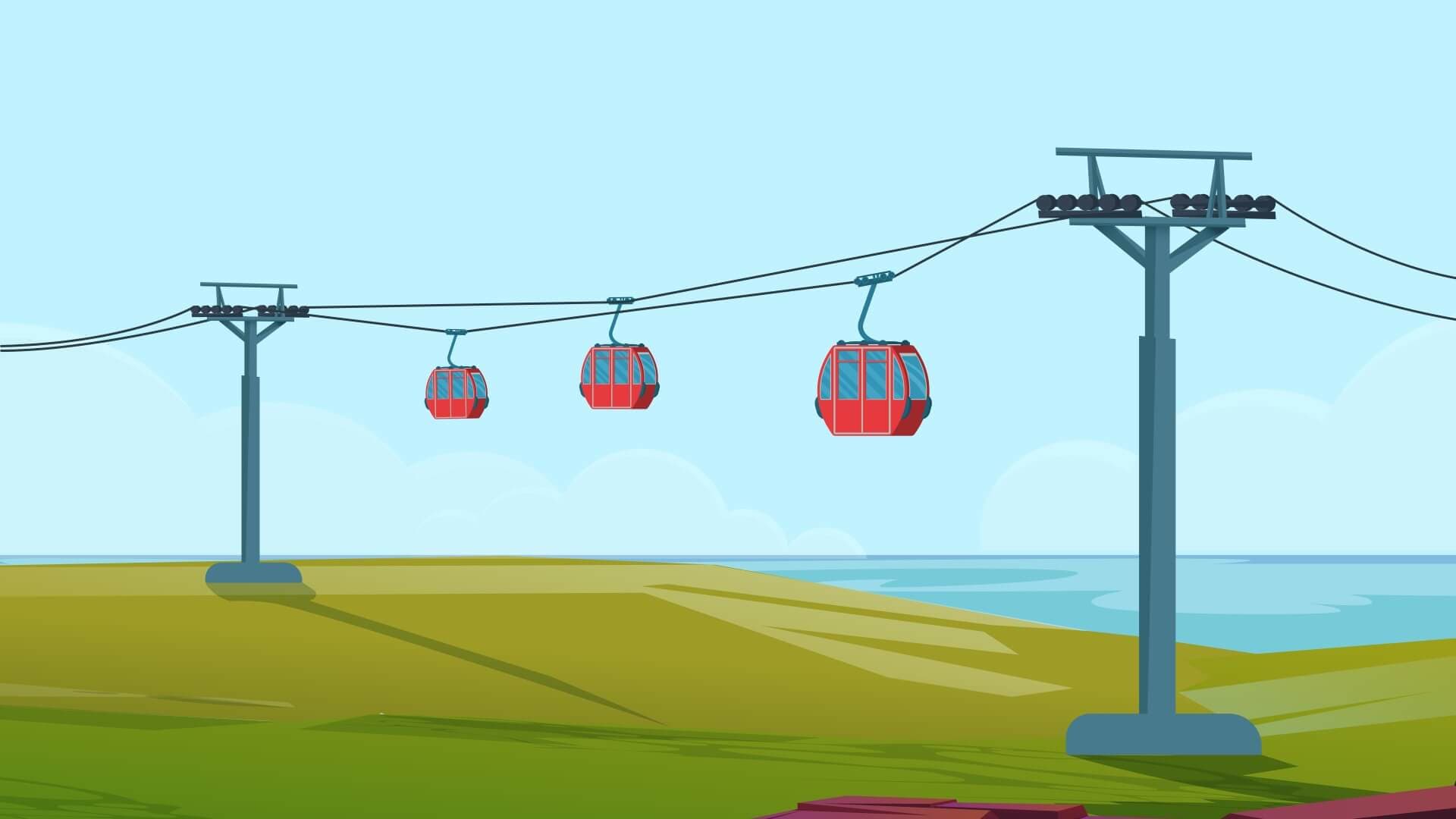
Ever wondered how the Golden Gate Bridge stays suspended despite carrying millions of pounds of traffic daily? A cable subjected to a distributed load forms the engineering backbone of iconic US suspension bridges like the Verrazano-Narrows Bridge in New York. This fundamental structural concept explains how flexible cables develop specific curved shapes and tension patterns when supporting distributed weights across their span. Watch the full video on JoVE Coach to master this concept with expert-led visuals and step-by-step explanations.
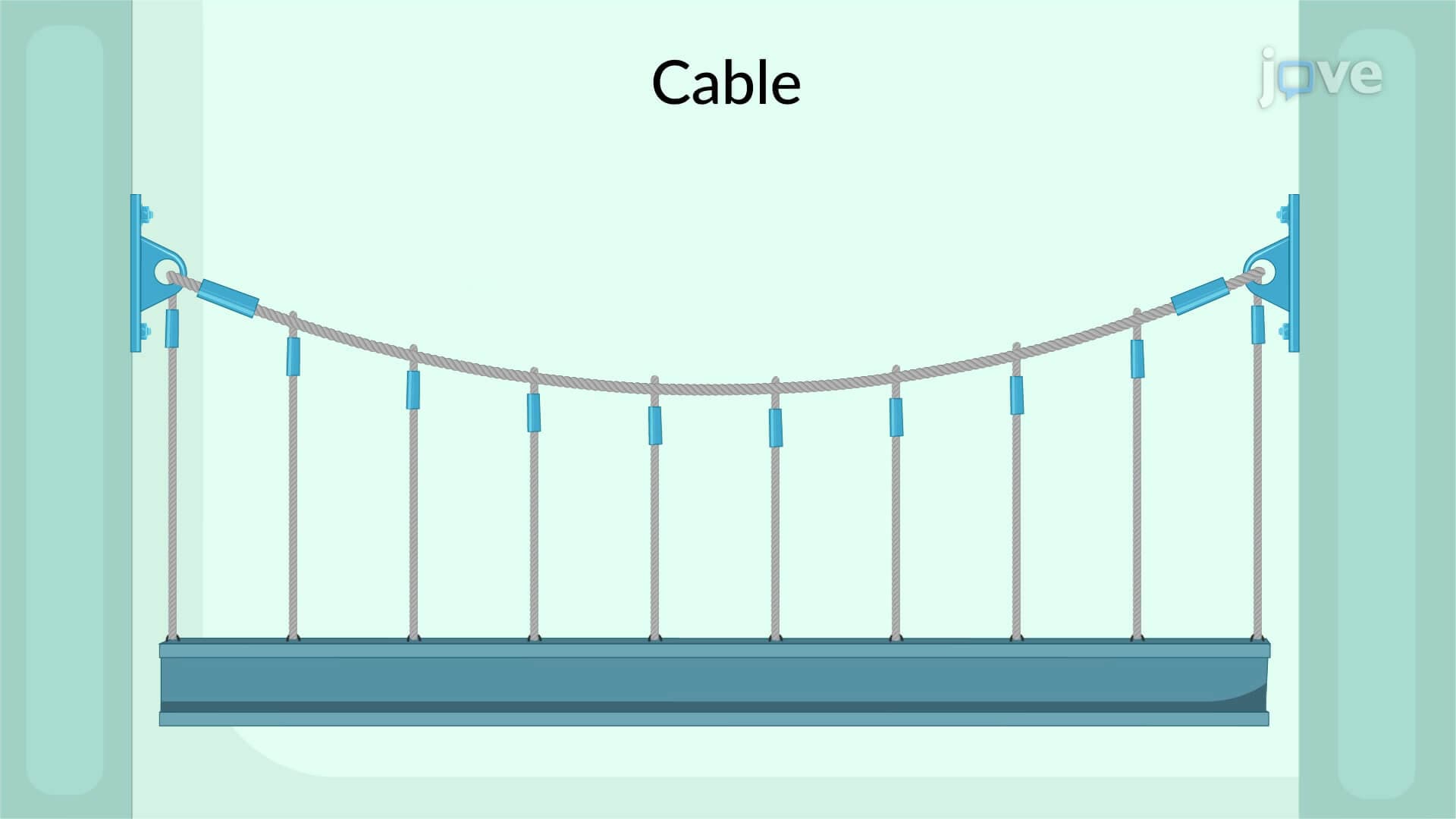
When engineers design suspension bridges like San Francisco's Bay Bridge, they must understand how cables subjected to distributed loads behave under various loading conditions. Unlike concentrated point loads, distributed loads spread continuously across the cable's length, creating smooth, predictable curve patterns that define the cable's final shape.
The analysis begins with three critical assumptions that simplify real-world complexity. First, cables are perfectly flexible, meaning they cannot resist bending moments and only carry tensile forces. Second, cables are inextensible, maintaining constant length regardless of load magnitude. Third, the cable's self-weight is negligible compared to applied loads-a reasonable assumption for heavy traffic loads on bridge decks.
Engineering students studying for AP Physics or college-level statics courses encounter this cable subjected to a distributed load problem through systematic free-body analysis. Consider a small cable segment of length Δx experiencing distributed load w(x) per unit length. The segment experiences tension forces at both ends, with magnitudes T and T + ΔT, plus the distributed load acting downward.
Applying Newton's equilibrium principles yields three fundamental equations: horizontal force balance, vertical force balance, and moment equilibrium about any point. These equations establish relationships between load intensity, cable tension, and geometric properties that govern cable behavior.
The power of calculus transforms discrete equilibrium equations into continuous relationships as Δx approaches zero. This limiting process, essential for SAT Math Level 2 and college calculus applications, produces differential equations describing cable behavior at every point along its span.
Integration of the horizontal force equation reveals that horizontal tension component remains constant throughout the cable-a crucial insight for practicing structural engineers. The vertical component varies with position, creating the cable's characteristic curved profile.
Major US suspension bridges demonstrate these principles in practice. The Mackinac Bridge connecting Michigan's peninsulas exemplifies how cable subjected to a distributed load analysis guides real construction projects. Engineers use these mathematical relationships to predict cable shapes, calculate required anchor forces, and ensure structural safety under various loading scenarios including traffic, wind, and seismic forces.
Related Micro-courses