Loading video…


 14 Concepts
 24.5K views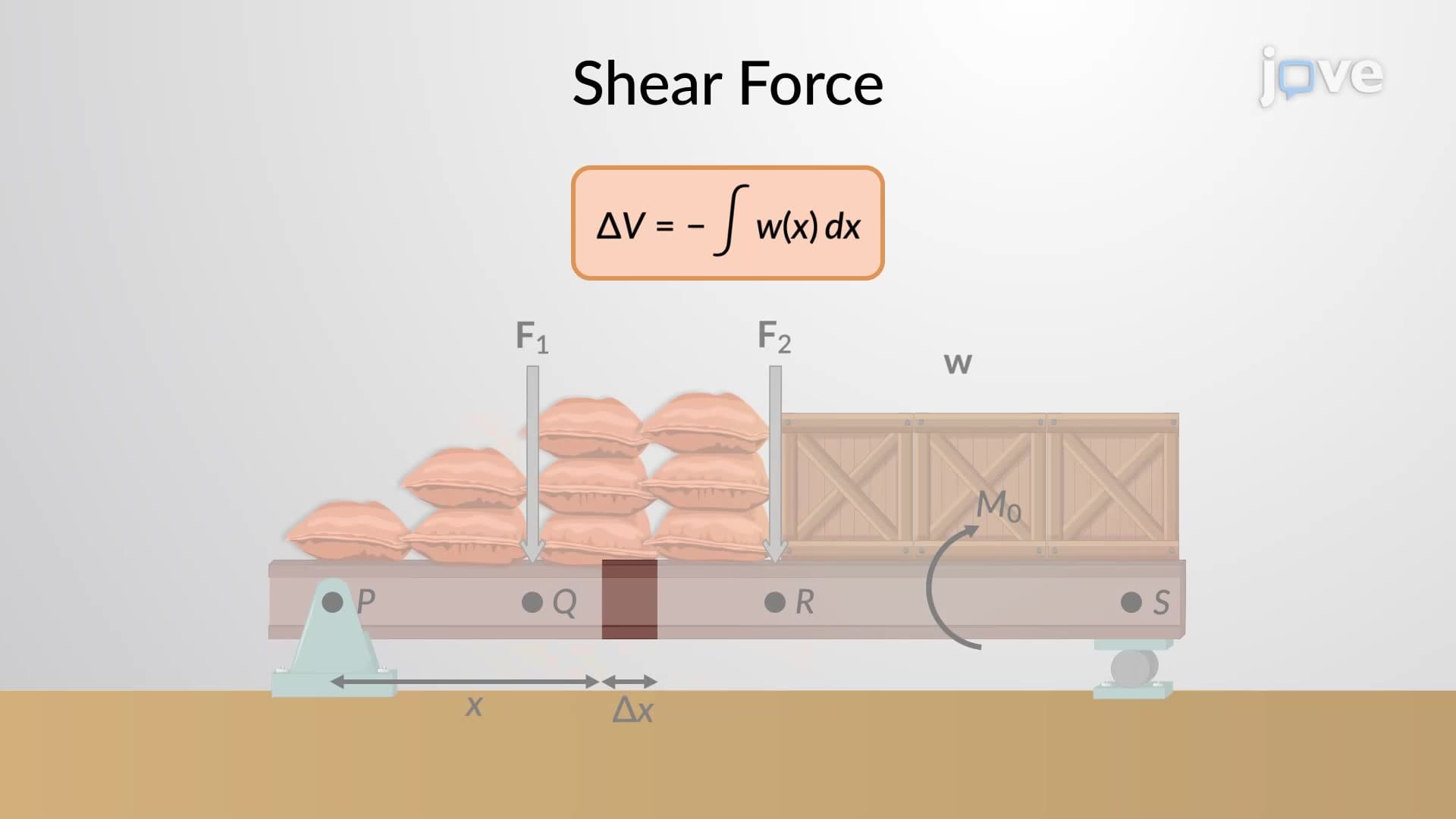

Video Summary: Relation Between the Distributed Load Explained
Ever wonder why highway bridges don't collapse under the weight of traffic spread across their entire length? The relation between the distributed load and structural forces is what keeps these massive structures standing safely. Understanding this fundamental engineering principle is crucial for analyzing how beams respond to loads distributed over their span, like snow on a roof beam or cars on a bridge deck in states like California or New York. This concept forms the backbone of structural analysis in civil and mechanical engineering applications. Watch the full video on JoVE Coach to master this concept with expert-led visuals and step-by-step explanations.
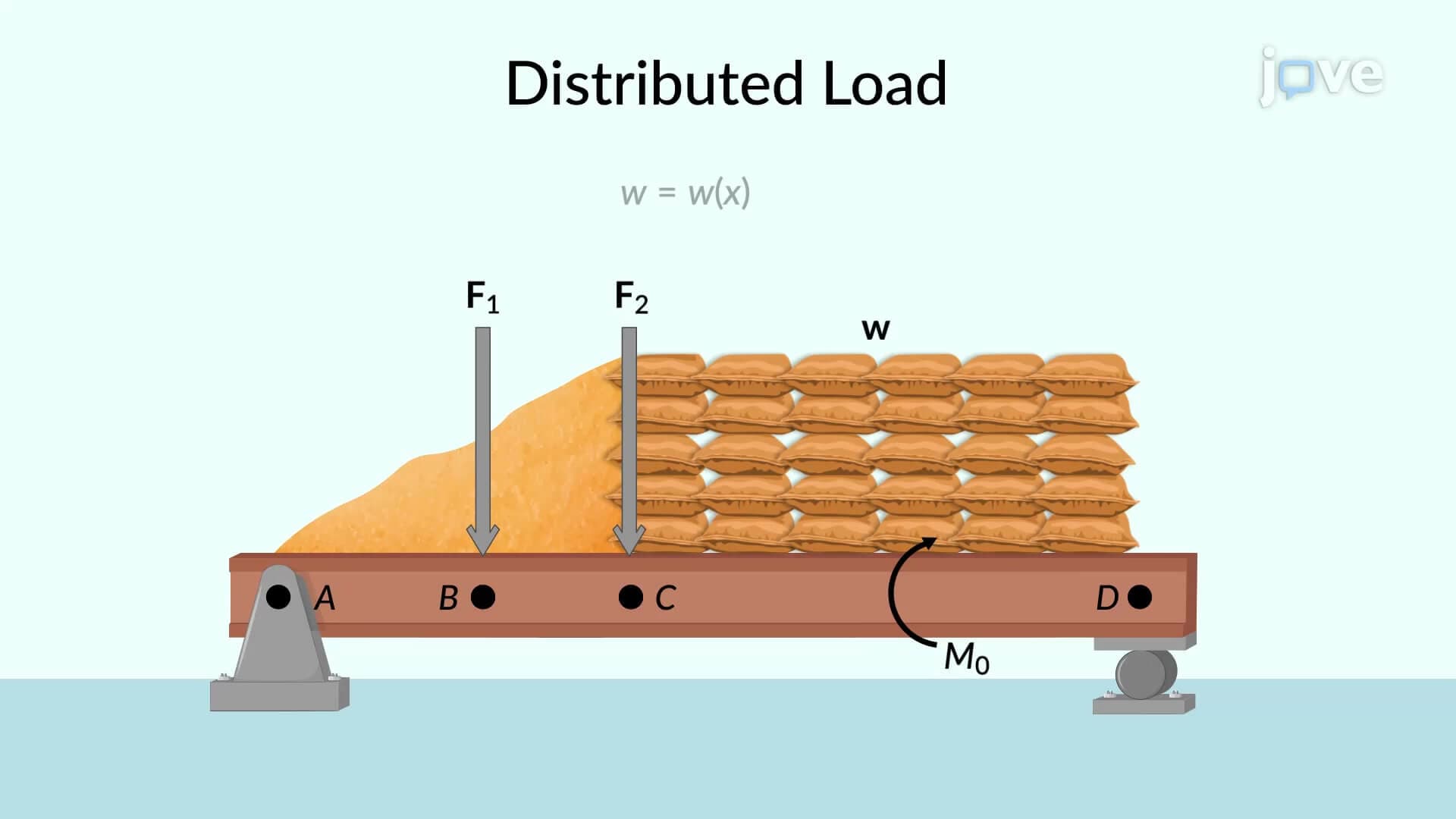
The relation between the distributed load represents one of the most fundamental principles in structural mechanics and engineering statics. This relationship forms the mathematical foundation for analyzing how beams, columns, and other structural elements respond to loads that are spread continuously over their length rather than applied at single points.
When engineers analyze structures like the suspension cables of San Francisco's Golden Gate Bridge or the floor joists in residential construction, they must understand how distributed loads create internal forces. The key insight comes from examining an infinitesimal element of a beam under distributed loading conditions.
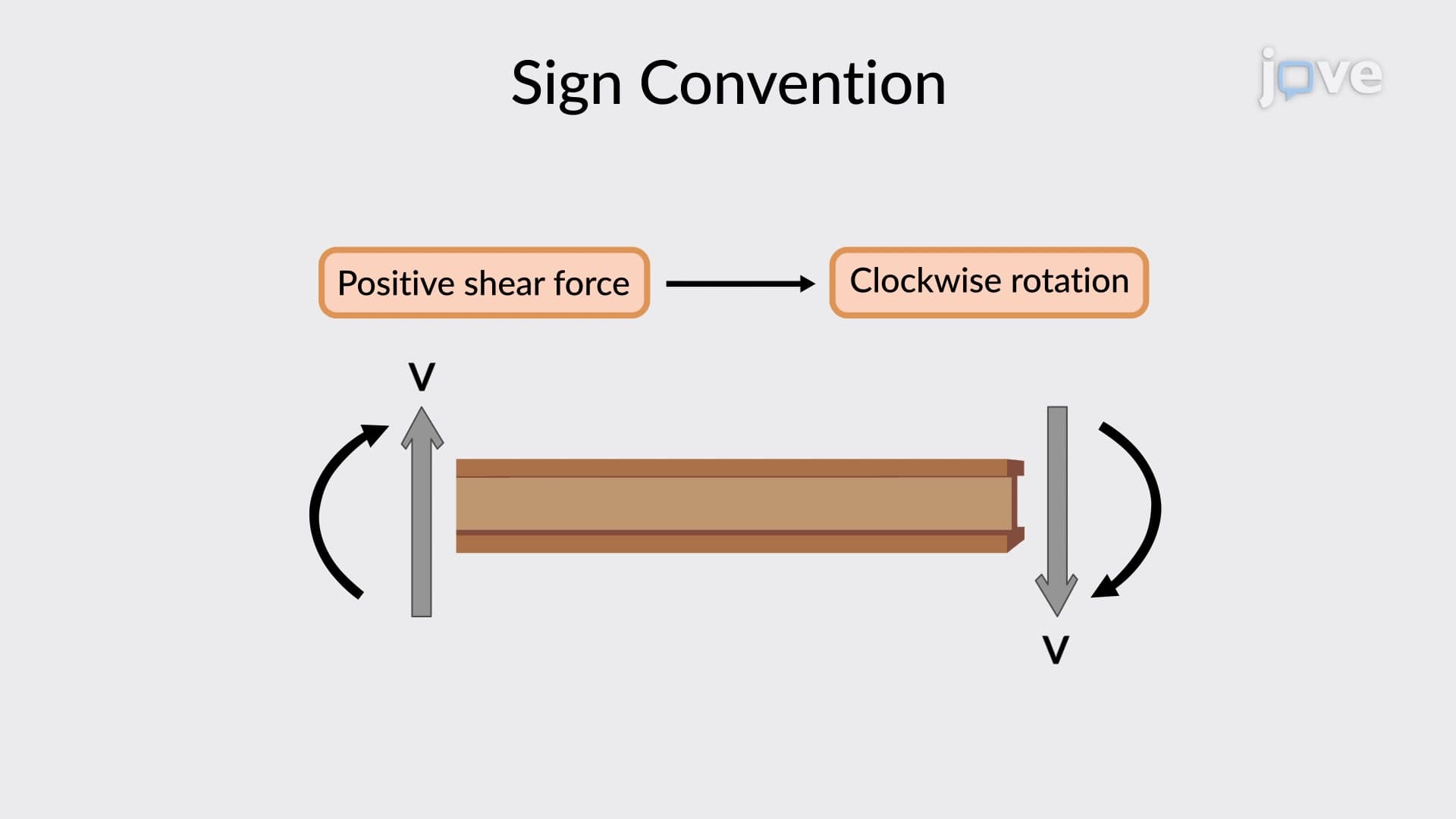
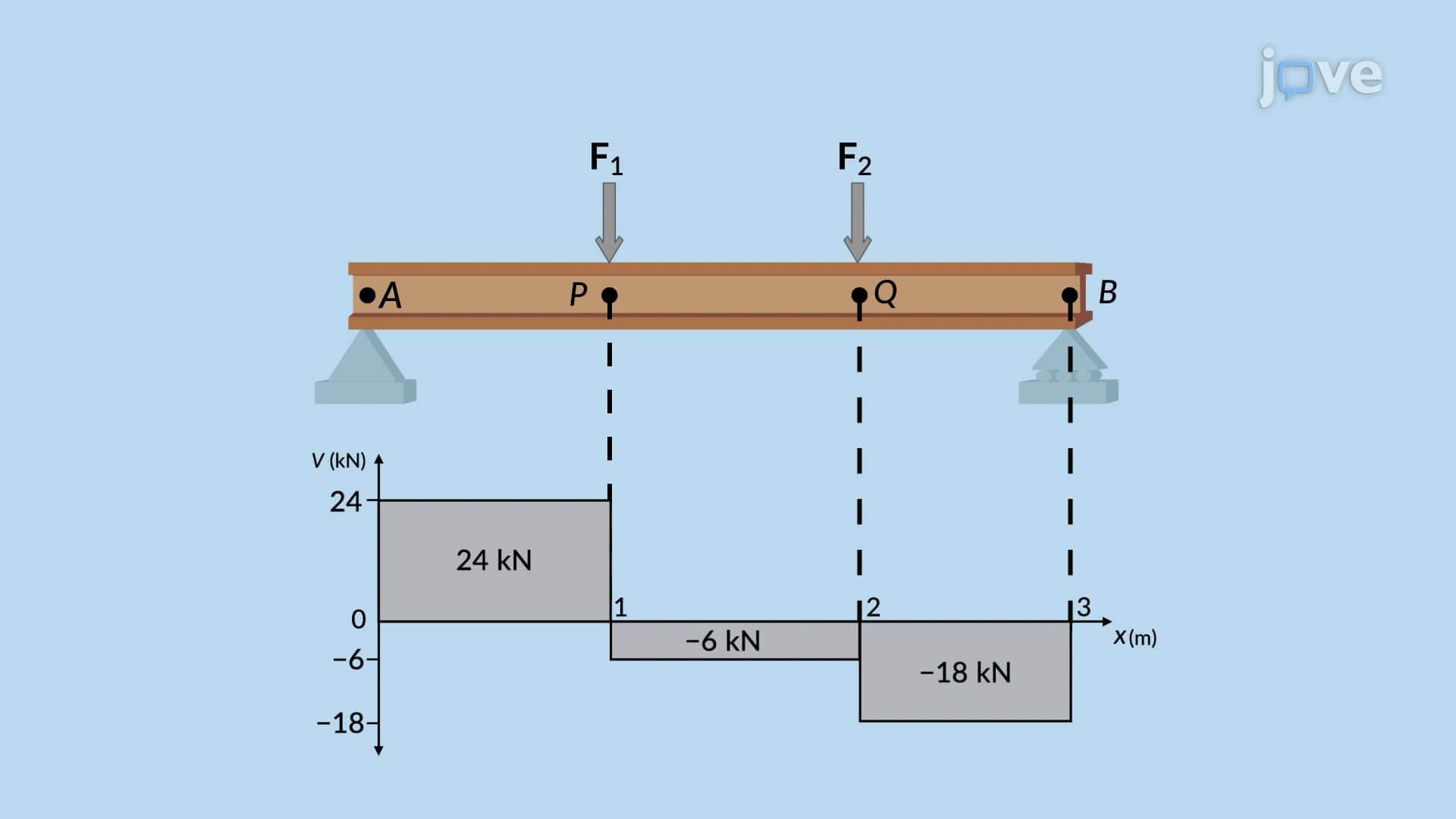
Consider a small section of length dx cut from a beam experiencing distributed load w(x). For this element to remain in equilibrium, the sum of vertical forces must equal zero. The shear force V(x) acting on the left face must balance the shear force V(x) + dV on the right face, plus the resultant of the distributed load over the element length.
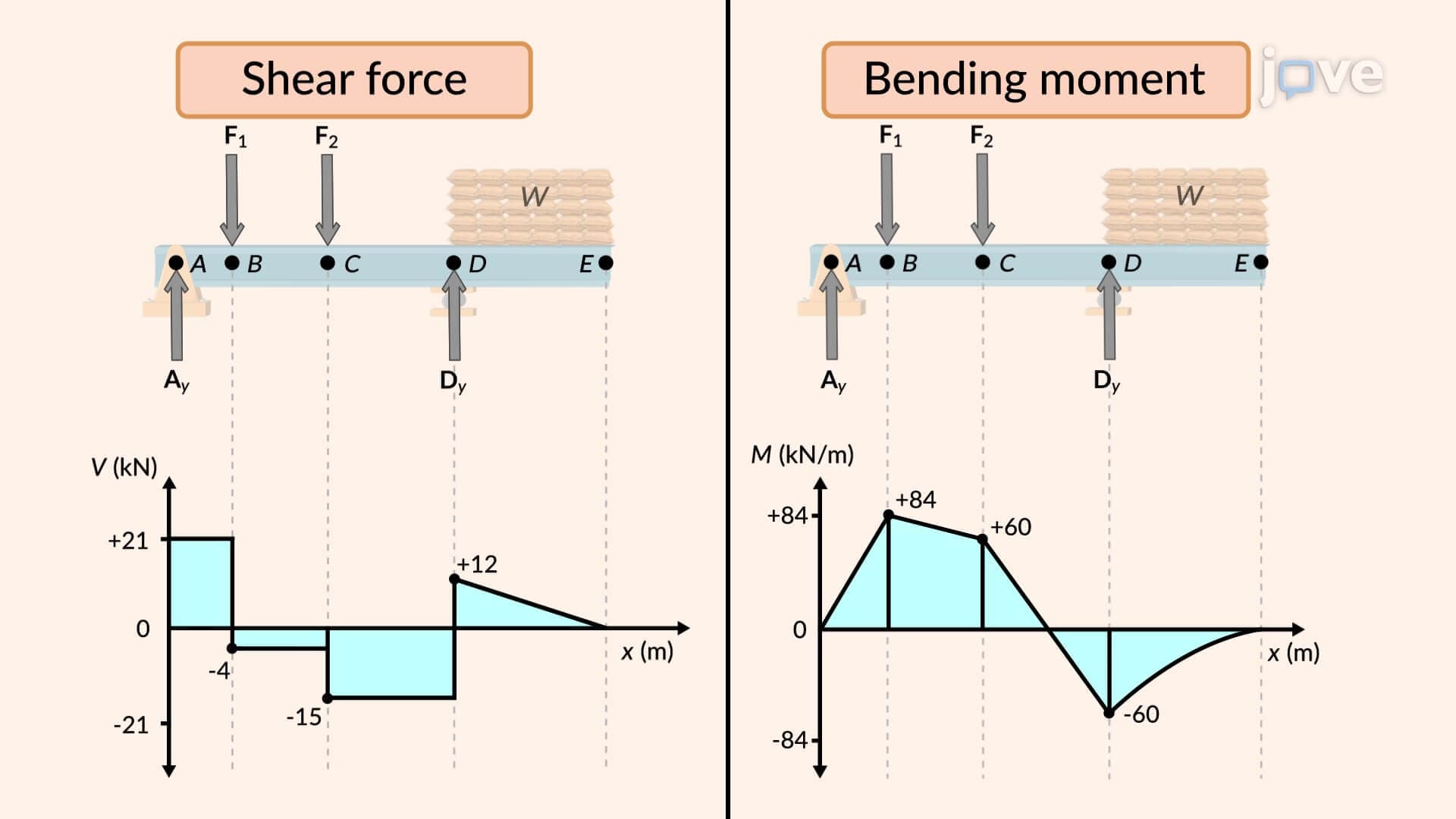
This equilibrium condition leads to the fundamental relationship: dV/dx = -w(x), where V represents shear force and w represents the distributed load intensity. This equation tells us that the slope of the shear force diagram at any point equals the negative value of the distributed load intensity at that same point.
This relation between the distributed load concept appears throughout engineering practice and academic coursework. In AP Physics C: Mechanics, students encounter these principles when analyzing beam bending problems. College-level statics and mechanics of materials courses, such as those at MIT or Stanford, extensively cover these relationships as prerequisites for advanced structural analysis.
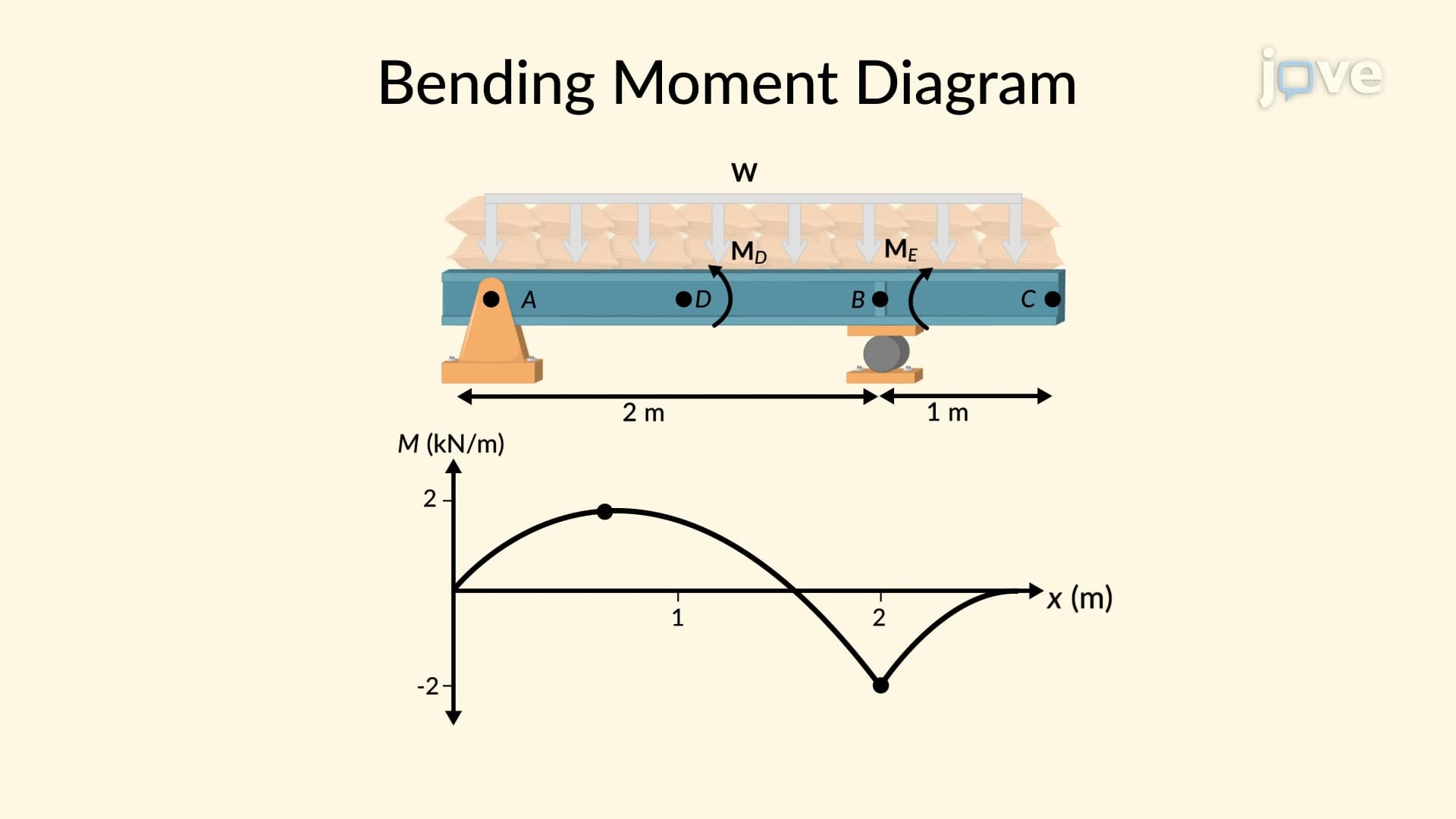
Real-world applications include designing hospital floors that must support distributed patient and equipment loads, calculating snow load effects on warehouse roofs in Colorado, or analyzing wind pressure distributions on skyscrapers in Chicago. The integration aspect of this relationship allows engineers to determine total shear force changes by calculating the area under the distributed load curve between any two points along the beam.
The integration of the fundamental differential equation reveals that the change in shear force between two points equals the area under the distributed load curve between those same points. Mathematically: ΔV = -∫w(x)dx. This powerful relationship enables engineers to construct shear force diagrams graphically and perform complex structural analyses using relatively simple geometric calculations.
Related Micro-courses