Loading video…


 14 Concepts
 24.5K views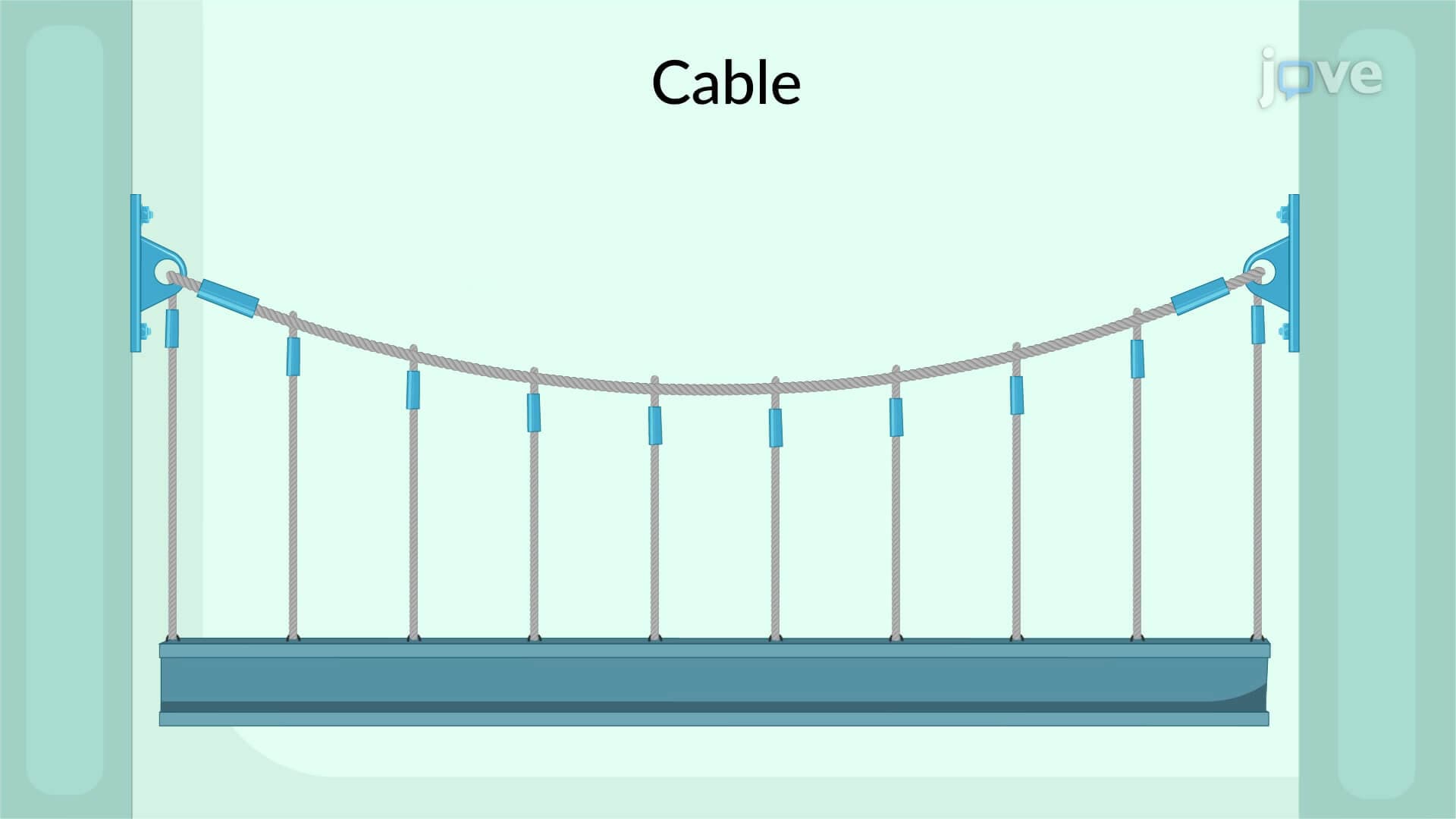

Video Summary: What Is Cable Problem Solving
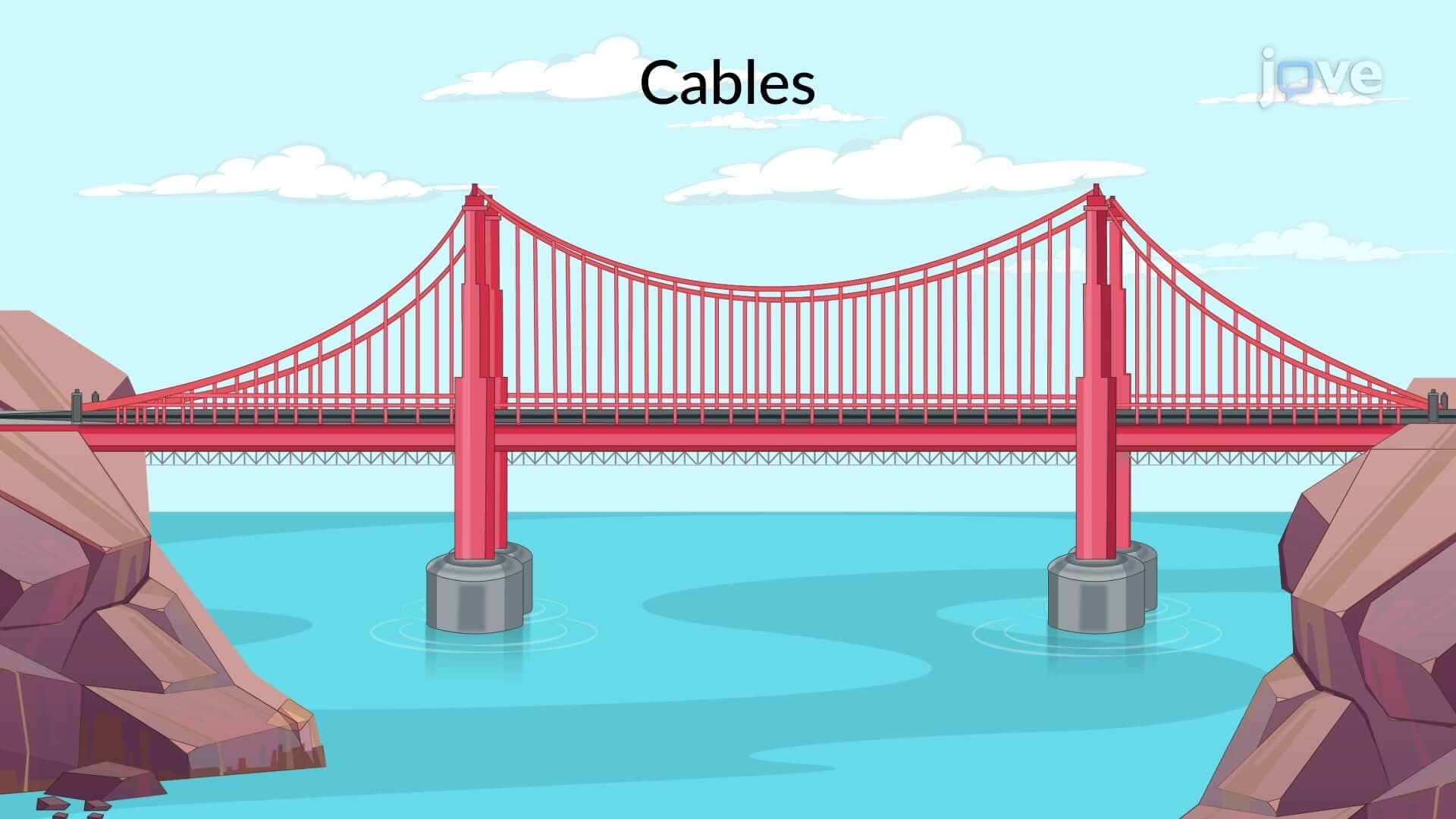
Ever wondered how engineers ensure suspension bridges like the Golden Gate Bridge can safely carry thousands of vehicles daily? Cable problem solving is the engineering method used to analyze cables under various loads and determine critical forces like maximum tension. This fundamental concept in structural mechanics involves mathematical equations to predict how cables behave under distributed loads, ensuring safety in real-world applications from bridge construction to power line installation. Watch the full video on JoVE Coach to master this concept with expert-led visuals and step-by-step explanations.
Cable problem solving represents a critical area of structural engineering that focuses on analyzing flexible structural elements under various loading conditions. Unlike rigid beams or columns, cables can only resist tension forces and naturally form curved shapes when loaded. This unique behavior makes cable analysis both challenging and essential for engineers designing suspension systems, from the iconic Brooklyn Bridge in New York to modern cable-stayed structures across the United States.
The mathematical foundation of cable problem solving begins with establishing the cable's shape equation under distributed loading. Engineers typically place the coordinate system origin at the cable's lowest point due to symmetry, simplifying calculations. The governing differential equation relates the cable's curvature to the applied load intensity, requiring integration to determine the cable's profile.
For uniformly distributed loads-common in bridge decks and building floors-the cable forms a parabolic shape. The integration process involves applying boundary conditions at specific points, such as the cable's center and support locations. These conditions help determine integration constants (C1 and C2), which are crucial for finding the exact cable geometry and internal forces.
Cable tension varies along the cable's length, reaching maximum values at the support points where the cable angle is steepest. The horizontal component of tension remains constant throughout the cable, while the total tension increases with the cable's slope. This relationship follows the fundamental equation: T = H / cos(θ), where T is total tension, H is horizontal tension, and θ is the cable angle.
Understanding this tension distribution proves essential for AP Physics courses and college-level statics classes, where students must analyze cable systems for structural adequacy. The maximum tension calculation involves substituting the support coordinates into the slope equation, then applying trigonometric relationships to find the final result.
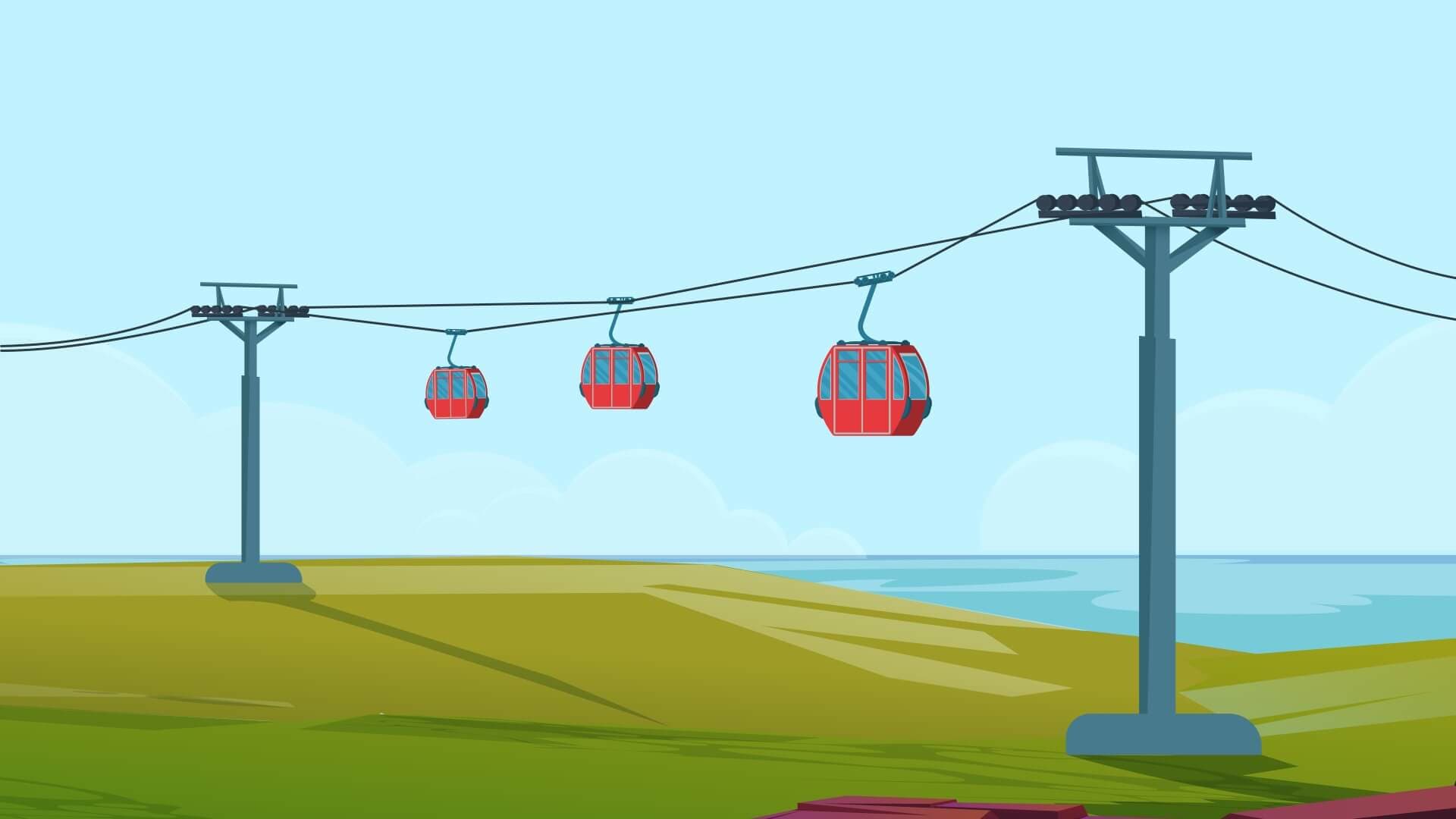
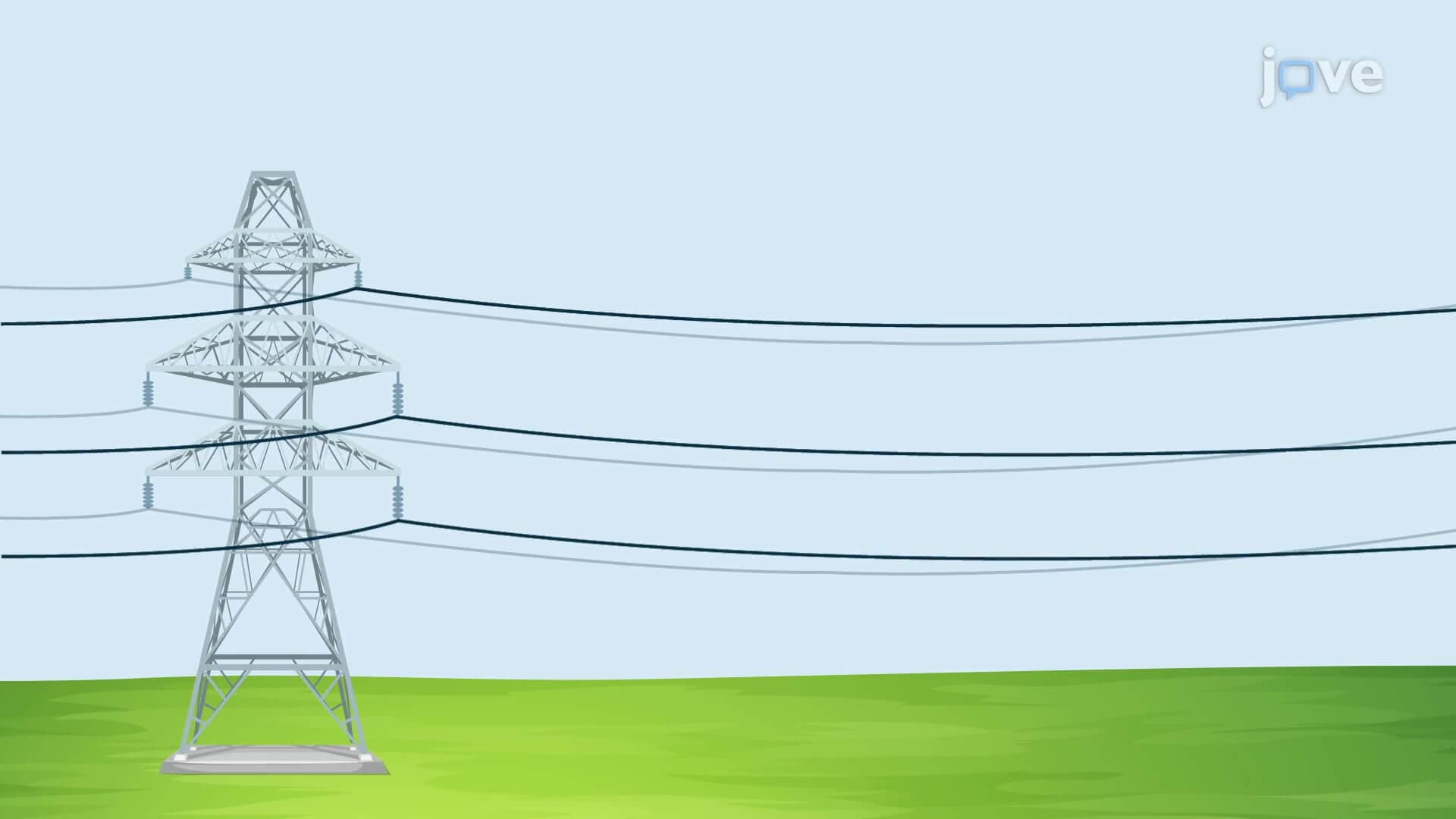
Cable problem solving directly impacts numerous US infrastructure projects. The Verrazzano-Narrows Bridge connecting Staten Island and Brooklyn demonstrates these principles on a massive scale, with main cables supporting the entire bridge deck load. Power transmission lines across states like Texas and California rely on similar analysis to ensure safe operation under wind and ice loading conditions.
Engineers working on these projects must consider factors beyond basic cable theory, including dynamic effects, material properties, and safety factors. The Federal Highway Administration requires specific cable analysis procedures for bridge projects, making this knowledge essential for professional engineering licensure examinations.
Related Micro-courses