Loading subject page…


5,775 views

Video Summary: Stress on an Oblique Plane Explained
Ever wonder why a steel beam in Chicago's Willis Tower can handle massive loads from different angles? Stress on an oblique plane occurs when forces act on structural members at various angles, creating both normal and shearing stress components. Consider a bridge cable under tension - depending on how we analyze the cross-section, the same force creates different stress patterns. Understanding Stress On An Oblique Plane Explained reveals how engineers predict material behavior under complex loading conditions. Watch the full video on JoVE Coach to master this concept with expert-led visuals and step-by-step explanations.
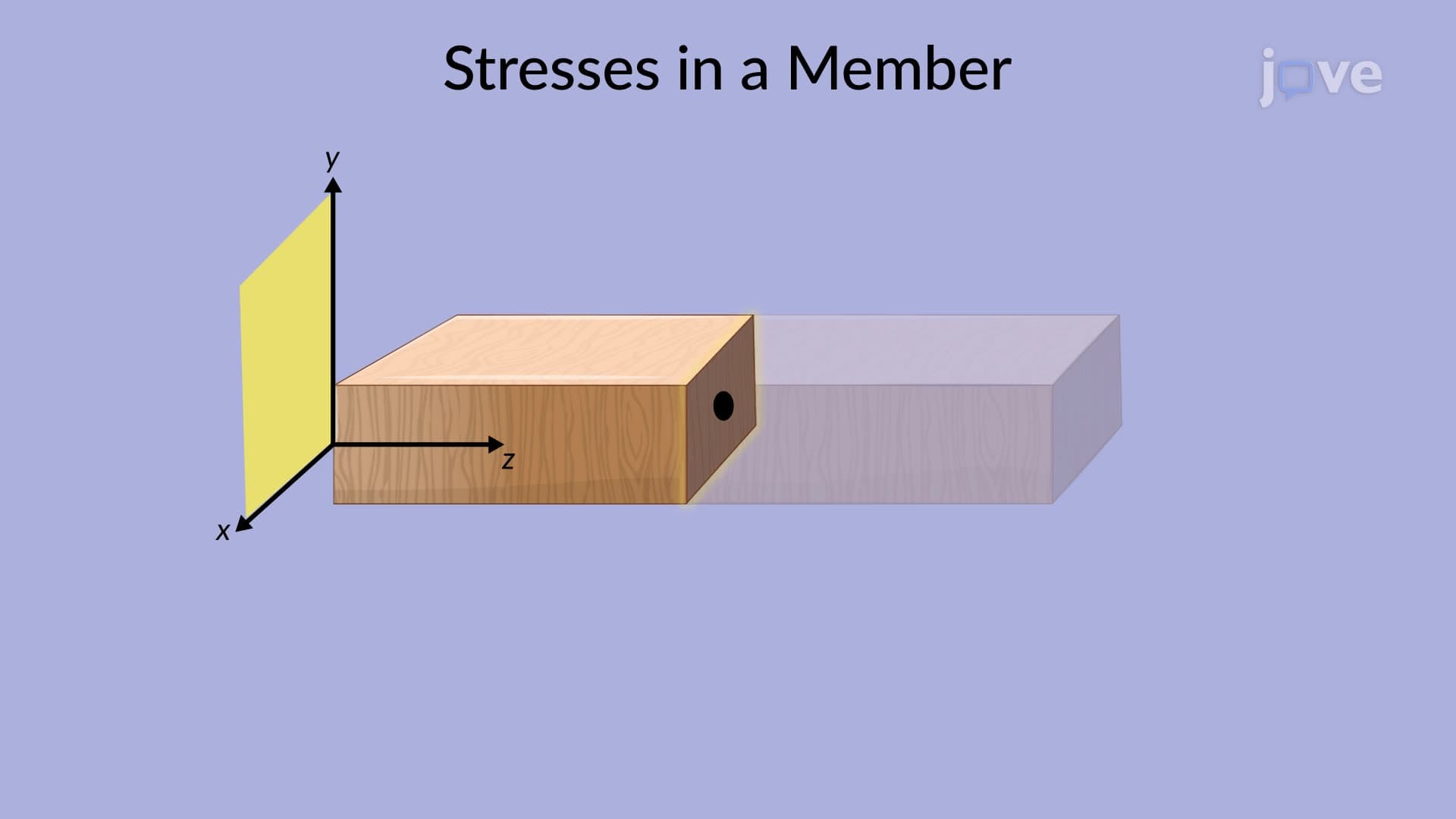
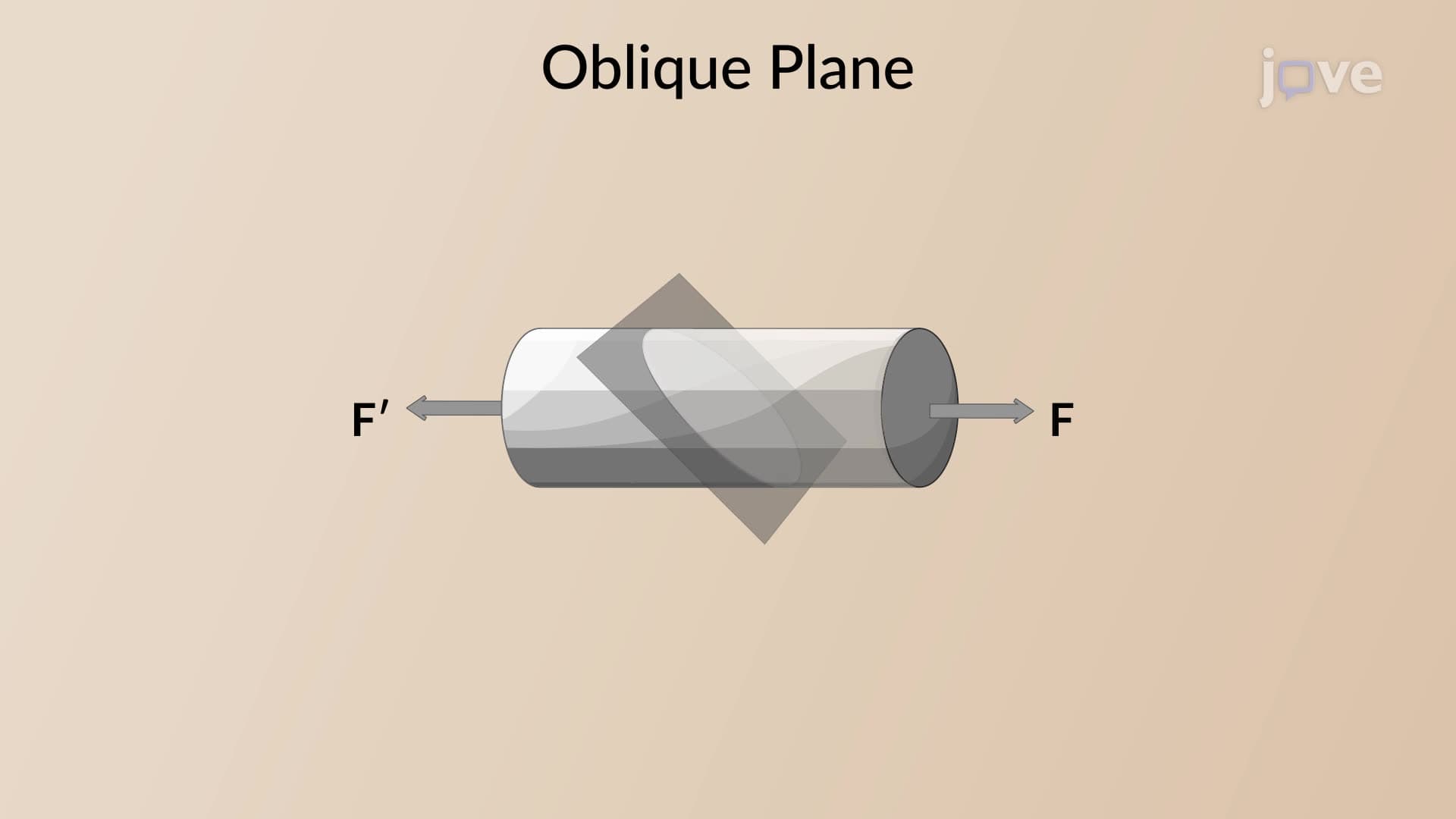
When structural members experience axial forces, the internal stress distribution depends critically on how we examine the cross-section. Stress on an oblique plane represents the sophisticated analysis technique engineers use to understand material behavior when sectional planes aren't perpendicular to the loading direction. This concept forms the foundation for advanced structural analysis taught in college-level mechanics of materials courses and appears frequently on engineering licensing exams.
The key insight lies in recognizing that oblique planes experience two distinct stress types simultaneously. Normal stress acts perpendicular to the sectional surface, representing the direct pulling or pushing effect of applied forces. Shearing stress acts parallel to the section, creating sliding tendencies within the material. For example, when analyzing a suspension bridge cable under tension, cutting through the cable at different angles reveals varying combinations of these stress components, even though the applied load remains constant.
The mathematical beauty emerges in how stress magnitude varies predictably with plane orientation. Maximum normal stress occurs when the sectional plane sits perpendicular to the member's axis - this represents the classic tensile or compressive stress scenario covered in introductory physics courses and AP Physics C mechanics. As the plane angle increases, normal stress decreases while shearing stress develops. At 45 degrees, shearing stress reaches its maximum value, equal to half the maximum normal stress. This relationship explains why materials often fail along diagonal planes rather than straight across.
Understanding oblique plane stress proves essential for MCAT physics sections, college engineering courses, and professional engineering examinations. Real-world applications include analyzing aircraft wing struts under complex loading, designing earthquake-resistant building connections, and predicting failure modes in automotive components. California's seismic building codes, for instance, require engineers to consider how structural members respond to forces from multiple directions, making oblique plane analysis indispensable for safe design.
This concept bridges introductory mechanics with advanced material science, preparing students for topics like Mohr's circle analysis, principal stresses, and three-dimensional stress states encountered in upper-level engineering coursework.
Related Micro-courses