Loading video…


 8 Concepts
 5.8K views

Video Summary: What Is Design Consideration
Ever wonder why the Golden Gate Bridge can support 887,000 tons despite weighing only 887,000 tons itself? Design consideration is the systematic process engineers use to ensure structures can safely handle loads far beyond their expected use. This comprehensive approach involves analyzing material strength, safety factors, and load uncertainties-the same principles that keep San Francisco's iconic bridge standing strong after nearly 90 years. Understanding what is design consideration reveals how engineers balance performance, safety, and economics in everything from skyscrapers to smartphones. Watch the full video on JoVE Coach to master this concept with expert-led visuals and step-by-step explanations.
Design consideration encompasses the comprehensive evaluation process that engineers and designers use to create safe, functional, and efficient structures or products. This systematic approach begins with understanding material behavior under stress, progressing through safety analysis, and culminating in practical design decisions that protect both users and property.
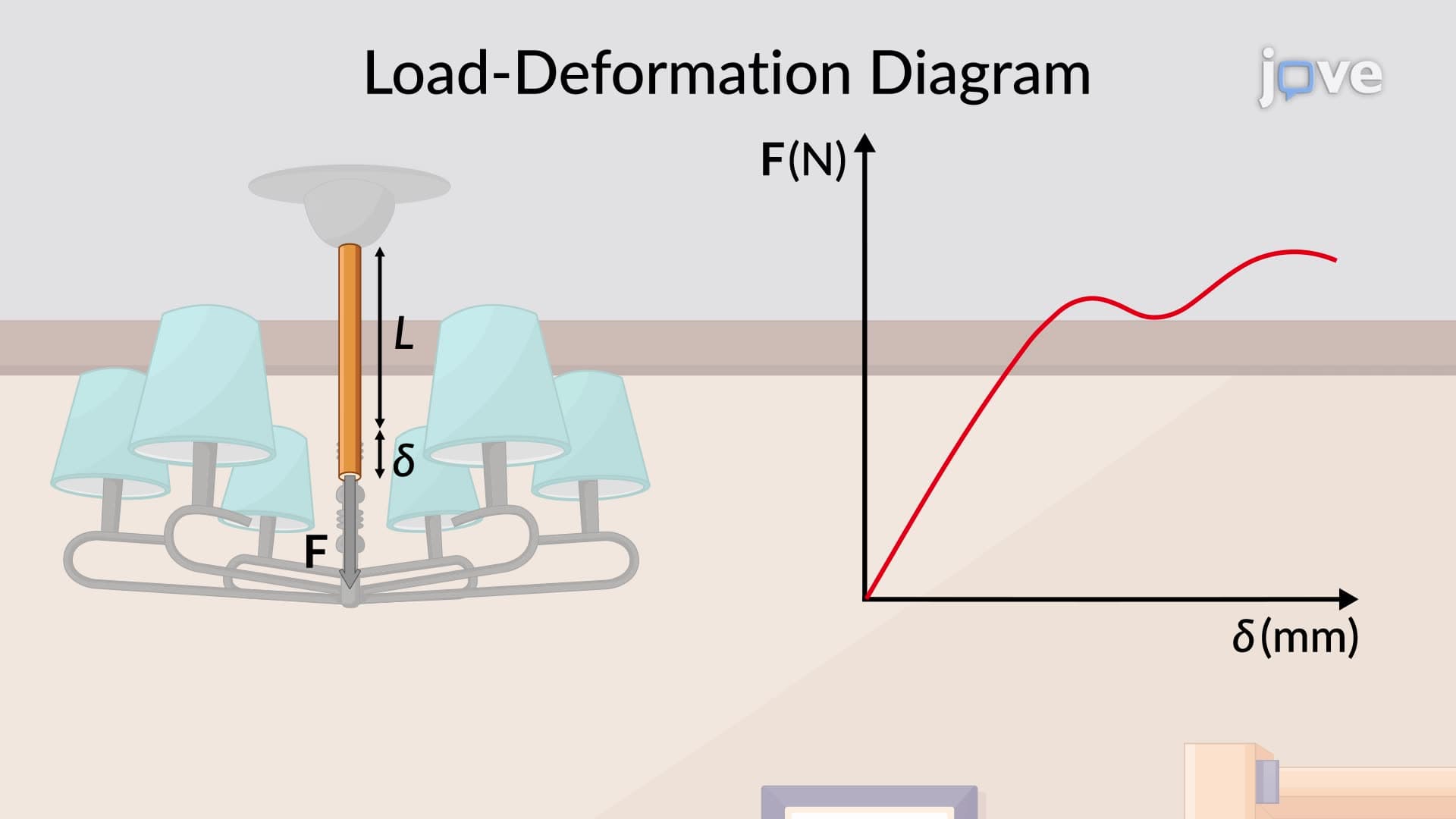
The foundation of any design consideration lies in material testing and ultimate strength determination. Engineers conduct rigorous tests where materials are subjected to increasing loads until failure occurs. This process reveals the ultimate load-the maximum force a material can withstand before breaking. The ultimate normal stress, calculated as the ratio of ultimate load to original cross-sectional area, provides crucial data for design decisions. For instance, when designing the supports for Chicago's Willis Tower, engineers needed precise ultimate strength data for steel beams to ensure they could handle both the building's weight and extreme wind loads.
The factor of safety represents one of the most critical design considerations, serving as the ratio between ultimate load capacity and allowable load in actual use. This isn't just a simple multiplication-it's a carefully calculated buffer that accounts for real-world uncertainties. Consider the Interstate Highway System: bridge designers don't just calculate loads for typical traffic; they factor in potential overweight vehicles, material degradation over decades, and even seismic activity.
Selecting an appropriate factor of safety requires evaluating multiple variables: material property variations between batches, unexpected loading scenarios, different failure modes, uncertainties in analytical calculations, long-term deterioration effects, structural importance to public safety, and potential risks to life and property. A pedestrian bridge might use a factor of safety of 3, while a nuclear power plant structure might require factors of 10 or higher.
Traditional design follows the allowable-stress method, which lumps all uncertainties into a single safety factor. This approach, while straightforward, can be overly conservative or insufficient depending on the specific application. For example, when designing a residential deck, this method might result in overbuilt, expensive structures.
The Load and Resistance Factor Design (LRFD) method offers a more sophisticated approach by distinguishing between different types of uncertainties. It separately considers structural uncertainties (material properties, construction quality) and load uncertainties, while differentiating between predictable dead loads (permanent fixtures) and variable live loads (occupancy, snow, wind). This method appears in modern building codes and is tested on engineering exams like the Fundamentals of Engineering (FE) exam and Professional Engineering (PE) licensure tests.
Students preparing for AP Physics or college-level statics courses will encounter these concepts when analyzing beam deflection, truss analysis, and material selection problems. Understanding design considerations provides the critical thinking framework needed to approach complex engineering problems systematically.
Related Micro-courses