Loading subject page…


53,692 views

Video Summary: Strong Acid Strong Base Titration Theory and Calculations
Ever wondered why stomach acid medications work so precisely? A strong acid base titration between hydrochloric acid (HCl) and sodium hydroxide (NaOH) demonstrates the exact neutralization principles used in antacids like Tums and Rolaids. This Strong Acid-Strong Base Titration: Theory and Calculations process shows how pH changes dramatically from acidic to neutral (pH 7) at the equivalence point, then becomes basic as excess base is added. Watch the full video on JoVE Coach to master this concept with expert-led visuals and step-by-step explanations.
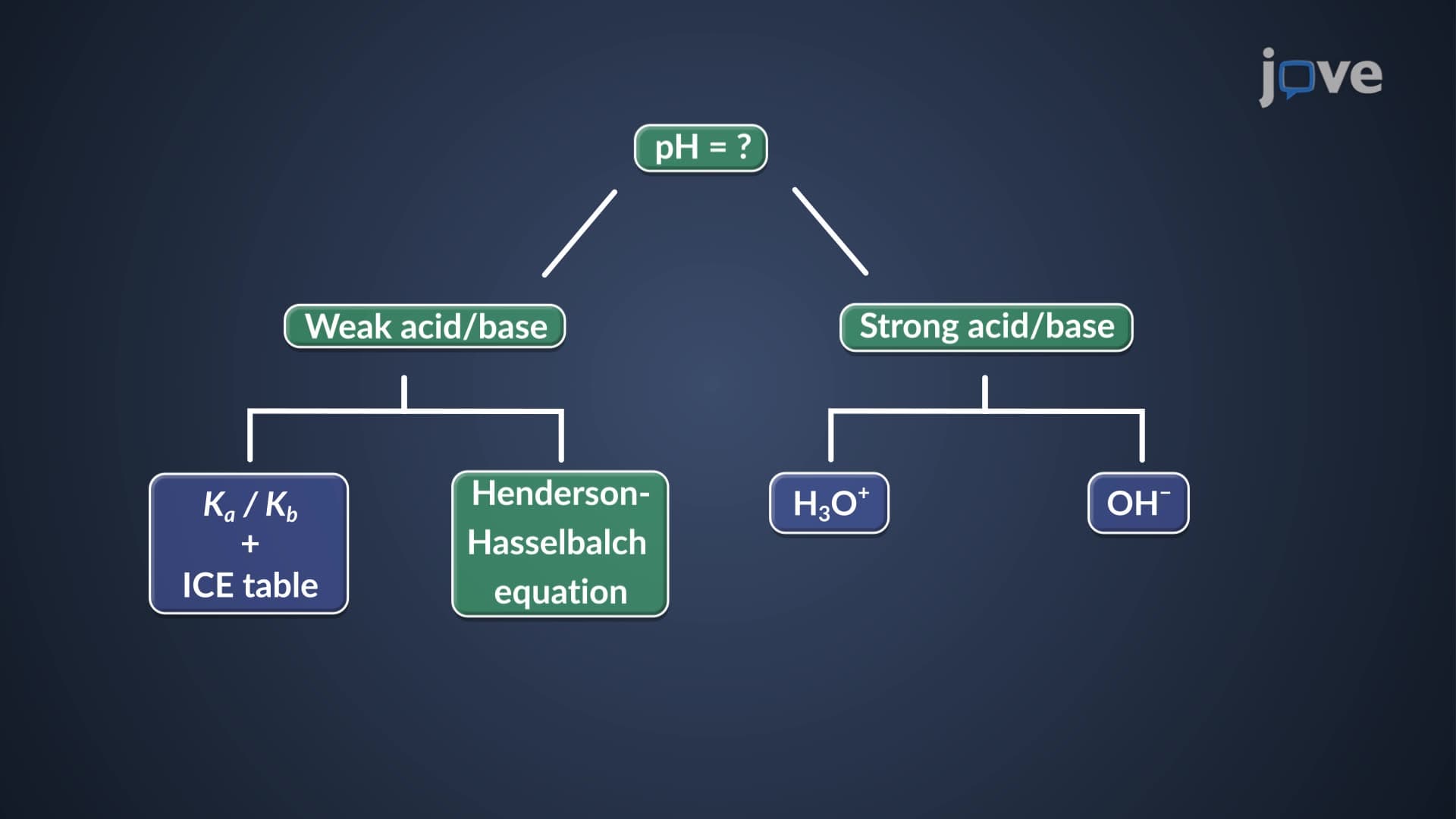
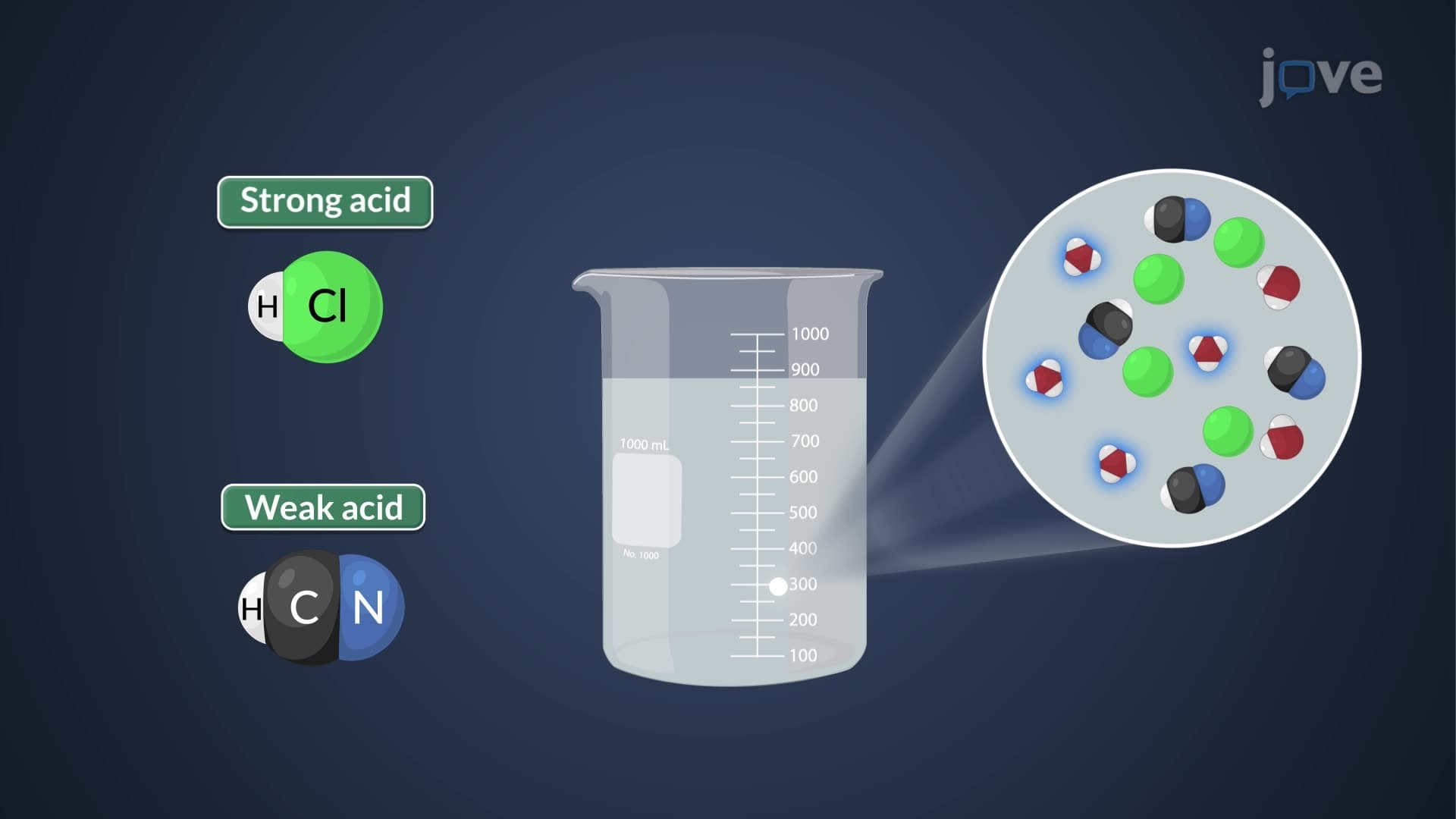
Strong acid base titration represents one of the most fundamental analytical techniques in chemistry, where a strong acid completely neutralizes a strong base in a predictable, stoichiometric manner. Unlike weak acid-base systems, strong acids like hydrochloric acid (HCl) and strong bases like sodium hydroxide (NaOH) dissociate completely in aqueous solution, making calculations straightforward and endpoints sharp.
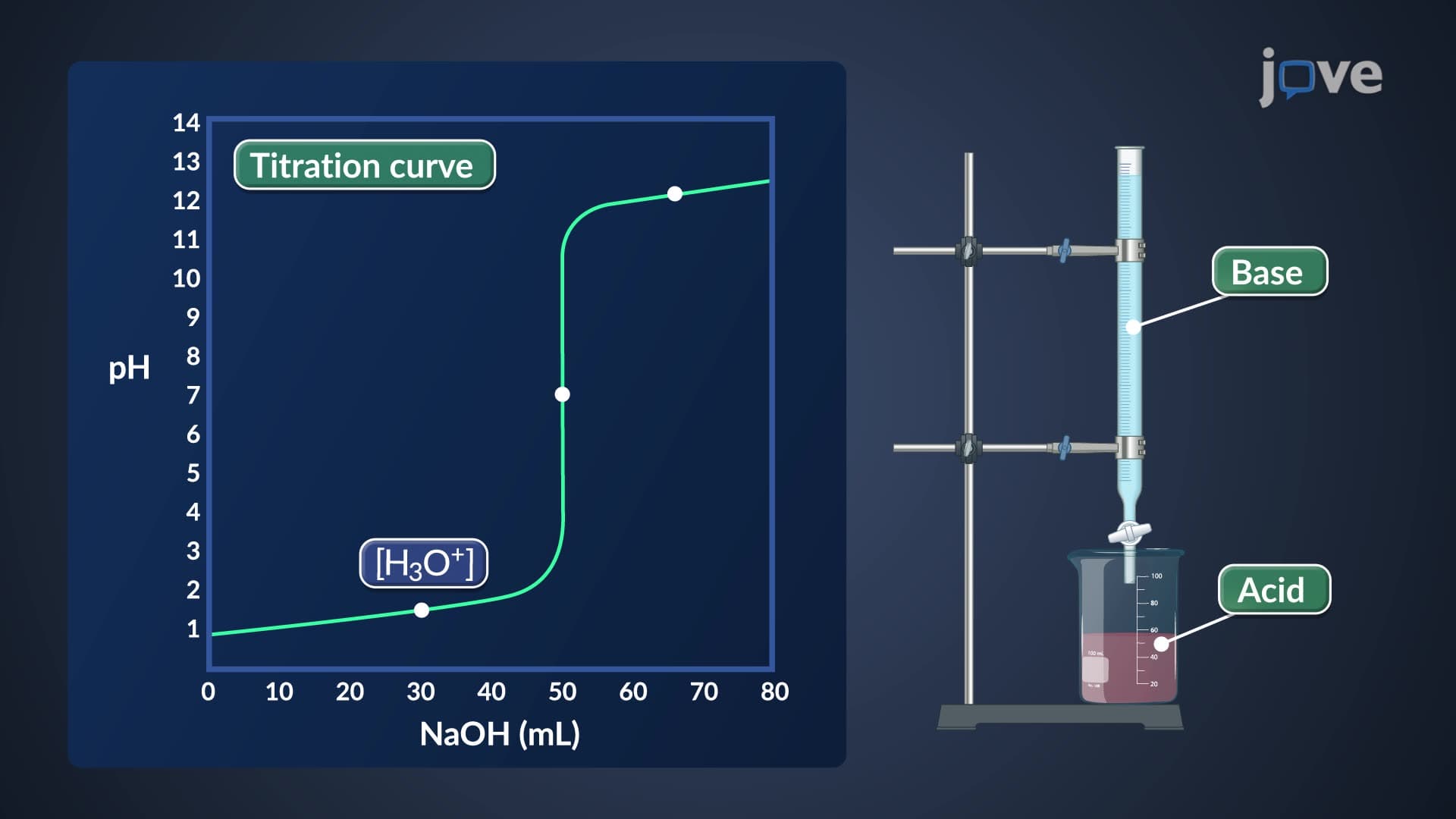
The process begins with a strong acid solution of known concentration. For example, 0.1 M HCl completely ionizes to produce 0.1 M H3O+ ions, establishing an initial pH around 1. This complete dissociation distinguishes strong acids from weak acids like acetic acid, which only partially ionize.
How to calculate strong acid base titration involves understanding the stoichiometric relationship between acid and base. As NaOH is added, each mole of OH- neutralizes exactly one mole of H3O+ according to the reaction: H3O+ + OH- → 2H2O.
The calculation process follows these steps: 1. Calculate initial moles of H3O+ from acid concentration and volume 2. Calculate moles of OH- added from base concentration and volume added 3. Determine excess moles (H3O+ or OH-) by subtraction 4. Calculate new concentration using total solution volume 5. Convert to pH or pOH as appropriate
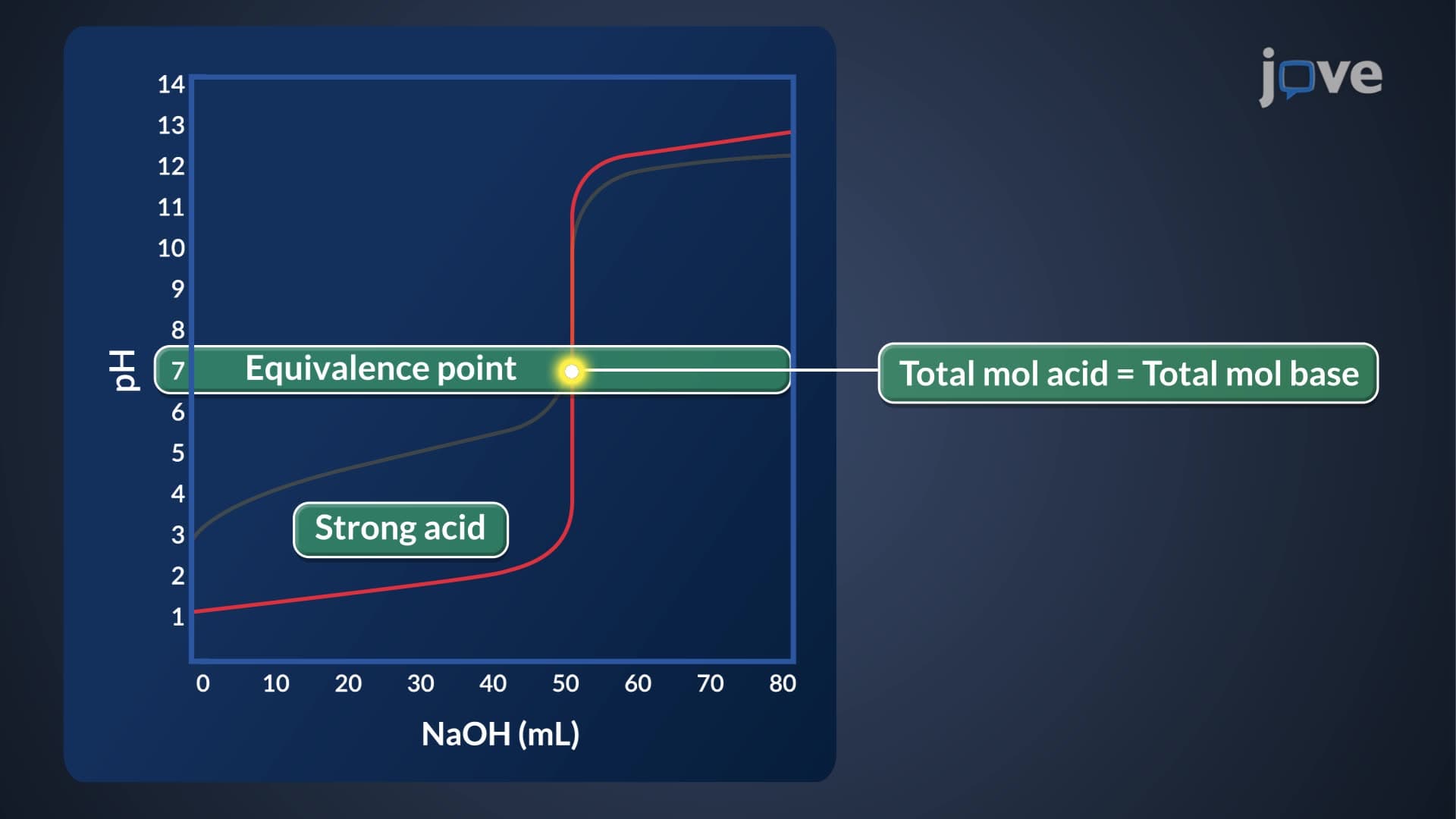
Before the equivalence point, excess H3O+ determines pH. At the equivalence point, pH equals 7. After the equivalence point, excess OH- determines pOH, which converts to pH using pH + pOH = 14.
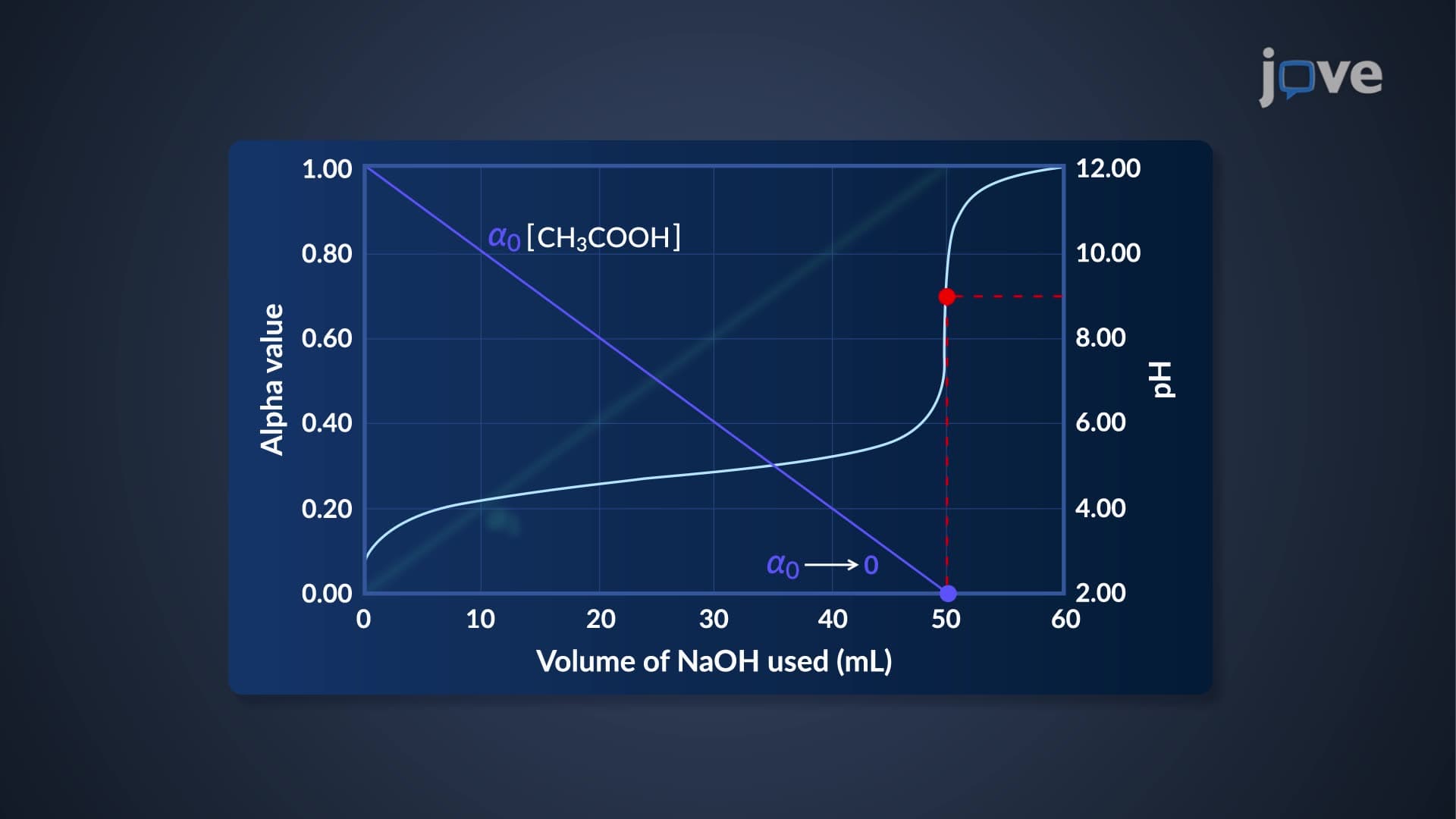
The strong acid strong base titration curve displays a characteristic S-shaped plot with three distinct regions. Initially, pH rises gradually as acid is neutralized. Near the equivalence point, pH increases dramatically over a small volume range-this sharp transition makes endpoint detection straightforward using indicators like phenolphthalein or methyl orange.
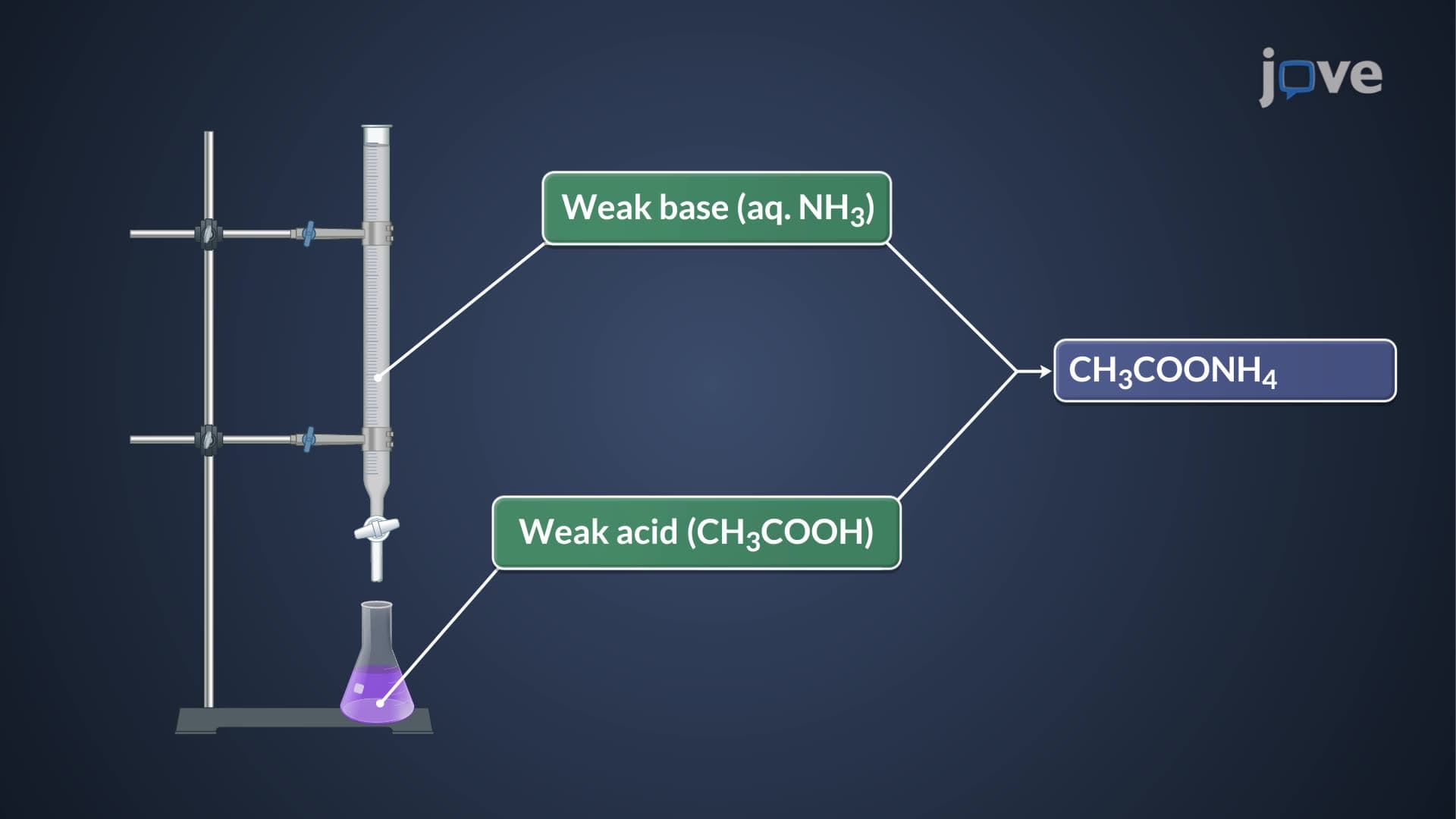
This sharp endpoint contrasts with weak acid-base titrations, which show gradual pH changes and require careful indicator selection. The predictable nature of strong acid-strong base titrations makes them ideal for analytical applications in pharmaceutical manufacturing, water treatment facilities, and food processing industries.
Strong acid-base titrations appear frequently on AP Chemistry exams, college general chemistry courses, and MCAT practice tests. Students should master both the conceptual understanding and mathematical calculations, as these form the foundation for more complex acid-base equilibrium problems.
In pharmaceutical quality control, companies like Pfizer and Johnson & Johnson use titration methods to ensure accurate drug concentrations. Environmental laboratories employ similar techniques to monitor acid rain effects and industrial wastewater treatment efficiency across facilities in states like Texas, California, and New York.
Related Micro-courses