Loading subject page…


53,693 views
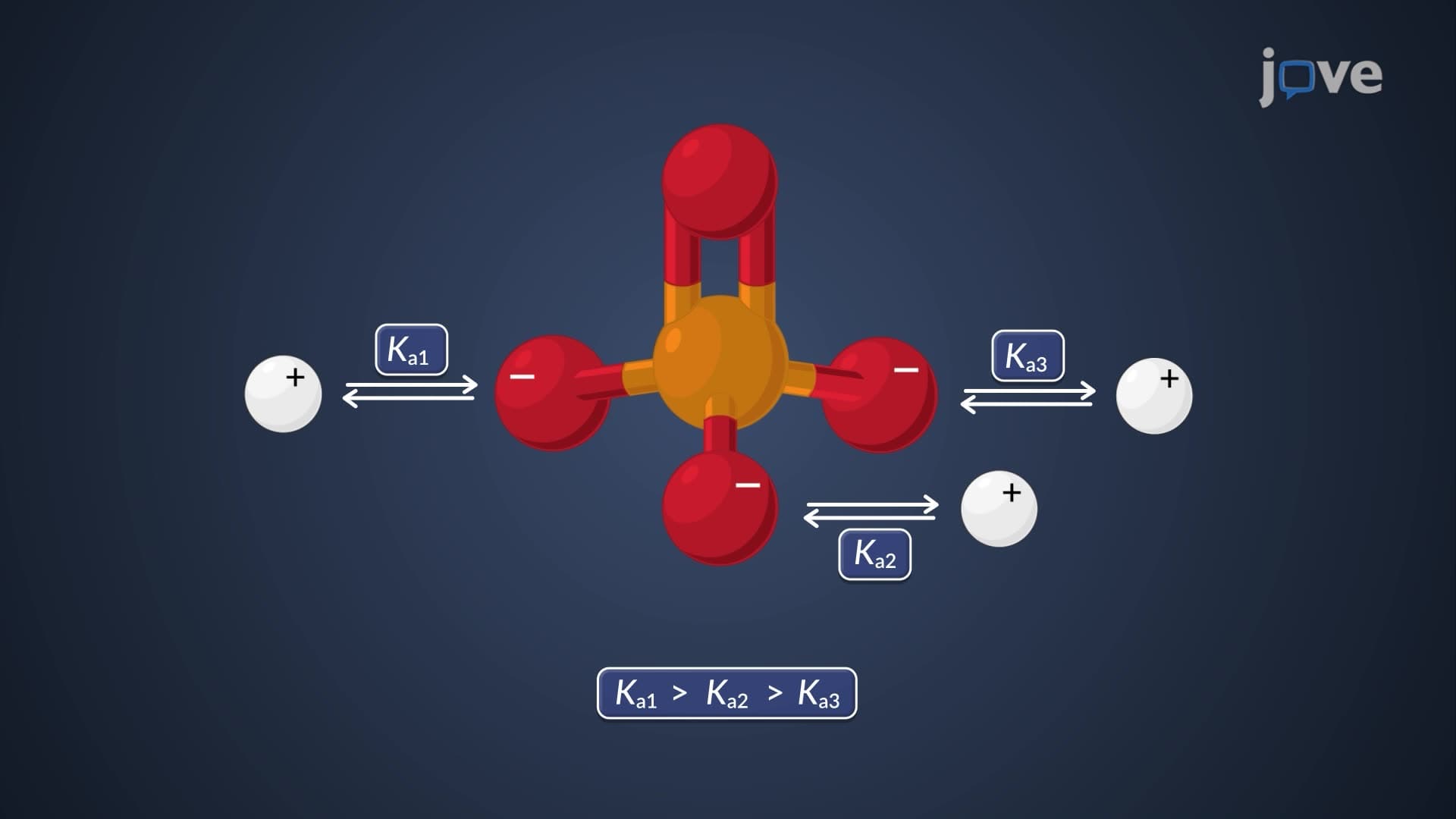

Video Summary: Strong Base Titration of Polyprotic Acids Theory and Equivalence Points
Ever wonder why antacid tablets neutralize stomach acid in multiple stages? Polyprotic acid titration reveals how acids with multiple ionizable protons, like phosphoric acid in cola beverages, release each proton at different pH levels when neutralized with strong bases like sodium hydroxide. Understanding strong base titration of polyprotic acids: theory and equivalence points helps predict exactly when each acidic proton will be neutralized during laboratory analysis. Watch the full video on JoVE Coach to master this concept with expert-led visuals and step-by-step explanations.
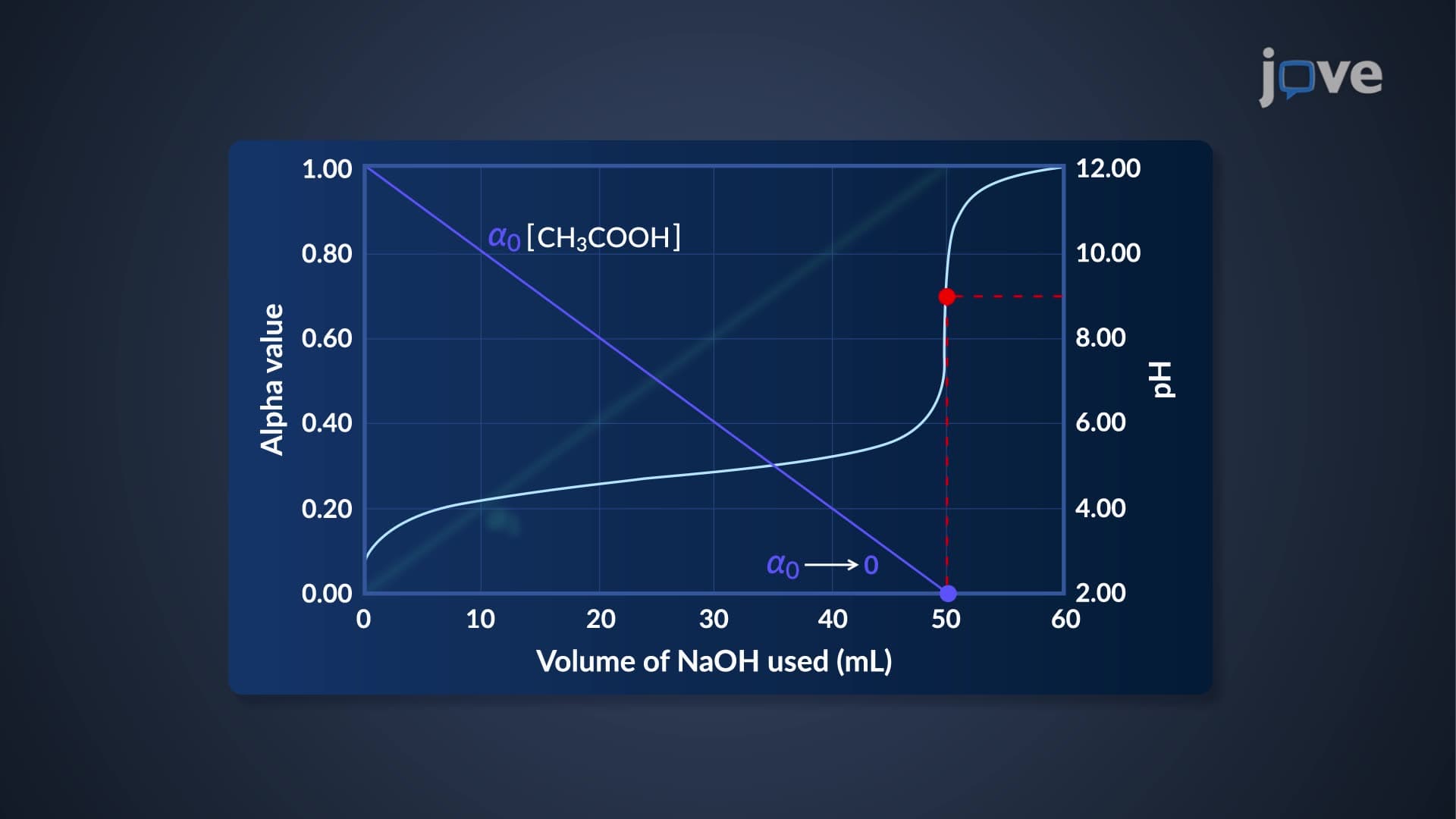
Polyprotic acids represent a fascinating class of compounds that release multiple protons sequentially, creating complex neutralization patterns when titrated with strong bases. Unlike monoprotic acids that exhibit a single, sharp equivalence point, polyprotic acid titration produces distinctive stepped curves with multiple equivalence points corresponding to each ionizable proton.
The key to understanding polyprotic acid behavior lies in recognizing that each successive proton becomes increasingly difficult to remove. For sulfurous acid (H2SO3), the first dissociation constant Ka1 is significantly larger than Ka2. This occurs because removing a proton from a neutral molecule is easier than removing one from an already negatively charged ion. The electrostatic repulsion makes subsequent proton removal energetically unfavorable.
In pharmaceutical analysis, this principle helps quality control chemists determine the purity of aspirin, which contains a carboxylic acid group. Similarly, environmental scientists analyzing acid rain samples rely on these concepts to identify sulfurous and sulfuric acid concentrations in precipitation samples collected across the United States.
During H3PO4 titration curve analysis, three distinct equivalence points emerge, each representing the neutralization of one proton. The first equivalence point occurs when phosphoric acid converts to dihydrogen phosphate (H2PO4-). The second marks the formation of hydrogen phosphate (HPO4 2-), and the third produces phosphate ions (PO4 3-).
Students preparing for AP Chemistry exams frequently encounter multiple proton titration problems involving phosphoric acid because it demonstrates clear stepwise titration acid behavior. The pH at each half-equivalence point equals the respective pKa value, making these curves excellent teaching tools for understanding buffer systems.
The stoichiometry of diprotic acid titration curve analysis follows predictable patterns. For every mole of diprotic acid like carbonic acid (H2CO3), exactly two moles of strong base are required for complete neutralization. This 1:2 molar relationship becomes crucial in analytical chemistry calculations.
College biochemistry students studying metabolic pathways encounter these principles when examining citric acid cycle intermediates. Many organic acids in cellular respiration are polyprotic, and understanding their titration behavior helps explain pH regulation in biological systems. MCAT preparation often includes questions about amino acid titrations, where both carboxyl and amino groups contribute multiple ionizable protons.
Related Micro-courses