Loading subject page…


53,691 views

Video Summary: Weak Acid Strong Base Titration Theory and Calculations
Ever wonder why stomach antacids like Tums neutralize excess acid so effectively? The answer lies in weak acid strong base titration principles. When calcium carbonate in antacids reacts with stomach acid (a weak acid-strong base reaction), it follows the same pH curve patterns used in analytical chemistry labs across the US. Understanding Weak Acid-Strong Base Titration: Theory and Calculations helps explain everything from pharmaceutical formulations to environmental water testing. Watch the full video on JoVE Coach to master this concept with expert-led visuals and step-by-step explanations.
Weak acid strong base titration represents one of the most important analytical techniques in chemistry, with applications ranging from pharmaceutical quality control to environmental monitoring. Unlike strong acid-strong base titrations, these reactions create complex pH curves due to the partial ionization of weak acids and the formation of buffer systems.
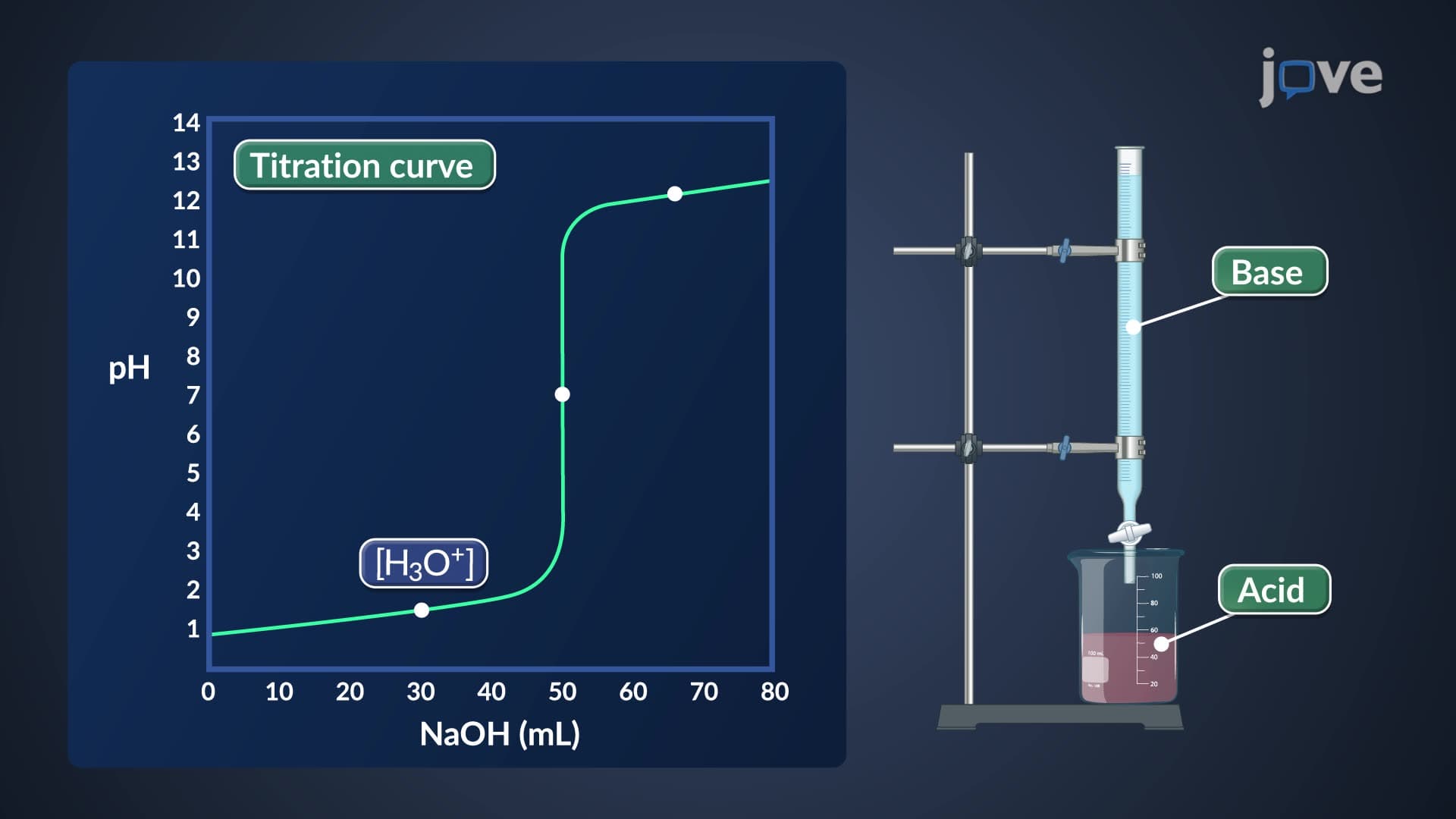
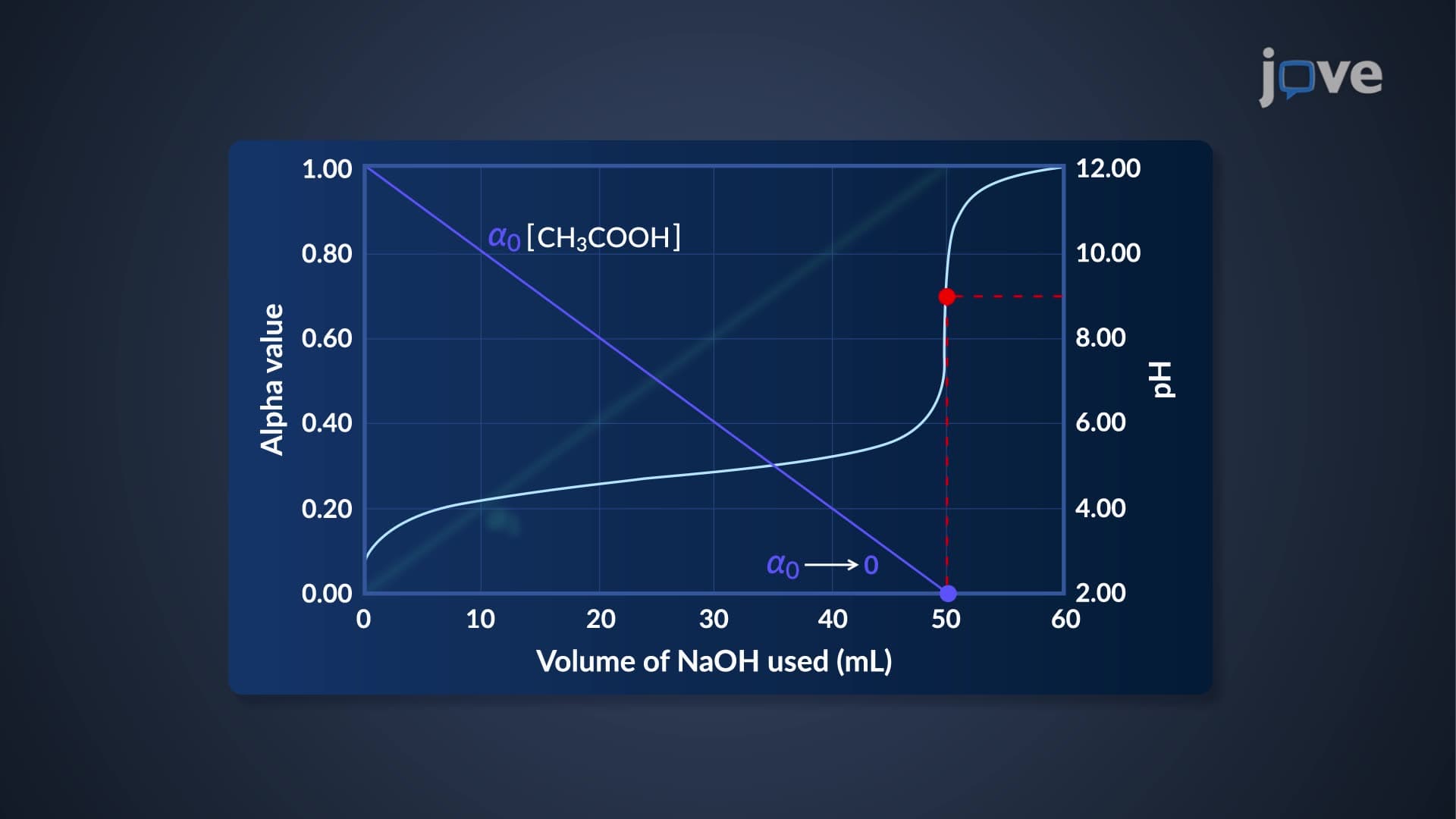
The classic example involves titrating acetic acid (CH₃COOH) with sodium hydroxide (NaOH). This reaction occurs in countless US laboratories, from high school chemistry classes preparing for AP exams to pharmaceutical companies testing drug formulations. The resulting titration curve shows four distinct regions, each requiring different calculation approaches.
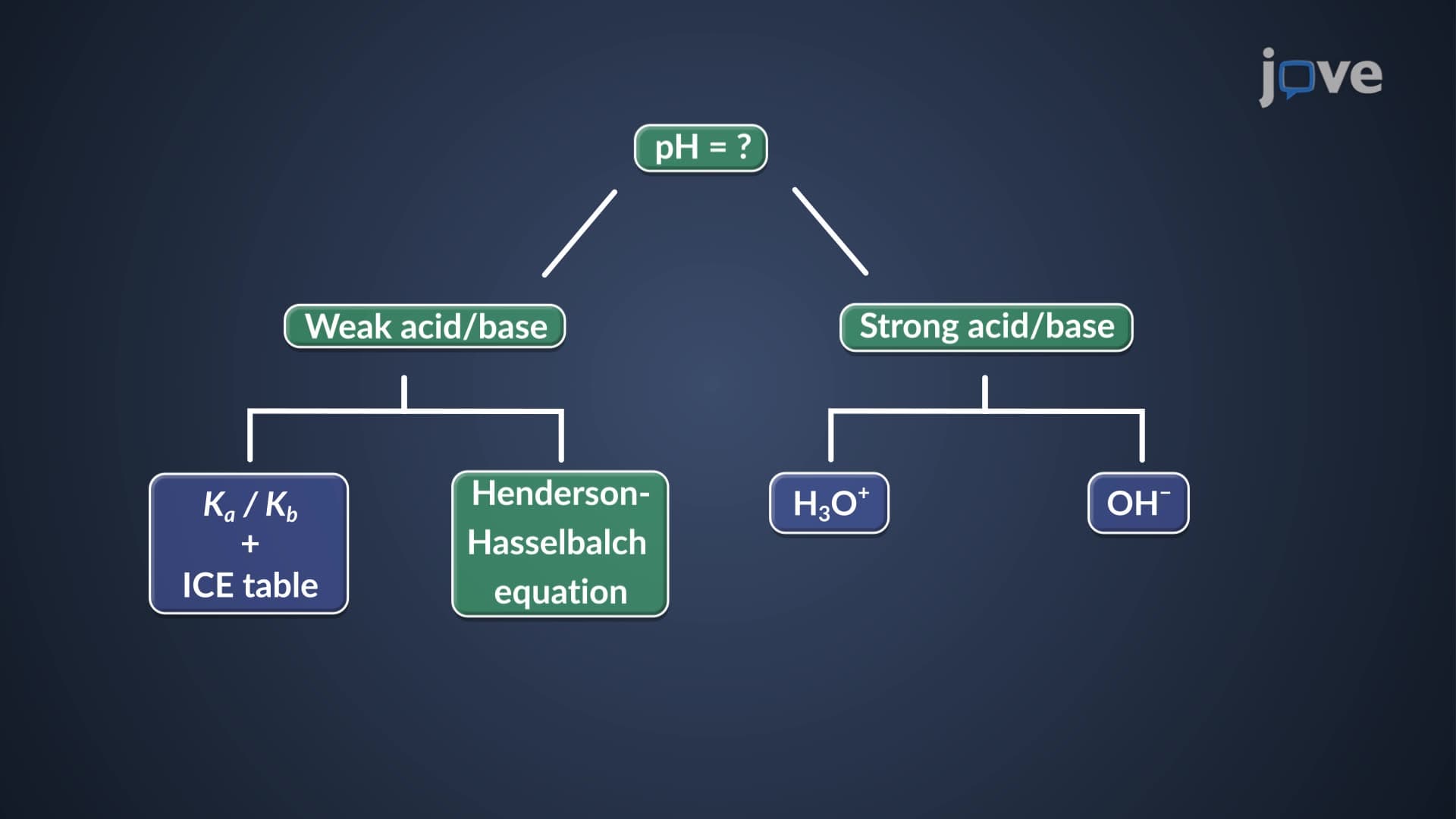
Before any base is added, calculating the initial pH of a weak acid requires the acid dissociation constant (Ka) and an ICE table approach. For 0.1 M acetic acid, this yields a pH of approximately 2.87, significantly higher than what a strong acid of equal concentration would produce.
As NaOH is added, the buffer region titration begins. Here, the Henderson-Hasselbalch equation becomes essential: pH = pKa + log([A⁻]/[HA]). This equation allows students to calculate pH values throughout the buffer region, a skill tested extensively on the MCAT and AP Chemistry exams. The buffer region provides resistance to pH changes, making it crucial for biological systems and industrial processes.
At the half equivalence point pKa relationship becomes apparent-the pH exactly equals the pKa of the weak acid. This occurs because equal concentrations of the weak acid and its conjugate base exist, making the log term in Henderson-Hasselbalch equal to zero. Understanding this concept helps students quickly identify pKa values from experimental titration curves.
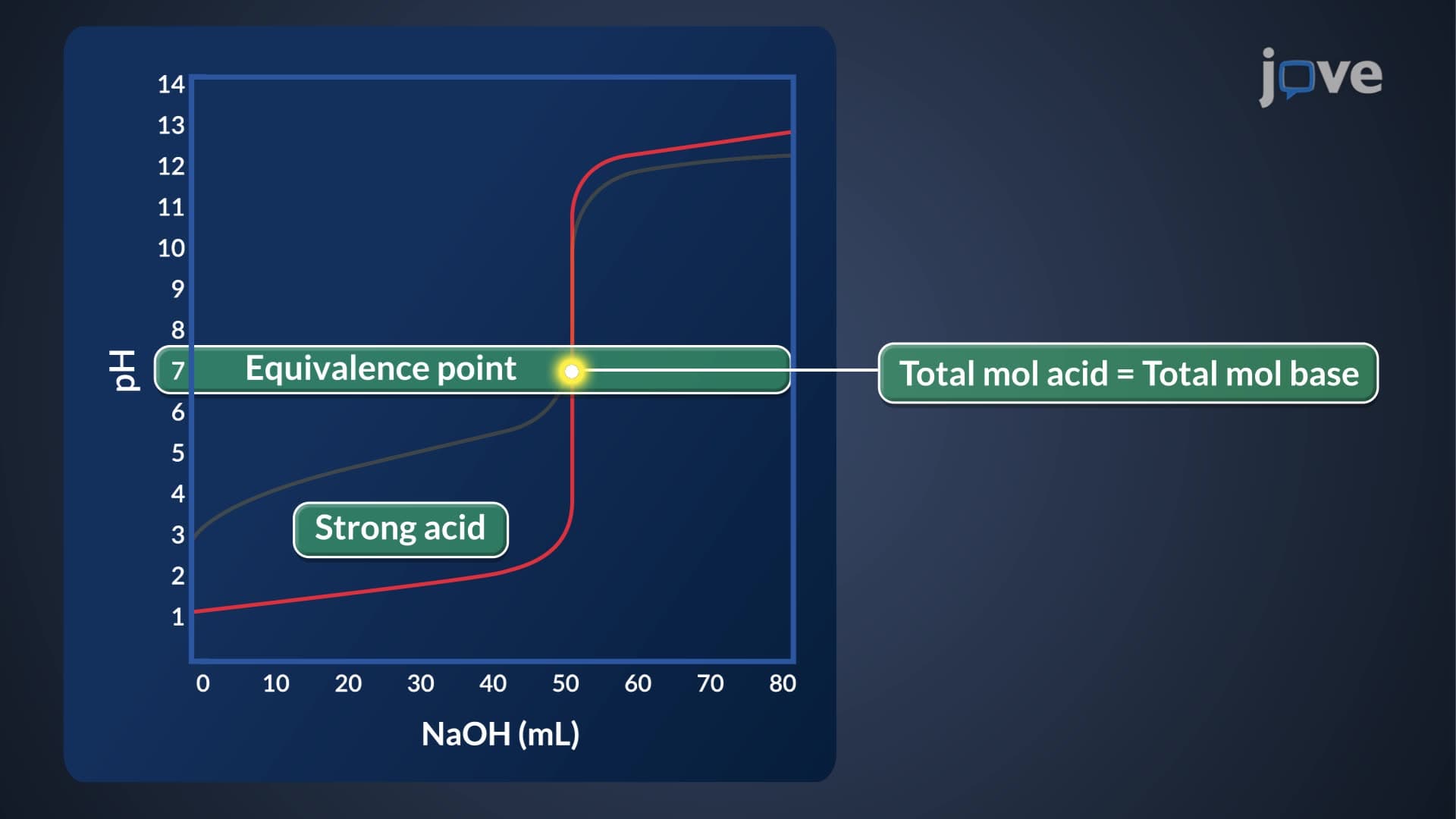
The weak acid equivalence point presents unique challenges since the resulting solution contains only the conjugate base of the weak acid. This creates a basic solution, not the neutral pH of 7 found in strong acid-strong base titrations. Calculating this pH requires using the Kb of the conjugate base and another ICE table approach.
For acetic acid-NaOH titrations, the equivalence point pH reaches approximately 8.72, well above neutral. This basic equivalence point is why phenolphthalein (color change around pH 8.3) works better than methyl orange for these titrations-a practical consideration emphasized in college general chemistry courses.
Beyond the equivalence point, excess NaOH dominates the pH, and calculations become straightforward molarity-based problems, similar to strong base calculations.
Related Micro-courses