Loading…
Loading video…

11,665 views
Ever wonder how pharmaceutical companies ensure every aspirin tablet contains exactly 325mg of active ingredient? Quality control analytical chemistry forms the backbone of laboratory reliability, using systematic procedures to verify that analytical systems operate within acceptable limits. From FDA-regulated drug testing to environmental monitoring by the EPA, understanding what is quality control becomes crucial for maintaining scientific integrity. This comprehensive quality assurance process involves statistical control charts, proficiency testing, and rigorous documentation protocols. Watch the full video on JoVE Coach to master this concept with expert-led visuals and step-by-step explanations.
Quality control analytical chemistry represents a systematic approach to ensuring laboratory measurements remain accurate, precise, and reliable over time. Unlike quality assurance (which focuses on preventing errors) or quality improvement (which enhances processes), quality control specifically monitors ongoing analytical performance through statistical methods and standardized protocols.
In the United States, regulatory agencies like the FDA, EPA, and CDC mandate strict quality control requirements for laboratories conducting everything from pharmaceutical analysis to environmental testing. These requirements ensure public safety and scientific credibility across all analytical measurements.
Quality control charts serve as the foundation of analytical monitoring systems. These consecutive plots track specific analytical characteristics over time, comparing each measurement against established reference values. For example, a clinical chemistry laboratory might plot daily glucose control results, immediately identifying when their analyzer drifts beyond acceptable limits.
Control sample analysis involves running known reference materials alongside unknown samples. When a hospital laboratory analyzes patient blood glucose, they simultaneously run high, normal, and low glucose controls. If control results fall outside predetermined ranges (typically ±2 or ±3 standard deviations), the entire analytical run gets rejected and repeated.
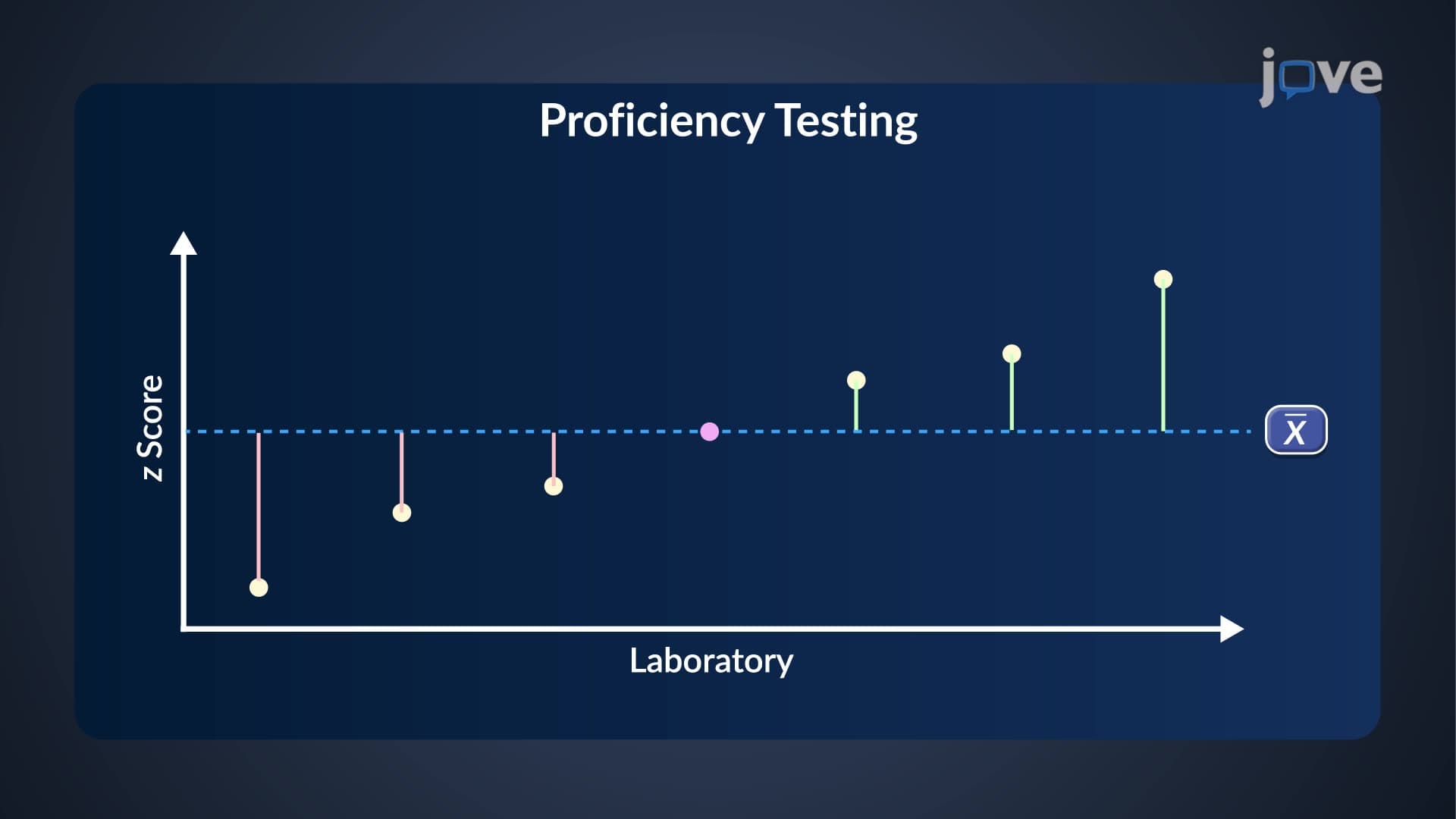
Proficiency testing provides external validation of laboratory performance by comparing results across multiple facilities. Organizations like the College of American Pathologists (CAP) distribute identical samples to thousands of laboratories nationwide. Each lab analyzes these samples using their standard procedures, then receives statistical comparisons showing how their results compare to peer laboratories.
The z-score calculation quantifies laboratory performance: z = (lab result - target value) / standard deviation. Z-scores between -2 and +2 indicate acceptable performance, while values beyond ±3 typically require immediate corrective action. This statistical approach helps laboratories identify systematic errors and maintain analytical quality.
Establishing appropriate QC acceptance criteria requires understanding both analytical requirements and regulatory expectations. Clinical laboratories often use Westgard rules, which define specific patterns of control failures that trigger investigative actions. Environmental laboratories follow EPA protocols that specify different acceptance criteria based on analyte types and concentration ranges.
Comprehensive documentation and archiving ensure traceability and regulatory compliance. Every QC result, corrective action, and method modification must be recorded and retained according to industry standards. This documentation proves essential during regulatory inspections and accreditation surveys.
Students preparing for the MCAT encounter quality control concepts in general chemistry and biochemistry sections, particularly regarding experimental design and data interpretation. AP Chemistry students apply these principles when designing laboratory experiments and analyzing measurement uncertainty. College analytical chemistry courses extensively cover quality control as fundamental to professional laboratory practice.
Frequently Asked Questions
Quality control involves ongoing monitoring and measurement of analytical performance to ensure systems remain within statistical control limits. Unlike quality assurance (which prevents errors through planning and procedures), quality control detects problems after they occur through statistical analysis of control samples and reference materials. It's one of three cyclical quality activities essential for maintaining laboratory reliability.
The MCAT includes quality control concepts in general chemistry sections, focusing on experimental design, measurement uncertainty, and statistical analysis of data. AP Chemistry exams test these principles through laboratory-based questions about control samples, reference materials, and data validation. Students must understand when analytical results are acceptable and when corrective actions are needed.
Levey-Jennings charts are most frequently encountered in undergraduate analytical chemistry courses, plotting control results over time with warning and control limits marked. Students learn to interpret trends, shifts, and outliers that indicate analytical problems. College laboratories often use these charts for instrument monitoring in quantitative analysis experiments.
Basic statistics knowledge suffices for introductory quality control concepts - primarily understanding means, standard deviations, and normal distributions. High school algebra and introductory statistics provide adequate mathematical background. The focus remains on practical application rather than complex statistical theory, making these concepts accessible to most chemistry students.
Create flowcharts showing decision trees for when QC results are acceptable versus when corrective action is needed. Practice interpreting control charts and calculating z-scores using real laboratory scenarios. Focus on understanding the "why" behind QC procedures rather than memorizing rules, as exam questions often present novel situations requiring conceptual application.
These companies implement comprehensive QC testing at every manufacturing stage, analyzing raw materials, intermediate products, and finished drugs against strict specifications. They run multiple control samples with each batch, maintain detailed documentation for FDA compliance, and participate in proficiency testing programs. Any QC failure triggers investigation and potential batch rejection, ensuring patient safety.
Explore method validation principles including accuracy, precision, linearity, and detection limits. Study advanced control chart interpretation including Westgard rules and trending analysis. Investigate regulatory requirements for different industries (pharmaceutical, environmental, clinical) and learn about automated QC systems used in modern laboratories.
Related Micro-courses


Related Subjects
 Chemistry 21 micro-courses›
 Organic Chemistry 21 micro-courses›