Loading subject page…


68,318 views

Video Summary: What Is Muscles Anterior Neck
Ever wonder why emergency medical technicians check your neck pulse at the carotid artery during CPR training? The anterior neck muscles anatomy creates protective pathways around vital structures like blood vessels and the airway. These front-facing neck muscles, including suprahyoid and infrahyoid groups, work together to control swallowing, speaking, and head positioning-essential functions that EMTs assess during emergency response protocols. Understanding what is muscles anterior neck reveals how these muscle groups coordinate complex movements we use hundreds of times daily. Watch the full video on JoVE Coach to master this concept with expert-led visuals and step-by-step explanations.
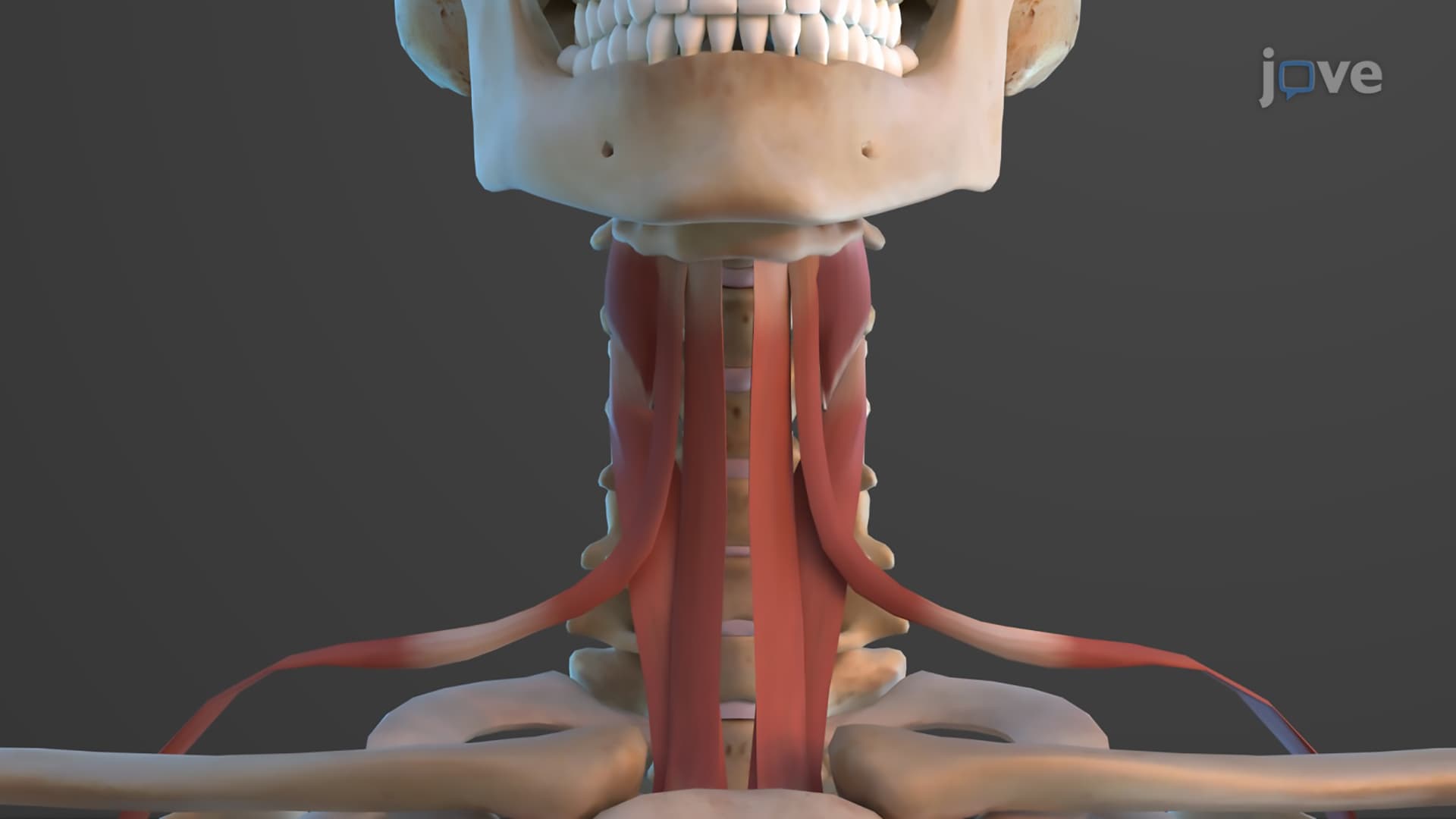
The anterior neck muscles anatomy represents one of the most intricate muscular systems in human anatomy, organized into two distinct functional groups. These muscles create a complex network that supports vital functions including swallowing, speech, and respiratory control. Medical students at institutions like Johns Hopkins and UCLA consistently identify this region as challenging due to the dense concentration of small muscles with overlapping functions.
The hyoid bone serves as the central landmark dividing these muscles into suprahyoid (above) and infrahyoid (below) categories. This U-shaped bone, unique because it doesn't articulate with any other bone, acts as a mobile platform that these muscles manipulate during various physiological processes.
The suprahyoid division of neck muscles front anatomy includes four paired muscles that elevate the hyoid bone and assist in opening the jaw. The digastric muscle, with its distinctive dual-belly structure, creates a sling-like support system. Its anterior belly originates from the mandible while the posterior belly attaches to the temporal bone's mastoid process, meeting at an intermediate tendon that slides through a fascial loop attached to the hyoid bone.
The mylohyoid muscle forms the floor of the mouth, creating a muscular diaphragm that supports the tongue during swallowing. Physical therapy students studying at schools like University of Southern California learn that weakness in this muscle can contribute to dysphagia (difficulty swallowing), a condition affecting over 15 million Americans annually.
The geniohyoid and stylohyoid muscles complete this group, with the former pulling the hyoid forward during swallowing and the latter providing lateral stabilization. These muscles work synergistically during the complex swallowing reflex, which involves precise coordination timing measured in milliseconds.
The infrahyoid muscles, often called "strap muscles" due to their ribbon-like appearance, function primarily to depress and stabilize the hyoid bone and larynx. The sternohyoid muscle creates a direct connection between the chest and hyoid, originating from the manubrium of the sternum and medial clavicle. This muscle is frequently examined in MCAT anatomy sections and appears in clinical scenarios involving voice disorders.
The omohyoid muscle's unique configuration includes two bellies connected by an intermediate tendon held in place by a fascial sling. This arrangement allows it to function as a pulley system, providing both depression and lateral stabilization of the hyoid during phonation.
The sternothyroid and thyrohyoid muscles work as a functional unit to control laryngeal position during voice production. Voice coaches and speech pathologists across the United States, from Broadway training programs in New York to film industry voice work in Los Angeles, rely on understanding these muscles to help performers optimize their vocal technique and prevent injury.
Understanding what are the muscles of the anterior neck becomes crucial for healthcare professionals during procedures like intubation, where knowledge of muscle relationships helps avoid complications. Emergency medicine residents training at hospitals like Massachusetts General Hospital practice identifying these structures during difficult airway management scenarios.
On standardized exams including the USMLE Step 1 and MCAT, questions often focus on muscle origins, insertions, and their role in coordinated functions like swallowing. The anterior neck muscle group frequently appears in clinical vignettes describing stroke patients with swallowing difficulties or vocal cord paralysis cases.
Related Micro-courses