Loading subject page…

- Chemistry
- Chemical Equilibrium
- The Equilibrium Constant
Micro-course: Chemical Equilibrium
457,403 views
Learn key concepts and earn your certificate.

The Equilibrium Constant

00:00
03:10
Video Summary: What Is the Equilibrium Constant
Ever wonder why industrial ammonia production maintains specific temperature and pressure conditions at fertilizer plants across the Midwest? The equilibrium constant determines exactly how much product forms when chemical reactions reach balance. This fundamental concept in chemistry quantifies whether reactions favor reactants or products at equilibrium, making it essential for understanding everything from drug manufacturing to environmental processes. Watch the full video on JoVE Coach to master this concept with expert-led visuals and step-by-step explanations.
- Understand what the equilibrium constant represents and how it quantifies the balance between reactants and products in chemical reactions
- Identify the mathematical expression for equilibrium constants and interpret their numerical values
- Analyze how equilibrium constant values indicate reaction direction and product favorability
- Compare systems with large, small, and intermediate equilibrium constant values
- Evaluate how modifications to chemical equations affect equilibrium constant expressions
- Apply equilibrium constant principles to heterogeneous systems involving solids and liquids
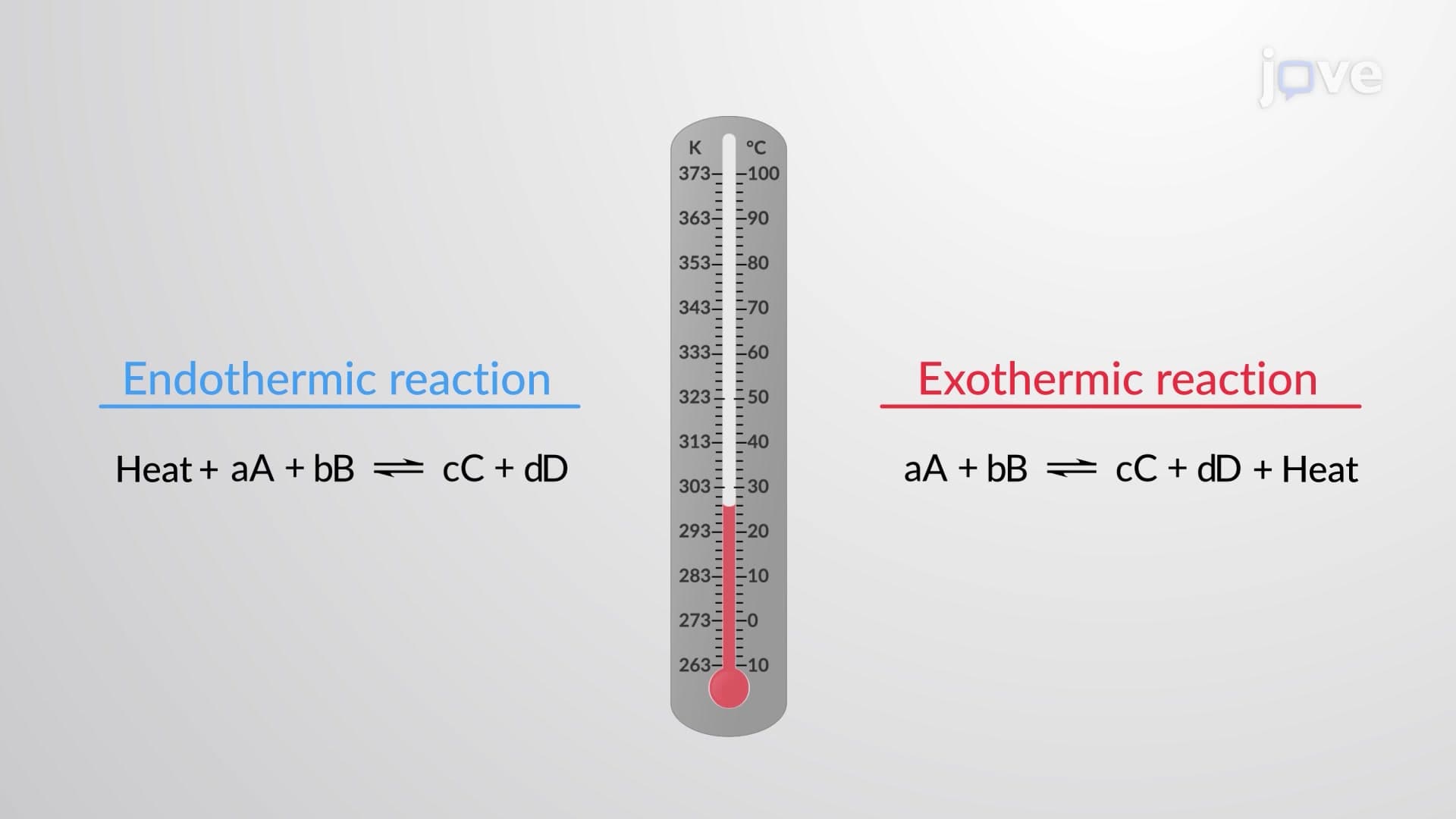
- Recognize the unitless nature of equilibrium constants and their temperature dependence
- Explore real-world applications in industrial processes and biological systems
Understanding The Equilibrium Constant Fundamentals
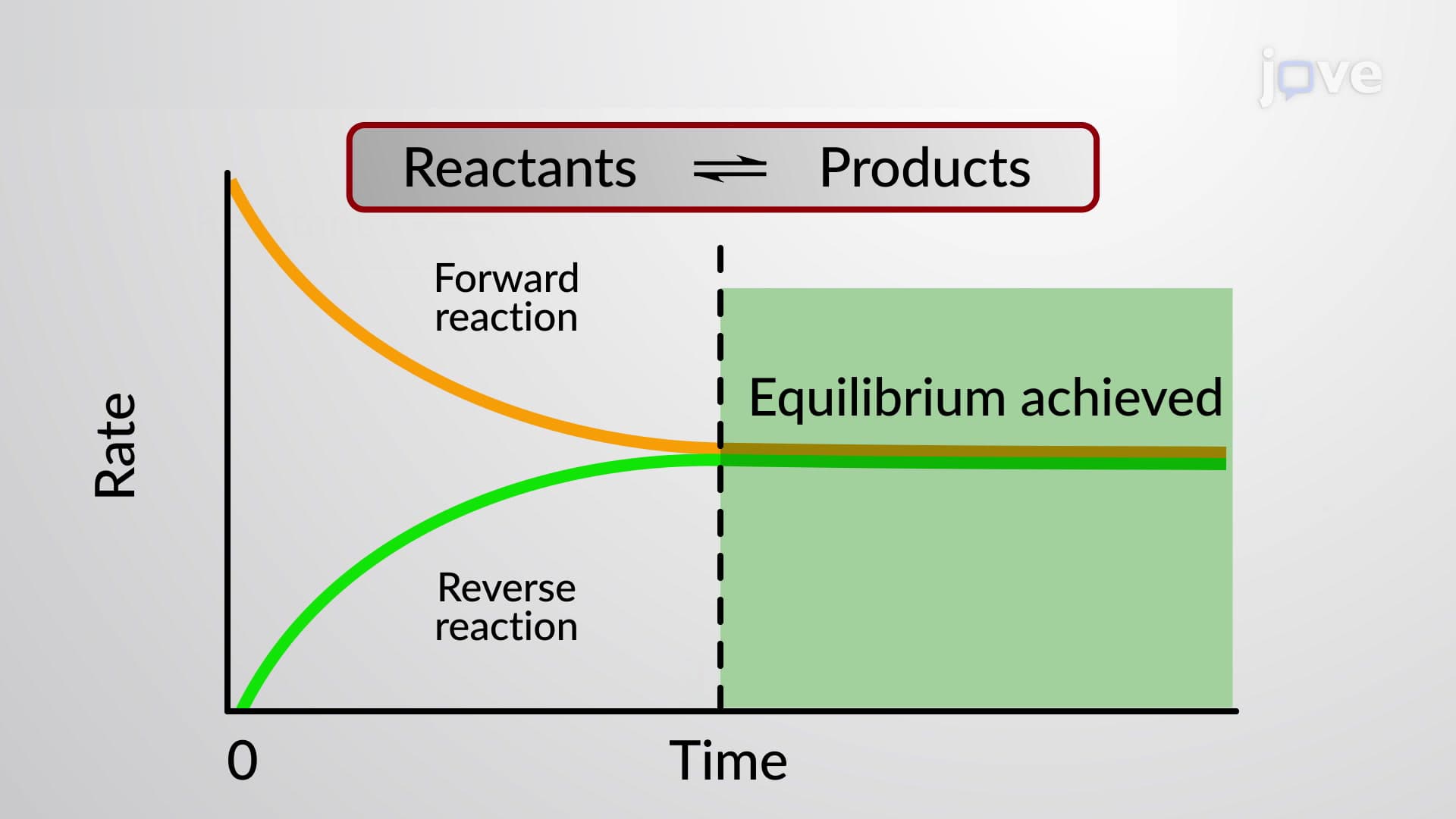
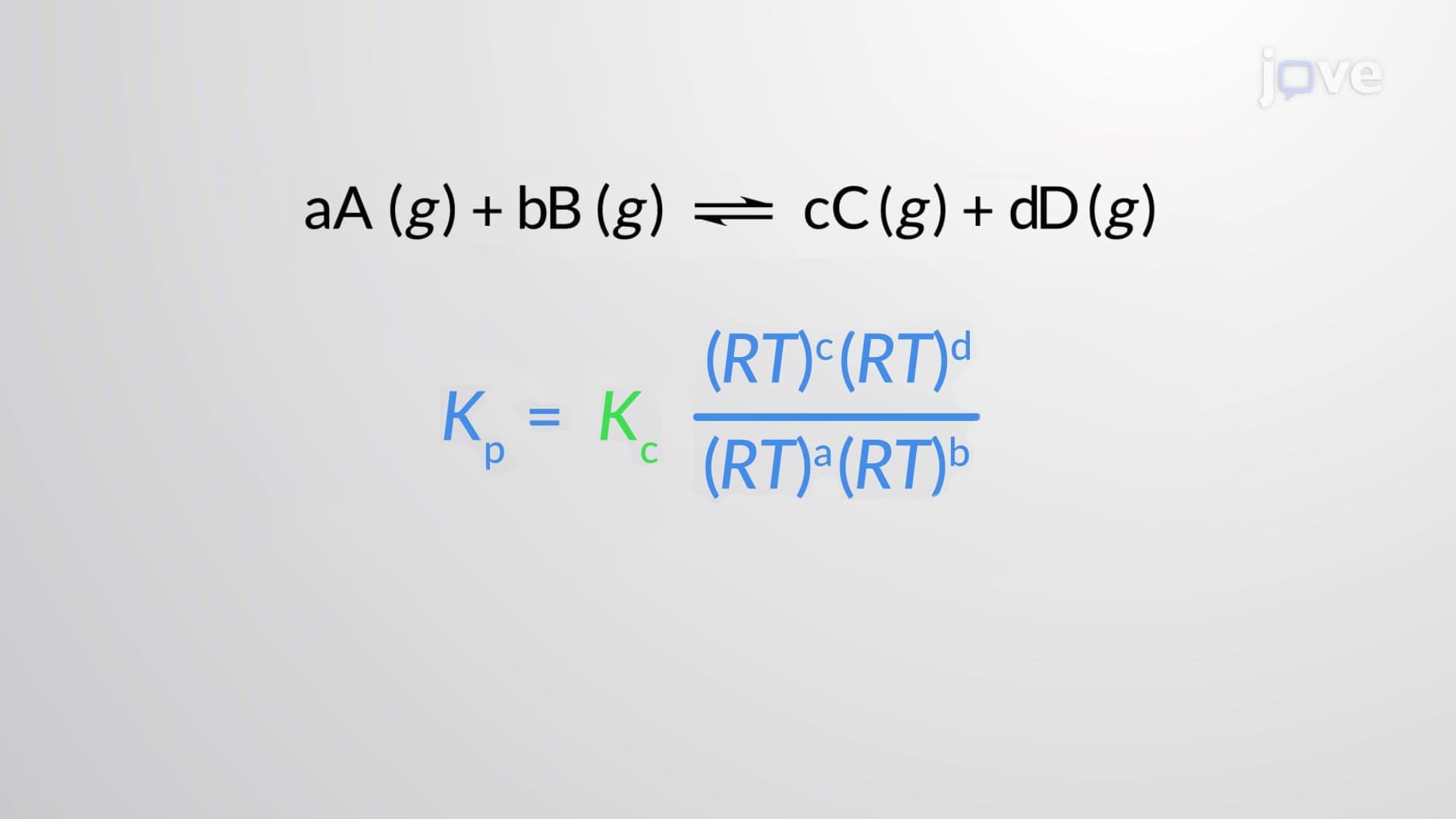
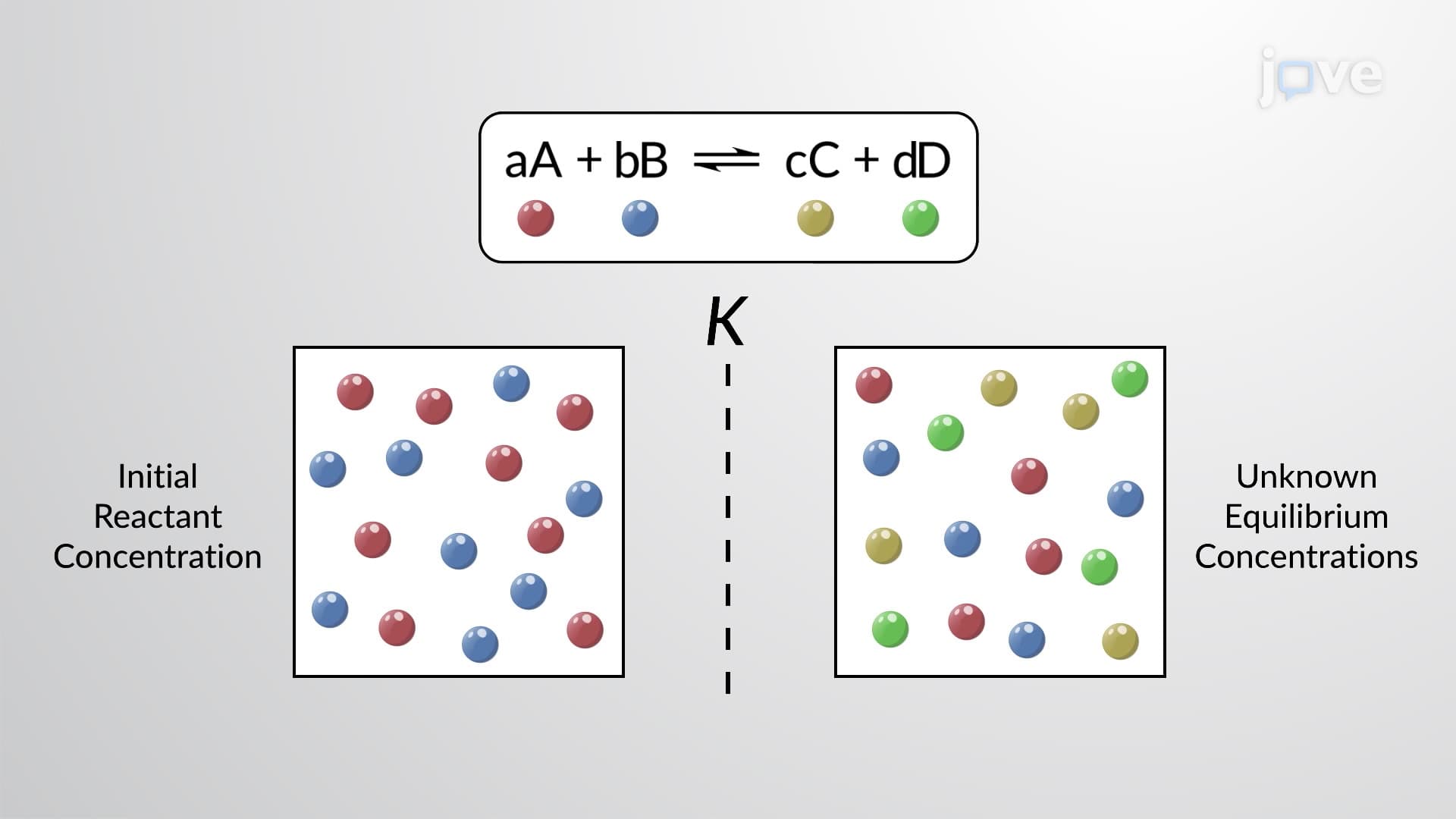
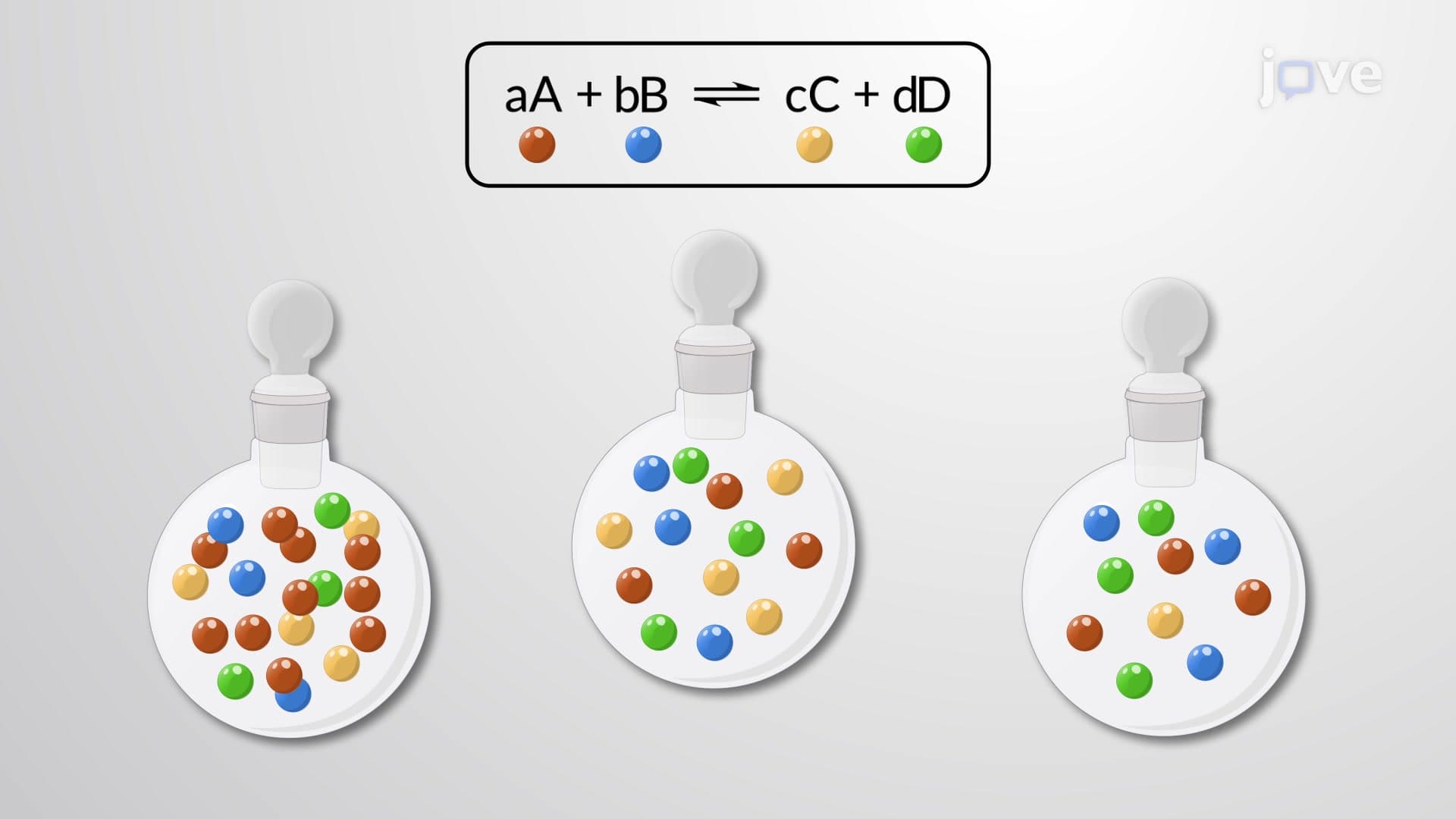
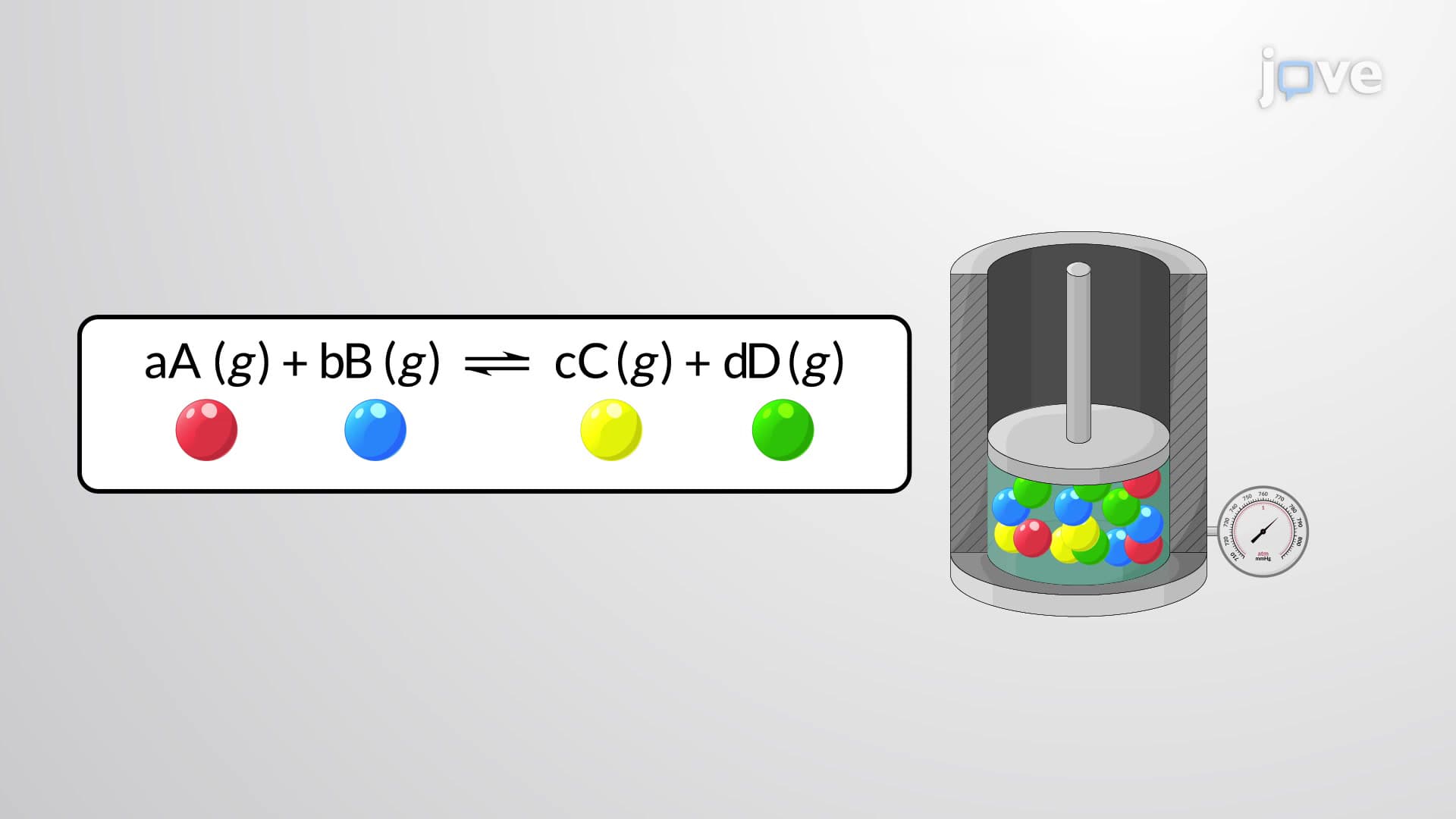
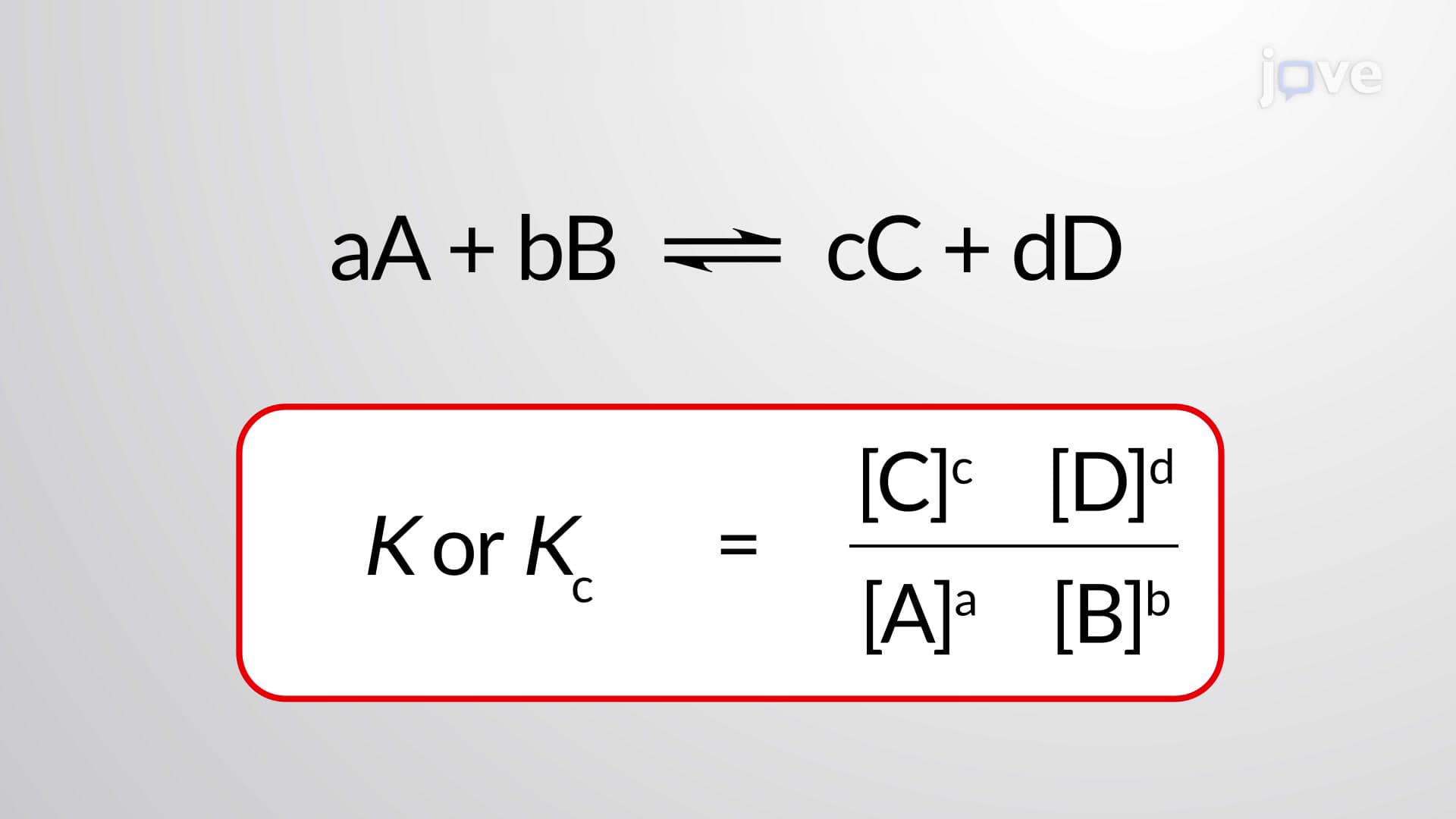
The equilibrium constant serves as chemistry's mathematical tool for predicting reaction outcomes. Derived from the law of mass action, this dimensionless quantity expresses the ratio of product concentrations to reactant concentrations, each raised to their stoichiometric coefficients. For the general reaction aA + bB ⇌ cC + dD, the equilibrium constant Kc equals [C]^c[D]^d / [A]^a[B]^b.
This concept proves invaluable for AP Chemistry students and college undergraduates studying thermodynamics. The equilibrium constant remains constant at a given temperature, making it a reliable predictor of reaction behavior across different concentration conditions.
Interpreting Equilibrium Constant Values
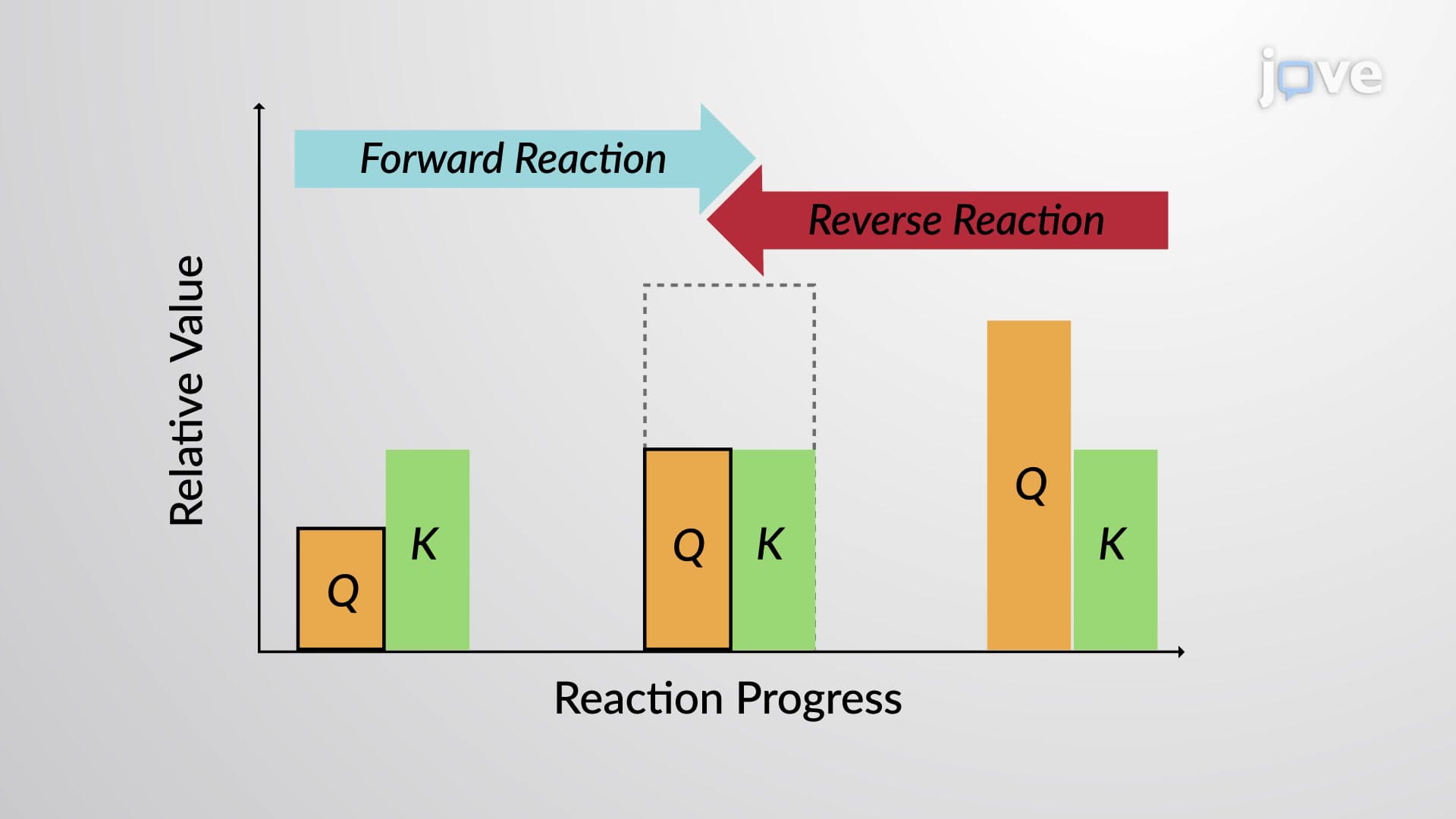
Numerical values reveal reaction tendencies immediately. When K >> 1 (much greater than one), products dominate at equilibrium, indicating the forward reaction is favored. Pharmaceutical companies leverage this principle when designing drug synthesis pathways, ensuring maximum yield of active compounds.
Conversely, K << 1 suggests reactants predominate, favoring the reverse reaction. Industrial processes often encounter this challenge when trying to force unfavorable reactions forward through temperature or pressure adjustments. When K ≈ 1, neither direction is significantly favored, creating roughly equal concentrations of reactants and products.
Mathematical Manipulations and Practical Applications
Chemical equation modifications directly impact equilibrium constants through predictable mathematical relationships. Reversing reactions inverts the equilibrium constant (K becomes 1/K), while multiplying coefficients raises K to that power. Adding reactions multiplies their individual equilibrium constants together.
These principles appear frequently on MCAT practice tests and college chemistry exams. Students studying for the American Chemical Society (ACS) standardized exam encounter problems requiring these manipulations to solve complex reaction sequences.
Heterogeneous Equilibria in Real Systems
Pure solids and liquids don't appear in equilibrium expressions because their concentrations remain essentially constant. Consider limestone decomposition in cement production facilities across states like Texas and California: CaCO3(s) ⇌ CaO(s) + CO2(g). Only carbon dioxide's concentration appears in the expression: K = [CO2].
This principle extends to biological systems, where enzyme-substrate interactions often involve proteins in their native solid-like conformations. Understanding these exclusions helps students tackle advanced biochemistry concepts in pre-med coursework.
Frequently Asked Questions
The equilibrium constant quantifies the balance between reactants and products in reversible chemical reactions. It predicts reaction direction, helps calculate concentrations, and guides industrial process optimization. This fundamental concept appears extensively in AP Chemistry, MCAT preparation, and undergraduate chemistry courses.
The equilibrium constant definition provides a mathematical framework for relating product and reactant concentrations. Students use this relationship to calculate unknown concentrations, predict reaction outcomes, and solve equilibrium problems on standardized tests. The expression K = [products]/[reactants] forms the basis for most equilibrium calculations.
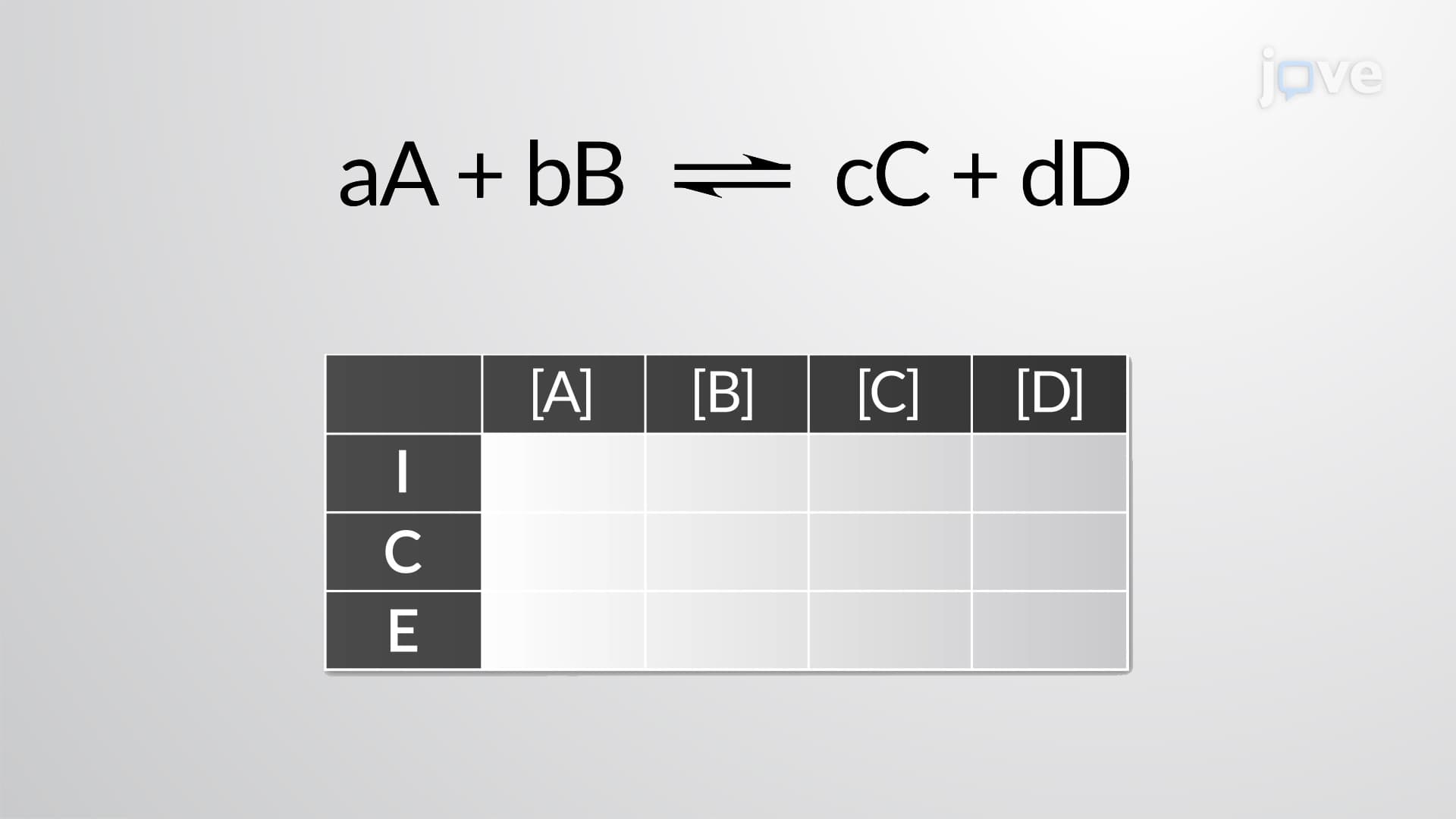
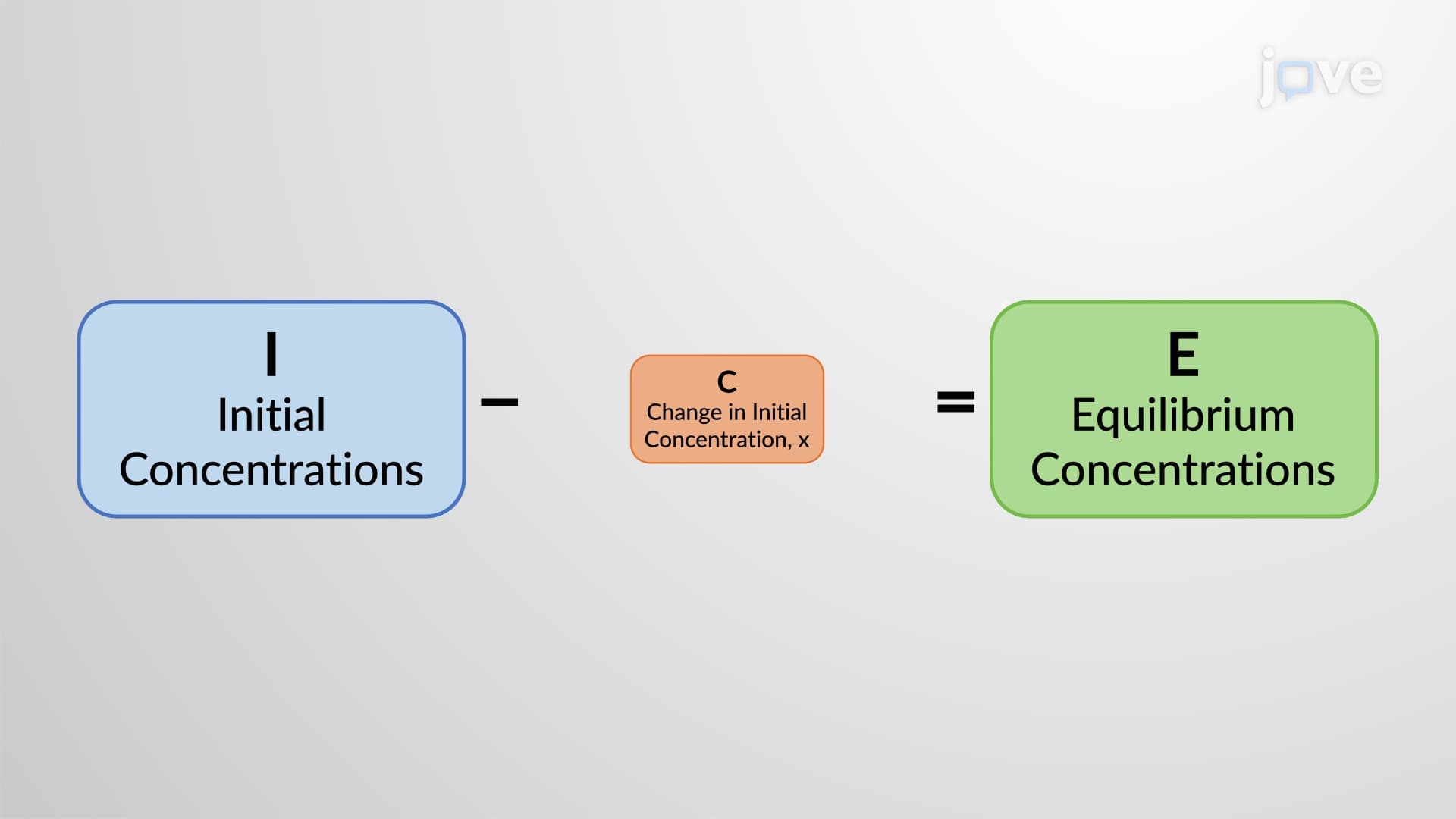
AP Chemistry frequently tests equilibrium constant calculations, interpretation of K values, and mathematical manipulations when equations are reversed or combined. Students encounter ICE tables, Le Chatelier's principle applications, and heterogeneous equilibria problems. The 2024 AP Chemistry course framework emphasizes quantitative analysis of equilibrium systems.
MCAT passages often present biological or biochemical systems requiring equilibrium constant analysis. Questions may involve enzyme kinetics, acid-base equilibria, or metabolic pathway balance. Test-takers must interpret K values in physiological contexts and apply equilibrium principles to complex biological scenarios.
Pharmaceutical manufacturing relies on equilibrium constants to optimize drug synthesis yields. Environmental engineers use them to predict pollutant behavior in water treatment facilities. The Haber process for ammonia production at Midwest fertilizer plants demonstrates industrial equilibrium applications, where temperature and pressure adjustments maximize product formation.
Basic algebra and logarithms suffice for most equilibrium constant applications. Students comfortable with exponents, ratios, and scientific notation typically master these concepts successfully. High school chemistry provides adequate mathematical preparation for understanding equilibrium principles.
Focus on understanding patterns rather than memorization: products over reactants, coefficients become exponents, and pure solids/liquids are excluded. Practice with diverse problem types from AP Chemistry review books and college textbooks. Creating concept maps connecting equilibrium constants to reaction spontaneity and thermodynamics strengthens long-term retention.
Thermodynamics connects equilibrium constants to Gibbs free energy through ΔG° = -RT ln(K). Advanced physical chemistry explores temperature dependence via the van't Hoff equation. Biochemistry applies these principles to enzyme mechanisms, metabolic regulation, and cellular energetics in courses like advanced biochemistry and molecular biology.
Related Micro-courses