Loading subject page…

- Chemistry
- Thermodynamics
- Free Energy Changes for Nonstandard States
Micro-course: Thermodynamics
251,100 views
Learn key concepts and earn your certificate.


Free Energy Changes for Nonstandard States

00:00
03:25
Video Summary: Free Energy Changes for Nonstandard States Explained
Ever wonder why industrial ammonia production doesn't follow textbook conditions? Free energy changes for nonstandard states govern most real chemical reactions, where conditions deviate from the standard 1 atm pressure and pure substances. Unlike standard state calculations, these reactions require the reaction quotient (Q) to predict spontaneity-crucial for processes like the Haber process used by companies like CF Industries in Louisiana. Watch the full video on JoVE Coach to master this concept with expert-led visuals and step-by-step explanations.
- Understand how free energy changes for nonstandard states differ from standard conditions and why most real reactions require nonstandard calculations
- Identify the relationship between reaction quotient (Q) and free energy change using the equation ΔG = ΔG° + RT ln(Q)
- Analyze how changing concentrations or partial pressures affect reaction spontaneity and equilibrium position
- Apply the reaction quotient formula for both solution-phase and gas-phase reactions using appropriate units
- Evaluate whether a reaction proceeds forward, reverse, or reaches equilibrium based on calculated ΔG values
- Compare standard versus nonstandard conditions and predict how deviations impact industrial chemical processes
- Recognize when ΔG equals zero at equilibrium and how this relates to the equilibrium constant
- Explore practical applications in manufacturing processes like ammonia synthesis and pharmaceutical production
Understanding Free Energy Changes For Nonstandard States
Most chemistry textbooks present reactions under ideal standard conditions-1 atm pressure, 25°C, and unit concentrations. However, real-world chemical processes rarely operate under these constraints. Free energy changes for nonstandard states become essential when analyzing industrial reactions, biological processes, or any system where concentrations, pressures, or temperatures deviate from standard values.
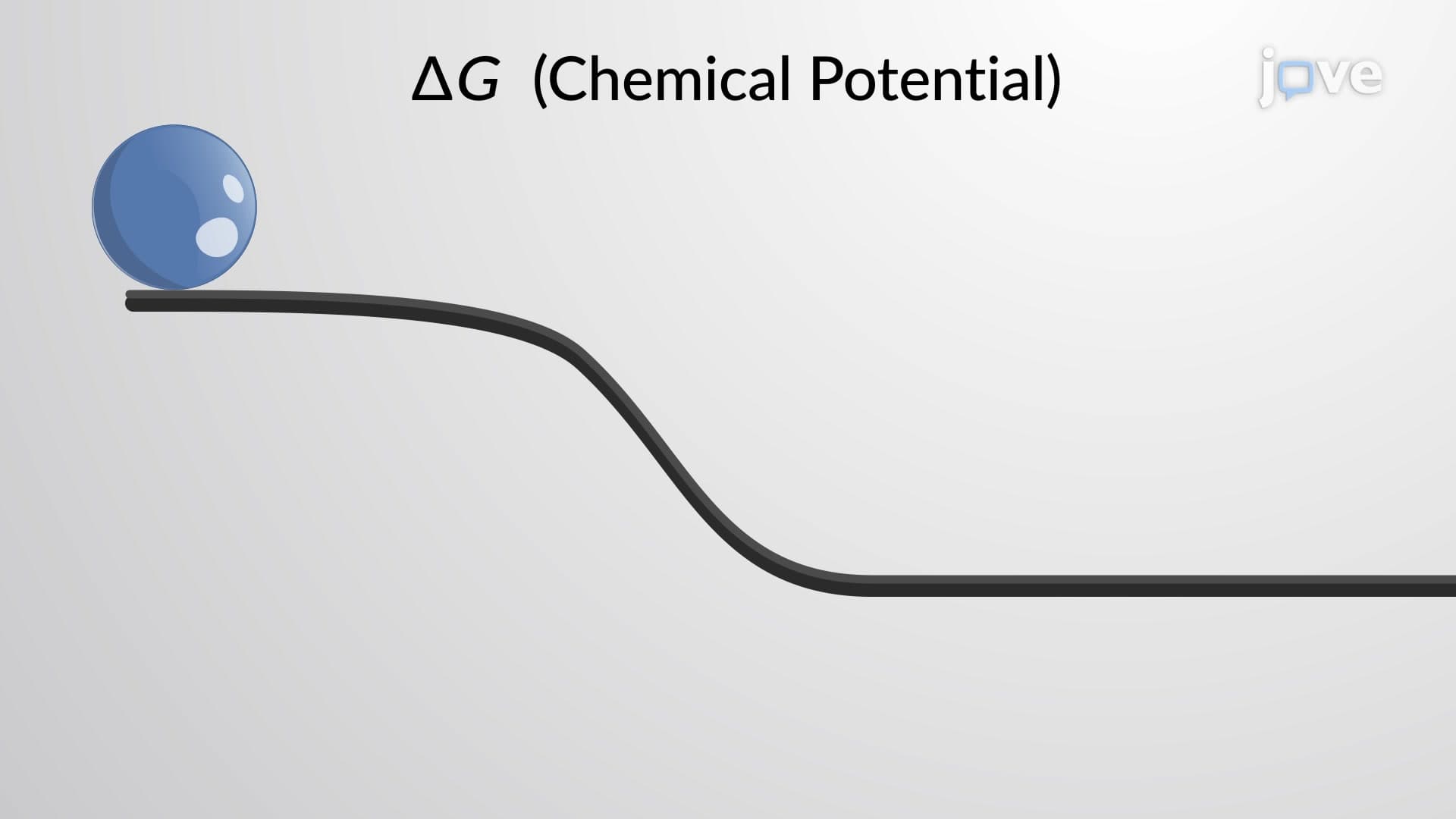
The fundamental equation governing nonstandard conditions is ΔG = ΔG° + RT ln(Q), where ΔG represents the actual free energy change, ΔG° is the standard free energy change, R equals 8.314 J/(mol·K), T is absolute temperature, and Q is the reaction quotient. This relationship explains why pharmaceutical companies must carefully control reaction conditions during drug synthesis-even favorable standard reactions can become unfavorable under certain concentration ratios.
Calculating the Reaction Quotient (Q)
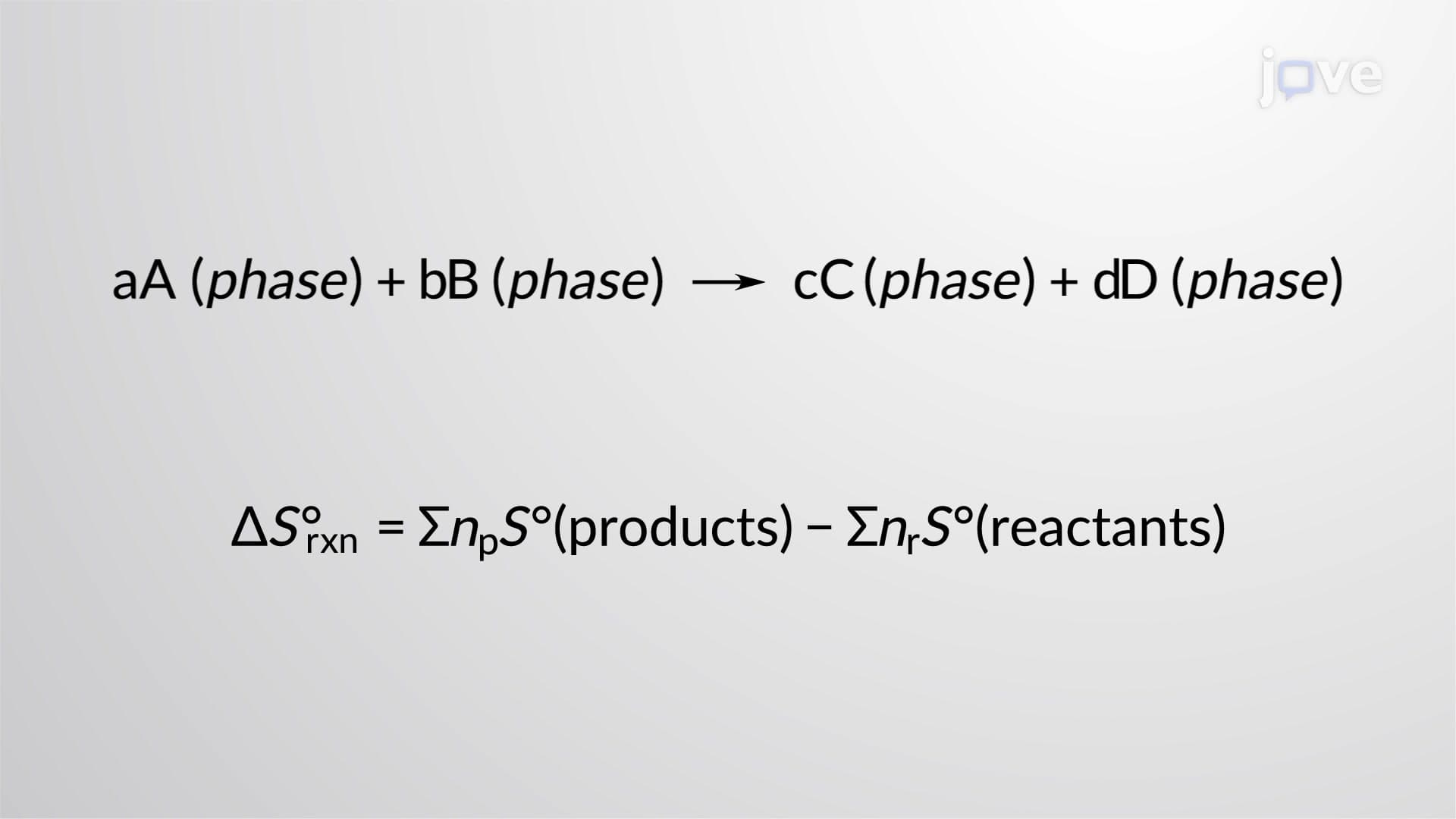
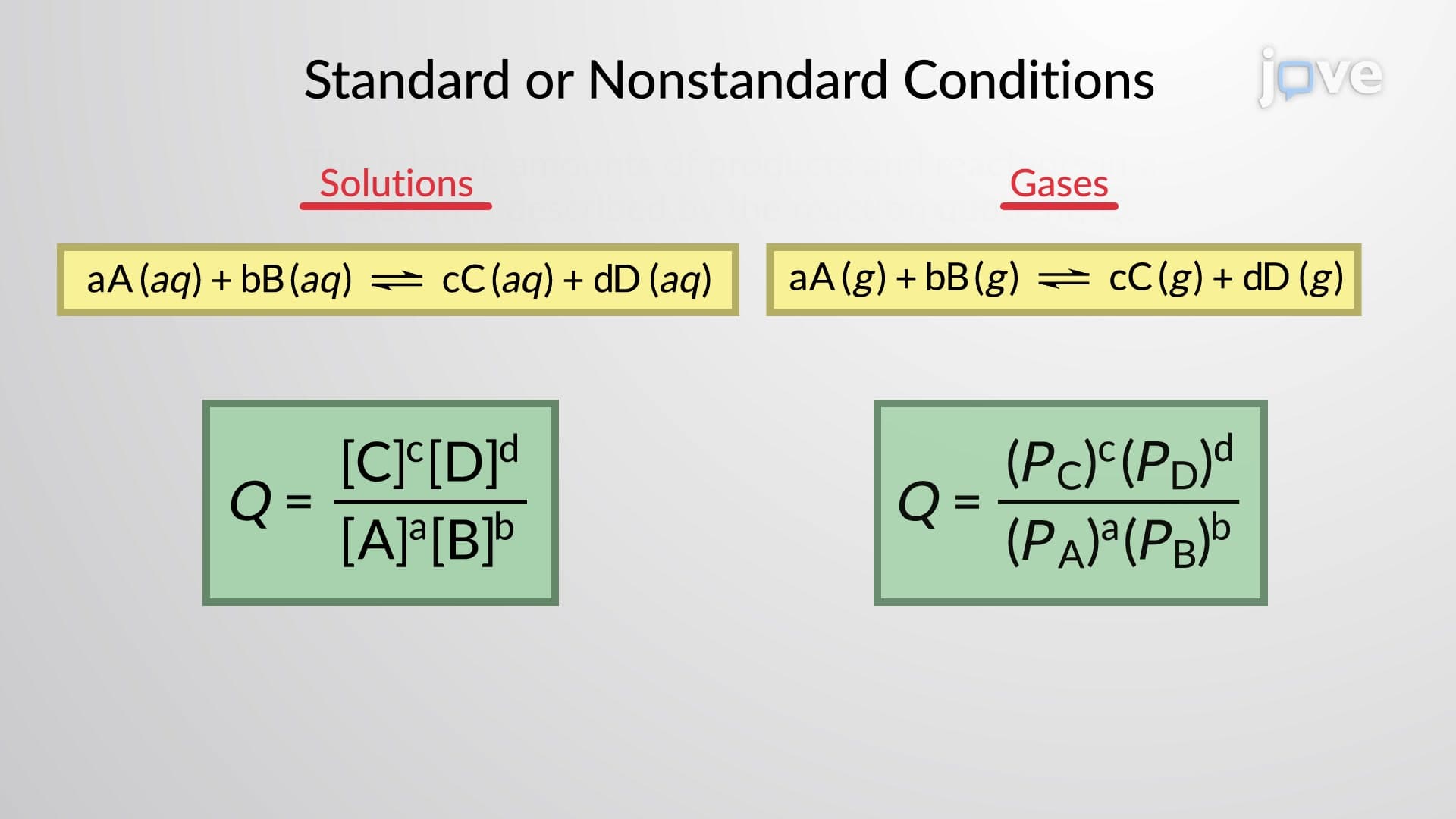
The reaction quotient mirrors the equilibrium constant expression but uses actual concentrations or partial pressures instead of equilibrium values. For the general reaction aA + bB → cC + dD, Q = [C]^c[D]^d/[A]^a[B]^b for solutions, or Q = (P_C)^c(P_D)^d/(P_A)^a(P_B)^b for gases. This calculation determines whether a reaction proceeds forward (Q < K), backward (Q > K), or remains at equilibrium (Q = K).
Consider ammonia synthesis: N₂ + 3H₂ → 2NH₃. Under nonstandard conditions with nitrogen at 1.2 atm, hydrogen at 3.6 atm, and ammonia at 0.60 atm, Q = (0.60)²/[(1.2)(3.6)³] = 0.0064. This low Q value, combined with the standard free energy change, predicts reaction spontaneity.
Industrial Applications and Exam Relevance
The Haber process exemplifies nonstandard state applications. Industrial ammonia plants operate at 400-500°C and 150-250 atm-far from standard conditions. Companies like Nutrien in Texas optimize these conditions to maximize yield while minimizing energy costs, directly applying nonstandard free energy calculations.
For AP Chemistry students, this concept frequently appears in free-response questions requiring ΔG calculations under varying conditions. MCAT test-takers encounter similar problems in biological contexts, such as ATP hydrolysis in cellular environments where concentrations fluctuate significantly from standard values. College organic chemistry courses emphasize these calculations when discussing reaction mechanisms and synthetic pathways.
Equilibrium and Spontaneity Predictions
When ΔG equals zero, the system reaches equilibrium, and Q equals the equilibrium constant K. This relationship allows chemists to predict reaction behavior: negative ΔG indicates forward spontaneity, positive ΔG favors the reverse reaction, and zero ΔG represents equilibrium. Understanding these relationships proves crucial for optimizing industrial processes and predicting biological reaction outcomes in varying cellular environments.
Frequently Asked Questions
Free energy changes for nonstandard states occur when reaction conditions deviate from standard values (1 atm, 25°C, unit concentrations). Unlike standard calculations using only ΔG°, nonstandard conditions require the equation ΔG = ΔG° + RT ln(Q) to account for actual concentrations or pressures. This distinction is crucial because most real-world reactions don't occur under textbook standard conditions.
AP Chemistry frequently tests nonstandard free energy through calculation-based free response questions, typically worth 7-10 points. Students must calculate Q from given concentrations, apply the ΔG equation, and predict reaction spontaneity. The 2023 AP exam included a question requiring students to determine whether a metal corrosion reaction would proceed under specific atmospheric conditions using nonstandard free energy calculations.
Students often confuse the reaction quotient Q with the equilibrium constant K, or forget to convert temperature to Kelvin. MCAT biochemistry passages frequently present cellular conditions where ATP concentrations vary significantly from 1 M standard conditions. Success requires carefully identifying given values, applying the correct equation, and interpreting whether calculated ΔG values favor forward or reverse reactions.
Companies like Pfizer and Johnson & Johnson optimize reaction conditions during API (active pharmaceutical ingredient) synthesis by calculating free energy changes under various concentration and temperature conditions. For example, when synthesizing acetaminophen, manufacturers adjust reactant concentrations to drive reactions forward, minimize side products, and reduce production costs while maintaining product purity standards required by FDA regulations.
Not at all-this concept builds naturally on equilibrium and thermodynamics principles already covered in advanced high school chemistry. Students need solid algebra skills and familiarity with logarithms, but the underlying logic is straightforward. Many high school AP Chemistry students successfully master this topic, and it provides excellent preparation for college-level physical chemistry and biochemistry courses.
Focus on understanding rather than memorization-the equation ΔG = ΔG° + RT ln(Q) follows logical patterns. Remember that standard conditions give Q = 1, making ln(Q) = 0, so ΔG = ΔG°. Practice identifying when to use concentrations versus partial pressures for Q, and create flashcards linking positive/negative ΔG values to reaction spontaneity directions.
Explore chemical kinetics to understand how thermodynamic favorability (ΔG) relates to reaction rates, then advance to electrochemistry where the Nernst equation applies similar principles to cell potentials. Biochemistry students should investigate enzyme kinetics and metabolic pathway regulation, while engineering students can study process optimization and reactor design principles used in industrial chemical manufacturing.
College exams often present multi-step problems requiring students to calculate Q from given data, determine ΔG under nonstandard conditions, predict reaction direction, and explain how changing conditions affects spontaneity. Professors frequently use industrial examples like ammonia synthesis or biological processes like cellular respiration, expecting students to demonstrate both computational skills and conceptual understanding of thermodynamic principles.
Related Micro-courses
10 Concepts

10 Concepts
10 Concepts