Loading subject page…


251,100 views

Video Summary: What Is Free Energy and Equilibrium
Ever wondered why some chemical reactions happen spontaneously while others require energy input? Free energy equilibrium determines whether reactions like the rusting of steel bridges in New York City occur naturally or need external help. What is Free Energy And Equilibrium reveals the mathematical relationship between thermodynamic favorability and chemical equilibrium, showing how the equilibrium constant K connects directly to Gibbs free energy changes through the equation ΔG° = -RT ln K. Watch the full video on JoVE Coach to master this concept with expert-led visuals and step-by-step explanations.
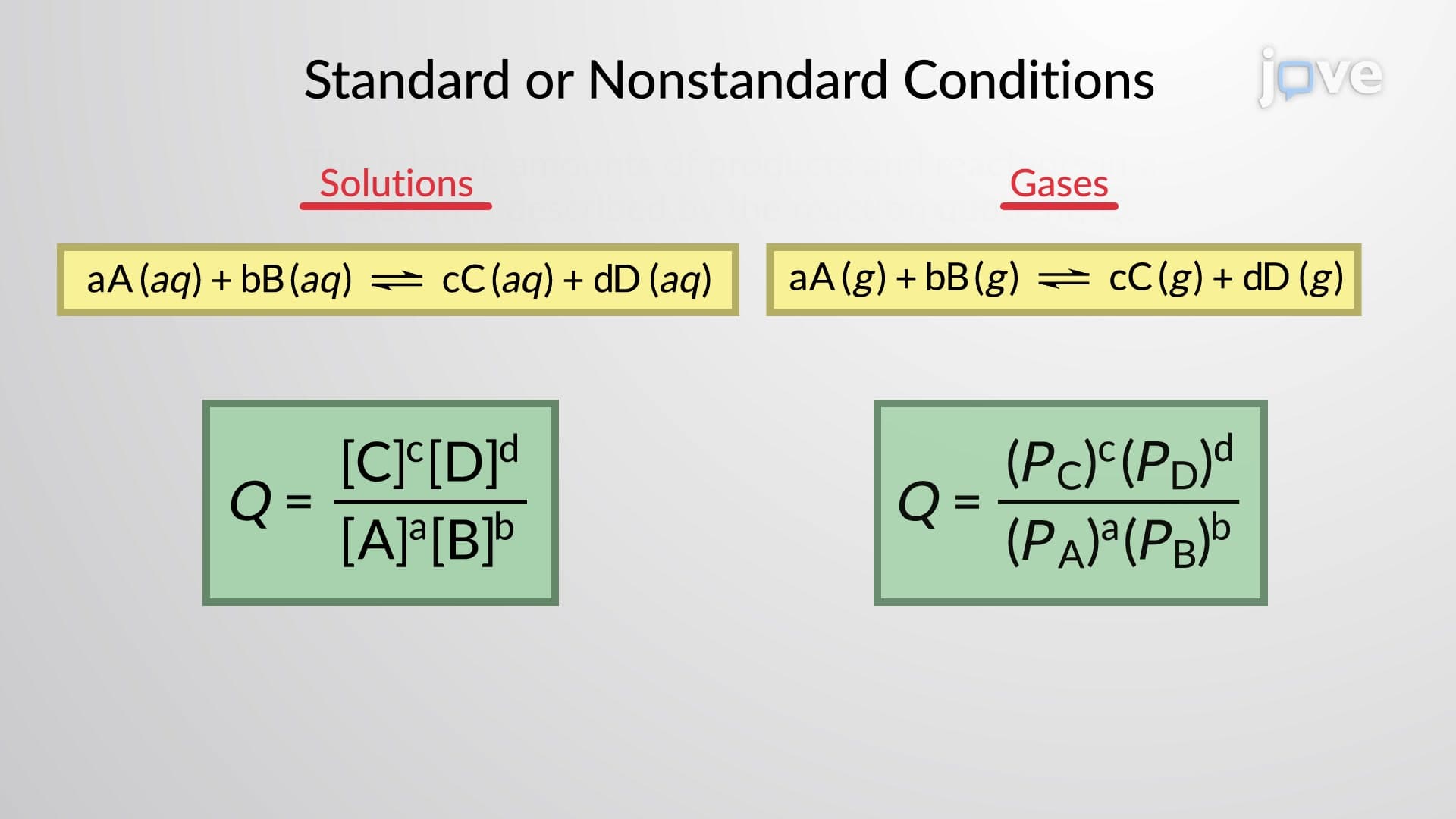
Free energy equilibrium represents one of chemistry's most powerful predictive tools, connecting thermodynamics with chemical behavior. The Gibbs free energy change (ΔG) serves as nature's decision-maker, determining whether reactions proceed forward, backward, or reach a balanced state. When ΔG equals zero, the system achieves equilibrium-a dynamic balance where forward and reverse reaction rates become equal.
The relationship ΔG° = -RT ln K creates a direct mathematical bridge between thermodynamic favorability and equilibrium position. This equation reveals profound insights: when ΔG° is negative, ln K becomes positive, meaning K exceeds 1 and products dominate at equilibrium. Consider the industrial synthesis of ammonia via the Haber process, where understanding this relationship helps chemical engineers at companies like DuPont optimize production conditions.
For reactions with large negative ΔG° values, equilibrium constants become enormous. The decomposition of dinitrogen tetroxide (N₂O₄ → 2NO₂) at 298 K demonstrates this principle with K = 1.34 × 10⁻¹⁷, corresponding to ΔG° = +98 kJ/mol, clearly favoring reactants.
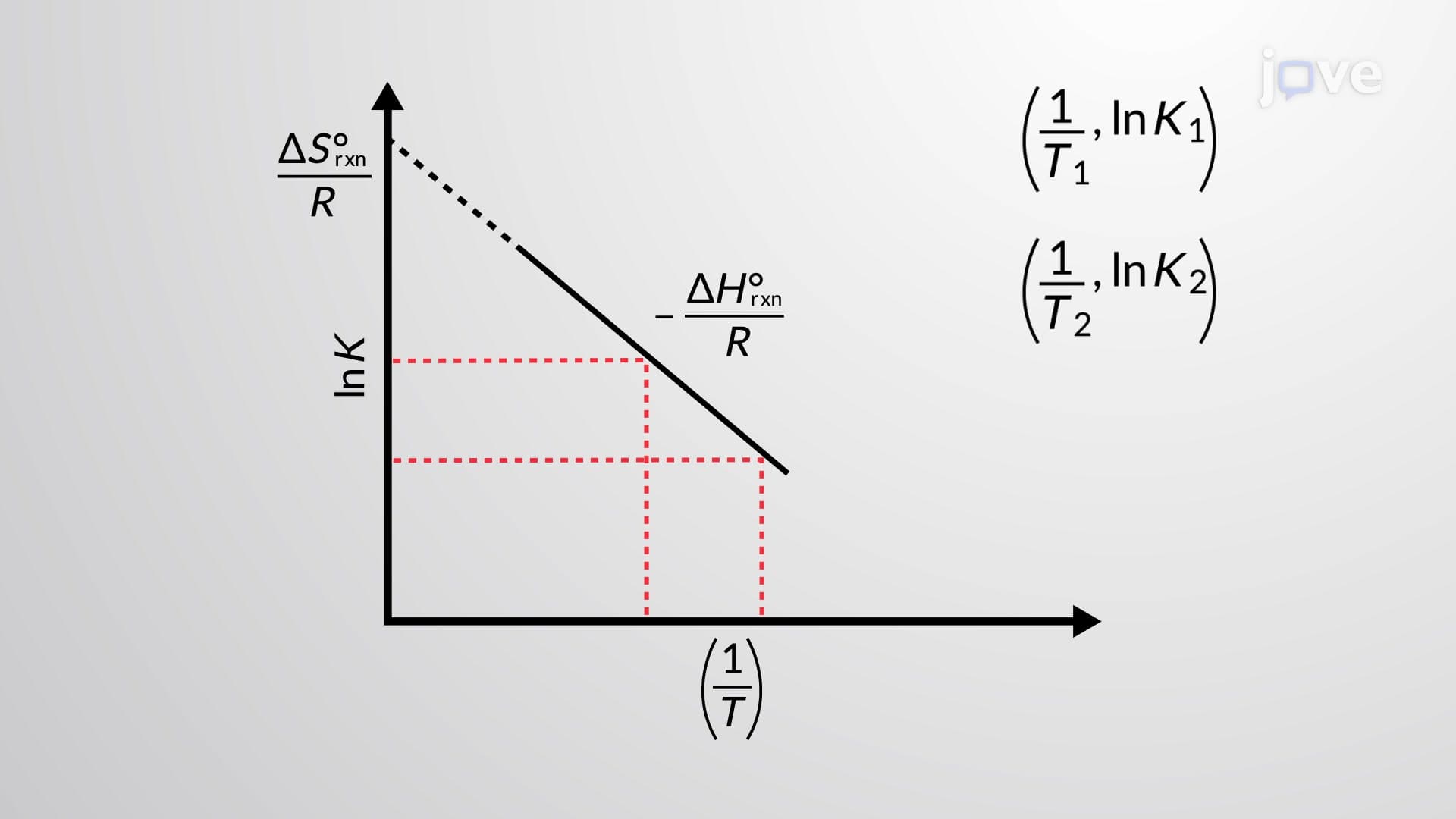
Temperature dramatically influences equilibrium positions through the van't Hoff relationship: ln K = -ΔH°/RT + ΔS°/R. This linear equation allows chemists to predict how equilibrium constants change with temperature, crucial for industrial processes like petroleum refining at ExxonMobil facilities.
Students preparing for AP Chemistry or college physical chemistry courses should recognize that plotting ln K versus 1/T yields a straight line with slope -ΔH°/R, enabling determination of reaction enthalpies from equilibrium measurements.
Free energy and equilibrium definition explained extends beyond academic exercises into real-world applications. Pharmaceutical companies use these principles to optimize drug stability, while environmental engineers apply them to predict pollutant behavior in groundwater systems. The concept appears prominently on MCAT passages, where students must interpret equilibrium data to answer questions about biological systems.
Understanding these relationships proves essential for success in advanced chemistry courses and professional applications in chemical engineering, biochemistry, and materials science.
Related Micro-courses