Loading subject page…

- Civil Engineering
- Fluid Statics
- Concept of Pressure at a Point
Micro-course: Fluid Statics
7,629 views
Learn key concepts and earn your certificate.


Concept of Pressure at a Point

00:00
01:15
Video Summary: Concept of Pressure at a Point Explained
Ever wonder why water pressure feels the same whether you're facing up, down, or sideways at the bottom of a swimming pool? The concept of pressure at a point reveals that fluid pressure acts equally in all directions at any given location. This fundamental principle, demonstrated through Pascal's law, explains how hydraulic systems in US automotive brakes and construction equipment can multiply force effectively. By analyzing forces on a tiny triangular fluid element, we discover that pressure remains constant regardless of surface orientation. Watch the full video on JoVE Coach to master this concept with expert-led visuals and step-by-step explanations.
- Understand the concept of pressure at a point and how it demonstrates Pascal's law through mathematical derivation
- Identify the forces acting on a fluid element, including normal pressure forces and gravitational weight
- Analyze the geometric relationships between triangular wedge dimensions and pressure calculations
- Apply equilibrium equations to prove that pressure acts equally in all directions at any point in a fluid
- Recognize how shearing stresses are neglected in static fluid analysis for simplified calculations
- Evaluate the mathematical limit process that leads to pressure equality at infinitesimal fluid elements
- Compare pressure magnitudes on different surfaces of a fluid element to verify directional independence
- Explore real-world applications of Pascal's law in hydraulic systems and engineering devices
Understanding the Concept of Pressure at A Point
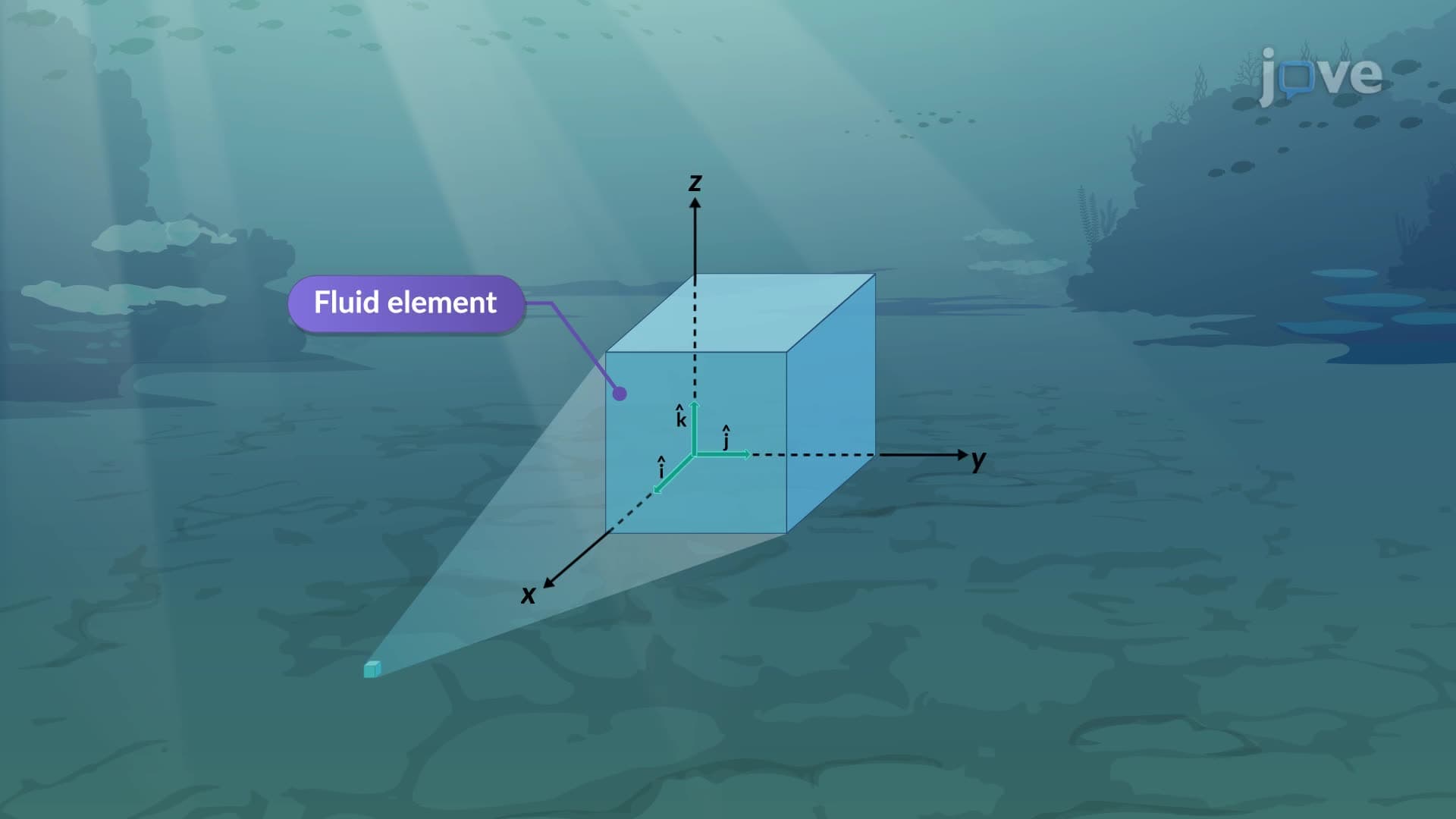
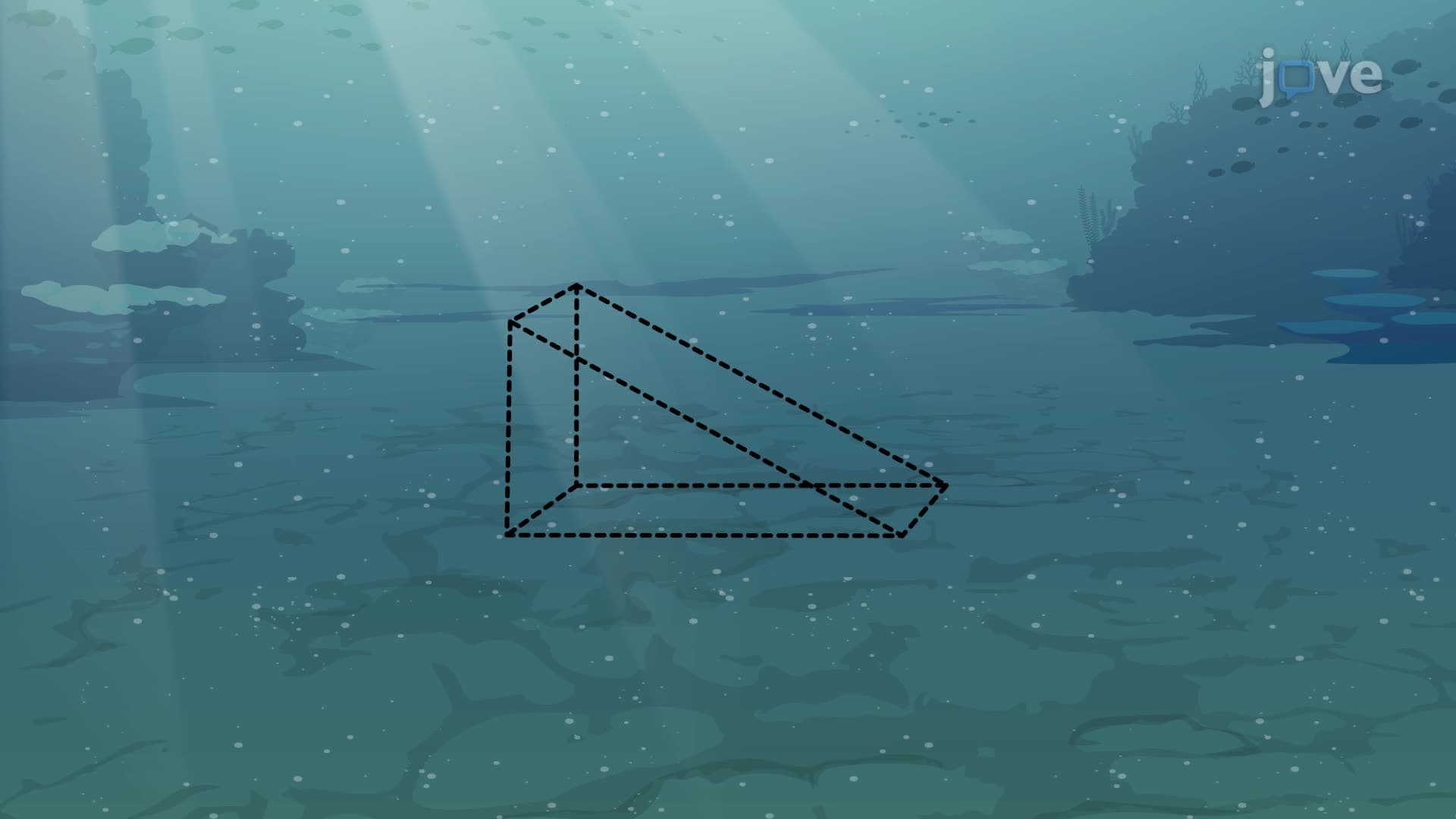
The concept of pressure at a point forms the mathematical foundation for fluid mechanics, establishing that pressure acts equally in all directions at any location within a static fluid. This principle emerges from analyzing the forces acting on an infinitesimally small fluid element, typically represented as a triangular wedge for two-dimensional analysis.
Force Analysis on Fluid Elements
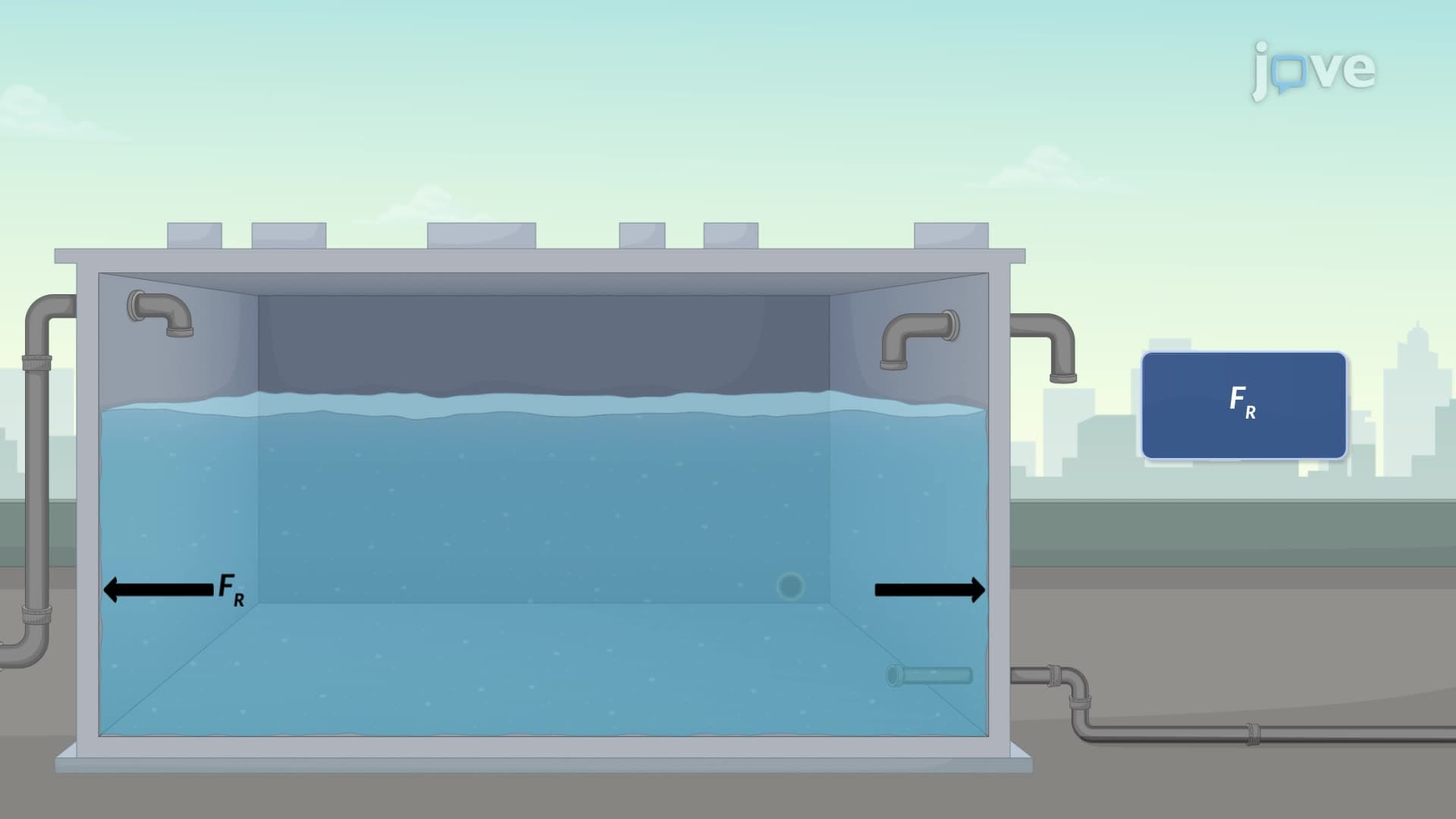
When examining a triangular fluid element extracted from a larger fluid mass, only two types of forces act upon it: normal pressure forces from the surrounding fluid and the element's own weight due to gravity. The pressure forces act perpendicular to each surface of the triangle, while the weight acts vertically downward. In static equilibrium, these forces must balance according to Newton's laws.
The mathematical representation involves calculating pressure multiplied by surface area to determine force magnitude. For a triangular wedge with dimensions related to an inclined surface, the vertical and horizontal faces can be expressed in terms of the hypotenuse length using basic trigonometry. This geometric relationship becomes crucial when applying equilibrium equations.
Mathematical Derivation and Pascal's Law
The equilibrium equations in both horizontal and vertical directions must equal zero for static conditions. When substituting the geometric relationships and pressure-force calculations into these equations, a remarkable result emerges: as the dimensions of the fluid element approach zero, the pressures acting on all surfaces become equal.
This mathematical limit process proves Pascal's law, which states that pressure applied to a confined fluid is transmitted equally in all directions. This principle revolutionized hydraulic engineering and remains fundamental to understanding fluid behavior in systems ranging from car brakes to hydraulic lifts used in US automotive service centers.
Practical Applications and Academic Relevance
Students encounter this concept extensively in AP Physics courses, particularly when studying fluid mechanics and pressure. College-level engineering courses expand on this foundation to analyze complex hydraulic systems. The concept appears regularly on standardized tests, including AP Physics exams and college placement assessments.
Understanding pressure at a point enables students to comprehend why hydraulic jacks can lift heavy vehicles with minimal input force, how pneumatic systems operate in manufacturing facilities, and why submarines experience uniform pressure distribution at any given depth. This knowledge proves essential for students pursuing engineering, physics, or applied mathematics careers.
Frequently Asked Questions
The concept of pressure at a point states that at any location within a static fluid, pressure acts equally in all directions regardless of surface orientation. This fundamental principle is mathematically proven through force analysis on infinitesimal fluid elements and forms the basis for Pascal's law. It explains why hydraulic systems can transmit force effectively through confined fluids.
AP Physics C exams frequently test this concept through problems involving fluid statics, hydraulic systems, and pressure calculations. Students must demonstrate understanding of force equilibrium on fluid elements and apply Pascal's law to solve multi-step problems. The concept often appears in free-response questions requiring mathematical derivations and real-world applications.
Yes, MCAT Physics sections include fluid mechanics questions that test understanding of pressure principles and Pascal's law. The exam may present scenarios involving blood pressure, hydraulic systems, or atmospheric pressure applications. Students should be comfortable with both conceptual understanding and quantitative problem-solving related to fluid pressure.
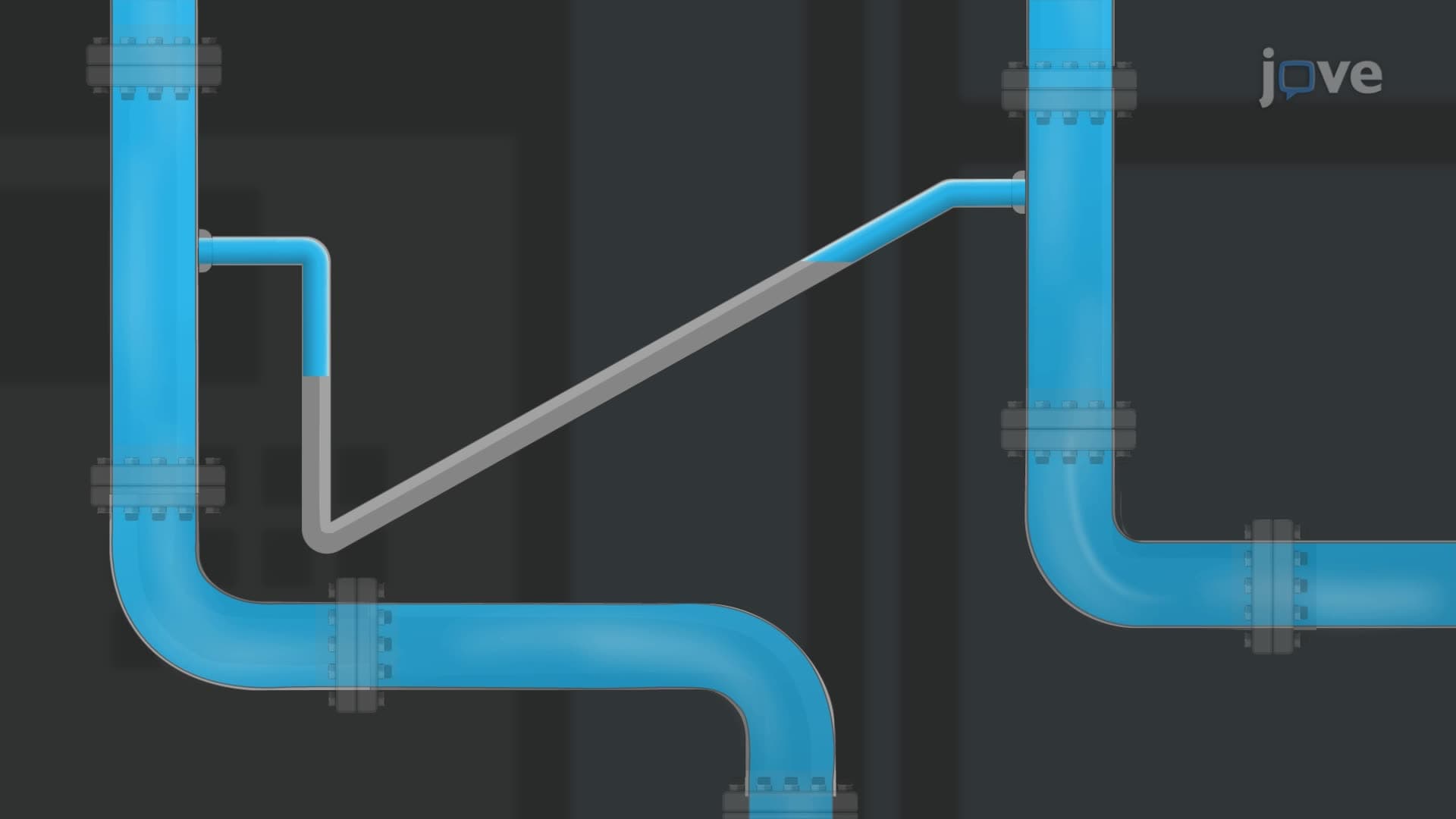
This concept is essential for designing hydraulic brake systems in vehicles, hydraulic lifts in construction equipment, and pneumatic controls in manufacturing. Engineers use Pascal's law to calculate force multiplication in hydraulic cylinders, design pressure vessel safety systems, and optimize fluid power transmission in industrial machinery throughout US manufacturing facilities.
While the mathematical derivation involves calculus concepts, the basic principle is quite intuitive once visualized properly. High school students can grasp the concept through practical demonstrations and simplified explanations before encountering the rigorous mathematical proof in advanced courses. Strong algebra and geometry skills provide sufficient background for initial understanding.
Focus on visualizing the triangular fluid element and drawing clear force diagrams showing all acting forces. Practice deriving the equilibrium equations step-by-step, then work through multiple example problems involving different geometric configurations. Create concept maps connecting Pascal's law to hydraulic applications, and review related topics like fluid density and hydrostatic pressure.
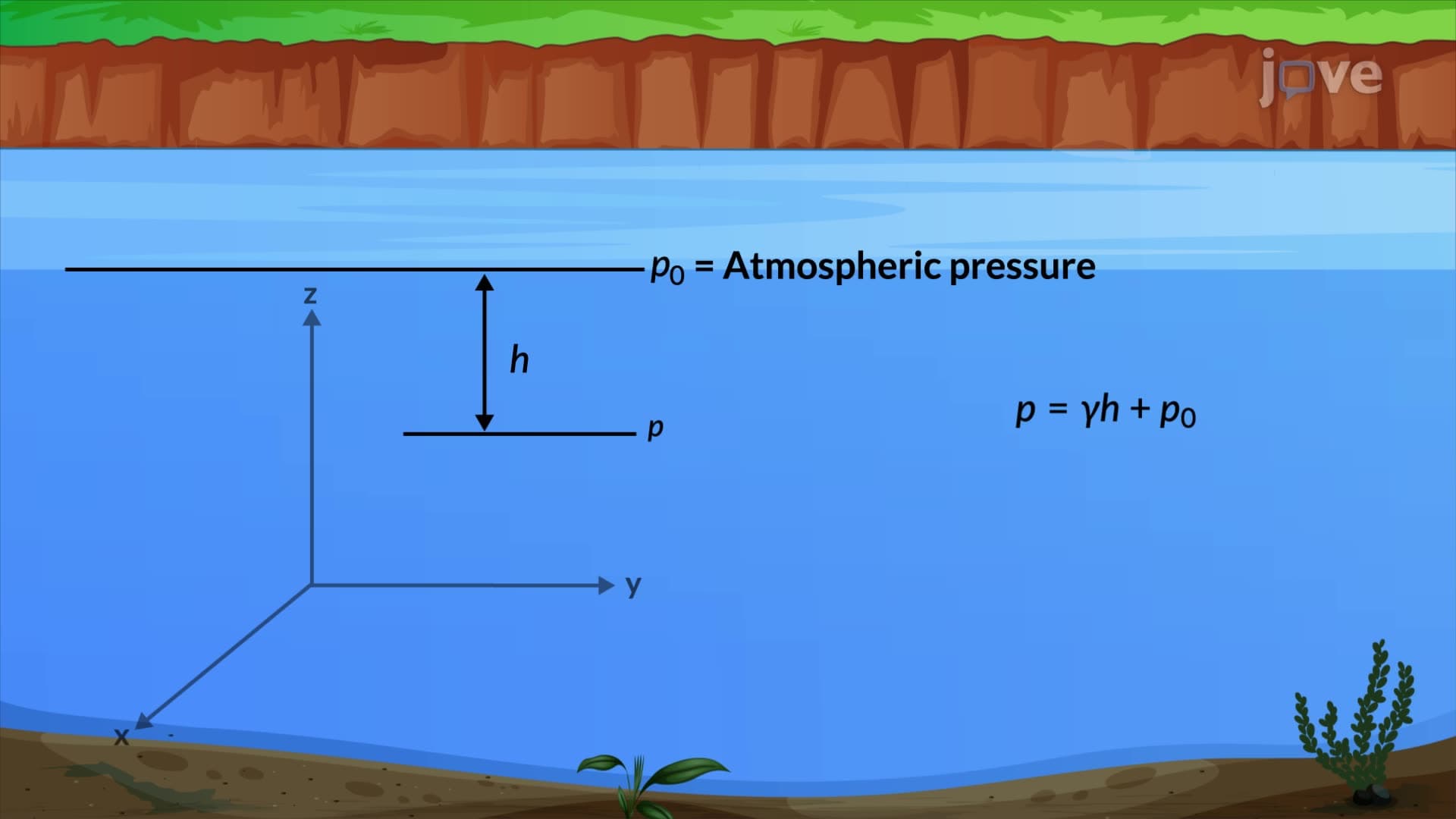
Build on this foundation by exploring hydrostatic pressure variation with depth, buoyancy and Archimedes' principle, and fluid flow dynamics. These concepts naturally extend pressure principles to more complex scenarios. Advanced students can investigate Bernoulli's equation, which combines pressure concepts with fluid motion and energy conservation principles.
College-level courses extend this concept to three-dimensional analysis, dynamic pressure in moving fluids, and complex boundary conditions. Students learn advanced mathematical techniques including tensor analysis for pressure fields and computational methods for solving complex fluid systems. The concept becomes fundamental to understanding turbulence, compressible flow, and advanced hydraulic engineering applications.
Related Micro-courses


