Loading…
Loading video…

2,456 views
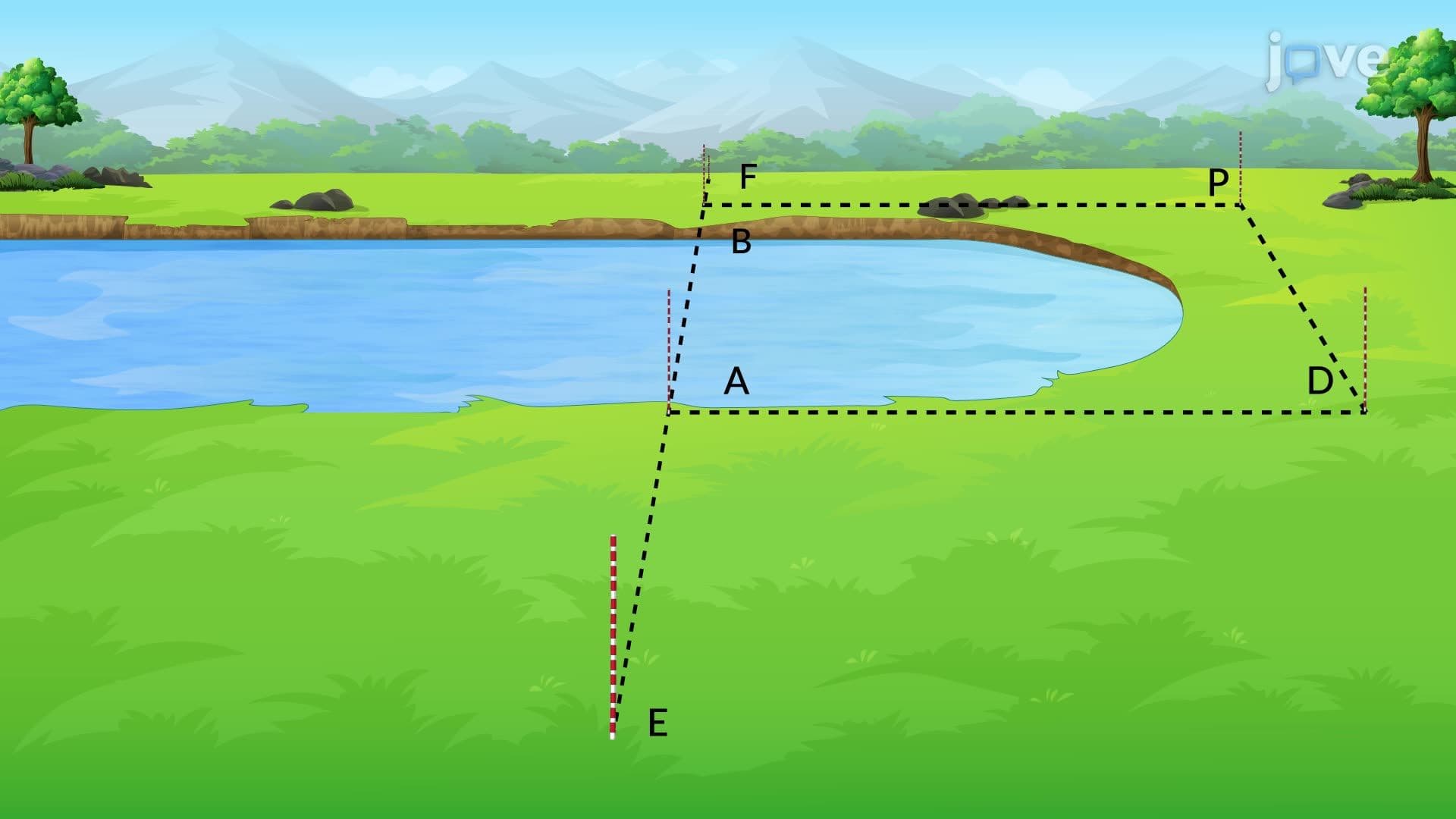
Did you know that California's Golden Gate Bridge engineers couldn't simply stretch a measuring tape across San Francisco Bay during construction planning? The introduction and methods of leveling become crucial when surveyors face natural obstacles like lakes, rivers, or canyons. Professional land surveyors routinely use the offset method—a clever technique demonstrated in Design Example Measuring Distance Between Explained—to measure distances across impassable terrain by creating parallel baselines and perpendicular measurements. Watch the full video on JoVE Coach to master this concept with expert-led visuals and step-by-step explanations.
The offset method represents a fundamental surveying technique that transforms an impossible direct measurement into a series of manageable, accurate calculations. When surveyors encounter obstacles like lakes, rivers, or steep terrain during property boundary determination or construction site mapping, traditional measuring tape becomes useless. This method creates a geometric solution by establishing a baseline parallel to the desired measurement and using perpendicular offsets to calculate the actual distance.
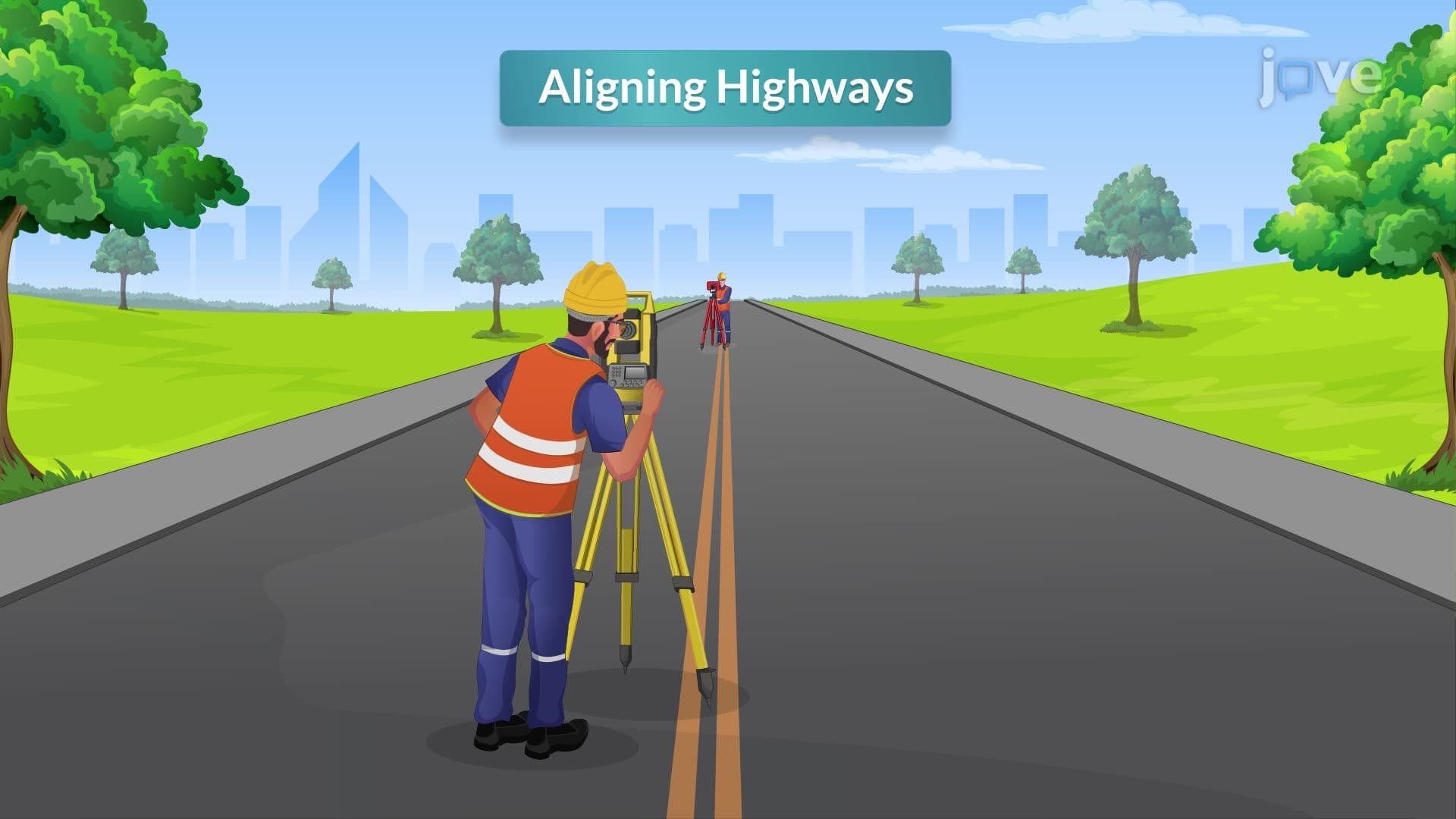
Professional surveyors begin by identifying the intended measurement line—the distance they need to determine across the obstacle. Using a surveying telescope or transit, they establish perfect alignment from one endpoint to the other, essentially creating an imaginary straight line across the water or obstruction. This baseline becomes the foundation for all subsequent measurements. The telescope's precision ensures that even across distances of several hundred feet, the alignment remains accurate to within inches—critical for legal property boundaries and engineering projects.
From both endpoints of the aligned baseline, surveyors use a compass to create perpendicular lines extending toward accessible ground. These offsets must be exactly 90 degrees from the baseline and of equal length—typically 50 to 200 feet depending on terrain and accuracy requirements. The compass ensures perpendicular precision, while careful pacing or chain measurements guarantee equal offset distances. This creates a rectangle where the unknown distance (across the obstacle) forms one side, and the measurable distance between offset endpoints forms the parallel opposite side.
This technique proves essential in numerous real-world scenarios across the United States. During the surveying of Central Park in Manhattan during the 1850s, surveyors used offset methods to measure across the various planned water features. Modern applications include highway construction projects crossing rivers, property line determination across wetlands, and urban development planning around existing infrastructure. Students preparing for the Fundamentals of Surveying (FS) exam—a requirement for professional surveying licensure—encounter offset method problems regularly, as this technique demonstrates core principles of geometric problem-solving and precision measurement that define professional practice.
Frequently Asked Questions
The Design Example Measuring Distance Between technique, also known as the offset method, allows surveyors to measure distances across impassable obstacles like lakes or rivers. It's essential for property boundary determination, construction planning, and infrastructure development where direct measurement is impossible. This method ensures legal accuracy in land surveying while maintaining the precision required for professional engineering projects.
AP Physics exams often include geometric problems involving similar triangles and perpendicular measurements that mirror offset method principles. AP Environmental Science may test this concept when discussing land use planning, wetland surveying, or habitat boundary determination. Students should understand the mathematical relationships between parallel measurements and geometric problem-solving applications.
Yes, introductory surveying courses and civil engineering programs regularly test offset method calculations and applications. Typical exam problems involve calculating unknown distances using given offset measurements, determining precision requirements, and explaining when this method is preferable to alternatives. Understanding geometric relationships and basic trigonometry helps students excel on these assessments.
Contemporary surveyors apply offset methods during bridge construction over rivers like the Mississippi or Colorado, property line surveys across lakes in residential developments, and infrastructure planning around protected wetlands. Major projects like California's high-speed rail construction or Florida Everglades restoration efforts rely on these techniques when GPS or direct measurement proves insufficient for legal accuracy requirements.
No, the offset method requires only basic geometry and arithmetic skills typically mastered by high school freshmen. Students need to understand parallel lines, perpendicular angles, and simple addition—concepts covered in Geometry or Algebra I. The mathematical complexity remains accessible while teaching important problem-solving approaches used in professional surveying practice.
Practice drawing diagrams for each problem, labeling known and unknown distances clearly, and working through step-by-step calculations methodically. Focus on understanding the geometric relationship between baseline, offsets, and parallel measurements rather than memorizing formulas. Create flashcards with common offset method scenarios and their solutions to build pattern recognition for exam success.
Progress to triangulation methods, electronic distance measurement (EDM), GPS surveying techniques, and topographic mapping principles. Advanced students can explore photogrammetry, laser scanning applications, and computer-aided surveying software. These topics build upon offset method foundations while incorporating modern technology used in contemporary professional practice.
This technique develops spatial reasoning, geometric problem-solving skills, and precision measurement concepts valuable in engineering, architecture, geology, and environmental science careers. Students learn to approach complex problems by breaking them into manageable components—a skill applicable across STEM disciplines from mechanical engineering design to archaeological site mapping and urban planning projects.
Related Micro-courses
Related Subjects
 Electrical Engineering 33 micro-courses›Mechanical Engineering 28 micro-courses›