Loading subject page…

- Civil Engineering
- Introduction to Surveying
- Electronic Distance Measuring Instruments
Micro-course: Introduction to Surveying
2,456 views
Learn key concepts and earn your certificate.




Electronic Distance Measuring Instruments

00:00
01:30
Video Summary: What Is Electronic Distance Measuring Instruments
Did you know surveyors can measure distances across the Grand Canyon with millimeter precision? A design example measuring distance between two points showcases how Electronic Distance Measuring Instruments (EDM) revolutionize accuracy in fields from construction to environmental monitoring. These sophisticated tools use electromagnetic signals-either light waves or microwaves-to calculate distances by measuring signal travel time. Watch the full video on JoVE Coach to master this concept with expert-led visuals and step-by-step explanations.
- Understand how Electronic Distance Measuring Instruments operate using electromagnetic signal principles to achieve precise distance calculations
- Identify the two primary signal types (light-based and microwave-based) and their optimal applications in different environmental conditions
- Compare Phase Shift and Timed-Pulse measurement methods, analyzing their accuracy capabilities and distance range limitations
- Analyze how infrared and laser light systems perform in clear conditions versus microwave systems in challenging weather
- Evaluate the advantages of EDM technology over traditional surveying methods in terms of speed, accuracy, and reliability
- Apply knowledge of EDM selection criteria when choosing appropriate instruments for specific surveying projects
- Recognize real-world applications of EDM technology in construction, geology, and engineering projects
- Explore how electromagnetic wave properties influence measurement accuracy and instrument design choices
Understanding Electronic Distance Measuring Instruments Fundamentals
Electronic Distance Measuring Instruments represent a revolutionary advancement in precision surveying technology. These sophisticated devices calculate distances by transmitting electromagnetic signals to target reflectors and measuring the time required for signal return. This fundamental principle-based on the constant speed of electromagnetic radiation-enables surveyors to achieve accuracy levels impossible with traditional tape measures or optical methods.
The technology proves essential in numerous applications, from highway construction projects spanning the Interstate system to geological surveys mapping earthquake fault lines in California. Students preparing for AP Physics or college-level engineering courses encounter EDM principles when studying wave propagation and electromagnetic theory.
Light-Based vs. Microwave Signal Systems
Light-based EDM instruments utilize infrared or laser light for short to medium-range measurements, typically effective up to several kilometers under ideal conditions. The Golden Gate Bridge's construction monitoring exemplifies this application, where precise measurements ensure structural integrity. These systems excel in clear atmospheric conditions but face limitations during fog, rain, or dust storms common in regions like the Southwest.
Microwave-based systems overcome weather limitations by utilizing radio frequencies that penetrate atmospheric obstacles. The Alaska Pipeline project extensively employed microwave EDM technology to maintain accuracy across vast distances despite harsh Arctic conditions. Understanding this distinction helps students grasp electromagnetic spectrum properties-a key concept in SAT Physics Subject Tests and college physics coursework.
Phase Shift and Timed-Pulse Measurement Methods
Phase Shift EDM instruments achieve exceptional precision by analyzing the phase difference between transmitted and received signals. This method works optimally for shorter distances where high accuracy is paramount, such as building foundation surveys or precision manufacturing applications. The technique relies on wave interference principles studied in advanced physics courses.
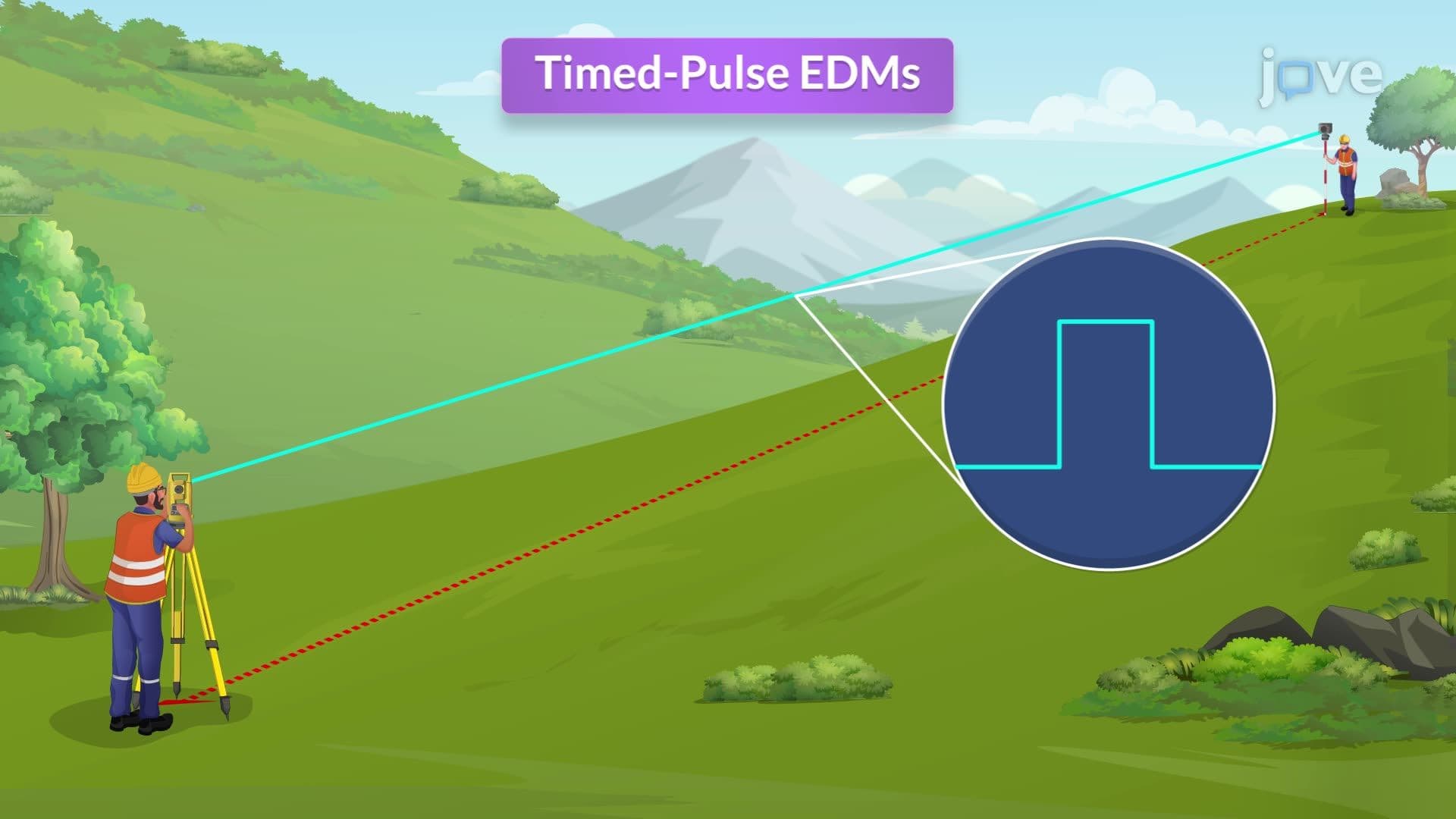
Timed-Pulse systems measure direct signal travel time, making them ideal for long-range applications like mapping national forests or conducting geological surveys across state boundaries. These instruments excel in scenarios where Phase Shift methods become impractical due to distance limitations or signal degradation.
Real-World Applications and Career Connections
EDM technology drives numerous industries crucial to American infrastructure. Civil engineers use these instruments for highway design, urban planners rely on them for city development projects, and environmental scientists employ them for ecosystem monitoring. Students considering STEM careers will encounter EDM principles in surveying technology, geomatics engineering, and construction management programs at universities nationwide.
The technology's precision proves vital for projects requiring millimeter-level accuracy, such as the alignment of particle accelerators at Fermilab or the construction of precision telescope arrays in observatories across the continental United States.
Frequently Asked Questions
Electronic Distance Measuring Instruments (EDM) are precision surveying tools that calculate distances by transmitting electromagnetic signals to reflectors and measuring return time. They use either light waves (infrared/laser) or microwaves, achieving accuracy levels impossible with traditional measuring methods. This technology forms the backbone of modern surveying and construction projects.
AP Physics exams often include questions about electromagnetic wave properties, signal propagation, and measurement principles underlying EDM technology. College engineering courses test understanding of phase relationships, signal processing, and accuracy calculations. Students should focus on wave theory and electromagnetic spectrum properties.
Professional Land Surveyor (PLS) exams emphasize EDM instrument selection, accuracy specifications, and error sources. Questions typically cover atmospheric corrections, prism constants, and measurement procedures. Understanding both Phase Shift and Timed-Pulse methods is essential for certification success.
The Interstate Highway System expansion relies heavily on EDM technology for precise alignment and grade control. Major projects like California's high-speed rail construction use EDM instruments for tunnel boring accuracy and track alignment. Bridge construction projects, including replacements across the Mississippi River, depend on EDM for structural positioning.
Basic algebra and trigonometry provide sufficient foundation for understanding EDM principles. While electromagnetic theory involves complex mathematics, practical EDM operation requires only fundamental wave concepts. High school physics preparation adequately covers prerequisite knowledge for introductory surveying courses.
Focus on understanding electromagnetic wave properties and signal propagation first, then practice calculation problems involving distance, time, and wave speed relationships. Create comparison charts between light-based and microwave systems, highlighting advantages and limitations. Hands-on experience with actual EDM instruments significantly reinforces theoretical knowledge.
Civil engineering, land surveying, construction management, and geomatics engineering rely heavily on EDM technology. Environmental consulting, archaeological surveying, and mining engineering also utilize these instruments regularly. Many state universities offer specialized surveying technology programs preparing students for these high-demand careers.
Explore Global Positioning System (GPS) integration with traditional EDM methods, laser scanning technology, and photogrammetry applications. Advanced courses cover atmospheric correction models, statistical analysis of measurement data, and integration with Geographic Information Systems (GIS). These topics prepare students for specialized roles in modern surveying practice.
Related Micro-courses