Loading subject page…

- Electrical Engineering
- Basics of Electric Circuits
- Independent and Dependent Sources
Micro-course: Basics of Electric Circuits
23,690 views
Learn key concepts and earn your certificate.

Independent and Dependent Sources

00:00
01:18
Video Summary: What are Independent and Dependent Sources
Ever wondered how your smartphone maintains consistent power while running multiple apps simultaneously? This engineering marvel relies on Ohm's law principles governing independent and dependent sources in electrical circuits. Understanding What are Independent And Dependent Sources is crucial for analyzing how circuit elements interact and control each other, similar to how power management systems in Tesla's electric vehicles regulate voltage and current flow. Watch the full video on JoVE Coach to master this concept with expert-led visuals and step-by-step explanations.
- Understand What are Independent And Dependent Sources and how they function differently in electrical circuits
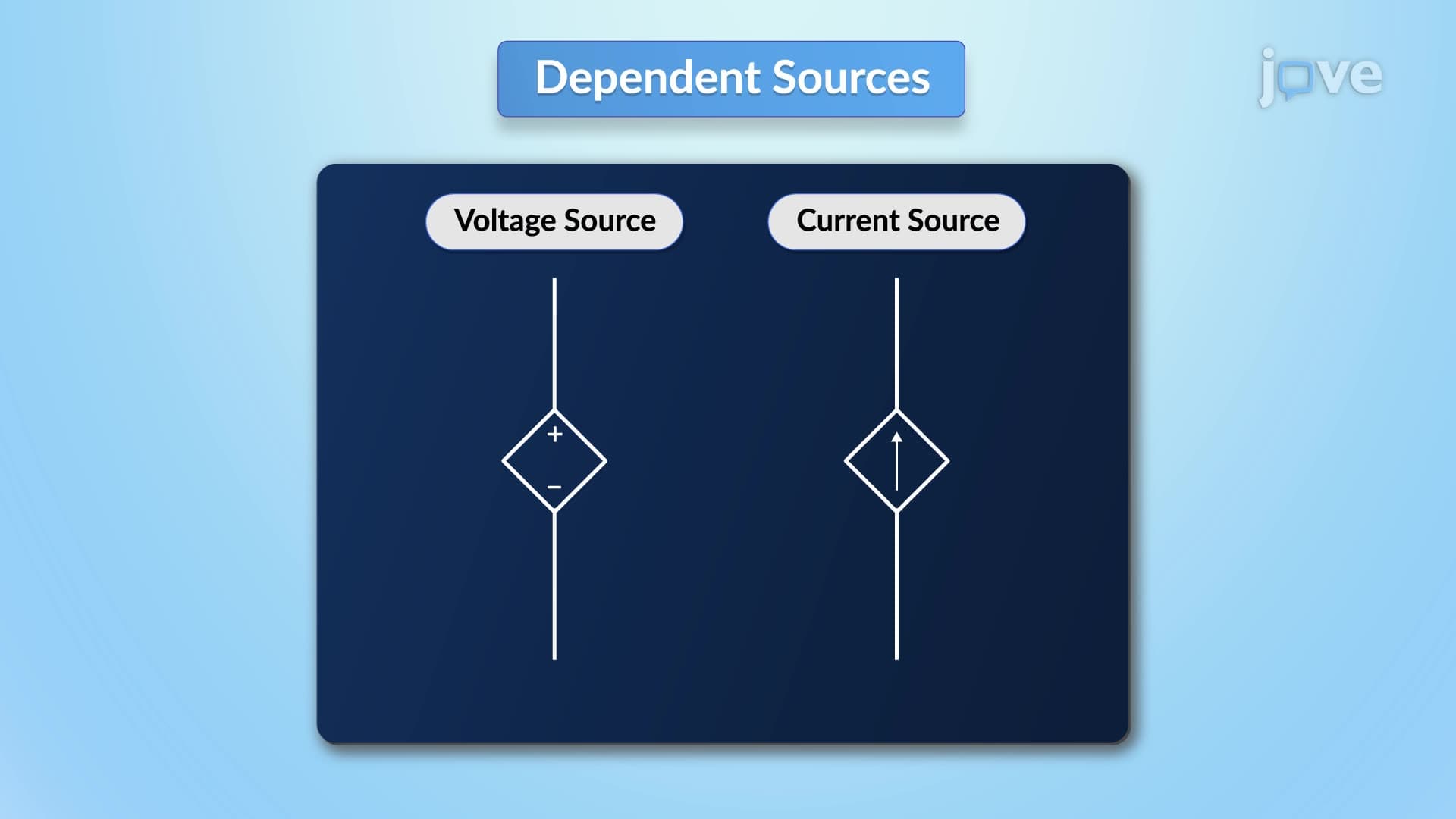
- Identify the symbolic representations and characteristics of independent voltage and current sources
- Analyze how dependent sources are controlled by other circuit elements through voltage or current relationships
- Compare the four categories of dependent sources based on their controlling and controlled parameters
- Evaluate circuit behavior when short circuits and open circuits are introduced with independent sources
- Apply Ohm's law principles to calculate gain ratios in dependent source configurations
- Recognize the diamond-shaped symbols used to represent dependent sources in circuit diagrams
- Explore practical applications of source types in modern electronic devices and power systems
Understanding What are Independent And Dependent Sources
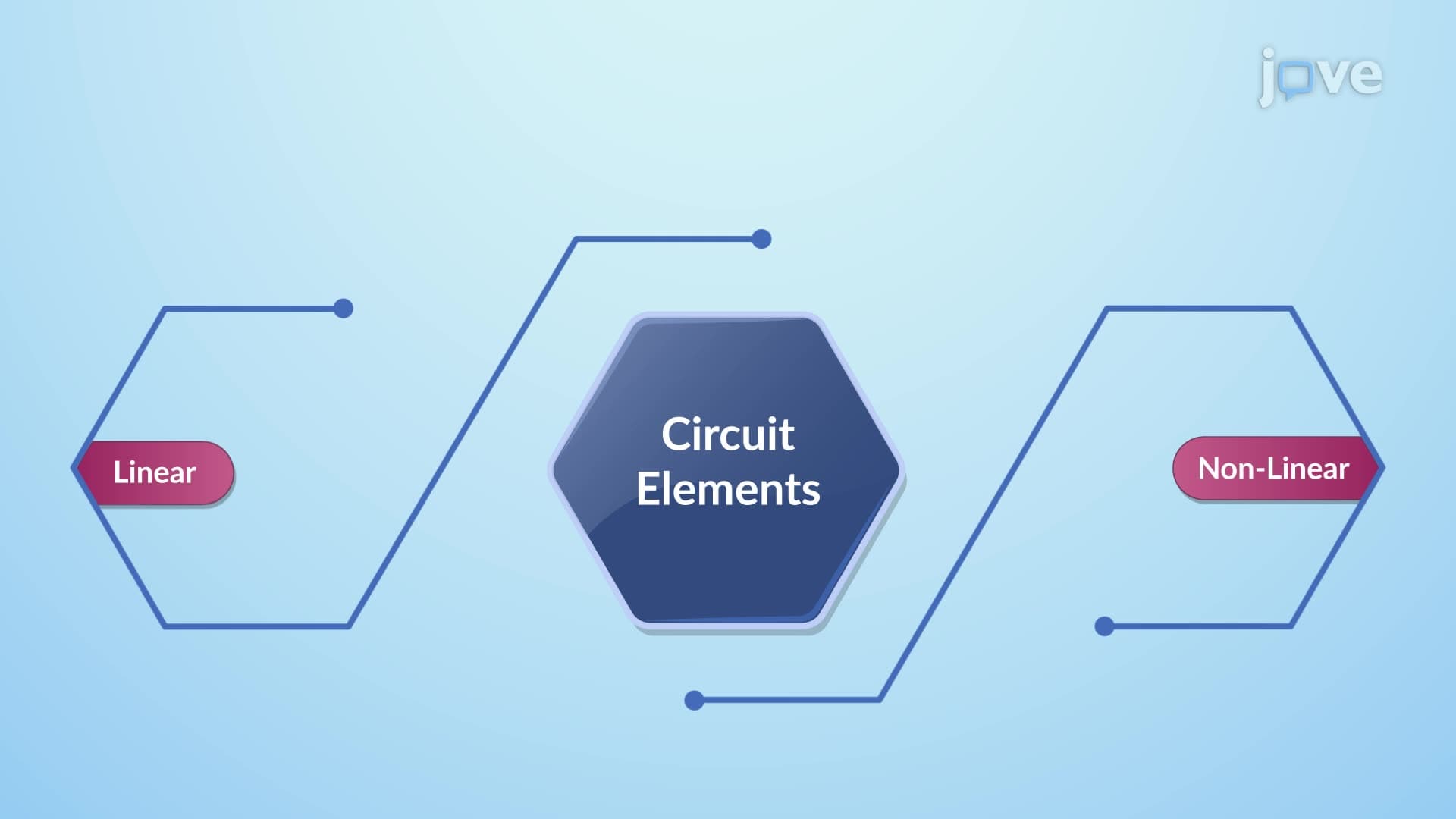
What are Independent And Dependent Sources represents a fundamental concept in circuit analysis that distinguishes between two primary types of electrical sources. Independent sources maintain their output regardless of other circuit conditions, while dependent sources have outputs controlled by other circuit elements. This distinction is essential for Ohm's law applications and advanced circuit analysis techniques used in electrical engineering programs at institutions like MIT and Stanford.
Independent Sources: The Foundation of Circuit Analysis
Independent voltage sources maintain constant voltage output regardless of current demands, similar to an ideal battery. These sources display polarity markings (+ and -) in circuit diagrams and form the basis for Ohm's law calculations. Independent current sources, conversely, provide constant current flow indicated by arrow symbols, regardless of voltage requirements across their terminals.
Understanding extreme cases proves crucial for Ohm's law mastery: a short circuit represents a zero-voltage independent source (V = 0), while an open circuit represents a zero-current independent source (I = 0). These concepts frequently appear on AP Physics exams and college-level electrical engineering assessments at universities like UC Berkeley and Georgia Tech.
Dependent Sources: Advanced Circuit Control
Dependent sources, represented by diamond-shaped symbols, have outputs controlled by other circuit variables. The Ohm's law definition extends to these sources through proportional relationships between controlling and controlled parameters. Four categories exist based on control mechanisms:
1. Voltage-Controlled Voltage Source (VCVS): Output voltage proportional to controlling voltage 2. Current-Controlled Voltage Source (CCVS): Output voltage proportional to controlling current 3. Voltage-Controlled Current Source (VCCS): Output current proportional to controlling voltage 4. Current-Controlled Current Source (CCCS): Output current proportional to controlling current
Practical Applications and Gain Calculations
When analyzing what is Ohm's law in detail within dependent source circuits, gain calculations become essential. The ratio between source output and controlling parameter defines the dependent source gain. For instance, in operational amplifier circuits used in medical devices like pacemakers manufactured by companies such as Medtronic, dependent sources model the amplification behavior crucial for proper device function.
Real-world applications include automotive systems where dependent current sources model transistor behavior in Ford's electric vehicle charging systems, and voltage-controlled sources represent sensor feedback mechanisms in Boeing's aircraft electrical systems.
Frequently Asked Questions
Independent sources provide constant voltage or current regardless of circuit conditions, like batteries or power supplies. Dependent sources have outputs controlled by other circuit elements, functioning like amplifiers where input signals control output levels. This distinction is fundamental for circuit analysis and Ohm's law applications.
AP Physics C: Electricity and Magnetism frequently tests these concepts through circuit analysis problems requiring Ohm's law calculations. Students must identify source types, apply appropriate analysis techniques, and solve for unknown voltages or currents. Practice problems often involve mixed circuits containing both source types.
Medical devices rely heavily on dependent source principles, particularly in diagnostic equipment and patient monitoring systems. MCAT Physical Sciences sections test Ohm's law applications in biological contexts, where dependent sources model nerve signal amplification and biomedical sensor responses critical for healthcare technology understanding.
Circuit Analysis, Electronics I, and Signal Processing courses at universities like Stanford and MIT extensively use these principles. Students apply Ohm's law definition concepts to analyze operational amplifier circuits, transistor models, and control systems. Advanced courses explore dependent sources in power electronics and communication systems.
Smartphones use dependent current sources in battery management systems, while home audio amplifiers employ voltage-controlled sources for signal processing. Tesla's Autopilot sensors utilize dependent sources for signal conditioning, and medical devices like MRI machines rely on these principles for image processing and patient safety systems.
Not at all! Start with Ohm's law basics and independent sources before progressing to dependent types. The diamond symbol provides easy visual identification, and the proportional relationships follow familiar mathematical patterns. Many students find dependent sources logical once they understand the controlling relationship concept.
Focus on Ohm's law study guide materials emphasizing symbol recognition and gain calculations. Practice identifying source types in circuit diagrams, solve mixed-source problems systematically, and understand when to apply different analysis techniques. Create flashcards for the four dependent source categories and their applications.
Node voltage analysis, mesh current analysis, and Thévenin equivalent circuits represent natural progressions. Understanding Ohm's law in these contexts leads to operational amplifier design, filter circuits, and control system analysis. Many students continue with power electronics and digital signal processing applications.
Related Micro-courses