Loading subject page…

- Finance
- Behavioral Finance
- The Overconfidence Bias
Micro-course: Behavioral Finance
3,690 views
Learn key concepts and earn your certificate.





The Overconfidence Bias

00:00
01:28
Video Summary: What Is the Overconfidence Bias
Poor decision-making costs Fortune 500 companies billions annually, with overconfidence bias driving many strategic failures. Overconfidence bias leads professionals to overestimate their knowledge and abilities while dismissing critical uncertainties. Consider how Enron executives ignored warning signs and opposing viewpoints, ultimately causing one of the largest corporate collapses in US history. Watch the full video on JoVE Coach to master this concept with expert-led visuals and step-by-step explanations.
- Apply systematic doubt techniques to challenge your initial assumptions during strategic planning and investment decisions
- Evaluate confidence intervals in financial forecasting by incorporating wider uncertainty ranges and multiple scenario planning
- Analyze team dynamics to identify when groupthink and overconfidence may be compromising critical business decisions
- Implement devil's advocate processes in leadership meetings to surface overlooked risks and alternative perspectives
- Assess market research methodologies to avoid launching products based on incomplete customer understanding
- Leverage diverse advisory boards and external consultants to counterbalance internal overconfidence in major initiatives
- Identify early warning signals that indicate overconfident decision-making patterns within your organization
- Compare your prediction accuracy against actual outcomes to calibrate future business forecasts and strategic plans
Understanding What is The Overconfidence Bias in Business Context
Corporate boardrooms witness overconfidence bias daily, from aggressive market projections to poorly researched acquisitions. This cognitive bias manifests when executives, managers, and teams systematically overestimate their knowledge while underestimating risks and uncertainties. Unlike simple optimism, overconfidence bias creates measurable gaps between predicted and actual business outcomes.
The Three Dimensions of Professional Overconfidence
Overestimation occurs when leaders believe their capabilities exceed reality. WeWork's Adam Neumann exemplified this, claiming his company would revolutionize multiple industries simultaneously while ignoring fundamental business metrics. His overconfidence contributed to a spectacular IPO failure and massive valuation correction.
Overplacement involves believing you outperform peers or competitors. Many retail executives during the early 2000s assumed their brick-and-mortar strategies were superior to emerging e-commerce models, leading to devastating market share losses to Amazon and other digital-first competitors.
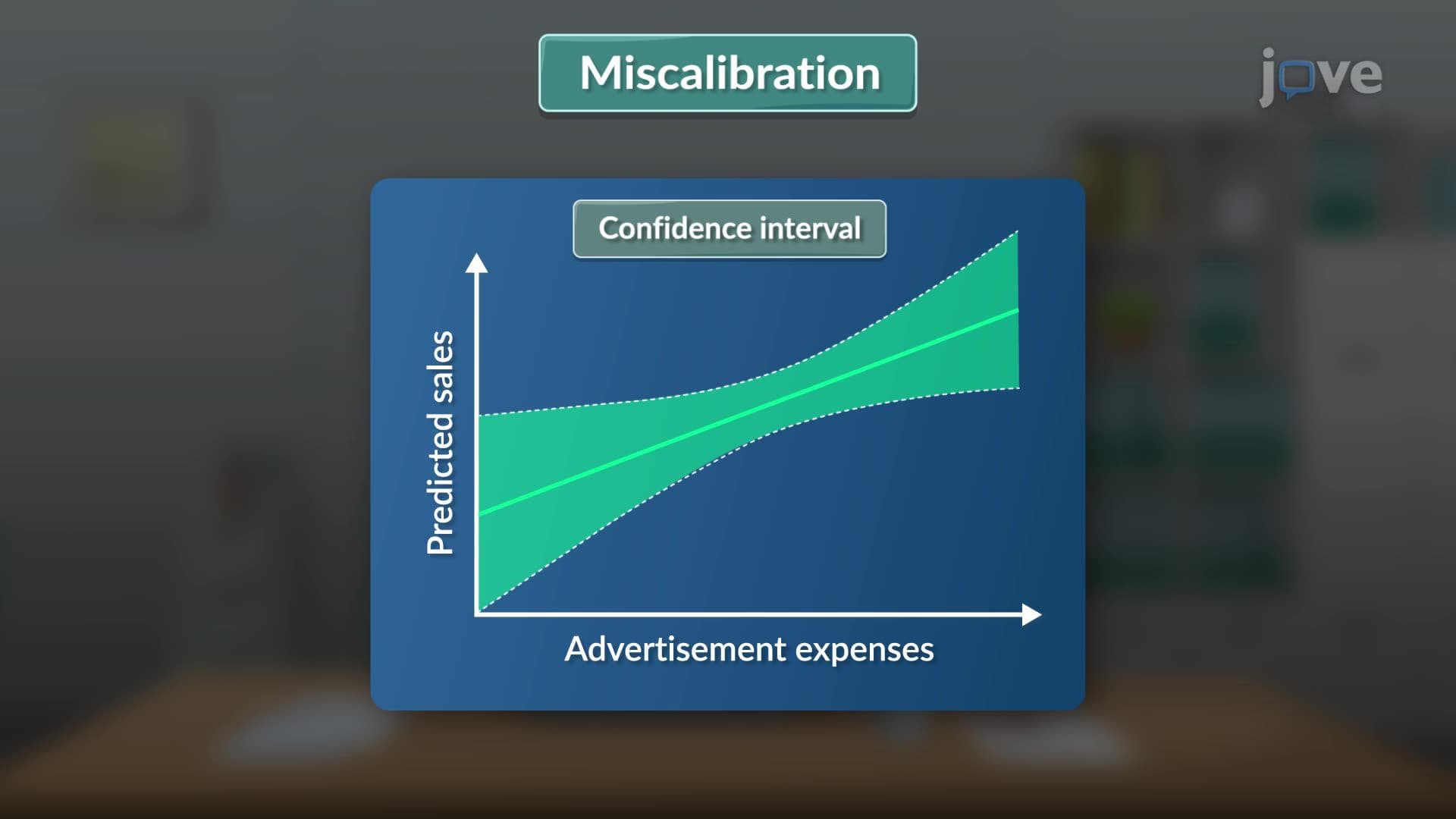
Overprecision represents the most dangerous form for business decision-makers. This involves creating overly narrow confidence intervals that fail to account for market volatility, competitive responses, or external disruptions. Financial analysts frequently exhibit overprecision when forecasting quarterly earnings or market movements.
Real-World Business Consequences and Financial Impact
Overconfidence bias directly impacts P&L performance through several channels. Marketing teams routinely overestimate campaign effectiveness, leading to misallocated budgets and missed revenue targets. Product development cycles extend beyond projections when teams underestimate technical complexity or market feedback requirements.
M&A activities particularly suffer from overconfidence bias. Research indicates that 70-90% of acquisitions fail to create shareholder value, often because acquiring companies overestimate synergies while underestimating integration challenges. AOL's acquisition of Time Warner exemplifies how overconfident assumptions about convergence strategy destroyed billions in shareholder value.
Strategic Frameworks for Bias Mitigation
Successful organizations implement systematic approaches to combat overconfidence. Red team exercises, popularized by McKinsey & Company, deliberately challenge strategic assumptions through adversarial analysis. Pre-mortem sessions require teams to imagine failure scenarios before major initiatives, surfacing overlooked risks that overconfident planning might miss.
Leading investment firms like Bridgewater Associates institutionalize "radical transparency," encouraging dissent and systematic challenge of leadership decisions. This cultural approach helps counteract the natural tendency toward overconfident consensus-building that plagues many corporate environments.
Frequently Asked Questions
Overconfidence bias involves systematically overestimating your abilities while ignoring contradictory evidence or uncertainties. Unlike healthy confidence, which incorporates realistic risk assessment, overconfidence creates blind spots that lead to poor strategic decisions. It manifests as overly narrow forecasting ranges, dismissing competitor threats, or launching initiatives without adequate market validation.
Look for teams presenting single-point forecasts without ranges, dismissing competitive threats as "unlikely," or claiming certainty about customer behavior without recent data. Pay attention when colleagues use phrases like "we're certain" or "this always works" during strategic discussions. Challenge any presentation lacking scenario planning or risk mitigation strategies.
Product launches, market expansion strategies, acquisition valuations, and promotional campaign effectiveness predictions are particularly susceptible. Sales forecasting, competitive positioning decisions, and technology implementation timelines also frequently suffer from overconfident assumptions. Any decision involving predictions about customer behavior or market dynamics carries elevated overconfidence risk.
Elizabeth Holmes exhibited classic overconfidence by claiming breakthrough technology capabilities without adequate validation, dismissing expert skepticism, and making overly precise promises to investors and partners. She consistently overestimated her team's abilities while underestimating technical complexities, leading to fraudulent claims and eventual company collapse with billions in investor losses.
No specialized background is required, though experience with data analysis and strategic planning helps. The key skills involve questioning assumptions, seeking diverse perspectives, and systematically tracking prediction accuracy against actual outcomes. Many effective bias mitigation techniques rely more on disciplined processes than technical expertise.
Mastering overconfidence bias recognition demonstrates sophisticated strategic thinking that boards and senior executives value highly. Leaders who systematically account for uncertainty and encourage dissenting views build more resilient organizations and deliver superior long-term performance. This skill differentiates you from peers who rely solely on intuition or past experience.
Anchoring bias provides natural progression, as it often works alongside overconfidence in financial modeling and negotiation scenarios. Confirmation bias also pairs well since overconfident decision-makers frequently seek information that validates their predetermined conclusions while avoiding contradictory data.
Related Micro-courses

20 Concepts
18 Concepts

14 Concepts