Loading video…

 22 Concepts
 3.2K views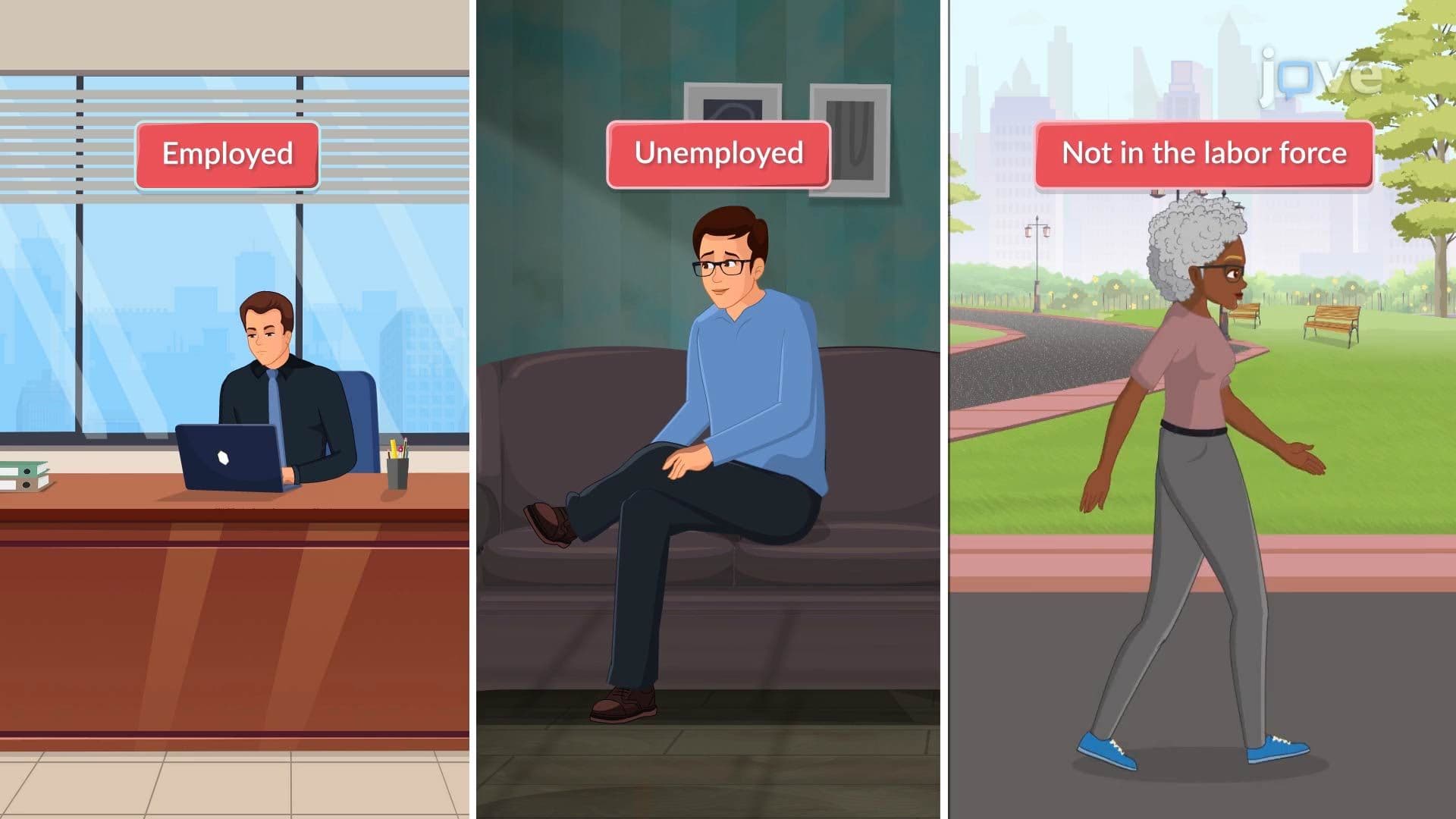

Video Summary: What Is the Labor Force And
Did you know that when the Bureau of Labor Statistics calculates unemployment, they're not just counting jobless Americans? The labor force and its measurement involves a complex survey system that determines who counts as "unemployed" versus "not in the labor force." Through the Current Population Survey, the BLS interviews 60,000 households monthly to classify every American over 16 into three categories, directly impacting policies from unemployment benefits to Federal Reserve decisions. Watch the full video on JoVE Coach to master this concept with expert-led visuals and step-by-step explanations.
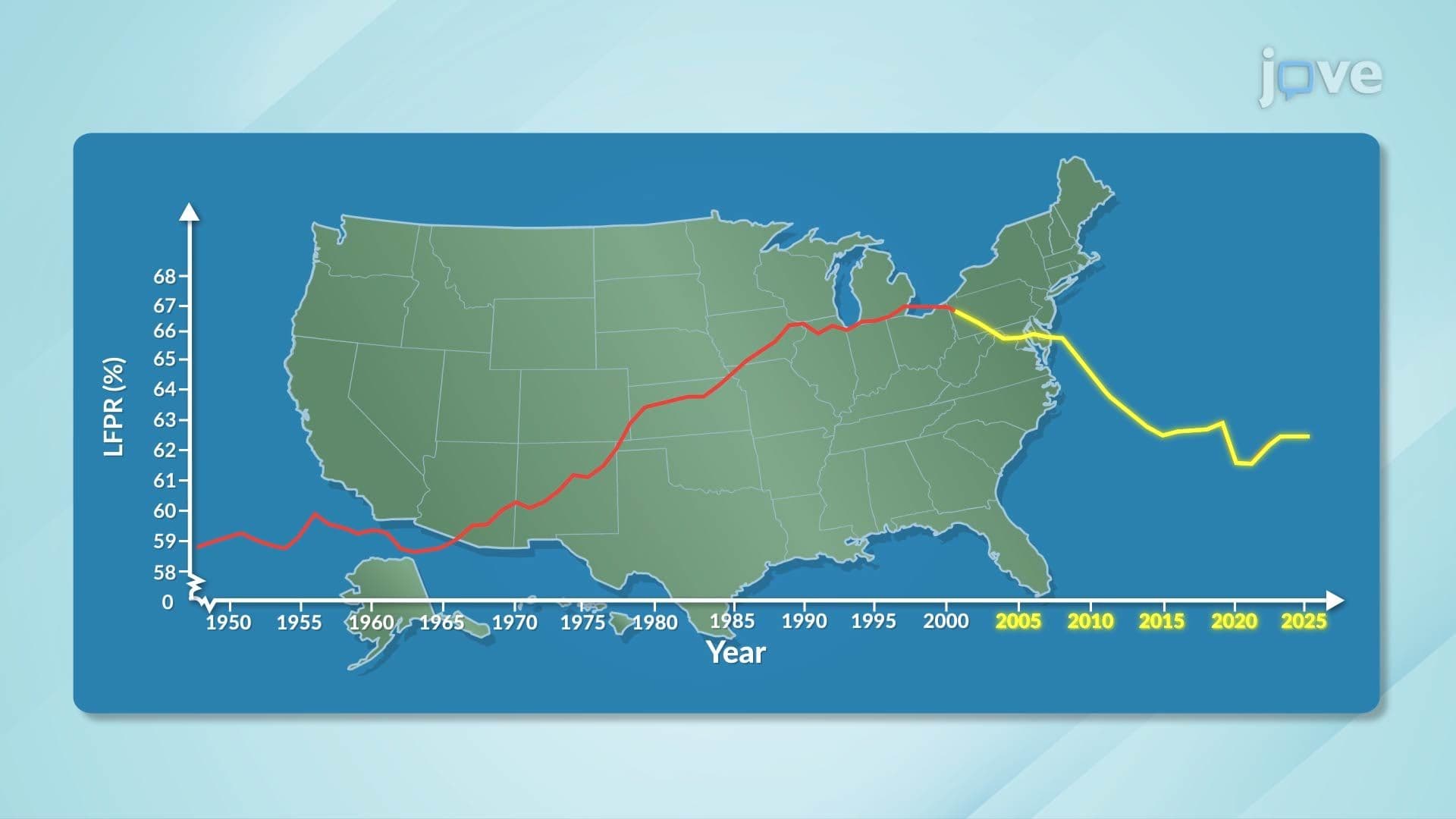
The labor force and its measurement form the foundation of how economists track America's economic health. Unlike simple population counts, the labor force represents only those Americans who are actively participating in the economy through work or job-seeking. This distinction matters enormously-during the 2008 recession, millions of Americans stopped looking for work and technically left the labor force, making unemployment rates appear better than the economic reality suggested.
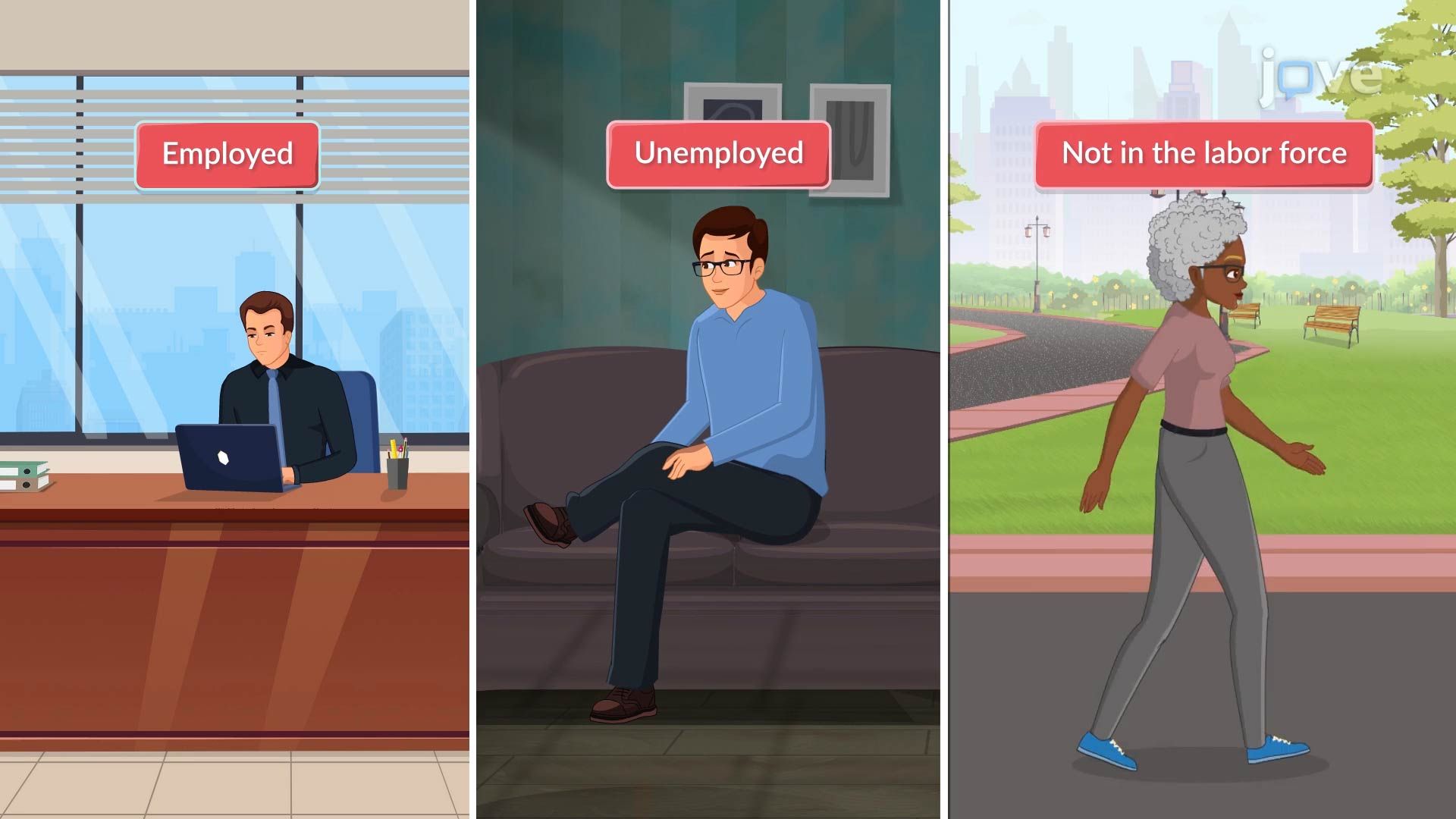
The Bureau of Labor Statistics defines the labor force as the sum of employed and unemployed individuals aged 16 and older. However, this excludes significant populations: full-time students, retirees, stay-at-home parents, disabled individuals unable to work, and institutionalized populations. Understanding these exclusions explains why labor force participation rates can fluctuate dramatically during economic cycles.
The Current Population Survey represents one of America's most sophisticated statistical operations. Each month, trained Census Bureau interviewers contact approximately 60,000 households across all 50 states, ensuring geographic and demographic representation. This sample size might seem small for a nation of 330 million, but statistical sampling theory allows these responses to accurately reflect national trends within narrow confidence intervals.
Interviewers ask detailed questions about employment status, hours worked, job-searching activities, and reasons for not working. Someone counts as "employed" if they worked even one hour for pay during the reference week. "Unemployed" individuals must be actively seeking work and available to start immediately. Everyone else falls into "not in the labor force," regardless of their circumstances.
Three key statistics emerge from this data collection: the unemployment rate (unemployed ÷ labor force × 100), the labor force participation rate (labor force ÷ civilian noninstitutional population × 100), and the employment-to-population ratio. These metrics guide Federal Reserve interest rate decisions, Congressional budget allocations, and state unemployment insurance programs.
Consider the 2020 pandemic: unemployment spiked to 14.8%, but labor force participation also plummeted as millions stopped job-searching. This dual movement complicated policy responses, as traditional unemployment benefits didn't address discouraged workers who had technically left the labor force.
Students encounter these concepts across multiple academic contexts. AP Economics courses test labor force calculations extensively, while college macroeconomics classes explore how demographic shifts affect participation rates. Business students analyze these trends for workforce planning, while pre-med students studying for the MCAT encounter labor statistics in social sciences passages about healthcare workforce shortages.
Related Micro-courses