Loading subject page…


3,175 views


Video Summary: What are Discouraged Workers
Did you know millions of Americans want jobs but aren't counted as unemployed? That's the paradox of discouraged workers, a concept at the heart of understanding true labor market health. Under the US Current Population Survey, these individuals searched for work within the past year but gave up recently, often believing no suitable jobs exist. Watch the full video on JoVE Coach to master this concept with expert-led visuals and step-by-step explanations.
When most people think about unemployment, they picture someone actively sending out résumés and showing up to interviews. But discouraged workers reveal a more complex reality, people who genuinely want to work but have stopped trying, often because they believe the effort is futile. Understanding this group is essential for anyone studying macroeconomics, labor policy, or social inequality.
In the United States, the Bureau of Labor Statistics (BLS) identifies discouraged workers through the Current Population Survey (CPS), a monthly household survey conducted jointly with the Census Bureau. To qualify as a discouraged worker under CPS guidelines, a person must have searched for employment at some point in the past 12 months but not in the most recent four weeks, and their reason for stopping must be job-market related, not personal (such as going back to school or caregiving). This distinction matters enormously: someone who stopped job-searching because they returned to college is *not* classified as discouraged, but someone who stopped because they believe no employer will hire them *is*.
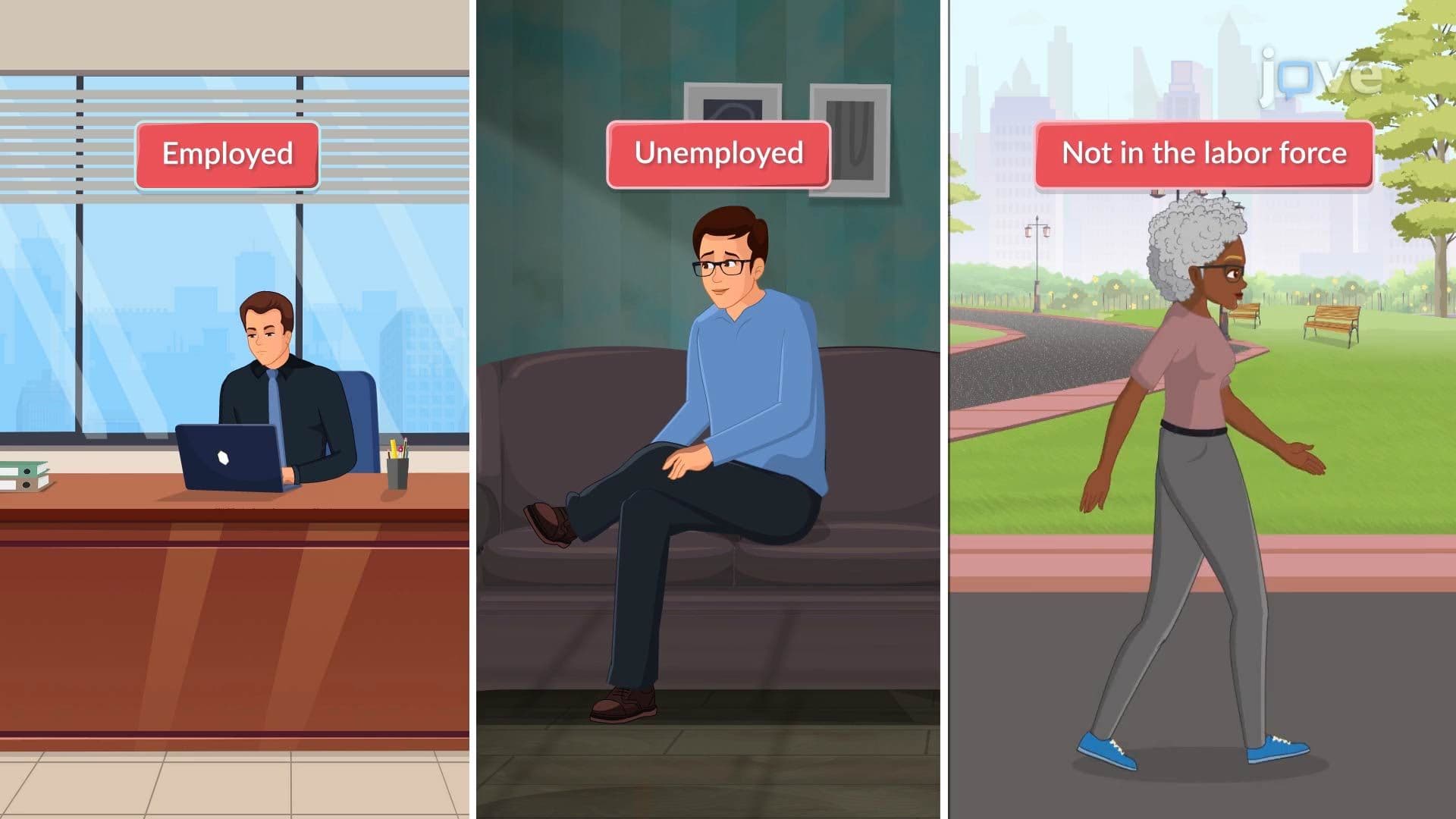
Discouraged workers are technically classified as "not in the labor force," which means they are excluded from both the numerator and denominator of the standard unemployment rate calculation. This makes the headline unemployment figure, the U-3 rate, an incomplete picture of labor market health. The BLS's broader U-6 rate includes discouraged workers and other marginally attached workers, offering a more complete measure of underemployment and labor slack.
The reasons workers disengage from job-seeking cluster around a few recurring themes. First, structural unemployment, a mismatch between workers' skills and the skills employers demand, is a major driver. For example, a manufacturing worker in the Rust Belt who lacks digital skills may feel locked out of today's tech-driven job market. Second, repeated rejection erodes confidence and motivation; psychological research confirms that persistent failure in job applications can lead to learned helplessness, making further effort feel pointless. Third, geographic barriers in rural communities or economically depressed urban neighborhoods can make the job market feel inaccessible, especially when transportation or internet access is limited.
Following the 2008 financial crisis, the number of discouraged workers in the US surged dramatically, peaking at roughly 1.3 million in early 2010, according to BLS data. Similarly, the COVID-19 pandemic triggered a sharp spike in discouraged workers as entire industries shut down and millions concluded job-seeking was temporarily pointless. These trends have real consequences: when large numbers of workers exit the labor force, potential economic output is lost, tax revenues shrink, and social safety net demands increase.
Policymakers respond with tools like federally funded job-training programs (such as those under the Workforce Innovation and Opportunity Act), expanded apprenticeship initiatives, and targeted hiring incentives for employers in high-unemployment regions. Understanding discouraged workers isn't just academic, it directly shapes how billions in federal workforce dollars are allocated.
In AP Macroeconomics, students are regularly tested on labor force classifications, the limitations of the official unemployment rate, and the difference between frictional, structural, and cyclical unemployment. Discouraged workers frequently appear in free-response questions asking students to explain why the U-3 rate might understate true unemployment. In college-level Principles of Economics courses and midterm exams, you may be asked to categorize hypothetical individuals as employed, unemployed, or not in the labor force, and to identify whether they qualify as discouraged. Mastering this nuance separates strong test-takers from the rest.
Related Micro-courses