Loading subject page…


26,579 views

Video Summary: What are International System of Units
Why does a gram of gold weigh exactly the same in New York as it does in California, while a pound can vary depending on your scale? The international system of units provides absolute measurement standards that remain constant worldwide, with base units of meters, kilograms, and seconds forming the foundation of scientific measurement. From NASA's Mars rover missions to your high school chemistry lab, these standardized units ensure precise communication across all scientific disciplines. Watch the full video on JoVE Coach to master this concept with expert-led visuals and step-by-step explanations.
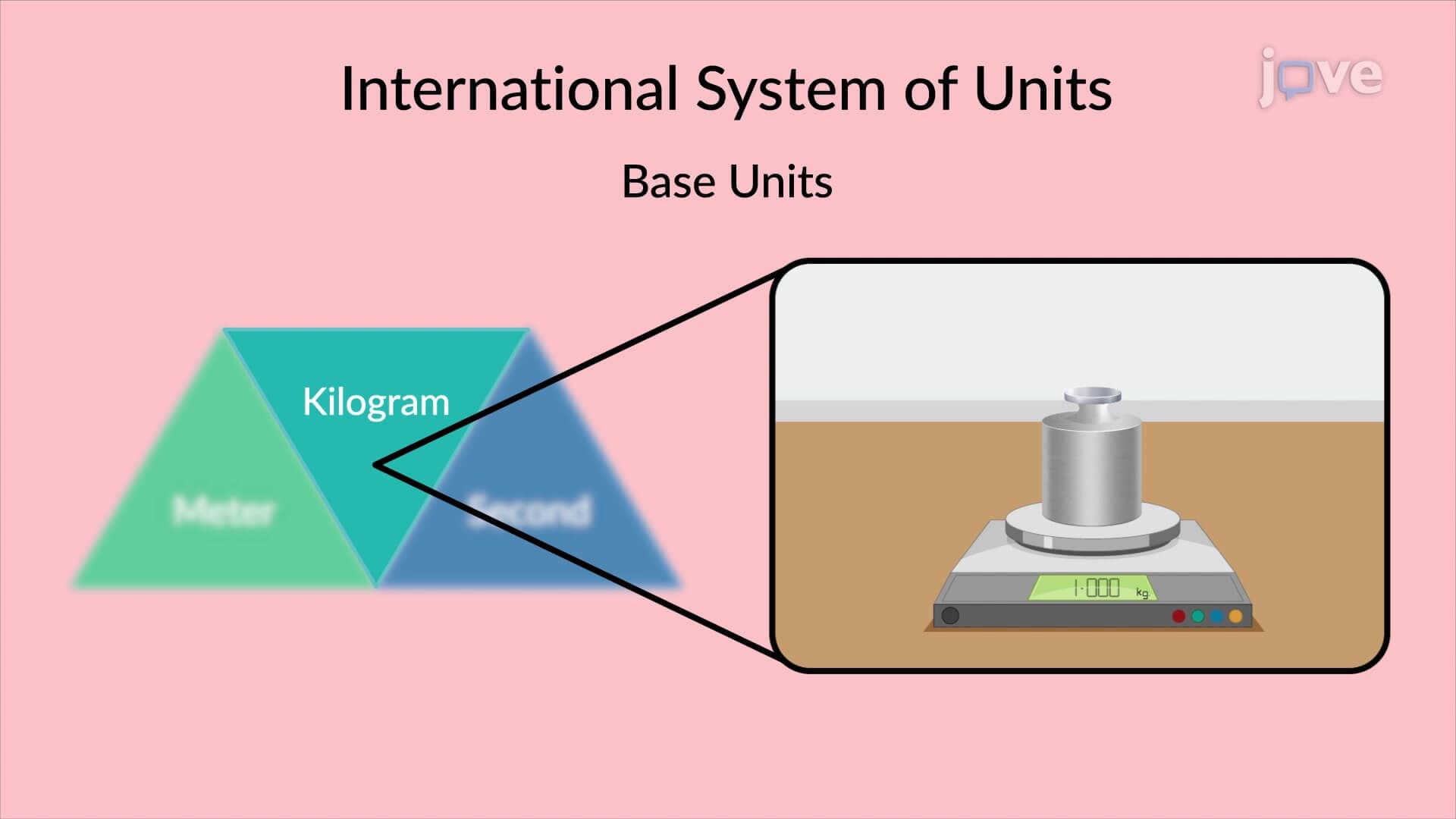
The international system of units (SI) represents the modern metric system adopted globally to ensure measurement consistency across scientific, industrial, and educational applications. Established by international treaty, SI provides seven base units that serve as building blocks for all other measurements: meter (length), kilogram (mass), second (time), ampere (electric current), kelvin (temperature), mole (amount of substance), and candela (luminous intensity).
The three fundamental base units-meters, kilograms, and seconds-form the backbone of most scientific calculations. Unlike older measurement systems that varied by region, these units maintain absolute values regardless of location. For example, the meter is defined by the distance light travels in vacuum during 1/299,792,458 of a second, making it invariant whether measured at MIT or Stanford University. This precision proves crucial in American industries like semiconductor manufacturing, where Intel's chip production requires measurements accurate to nanometer scales.
The SI prefix system elegantly handles quantities spanning enormous ranges, from femtometers in nuclear physics to gigameters in astronomy. Prefixes like milli- (10⁻³), micro- (10⁻⁶), and nano- (10⁻⁹) describe smaller quantities, while kilo- (10³), mega- (10⁶), and giga- (10⁹) represent larger ones. Notably, the kilogram stands as the only base unit incorporating a prefix-a historical artifact from the original gram-based definition.
Proper SI notation follows specific rules essential for AP Physics and college-level science courses. Composite units use dots for separation (N·m for newton-meters), prefixes appear only in numerators (km/s, not m/ks), and exponential powers apply to both prefix and unit (mm³ equals 10⁻⁹ m³, not 10⁻³ m³). These conventions prevent calculation errors common in MCAT physics problems.
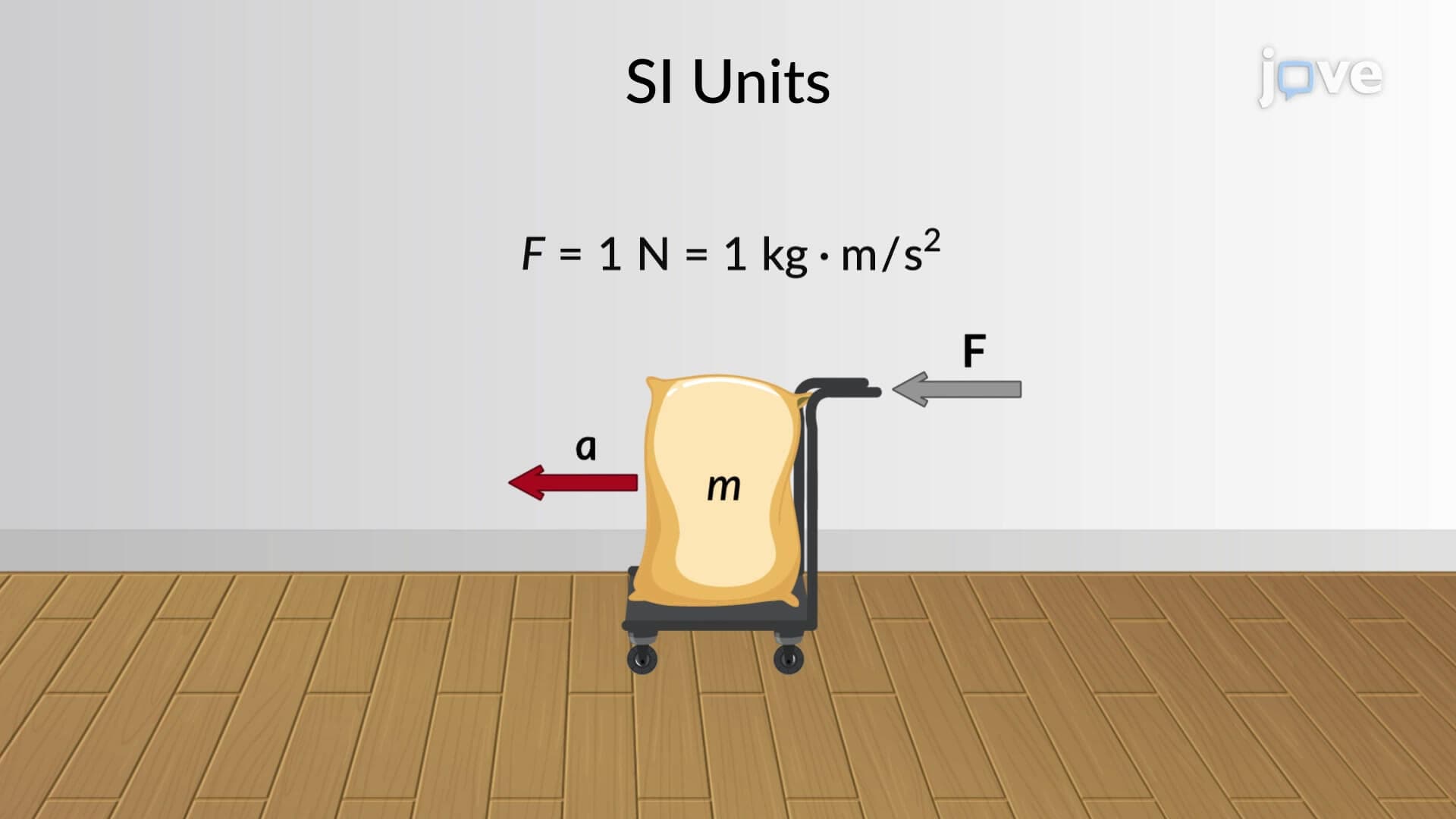
SI units dominate American scientific education and industry applications. The FDA requires pharmaceutical companies to report drug concentrations in SI units, while NASA exclusively uses SI for space missions following the 1999 Mars Climate Orbiter failure caused by unit conversion errors. In academic settings, AP Chemistry exams expect students to work fluently with molarity (mol/L), while AP Physics problems typically involve SI-derived units like joules (kg·m²/s²) and watts (kg·m²/s³).
Related Micro-courses