Loading video…


 10 Concepts
 26.6K views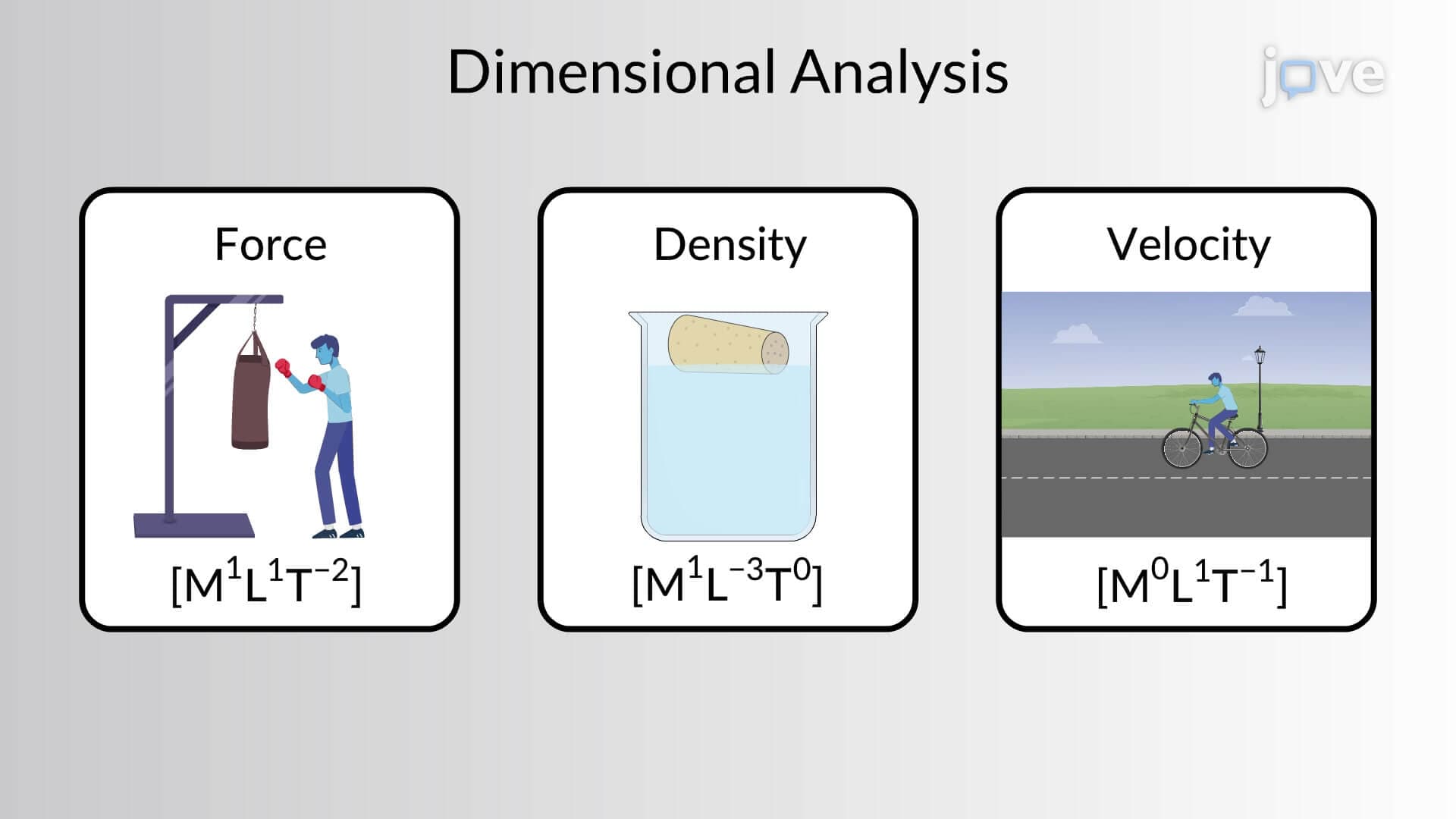

Video Summary: What Is Dimensional Analysis
Ever wonder how NASA ensures spacecraft calculations are accurate across different measurement systems? Dimensional analysis serves as physics' ultimate error-checking tool, helping scientists verify equations by examining the fundamental dimensions of mass, length, and time. This powerful technique prevented disasters like the Mars Climate Orbiter mission failure, where unit conversion errors cost $125 million. Understanding what is dimensional analysis means mastering the language that connects mathematical equations to physical reality. Watch the full video on JoVE Coach to master this concept with expert-led visuals and step-by-step explanations.
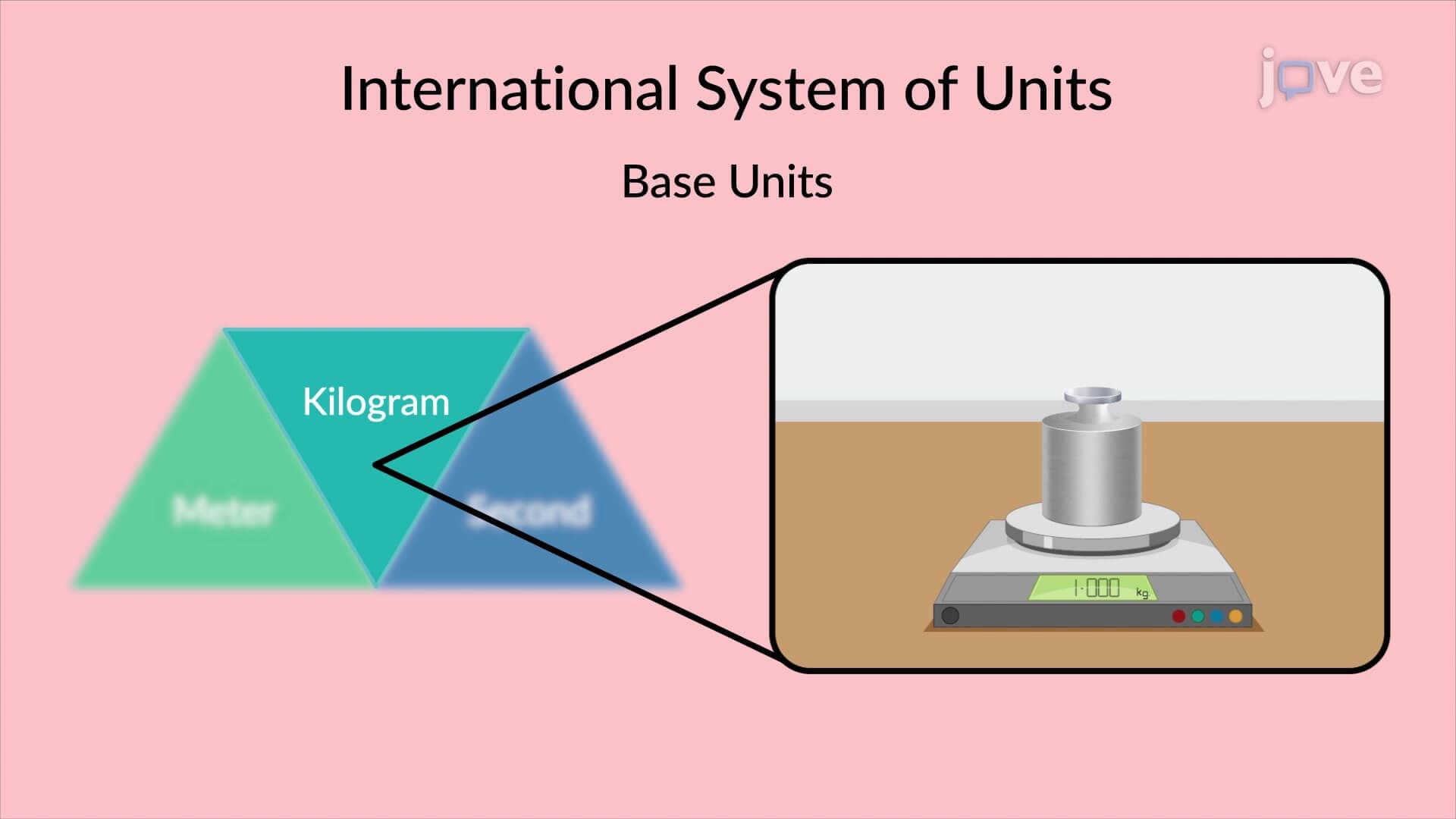
Dimensional analysis represents one of physics' most practical problem-solving tools, serving as both a verification method and a pathway to discovering physical relationships. At its foundation, this technique recognizes that all physical quantities in mechanics stem from three fundamental dimensions: mass [M], length [L], and time [T]. Think of these as the building blocks from which all other physical quantities construct their dimensional identity.
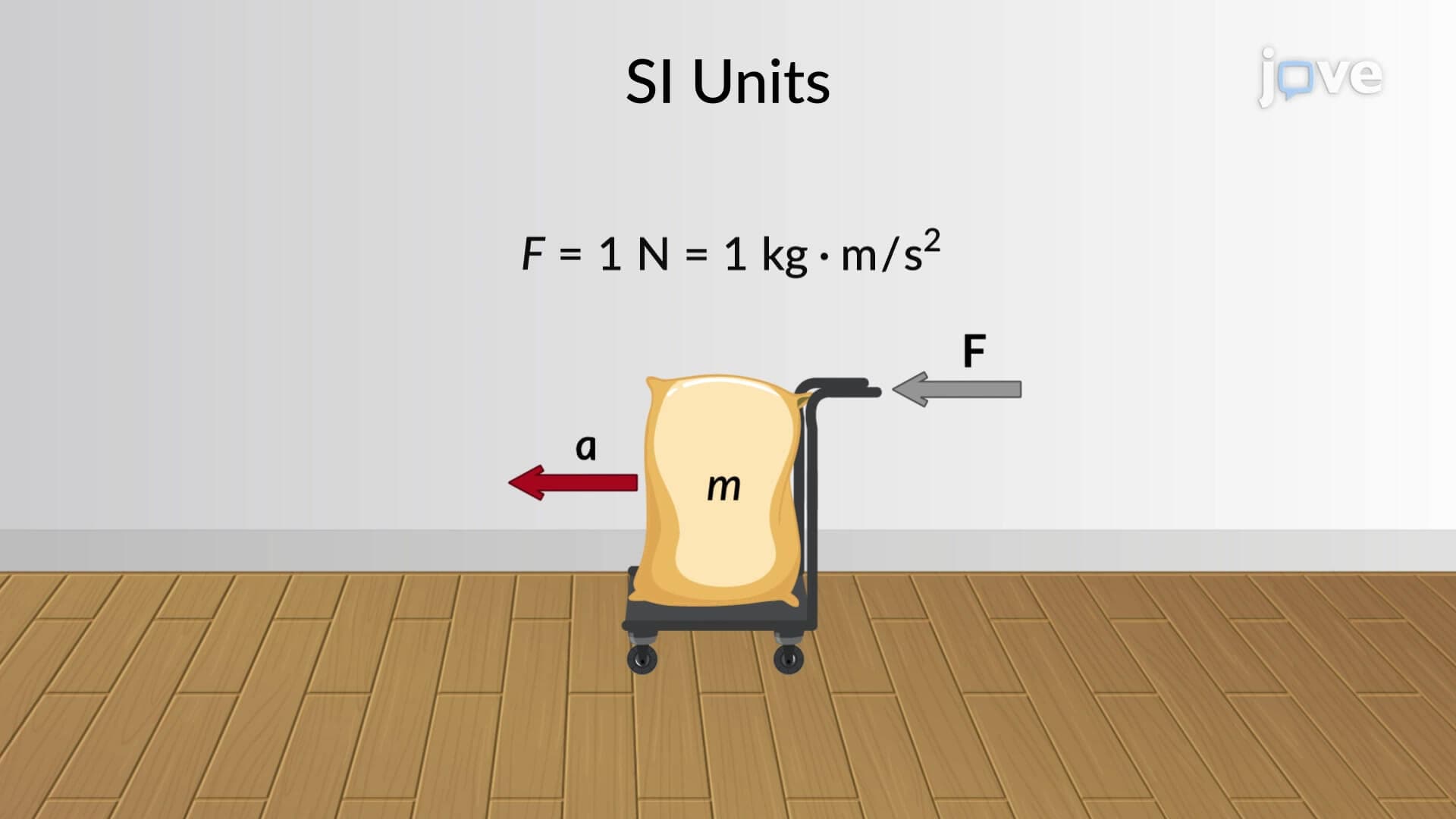
Consider force, a concept central to mechanics. When analyzing the dimensions of force using Newton's second law (F = ma), we find that force equals mass times acceleration. Since acceleration has dimensions of [L]/[T]², force carries dimensions of [M][L]/[T]². This dimensional signature becomes force's unique identifier, distinguishing it from other physical quantities like energy or momentum.
The beauty of dimensional analysis emerges when examining kinematic equations. Take the familiar equation v = u + at, where v represents final velocity, u initial velocity, a acceleration, and t time. Each term must share identical dimensions for the equation to maintain physical meaning-a principle called dimensional homogeneity. Both velocities carry dimensions [L]/[T], while acceleration multiplied by time (at) yields [L]/[T]² × [T] = [L]/[T], confirming dimensional consistency.
Two primary methods dominate dimensional analysis applications. Rayleigh's method proves particularly useful when determining how one variable depends on three or four others. For instance, if studying how the period of a pendulum depends on length, mass, and gravitational acceleration, Rayleigh's method helps establish the relationship T = k√(L/g), where k represents a dimensionless constant.
Buckingham's pi theorem offers a more systematic approach for complex systems involving numerous variables. The theorem states that any dimensionally homogeneous equation containing n variables and m fundamental dimensions can be reduced to (n - m) dimensionless groups. This reduction proves invaluable in fluid mechanics, where engineers analyze flow patterns using dimensionless numbers like Reynolds number.
Dimensional analysis appears throughout the US educational system, from high school AP Physics courses to undergraduate engineering programs. Students encounter it on standardized tests like the SAT Subject Tests and AP Physics exams, where dimensional consistency often provides quick verification of calculated answers. Medical school prerequisites emphasize dimensional analysis in physics courses, as future physicians must understand unit conversions for drug dosages and medical equipment calibrations.
Professional engineers rely heavily on dimensional analysis for safety-critical calculations. The 1999 Mars Climate Orbiter failure, caused by confusion between metric and imperial units, underscores why dimensional analysis remains essential for preventing costly errors in aerospace, civil engineering, and manufacturing industries.
Related Micro-courses