Loading video…


 10 Concepts
 26.6K views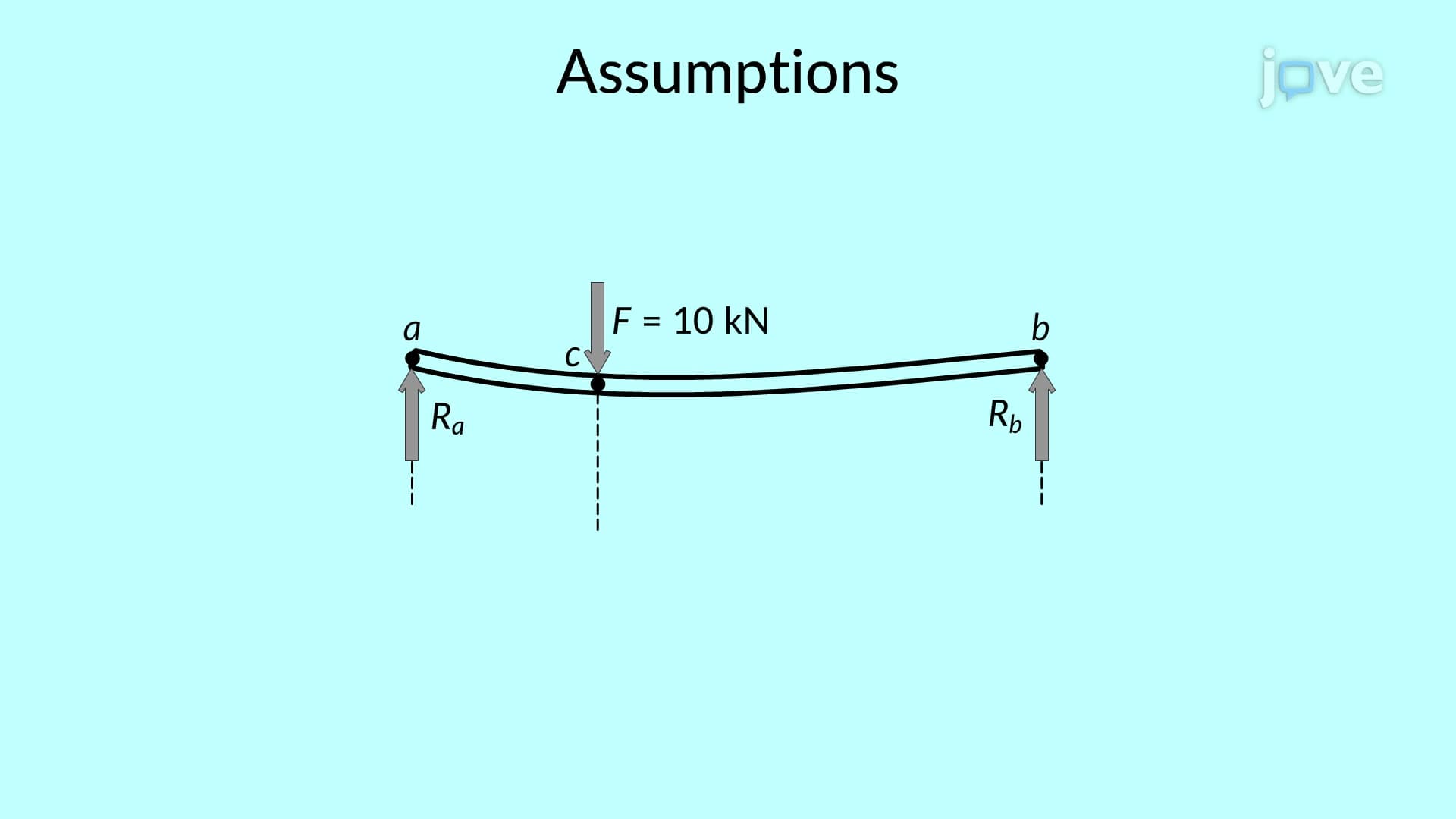

Video Summary: What Is Problem Solving in Statics
Ever wonder how engineers ensure a bridge won't collapse under the weight of thousands of cars daily? Problem solving in statics provides the fundamental framework for analyzing forces and moments in structures at rest, from the Golden Gate Bridge in San Francisco to skyscrapers in Manhattan. This systematic approach involves formulating problems, making reasonable assumptions, drawing free-body diagrams, and applying equilibrium equations to determine unknown forces and reactions. Students learn to create shear and moment diagrams that reveal critical stress points in beams and structures. Watch the full video on JoVE Coach to master this concept with expert-led visuals and step-by-step explanations.
Problem solving in statics represents a cornerstone methodology in engineering education, providing students with systematic tools to analyze structures and mechanical systems in equilibrium. Unlike dynamics, which deals with motion, statics focuses exclusively on bodies at rest or moving at constant velocity. This discipline forms the foundation for advanced engineering courses including structural analysis, machine design, and materials science.
The methodology begins with careful problem formulation, where engineers identify known quantities, unknown variables, and establish clear objectives. For instance, when analyzing the loading on a highway overpass in Texas, engineers must determine support reactions, maximum bending moments, and deflection patterns to ensure public safety.
Successful static analysis follows a proven five-step process. First, problem identification involves recognizing the type of structure (beam, truss, frame) and loading conditions. Second, assumption establishment simplifies complex real-world scenarios-engineers might neglect a beam's self-weight when analyzing heavy machinery loads, or assume rigid connections where flexibility is minimal.
Third, free-body diagram construction isolates the structure from its surroundings, clearly showing all external forces, moments, and support reactions. Fourth, equilibrium equations application uses the fundamental principles that the sum of forces equals zero and the sum of moments about any point equals zero. Finally, solution verification ensures results are physically reasonable and mathematically consistent.
Students encounter these principles extensively in AP Physics C courses, college-level engineering statics classes, and professional engineering licensure exams. The methodology proves essential for analyzing everything from residential floor joists in suburban developments to massive suspension bridge cables spanning San Francisco Bay.
Consider analyzing a simply supported beam carrying a concentrated load-a common scenario in building construction. Engineers determine support reactions using moment equilibrium, then construct shear and moment diagrams revealing maximum stress locations. These diagrams guide material selection and cross-sectional design, directly impacting construction costs and structural safety.
The problem-solving approach extends beyond academic exercises into professional practice, where structural engineers routinely analyze complex loading combinations including dead loads (permanent structure weight), live loads (occupancy and equipment), wind loads, and seismic forces as specified in American building codes.
Related Micro-courses