Loading video…


 10 Concepts
 26.6K views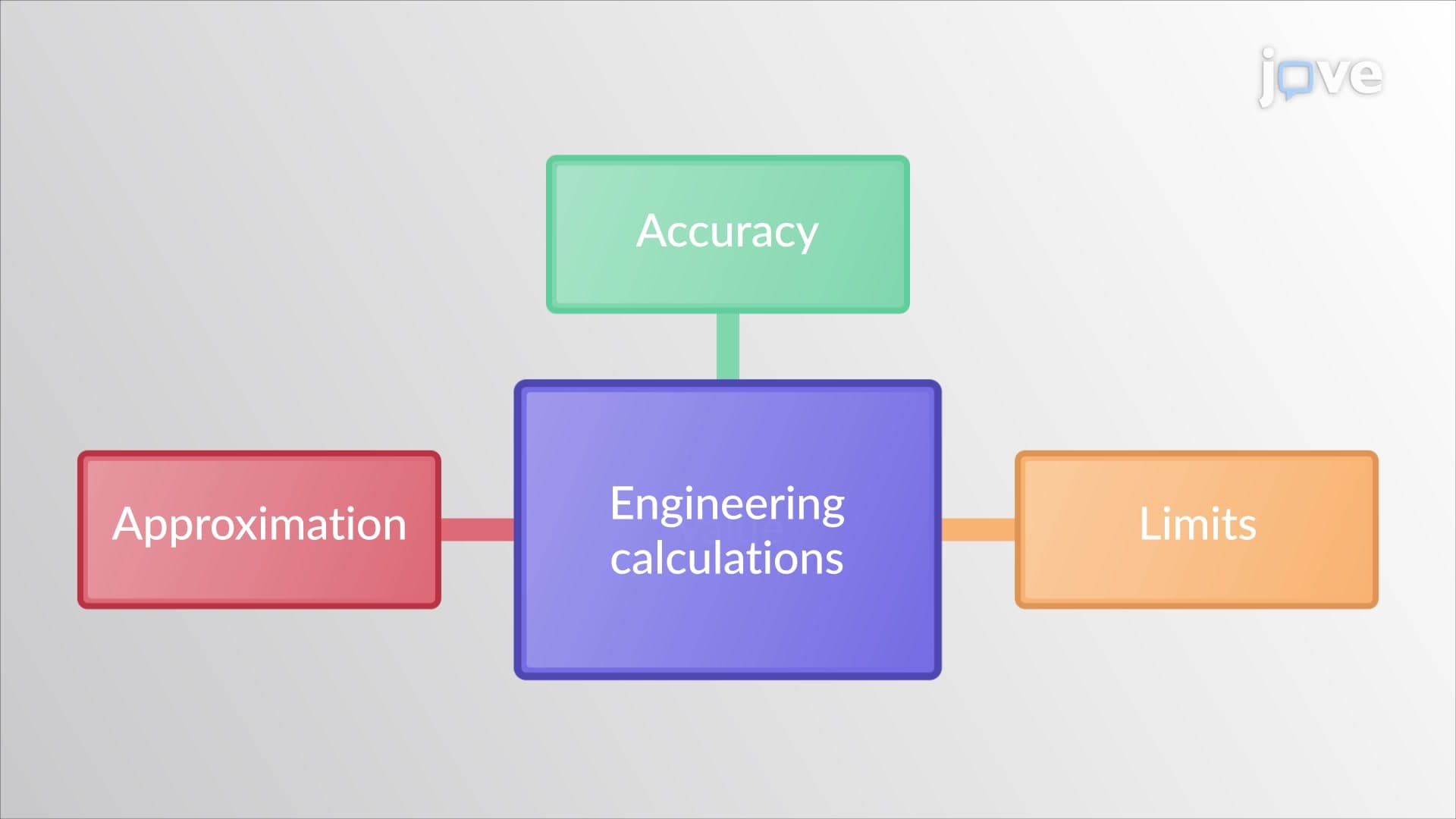

Video Summary: What Is Accuracy Limits and Approximation
Did you know that NASA's Mars rovers rely on accuracy limits and approximation to navigate millions of miles through space? Accuracy limits and approximation form the mathematical foundation for engineering calculations, from determining building loads to calculating medication dosages in US hospitals. This concept teaches how engineers represent values through rounding significant figures, apply calculus limits to find volumes of complex shapes, and use trigonometric approximations for small angles. Watch the full video on JoVE Coach to master this concept with expert-led visuals and step-by-step explanations.
Accuracy limits and approximation represent fundamental tools that bridge theoretical mathematics with practical engineering applications. These concepts allow engineers to balance computational efficiency with acceptable precision, making complex calculations manageable while maintaining reliability standards required in US industries from aerospace to biomedical engineering.
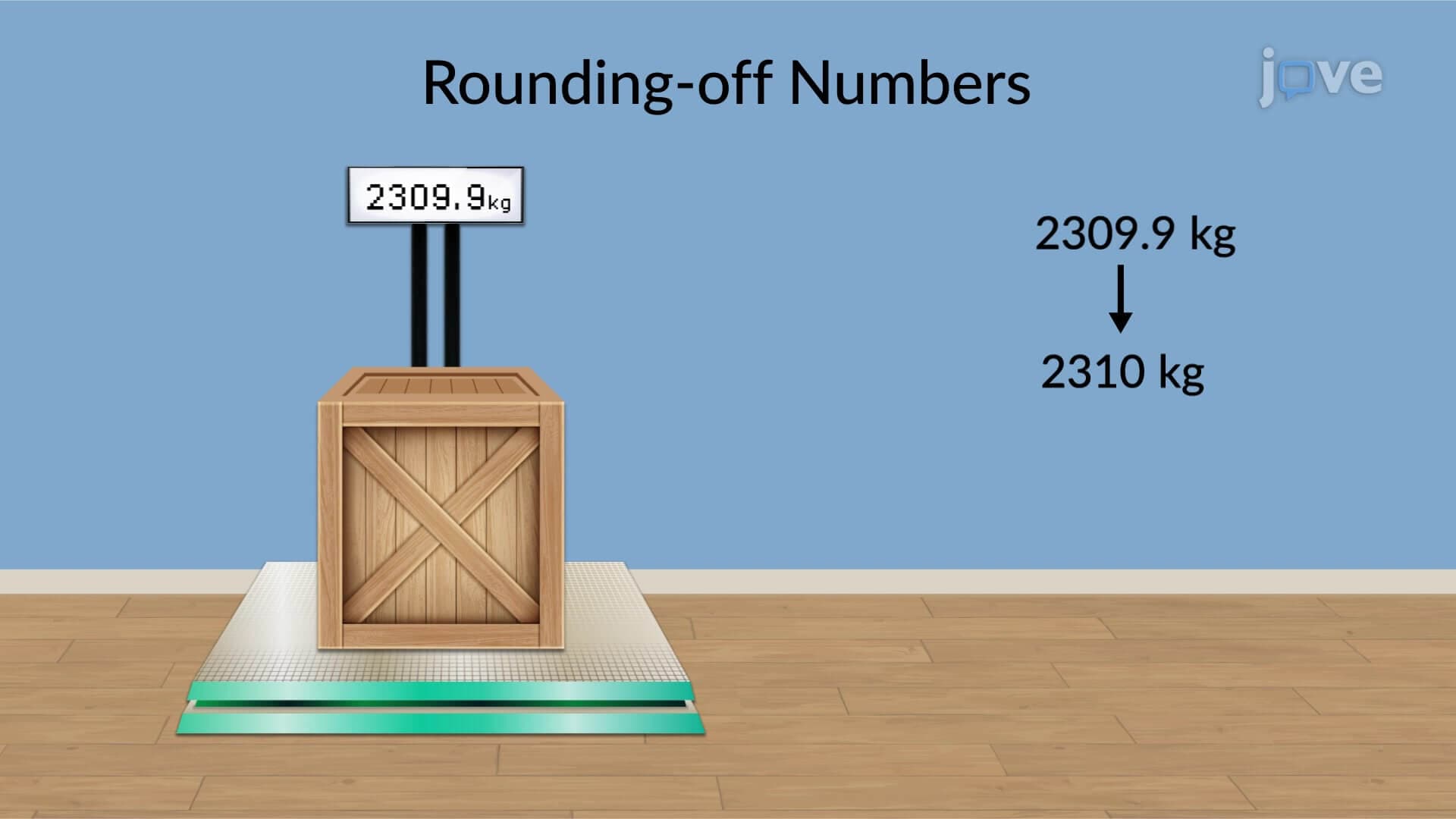
The foundation of accuracy limits begins with significant figures-the digits in a measurement that carry meaningful information about precision. When calculating the area of steel beams for US construction projects, engineers must round measurements to appropriate significant figures based on their measuring instruments' capabilities. For instance, if a beam measures 12.37 inches using calipers accurate to 0.01 inches, all four digits are significant. However, if measured with a standard ruler accurate to 0.1 inches, only three significant figures (12.4 inches) would be meaningful. This principle appears frequently on AP Physics and SAT Math exams, where students must demonstrate understanding of measurement uncertainty.
The transition from discrete to continuous mathematics through limits enables precise volume calculations for irregular shapes. Consider determining the volume of a conical fuel tank used in US rocket launches. By slicing the cone into infinitesimally thin circular discs and applying limit theory, engineers transform the discrete sum of disc volumes into the continuous integral ∫π r²(x) dx. This process, where Δx approaches dx through limits, forms the theoretical foundation for calculus-based volume calculations. College engineering students encounter this concept in Calculus I and II, particularly when studying applications of integration to real-world problems.
Small angle approximations provide powerful computational shortcuts when angles measure less than about 15 degrees. The approximations sin θ ≈ θ, cos θ ≈ 1, and tan θ ≈ θ (with θ in radians) simplify complex trigonometric calculations in fields ranging from satellite communications to optical engineering. US civil engineers use these approximations when calculating cable tensions in suspension bridges, where small angular deflections occur under normal loading conditions. These concepts frequently appear on MCAT physics sections and engineering qualifying exams, where rapid estimation skills prove valuable.
This mathematical toolkit enables engineers to solve real-world problems efficiently while maintaining the precision required for safe, reliable designs in critical US infrastructure and technology systems.
Related Micro-courses