Loading subject page…

- Mechanical Engineering
- Concept of Stress
- Components of Stress
Micro-course: Concept of Stress
5,774 views
Learn key concepts and earn your certificate.


Components of Stress

00:00
01:23
Video Summary: What are Components of Stress
Ever wonder why bridges don't collapse under heavy traffic or why airplane wings stay intact during turbulence? The answer lies in understanding components of stress, the invisible forces acting within materials at every point. When engineers analyze the Golden Gate Bridge's steel cables, they must consider how normal and shearing stress components interact in three dimensions to ensure structural safety. What are Components of Stress involves examining how these forces create a complete picture of material behavior under load. Watch the full video on JoVE Coach to master this concept with expert-led visuals and step-by-step explanations.
- Understand what are Components of Stress and how they represent the complete state of internal forces at any point within a material
- Identify the six independent stress components: three normal stresses and three shearing stresses acting on perpendicular faces
- Analyze how equilibrium conditions reduce the total stress components from nine to six independent values
- Recognize that shearing stresses must occur in complementary pairs on perpendicular planes to maintain rotational equilibrium
- Apply stress component analysis to determine internal forces in engineering structures and mechanical systems
- Evaluate the relationship between normal stresses acting perpendicular to material surfaces and shearing stresses acting parallel to surfaces
- Compare stress states at different points within loaded structures using three-dimensional stress analysis
- Explore how infinitesimal stress cubes help visualize complex loading conditions in real engineering applications
Understanding What are Components of Stress
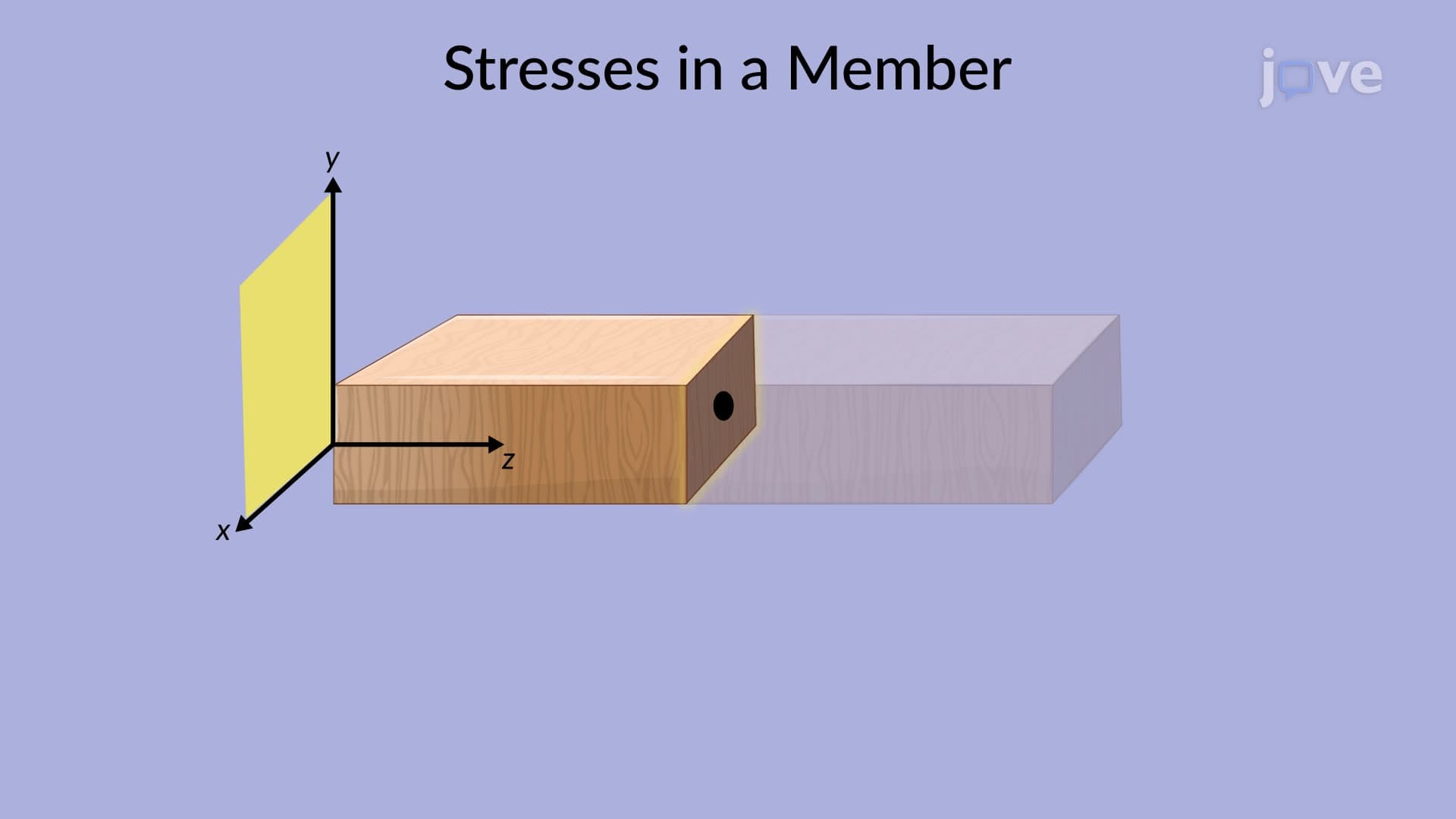
Components of stress represent the complete description of internal forces acting at any point within a loaded material. Unlike simple tension or compression in a rope, real-world structures experience complex three-dimensional loading that requires analyzing multiple stress components simultaneously. This comprehensive approach is essential for designing safe buildings, aircraft, and mechanical systems.
The Six Independent Stress Components
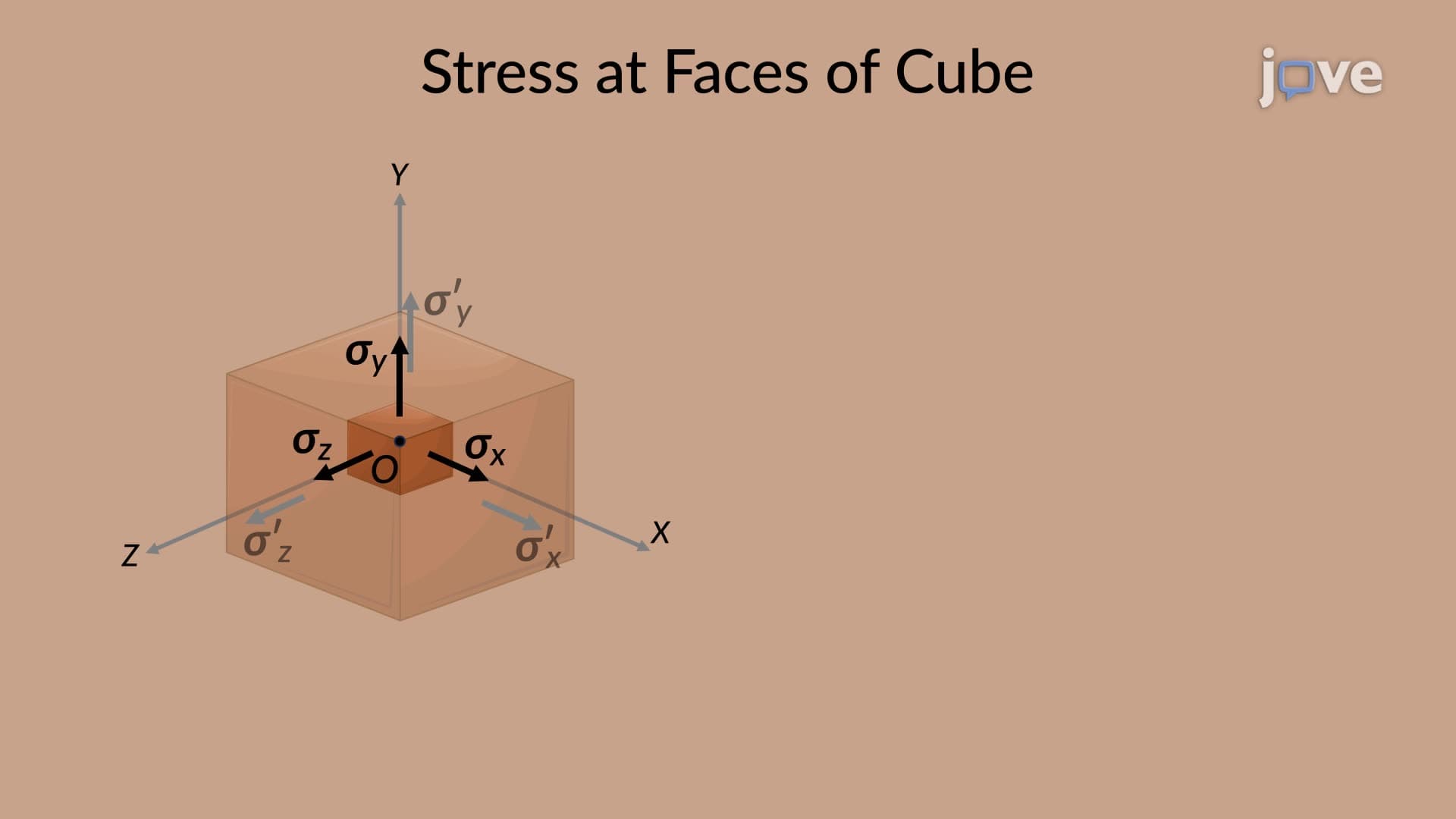
Engineers identify stress states using six independent components: three normal stresses (σx, σy, σz) and three shearing stresses (τxy, τxz, τyz). Normal stresses act perpendicular to material surfaces, while shearing stresses act parallel to surfaces. This system reduces from nine potential stress components because equilibrium requirements create relationships between complementary shear stresses. For example, τxy must equal τyx to prevent infinite rotation of material elements.
Equilibrium and Complementary Shear Stress Concept
The principle that shear stress cannot exist in isolation represents a fundamental concept in mechanics of materials. When the Federal Aviation Administration analyzes aircraft wing loading, engineers must account for how shearing stresses on horizontal planes are balanced by equal shearing stresses on vertical planes. This complementary relationship ensures rotational equilibrium and prevents material failure under complex loading conditions.
Practical Applications in Engineering Analysis
Understanding stress components proves crucial for AP Physics C mechanics and college-level statics courses. Students encounter these concepts when analyzing beam bending, pressure vessel design, and structural connections. For instance, when designing earthquake-resistant buildings in California, structural engineers use stress component analysis to ensure buildings can withstand both vertical gravity loads and horizontal seismic forces. This comprehensive approach appears frequently on engineering licensure exams and graduate school entrance tests.
The stress cube visualization technique helps students conceptualize how forces act in three dimensions, making complex problems more manageable for exam preparation and practical engineering applications.
Frequently Asked Questions
Components of stress are the six independent internal forces (three normal and three shearing) that completely describe how forces act at any point within a loaded material. Think of them as the "force fingerprint" that tells engineers exactly what's happening inside structures like bridges or airplane wings. These components help predict whether materials will fail under specific loading conditions.
The two main types are normal stress components (acting perpendicular to surfaces) and shearing stress components (acting parallel to surfaces). Normal stresses cause materials to stretch or compress, while shearing stresses cause materials to deform by sliding. Together, these six components provide a complete picture of internal forces at any point.
Stress components frequently appear in AP Physics C mechanics and college statics/mechanics courses through problems involving beam analysis, pressure vessels, and structural design. Students typically solve for unknown stress components using equilibrium equations and analyze failure conditions. MCAT physics sections may include basic stress concepts in biomechanics contexts.
Components of stress are crucial in designing US infrastructure like the Brooklyn Bridge cables, Boeing aircraft fuselages, and Tesla vehicle frames. Civil engineers use stress analysis for earthquake-resistant buildings in California, while biomedical engineers apply these concepts to hip implants and heart stents. Even smartphone cases require stress component analysis to prevent cracking.
Basic understanding requires only algebra and trigonometry typically covered in high school. The fundamental concepts use simple equilibrium equations and geometric relationships. More advanced applications in college engineering courses involve calculus, but the core principles remain accessible to students with solid algebra skills and spatial visualization abilities.
Focus on drawing stress cubes and identifying all six components systematically. Practice applying equilibrium equations to solve for unknown stresses, and work through problems involving different loading conditions. Create visual diagrams showing how normal and shear stresses act on material elements, as this helps with both conceptual understanding and problem-solving speed.
Next, explore principal stresses and Mohr's circle analysis, which show how stress components transform under different orientations. Advanced topics include stress concentration factors, fatigue analysis, and failure theories like von Mises criteria. These concepts build directly on stress components and appear in upper-level engineering courses and professional engineering licensure exams.
Related Micro-courses


