Loading subject page…

- Mechanical Engineering
- Concept of Stress
- Bearing Stress
Micro-course: Concept of Stress
5,772 views
Learn key concepts and earn your certificate.


Bearing Stress

00:00
01:22
Video Summary: What Is Bearing Stress
Ever wonder why bridge bolts don't punch through steel plates despite massive traffic loads? Bearing stress explains this critical engineering phenomenon where contact pressure between materials creates internal forces. When the Golden Gate Bridge's steel connections handle thousands of cars daily, bearing stress calculations ensure bolts won't crush through their support plates. This fundamental concept in structural mechanics involves distributing forces across contact areas to prevent catastrophic material failure. Watch the full video on JoVE Coach to master this concept with expert-led visuals and step-by-step explanations.
- Understand what is bearing stress and how it differs from other types of mechanical stress in structural applications
- Identify the key components needed to calculate bearing stress: internal force, plate thickness, and bolt diameter
- Analyze how bearing stress distributes forces across contact surfaces in bolted connections
- Apply the bearing stress formula (σ = F / (t × d)) to solve engineering problems involving mechanical fasteners
- Recognize real-world applications of bearing stress in bridges, buildings, and mechanical assemblies
- Evaluate the relationship between contact area and stress concentration in structural design
- Compare bearing stress calculations with tensile and shear stress analysis in comprehensive structural assessments
- Explore how bearing stress principles guide safe design practices in civil and mechanical engineering projects
Understanding What is Bearing Stress in Structural Design
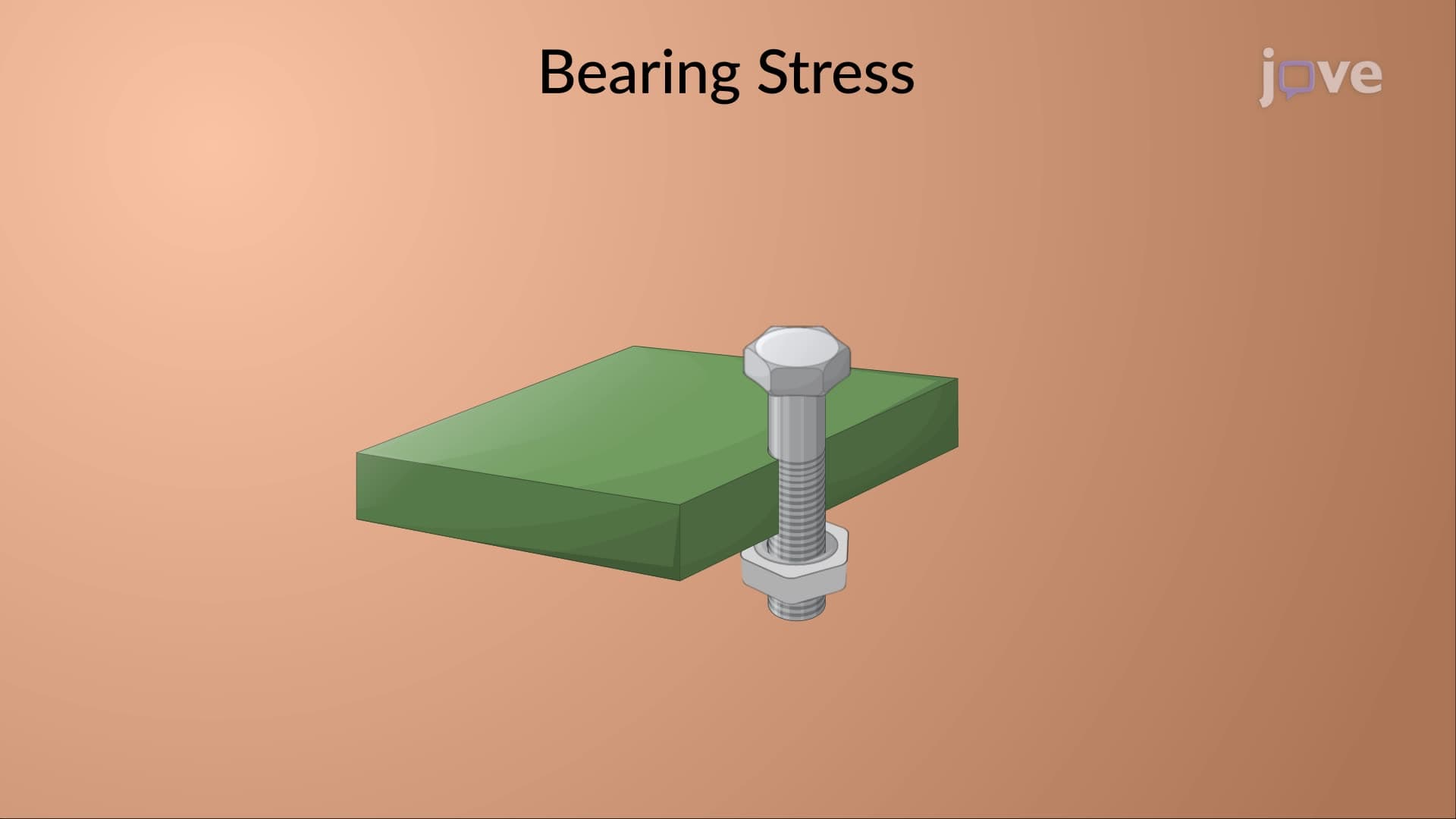
Bearing stress represents one of the most practical stress types engineers encounter when designing safe, reliable structures. Unlike tensile stress that pulls materials apart or shear stress that causes sliding failure, bearing stress occurs when two objects press against each other, creating localized pressure that could potentially crush or deform the material.
The Mechanics Behind Bearing Stress Calculation
The fundamental bearing stress equation simplifies complex force distributions into manageable calculations: σ_bearing = F / (t × d), where F represents the applied force, t equals the plate thickness, and d represents the bolt diameter. This formula assumes the force distributes evenly across the projected rectangular area where the bolt contacts the plate material.
Consider the Willis Tower (formerly Sears Tower) in Chicago, where thousands of high-strength bolts connect steel beams. Each connection experiences bearing stress as building loads transfer through bolt-to-steel contact points. Engineers must ensure this stress stays below the material's bearing strength to prevent the bolts from crushing through the steel plates.
Real-World Applications in US Infrastructure
American infrastructure relies heavily on bearing stress calculations. The Interstate Highway System features countless bolted connections in bridge structures, where traffic loads create varying bearing stresses throughout the day. The Bay Bridge connecting San Francisco and Oakland contains millions of bolts, each designed using bearing stress principles to handle earthquake forces and daily traffic loads safely.
In mechanical engineering, bearing stress appears in everything from automotive wheel assemblies to aircraft wing attachments. Boeing's 787 Dreamliner uses advanced composite materials where bearing stress calculations become even more critical due to the materials' unique failure characteristics compared to traditional metals.
Academic and Professional Applications
Students preparing for AP Physics or college-level statics courses frequently encounter bearing stress problems involving bolted joints and pin connections. The concept appears on the Fundamentals of Engineering (FE) exam that engineering graduates must pass for professional licensure. Understanding bearing stress helps students grasp how engineers balance material efficiency with safety factors in real-world designs.
The concept also connects to broader engineering principles like stress concentration factors and material selection criteria, making it essential foundation knowledge for advanced structural analysis courses typically taken in junior-level mechanical and civil engineering programs.
Frequently Asked Questions
Bearing stress is the compressive stress that occurs when two objects press against each other, such as a bolt pressing against a plate. Unlike tensile stress that stretches materials or shear stress that causes sliding, bearing stress involves crushing or local deformation at contact points. It's calculated by dividing the contact force by the projected contact area.
For AP Physics, bearing stress represents localized compression where objects contact each other, commonly seen in bolted connections. The stress equals force divided by the rectangular projection area (thickness times diameter). Students should understand this differs from normal stress because it involves contact pressure rather than uniform loading across a cross-section.
The MCAT rarely tests bearing stress directly, but it may appear in physics passages involving structural mechanics. Engineering exams like the FE exam frequently include bearing stress calculations in statics problems. Students should memorize the formula and understand when to apply it versus tensile or shear stress calculations.
Most college statics courses include bearing stress in their curriculum, especially when covering bolted connections and pin joints. Expect problems involving bolted plates where you'll calculate bearing stress alongside tensile and shear stresses. Practice identifying which stress type governs failure in different loading scenarios.
Bearing stress calculations are crucial in designing connections for bridges like the Brooklyn Bridge renovation, skyscrapers like One World Trade Center, and even smaller structures like highway overpasses. Every bolted connection in these structures requires bearing stress analysis to ensure bolts won't crush through their supporting materials under expected loads.
Basic algebra is sufficient for most bearing stress problems since the formula involves simple division: force divided by area. High school students comfortable with physics problem-solving can master bearing stress calculations. The challenge lies more in identifying the correct contact area and understanding when bearing stress governs structural failure.
Practice identifying contact areas in bolted connections and memorize that bearing area equals thickness times diameter. Work through problems involving multiple stress types simultaneously, as exam questions often require comparing bearing, tensile, and shear stresses to determine which causes failure first. Focus on unit consistency and proper force analysis.
After mastering bearing stress, students typically progress to stress concentrations, fatigue analysis, and advanced connection design. Courses in structural steel design and machine design heavily utilize bearing stress principles. Understanding bearing stress also prepares students for finite element analysis where contact mechanics become more sophisticated.
Related Micro-courses


