Loading subject page…

2,933 views


Video Summary: Designing and Managing a Performance Improvement Plan
When team members consistently miss targets despite feedback, creating a performance improvement plan for managers becomes essential. A structured PIP process transforms underperformance from a recurring frustration into a documented pathway for improvement or accountability. This systematic approach protects both employee rights and organizational standards through clear expectations, measurable goals, and defined timelines. Watch the full video on JoVE Coach to master this concept with expert-led visuals and step-by-step explanations.
Every manager faces the moment when informal coaching isn't enough. You've had multiple conversations with a team member about missed deadlines, quality issues, or behavioral concerns, yet nothing changes. Your other team members are starting to notice, and productivity is suffering. This is when a Performance Improvement Plan becomes your most powerful management tool.
Many managers view PIPs as paperwork exercises or precursors to termination. This mindset creates defensive conversations and missed opportunities for genuine improvement. The most effective managers approach PIPs as structured coaching programs with clear boundaries. They understand that 30-40% of employees placed on well-designed PIPs successfully meet expectations and continue in their roles.
The key shift is positioning the PIP as an investment in the employee's success, not a documentation trail for their exit. This requires moving beyond general performance concerns to specific, measurable gaps that can be addressed through targeted support.
Clarify specific performance gaps through data-driven analysis. Compare current results against role expectations, identifying exact metrics, behaviors, or outcomes falling short.
Link improvement goals to business impact using SMART criteria. Instead of "improve communication skills," specify "respond to client emails within 24 hours with complete information, achieving 95% client satisfaction scores."
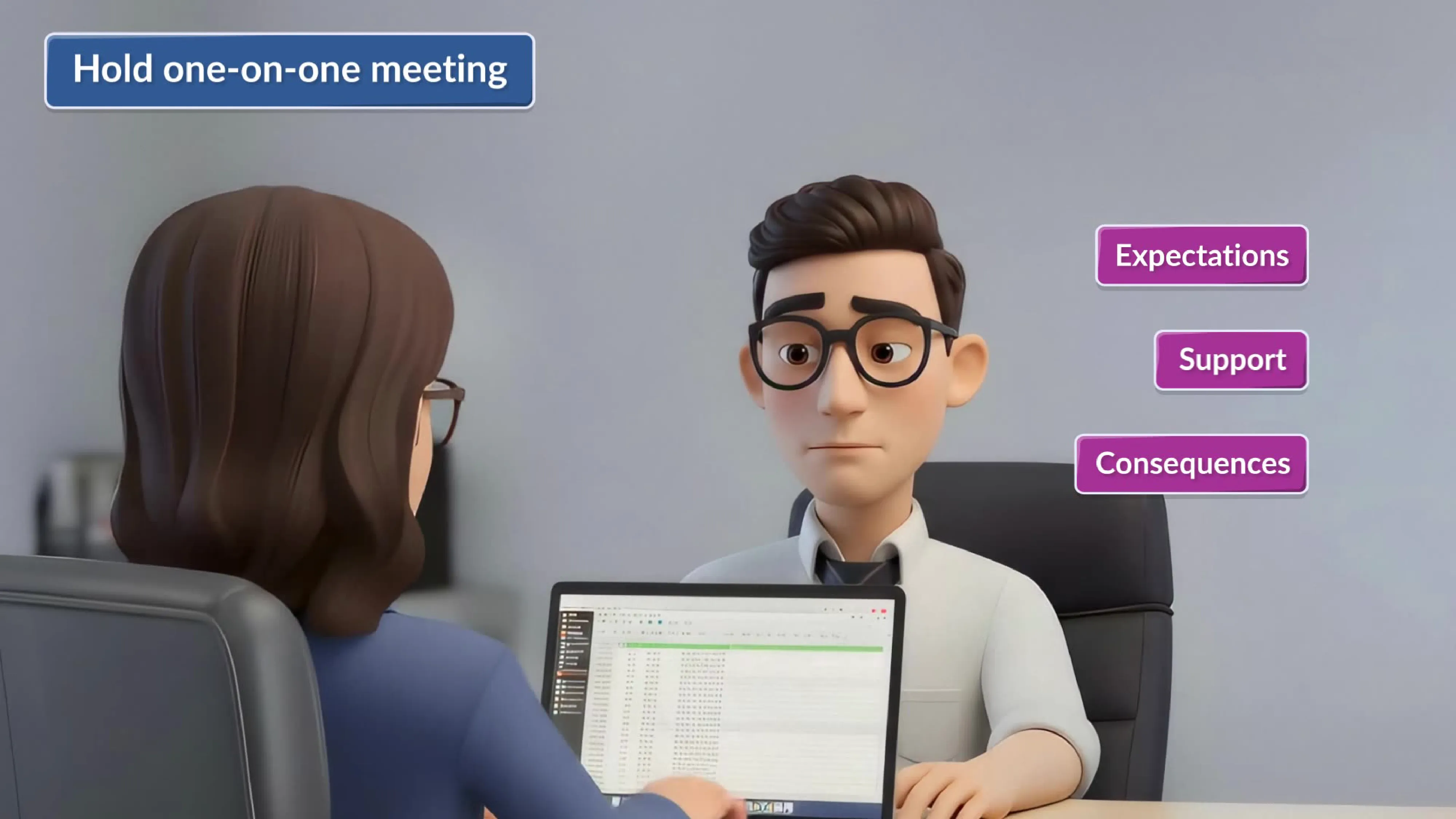
Establish support structures including training resources, mentoring partnerships, or process adjustments that address root causes of underperformance.
Agree on realistic timelines, typically 30-60 days depending on complexity. Set weekly check-ins to track progress and adjust support as needed.
Record everything consistently. Document conversations, progress indicators, and support provided. This creates accountability for both parties while ensuring legal compliance.
The biggest error is treating PIPs as surprise interventions. Effective improvement plans emerge from ongoing performance discussions where expectations were already clear. Another pitfall is creating unrealistic goals that set employees up for failure, which undermines the entire process.
Successful PIP management requires balancing support with accountability. Provide genuine help while maintaining clear consequences. Your role shifts from day-to-day manager to performance coach, requiring more frequent interaction and structured feedback than normal management routines.
Related Micro-courses