Loading subject page…

3,069 views

Video Summary: Setting Clear Performance Standards
Setting clear performance standards means defining exactly what quality work looks like, why it matters, and when it needs to be delivered. Without this clarity, teams default to their own assumptions, which leads to missed requirements and rework. A manager who sets explicit standards, connects them to client or business outcomes, and reinforces them through examples and check-ins gives the team a shared target to aim for. This is a foundational part of managing team performance and feedback.
Performance standards start with spelling out what the team is responsible for producing and what quality looks like in concrete terms. Describing required elements, such as bold headlines, brand-aligned visuals, and consistent font style, removes guesswork. This is central to focusing your team on results rather than activity.
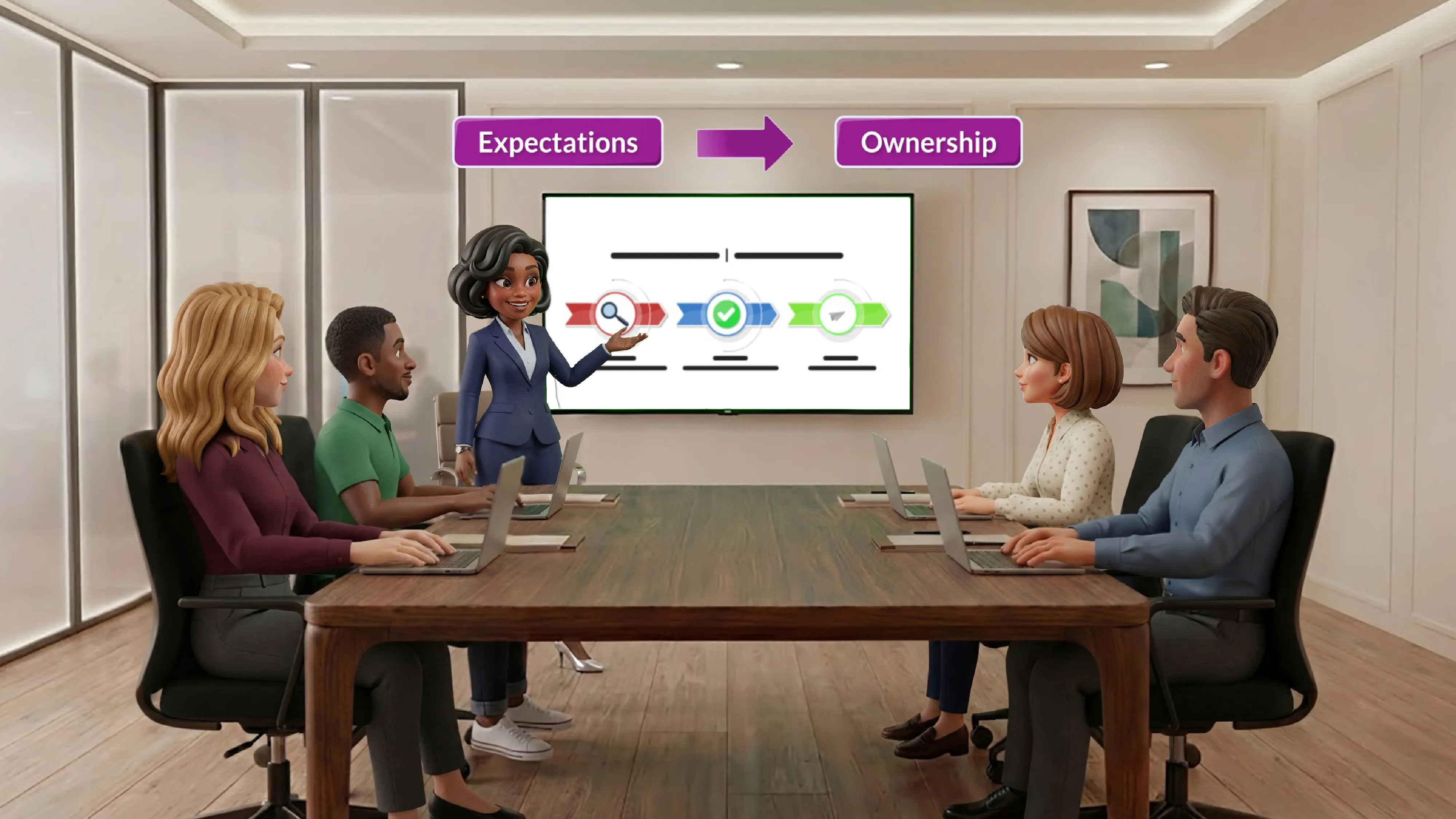
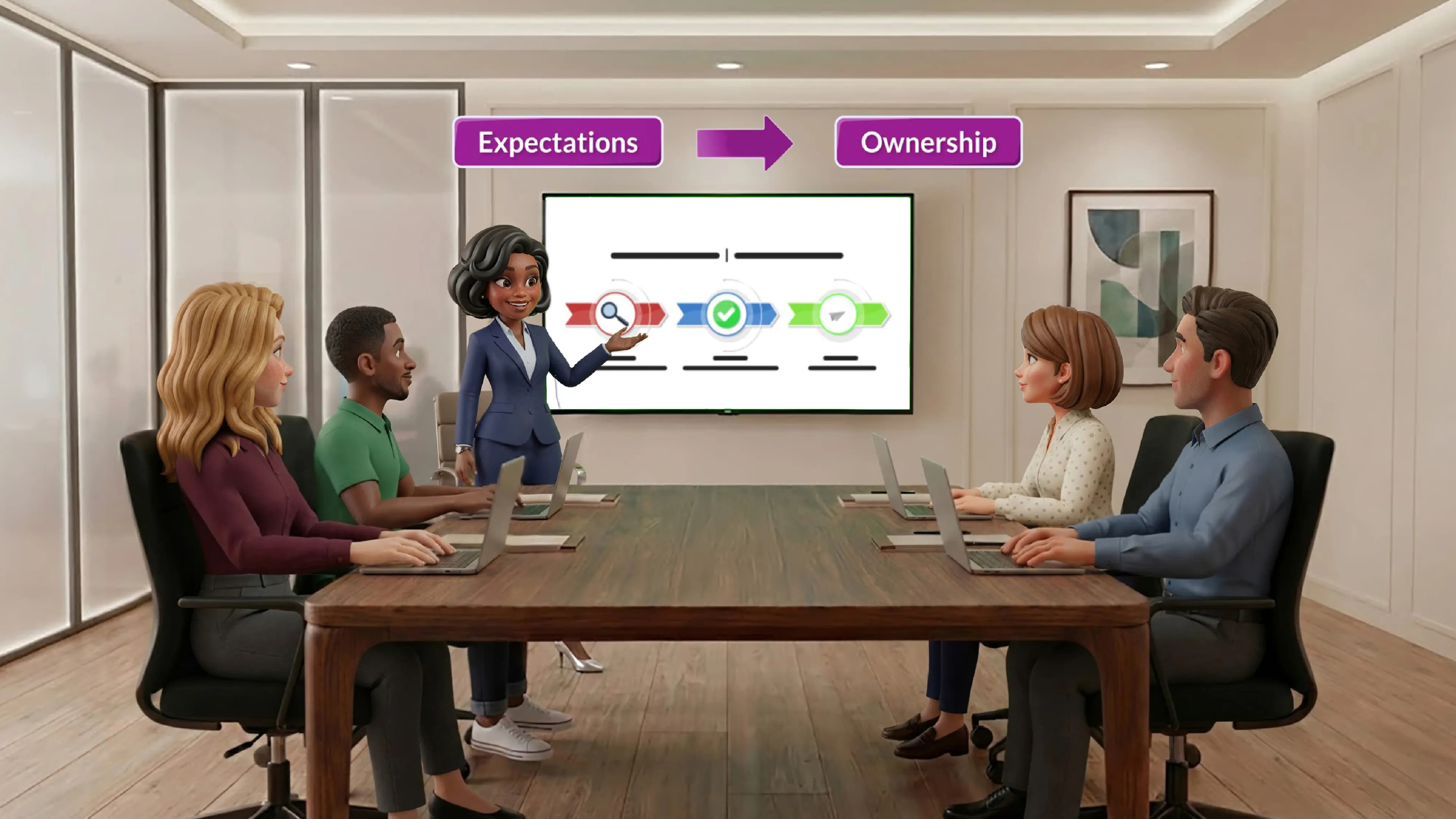
Telling team members what to do is not enough. Explaining why each expectation exists, for example, how it connects to client satisfaction, gives the standard meaning. When people understand the reasoning, they are more likely to take ownership rather than treat the requirement as a box to check. Turning feedback into measurable improvement depends on this same sense of ownership.
Sharing a past example of work makes abstract standards tangible. A manager can highlight what was done well, point out common mistakes, and invite questions to confirm everyone is aligned. This turns a general description into a shared reference point the team can actually use.
Clear standards include more than quality criteria. They also specify a timeline for each stage of the work and identify which client requirements take priority. This prevents teams from completing tasks in the wrong order or treating all requirements as equally urgent, both of which create delivery problems.
Setting standards once is not enough. Regular check-ins after the initial conversation allow a manager to catch issues early and provide constructive feedback while there is still time to adjust. Staying involved signals that the standards are real and that support is available.
Related Micro-courses