Loading subject page…

- New Manager Essentials
- How to Manage Team Performance and Feedback
- How to Give Constructive Feedback
Micro-course: How to Manage Team Performance and Feedback
2,908 views
Learn key concepts and earn your certificate.



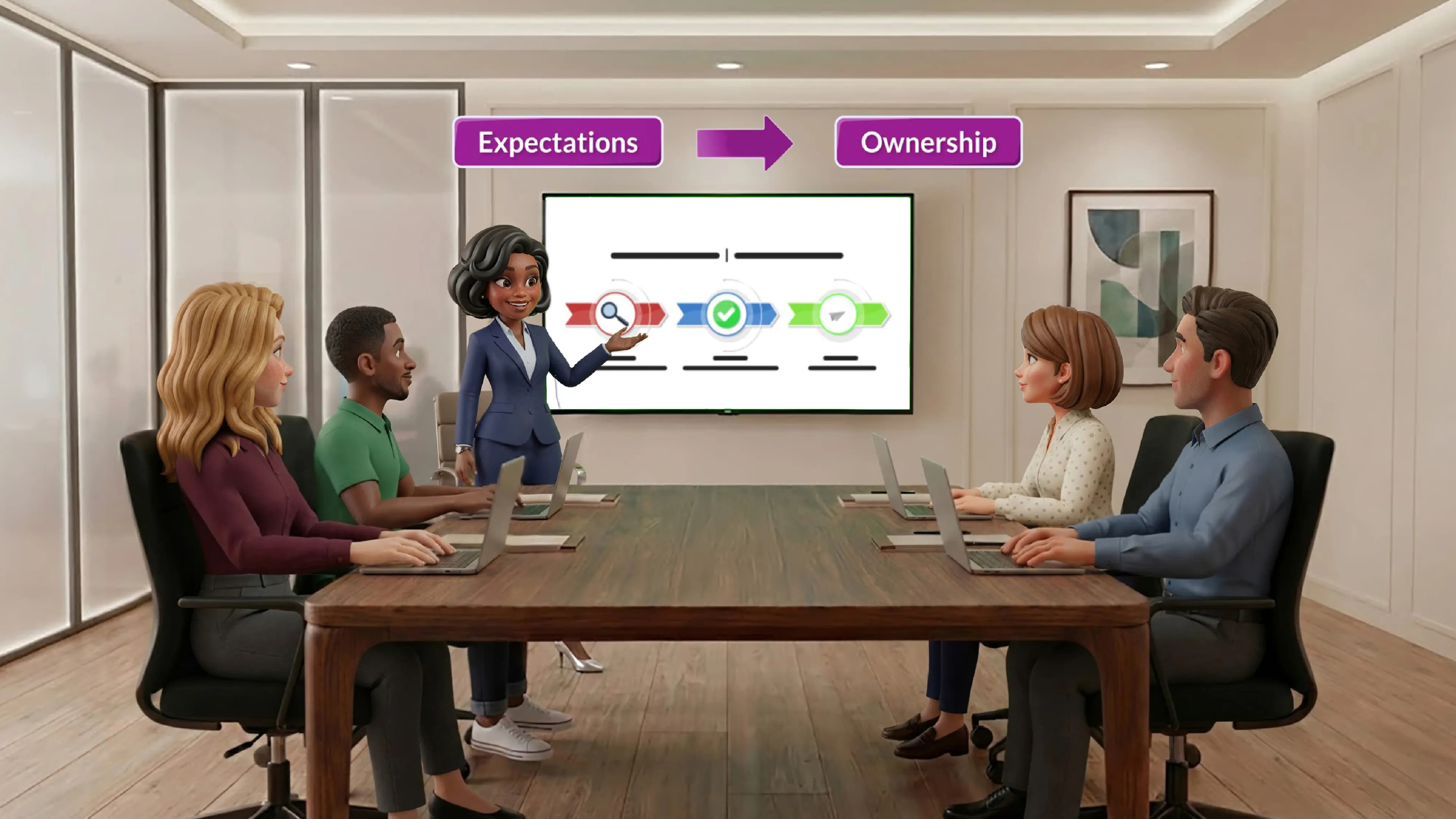








How to Give Constructive Feedback


00:00
01:14
Video Summary: How to Give Constructive Feedback
Most managers struggle with giving constructive feedback that actually changes behavior, often making conversations personal rather than addressing specific actions. The SBI feedback model provides a structured approach for giving constructive feedback that focuses on observable behaviors and measurable outcomes, helping managers deliver clear, actionable guidance without triggering defensiveness. By separating situation, behavior, and impact, leaders can transform difficult conversations into growth opportunities that strengthen team performance and build trust. Watch the full video on JoVE Coach to master this concept with expert-led visuals and step-by-step explanations.
- Structure feedback conversations using the three-part SBI framework to maintain objectivity and focus on improvement rather than personality
- Handle difficult performance discussions by separating observable behaviors from assumptions about intent or character
- Build trust with direct reports by delivering feedback that feels fair, specific, and actionable rather than vague or personal
- Navigate client-facing team member challenges by addressing communication patterns that impact external relationships
- Facilitate behavior change by connecting specific actions to measurable business outcomes and team dynamics
- Conduct regular feedback sessions that strengthen performance without creating defensiveness or conflict
- Manage underperforming team members through clear, behavior-focused conversations that document specific incidents and impacts
- Set expectations for professional communication standards that protect client relationships and team reputation
Giving Constructive Feedback: The SBI Model Explained
Every manager faces that moment when a team member's behavior affects team dynamics, client relationships, or project outcomes, yet many avoid the conversation or handle it poorly. The challenge isn't identifying the problem-it's delivering feedback that actually drives positive change without damaging the working relationship or triggering defensiveness.
Why Most Feedback Conversations Fail
Traditional feedback approaches often focus on personality traits or make assumptions about intent. Phrases like "you need to be more professional" or "you don't respect clients" create immediate defensiveness because they attack character rather than address specific behaviors. The recipient feels judged rather than guided, leading to shut-down responses or workplace conflict.
The SBI feedback model-Situation, Behavior, Impact-transforms these difficult conversations by maintaining objectivity and focusing on observable facts rather than interpretations or emotions.
The SBI Framework in Action
Situation establishes the specific context and timing. Rather than generalizing ("you always interrupt"), you anchor the conversation in a concrete moment: "During yesterday's client presentation when we were discussing the project timeline..." This approach prevents the recipient from deflecting or arguing about whether the behavior is a pattern.
Behavior describes exactly what you observed without interpretation. "You interrupted the client three times while they were explaining their concerns" focuses on actions, not motives. This eliminates the guesswork and assumptions that derail feedback conversations.
Impact connects the behavior to measurable consequences for the team, project, or relationship. "The client stopped sharing details about their concerns, which means we're missing critical information for the project scope" helps the recipient understand why the behavior matters beyond your personal preference.
Making SBI Work in Your Management Practice
Effective SBI implementation requires preparation and follow-up. Document specific incidents as they happen-noting time, context, and observable behaviors. This prevents feedback from becoming vague or feeling punitive.
During the conversation, focus on future behavior rather than past mistakes. After explaining the impact, shift to collaborative problem-solving: "How can we ensure clients feel heard in future meetings?" This positions you as a coach rather than a critic.
Follow up within a week to acknowledge improvement or address ongoing issues. The SBI model works best as part of ongoing performance management, not as a one-time intervention.
Frequently Asked Questions
The SBI model structures feedback around three objective components: Situation (specific context), Behavior (observable actions), and Impact (measurable consequences). Unlike traditional feedback that focuses on personality or assumptions, SBI keeps conversations factual and behavior-focused, reducing defensiveness and increasing the likelihood of positive change.
Prepare by documenting specific situations throughout the week where you observed behaviors worth addressing. Start your 1:1 with positive SBI examples, then address concerns using the same structure. Always end with collaborative next steps and timeline for follow-up, making the conversation feel supportive rather than punitive.
Use SBI for positive feedback in team settings to reinforce good behaviors publicly. Save corrective SBI feedback for private conversations unless the behavior directly affected the entire team and needs immediate group discussion. Public criticism using any model can damage trust and team dynamics.
Stay focused on the facts you've presented and acknowledge their feelings without backing down from the feedback. Say something like "I can see this is difficult to hear, and that's understandable. Let's focus on how we can move forward." Give them time to process, then schedule a follow-up conversation to discuss next steps.
Use SBI to clearly connect the behavior to business consequences, such as "The client mentioned feeling unheard, which could affect contract renewal discussions." Focus on the professional impact and work together to develop specific strategies for rebuilding or protecting those external relationships in future interactions.
No prior management experience is required, but practice is essential. Start with low-stakes feedback situations to build confidence with the structure. The model's strength is its simplicity-anyone can learn to separate situation, behavior, and impact with consistent practice and self-reflection.
Strong feedback skills build team trust, accelerate performance improvement, and reduce management stress by preventing small issues from becoming major problems. Managers who give clear, behavior-focused feedback see higher employee engagement, better retention, and stronger team performance because people understand exactly what's expected.
Focus on active listening and coaching skills to complement your feedback delivery. Learning how to ask powerful questions and guide team members to their own solutions makes your feedback conversations even more effective and builds stronger long-term development relationships.
Related Micro-courses


5 Concepts

8 Concepts