Loading subject page…
- New Manager Essentials
- Setting Clear Goals and Expectations
- Goals & Objectives: How Do They Work Together
Micro-course: Setting Clear Goals and Expectations
2,613 views
Learn key concepts and earn your certificate.








Goals & Objectives: How Do They Work Together

00:00
01:26
Video Summary: Goals and Objectives How Do They Work Together
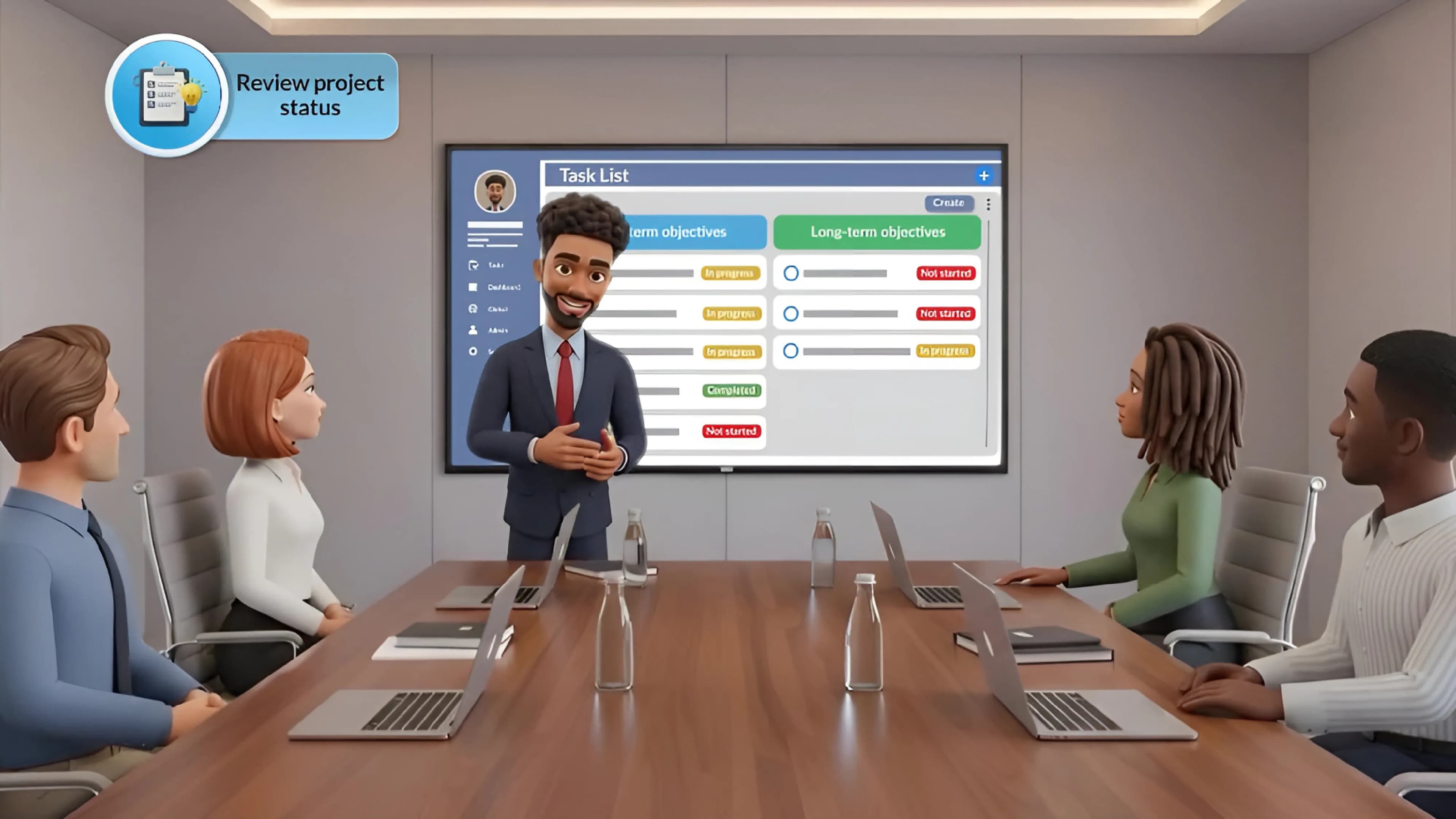
New managers often struggle with goals vs objectives for managers when team members report progress inconsistently during review meetings. One person lists completed tasks, another describes how busy they've been, while a third reports partial progress-creating confusion about what actually matters. Understanding the difference between goals and objectives becomes critical when your team lacks clarity on priorities and measurable outcomes. Goals define broad, long-term organizational results, while objectives translate these into specific, time-bound, measurable actions that drive daily work. Watch the full video on JoVE Coach to master this concept with expert-led visuals and step-by-step explanations.
- Set clear goal hierarchies that connect daily tasks to organizational priorities and strategic outcomes
- Facilitate team meetings where progress discussions focus on measurable business results rather than activity levels
- Coach team members to distinguish between high-level strategic goals and specific tactical objectives
- Build systematic approaches to team objectives setting that eliminate confusion about priorities
- Structure performance conversations using specific, time-bound metrics that demonstrate real business impact
- Navigate the transition from individual contributor to manager by implementing goal-setting frameworks
- Align cross-functional work streams by creating shared understanding of measurable goals and objectives
- Lead strategic planning sessions that translate organizational vision into actionable team objectives
Goals vs Objectives: What New Managers Need to Know
Picture this: You're three months into your first management role, and during weekly team check-ins, you're getting wildly different updates. Sarah mentions she "worked really hard on the project," while Marcus provides specific completion percentages, and Jennifer talks about being "swamped with requests." Sound familiar? This scattered approach to progress tracking signals a fundamental gap in how your team understands goals versus objectives.
Why Most Managers Struggle With Goal-Setting Clarity
The confusion stems from treating goals and objectives as interchangeable concepts. In reality, they operate at different strategic levels. Goals represent the broad, directional outcomes your organization wants to achieve-think "become the market leader" or "improve customer satisfaction." They're inspirational and provide strategic direction but lack the specificity needed for day-to-day execution.
Objectives, conversely, are the measurable stepping stones that make goals achievable. They follow the SMART framework (Specific, Measurable, Achievable, Relevant, Time-bound) and provide clear success criteria. When your team understands this distinction, conversations shift from vague activity reports to concrete progress metrics.
The OKR Framework for Management Success
Implement the Objectives and Key Results (OKRs) methodology to bridge this gap systematically. Start by establishing 3-5 high-level objectives per quarter, each supported by 2-4 measurable key results. For example, if your organizational goal is "increase market share," your quarterly objective might be "expand into new customer segments," with key results like "acquire 50 new enterprise clients" and "achieve 15% quarter-over-quarter revenue growth."
This approach transforms team objectives setting from wishful thinking into strategic execution. During your next team planning session, cascade organizational goals into department-specific objectives, then translate those into individual contributor targets that directly support the broader mission.
Avoiding Common Goal-Setting Pitfalls
The biggest mistake new managers make is creating objectives that are actually tasks disguised as strategic outcomes. "Update the customer database" isn't an objective-it's an activity. The real objective might be "improve customer retention rates by 10% through enhanced data accuracy and targeted outreach."
Another pitfall is setting too many priorities simultaneously. Research from Harvard Business School shows that teams with more than 3-5 primary objectives experience significant performance degradation. Focus creates clarity; proliferation creates confusion.
Frequently Asked Questions
Goals provide strategic direction and long-term vision, while objectives create specific, measurable milestones your team can execute against. As a manager, you translate organizational goals into team objectives, then break those into individual assignments with clear success metrics and deadlines.
Start with your organization's annual goals, then identify 3-5 specific outcomes your team can deliver this quarter. Each objective should pass the "measurement test"-if you can't quantify progress or define done, it needs refinement. Use the OKR framework to create objectives with 2-4 supporting key results that include numbers, percentages, or completion dates.
Frame objectives as clarity tools that make their work more impactful, not additional bureaucracy. Show how clear objectives eliminate ambiguity about priorities, reduce last-minute changes, and provide concrete evidence of their contributions during performance reviews. Start with collaborative objective-setting rather than top-down mandates.
Create a goal hierarchy that shows how each project contributes to broader team and organizational outcomes. Use RACI matrices to clarify decision rights and establish shared metrics with cross-functional partners. Regular stakeholder alignment meetings ensure everyone understands how their objectives interconnect.
No previous management experience required-these frameworks actually accelerate your leadership development by providing structure for strategic thinking. Start small with your immediate team, master the basics of objective-setting, then expand your influence as you build confidence and see results.
During performance review season, your team member asks why their promotion was delayed despite "working hard all year." Without clear objectives, this conversation becomes subjective and defensive. With established objectives and measurable key results, you can have specific discussions about achievement gaps and create concrete development plans for the next review period.
Clear goal-setting transforms you from activity manager to strategic leader. Your team gains confidence in your direction, stakeholders see measurable business impact, and senior leadership recognizes your ability to translate vision into execution. This combination accelerates career advancement and team performance simultaneously.
Focus on delegation and accountability systems next. Once your team understands what success looks like through clear objectives, you'll need frameworks for assigning ownership, tracking progress without micromanaging, and conducting effective performance conversations when objectives aren't being met.
Related Micro-courses

5 Concepts


7 Concepts