Loading…
Loading video…

114,600 views

Ever wonder why NASCAR drivers feel crushing forces while cornering at 200 mph, even when maintaining constant speed? Relating angular and linear quantities II reveals how circular motion creates two distinct types of acceleration that affect everything from roller coaster design to satellite orbits. When objects move in non-uniform circular paths—like a car accelerating around a racetrack curve—physicists must analyze both centripetal acceleration (changing direction) and tangential acceleration (changing speed). Watch the full video on JoVE Coach to master this concept with expert-led visuals and step-by-step explanations.
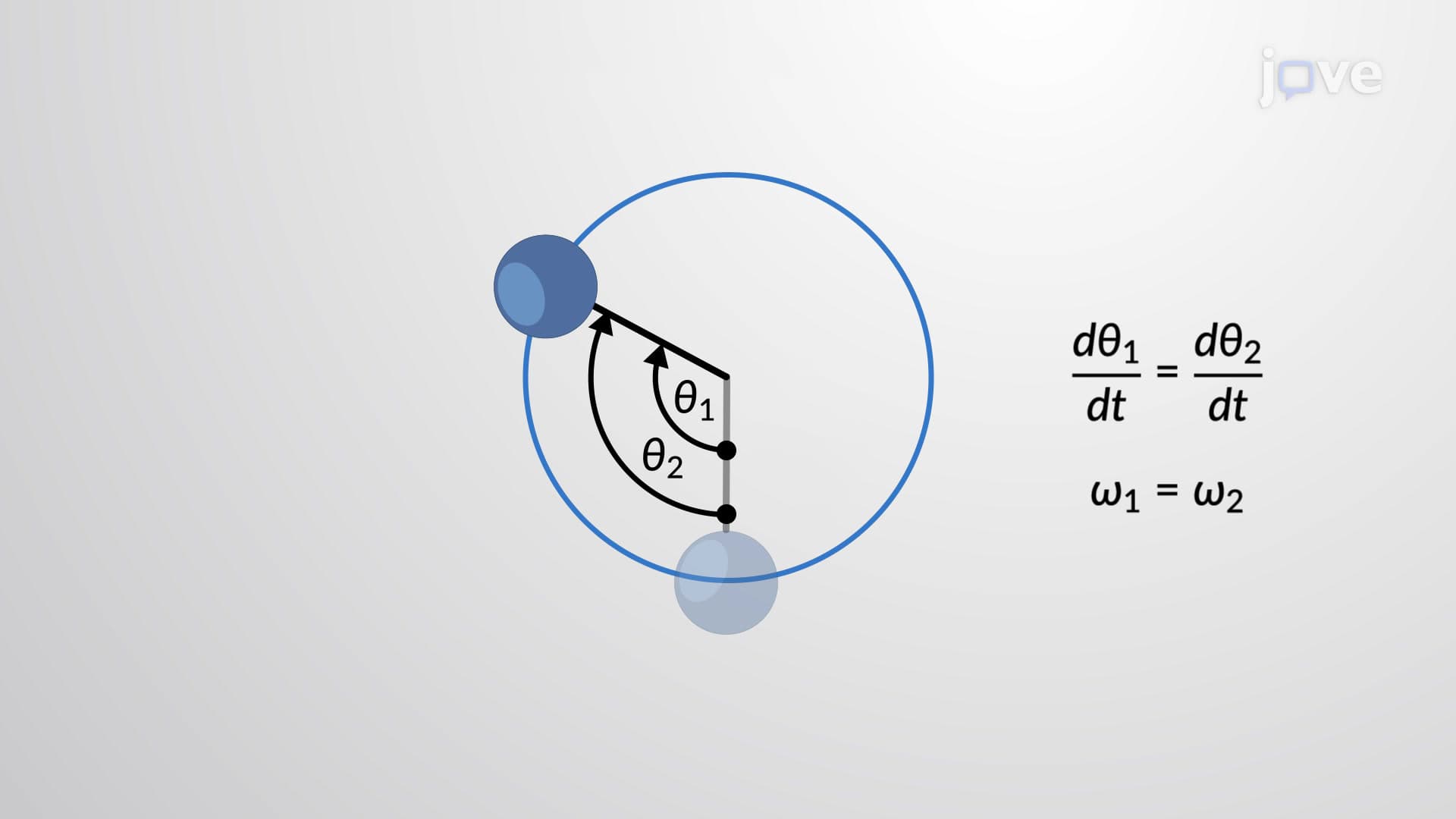
Building on basic rotational kinematics, relating angular and linear quantities II addresses the complex reality of non-uniform circular motion. While uniform circular motion involves only centripetal acceleration, real-world rotating systems often change speed while changing direction simultaneously. This advanced concept becomes crucial for engineering applications like turbine design, automotive systems, and aerospace dynamics.
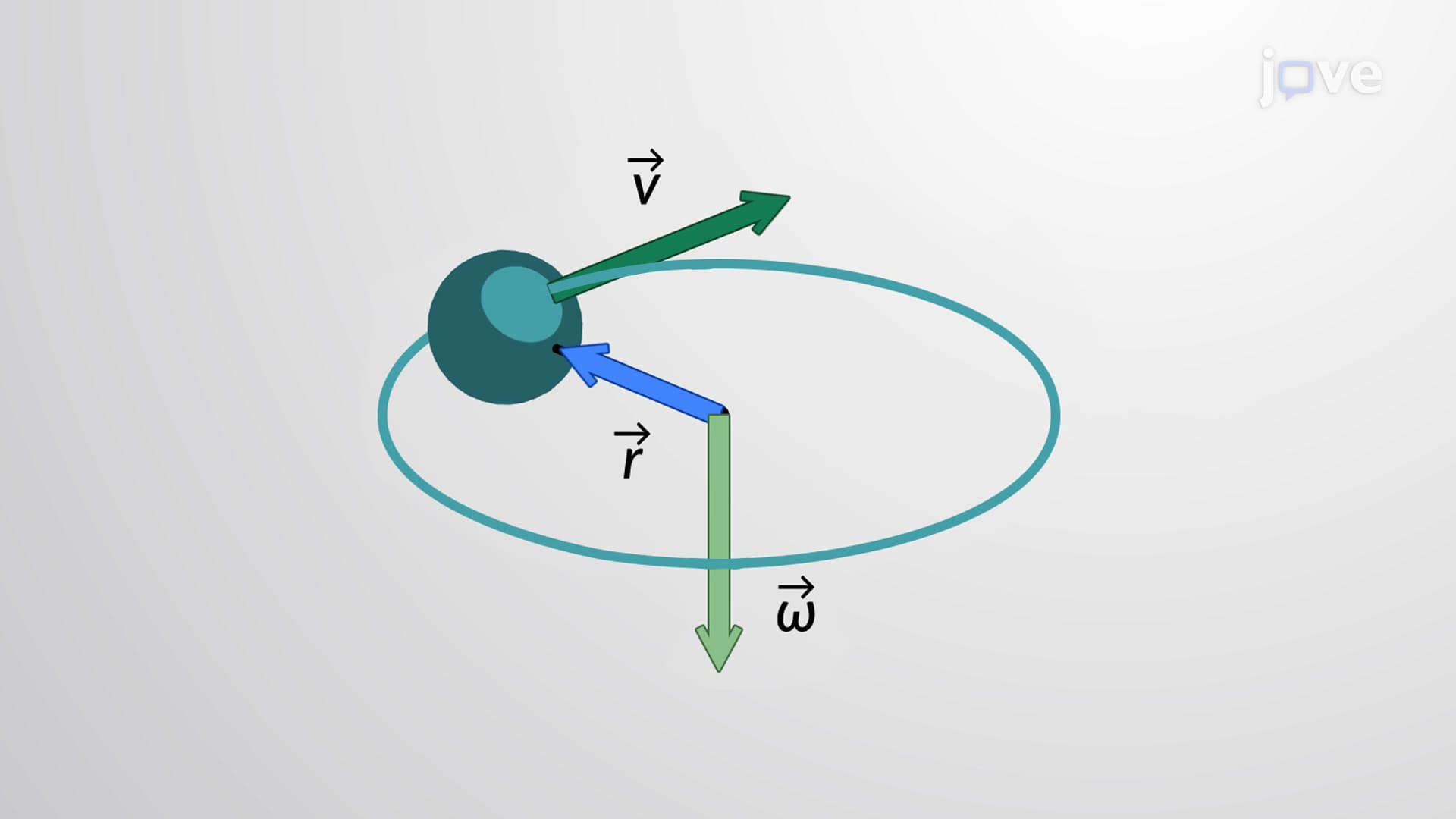
Centripetal acceleration always points toward the rotation center, responsible for continuously changing velocity direction even at constant speed. The fundamental relationship a(c) = v²/r transforms using v = ωr into a(c) = ω²r, directly connecting linear and angular descriptions. This acceleration explains why passengers feel pushed outward in turning vehicles—their bodies resist the centripetal force needed for circular motion.
American roller coaster engineers carefully calculate centripetal acceleration to ensure rider safety while maximizing excitement. The famous Millennium Force at Cedar Point experiences maximum centripetal accelerations around 4.5g, pushing the limits of human tolerance while maintaining the 200-foot drop thrill.
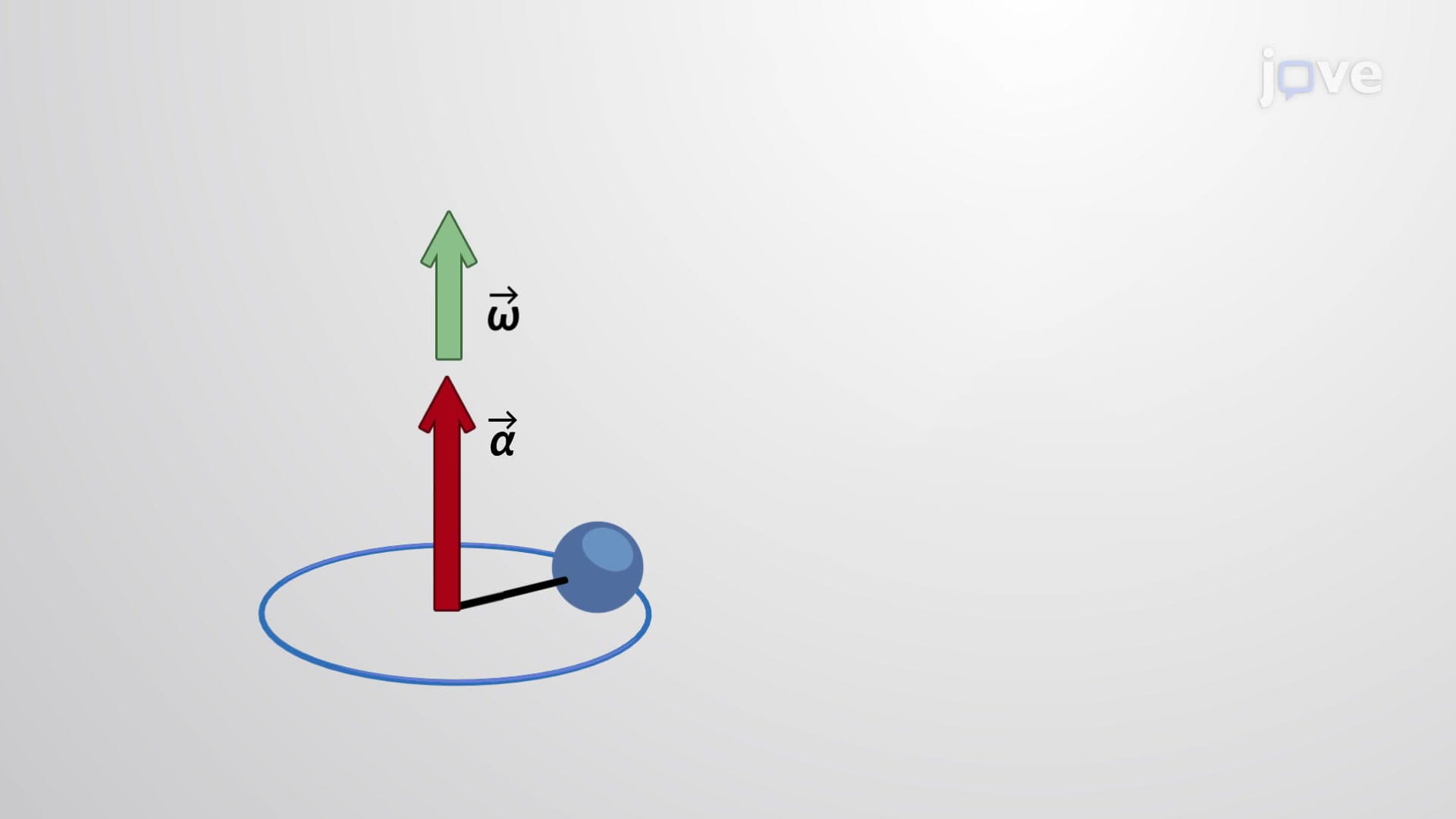
Tangential acceleration acts parallel to instantaneous velocity, changing speed magnitude without affecting direction. When angular velocity increases (positive angular acceleration), tangential acceleration points forward along the motion path. When angular velocity decreases (negative angular acceleration), tangential acceleration opposes motion direction.
The relationship a(t) = αr connects tangential acceleration to angular acceleration, where α represents the rate of angular velocity change. This principle governs everything from bicycle wheel acceleration to industrial centrifuge operation.
These concepts frequently appear on AP Physics exams, particularly in free-response questions involving rotating systems. College physics courses emphasize problem-solving strategies combining both acceleration components using vector addition. MCAT physics sections often test understanding through biological examples like blood flow in curved arteries or joint mechanics during athletic movements.
NASA engineers apply these principles when designing spacecraft orbital maneuvers, where both speed changes (tangential acceleration) and trajectory corrections (centripetal acceleration) occur simultaneously. Understanding this dual acceleration nature proves essential for careers in mechanical engineering, robotics, and automotive design.
Frequently Asked Questions
Relating angular and linear quantities II extends basic rotation to analyze non-uniform circular motion with changing speeds. Unlike uniform circular motion with only centripetal acceleration, this advanced concept involves both centripetal acceleration (changing direction) and tangential acceleration (changing speed magnitude). It's essential for understanding real-world rotating systems like car wheels during acceleration or deceleration.
AP Physics 1 and C exams frequently test this concept through multi-part problems involving rotating objects with changing angular velocities. Students must identify both acceleration components, apply relationships like a(c) = ω²r and a(t) = αr, then use vector addition to find total acceleration. Practice with circular motion free-response questions from past AP exams to master these problem-solving techniques.
MCAT questions often use biological contexts like heart pump mechanics or joint rotation during movement. Centripetal acceleration (a(c) = v²/r) always points toward the rotation center and changes direction only. Tangential acceleration (a(t) = αr) acts parallel to motion and changes speed magnitude only. Both can occur simultaneously in non-uniform circular motion scenarios.
During turns, NASCAR drivers experience centripetal acceleration from steering (changing direction) and tangential acceleration from throttle/brake inputs (changing speed). At Daytona's banked turns, drivers feel up to 3g centripetal acceleration while simultaneously experiencing tangential acceleration during speed changes. This combination creates the intense physical demands of professional racing.
Basic understanding requires only algebra and trigonometry, making it accessible to high school physics students. The core relationships (v = ωr, a(c) = ω²r, a(t) = αr) use straightforward multiplication and substitution. Calculus becomes helpful for advanced applications involving time-varying angular acceleration, but isn't necessary for introductory physics courses or most standardized exams.
Start by identifying whether motion involves changing speed (tangential acceleration present) or constant speed (centripetal only). Draw clear diagrams showing both acceleration components as vectors. Apply the appropriate relationships systematically, then use vector addition for total acceleration. Practice with problems involving specific scenarios like rotating machinery or orbital mechanics to build confidence.
Progress to rotational dynamics with torque and moment of inertia, then explore angular momentum conservation. These concepts build naturally into advanced mechanics topics like gyroscopic motion, precession, and rigid body rotation. Engineering students often continue with vibrations, control systems, and fluid dynamics applications involving rotating machinery.
Related Micro-courses


Related Subjects
 Math Fundamentals 11 micro-courses›
 Statistics 17 micro-courses›