Loading subject page…


114,600 views

Video Summary: Moment of Inertia of Compound Objects Explained
Ever wonder why a bicycle wheel spins so smoothly while a car wheel requires more force to rotate? The moment of inertia of compound objects determines how much torque is needed to spin complex rotating systems. This fundamental physics concept explains how objects made of multiple components-like a Boeing 787's turbofan engine with its titanium blades and central hub-resist rotational motion. Understanding moment of inertia of compound objects is crucial for engineering applications from automotive design to aerospace systems. Watch the full video on JoVE Coach to master this concept with expert-led visuals and step-by-step explanations.
The moment of inertia of compound objects represents one of the most practical applications of rotational mechanics in engineering and physics. Unlike simple geometric shapes with uniform mass distribution, compound objects consist of multiple components that each contribute to the system's total resistance to rotational acceleration. This concept is fundamental to understanding everything from the spinning motion of a figure skater to the design of industrial flywheels used in energy storage systems.
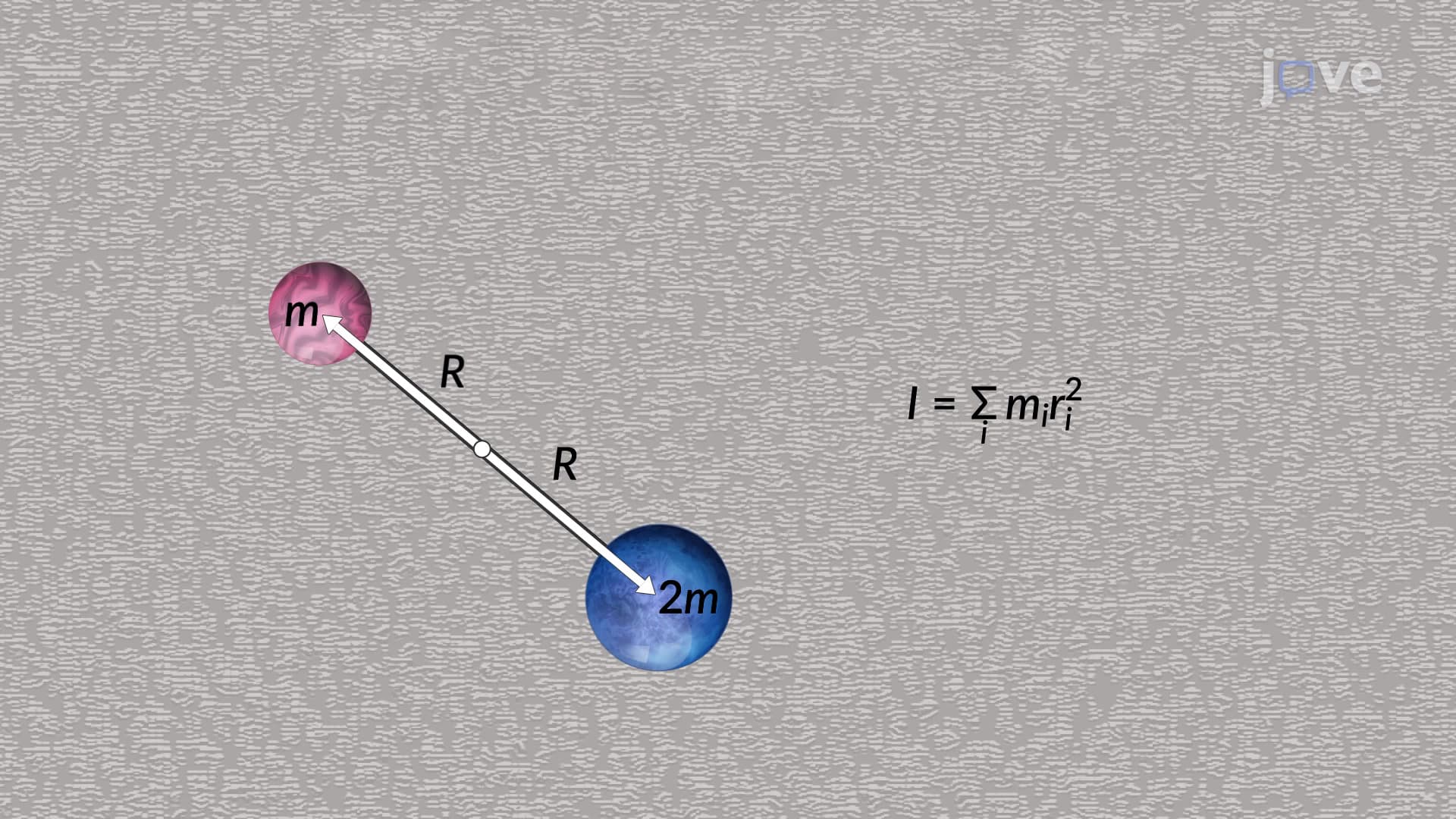
When calculating the total moment of inertia for compound objects, engineers use the principle of superposition. The total moment of inertia equals the sum of individual moments of inertia for each component, provided they all rotate about the same axis. For a compound system: I(total) = I(1) + I(2) + I(3) + ... + I(n).
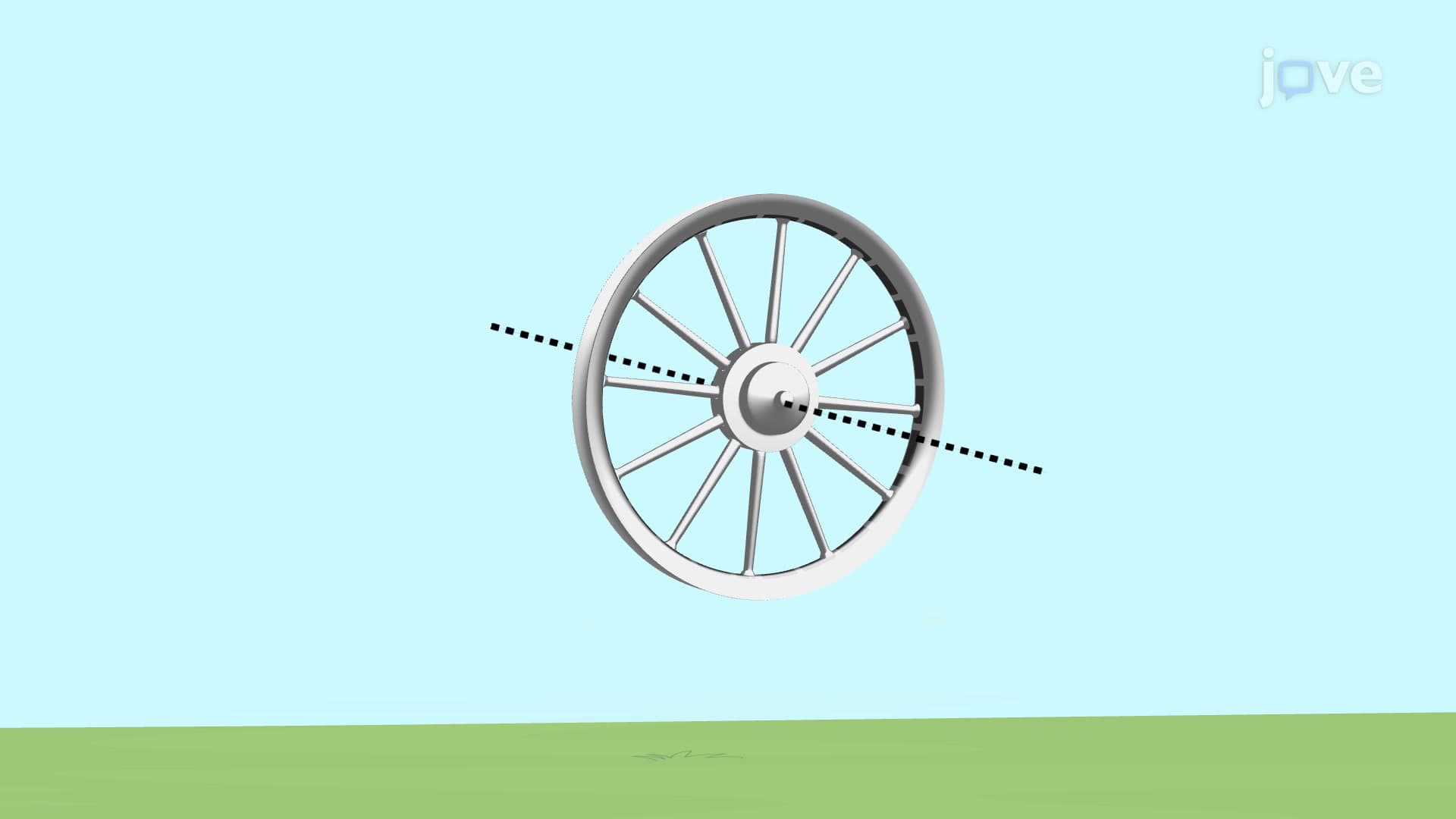
Consider the wheel example from the transcript: a 0.5-meter radius wheel with a 10 kg rim and twelve 0.3 kg spokes. The rim's moment of inertia follows the formula for a thin cylindrical shell: I(rim) = MR² = 10 kg × (0.5 m)² = 2.5 kg⋅m². Each spoke, treated as a rod rotating about one end, contributes I(spoke) = (1/3)ML² = (1/3) × 0.3 kg × (0.5 m)² = 0.025 kg⋅m². With twelve spokes: 12 × 0.025 = 0.3 kg⋅m². Total moment of inertia: 2.5 + 0.3 = 2.8 kg⋅m².
This principle drives critical engineering decisions across American industries. Ford's EcoBoost engines use compound flywheels where the central hub and outer ring are optimized separately to reduce rotational inertia while maintaining strength. NASA's James Webb Space Telescope relies on compound rotating mechanisms where each component's moment of inertia was precisely calculated to ensure accurate pointing control in space.
Students encounter moment of inertia of compound objects frequently on AP Physics exams, particularly in free-response questions involving energy conservation and rotational motion. College physics courses (Physics 1 and 2) extensively cover these calculations, often combining them with torque and angular momentum problems. The MCAT includes rotational mechanics questions where understanding compound systems helps solve complex biological applications, such as analyzing joint rotation in biomechanics.
The key to mastering these problems lies in systematic component identification, proper formula selection for each geometric shape, and careful attention to the axis of rotation. Students should practice with common compound objects like wheels, pulleys, and rotating machinery to build intuition for real-world applications.
Related Micro-courses